How to Stop Tooth Pain Fast
When a tooth flares up, here is what to do in the next ten minutes, and what to do next.
- To ease tooth pain quickly, rinse with warm salt water, take an over-the-counter pain reliever exactly as its label directs, and hold a cold compress to your cheek.
- Dislodging trapped food with gentle flossing, avoiding hot, cold, and sweet triggers, and keeping your head raised can each take the edge off within minutes.
- A dab of clove oil offers real but brief numbing; use only a little, keep it off the gums, and never pack it into an open tooth.
- Fast relief is comfort, not repair: none of these steps removes decay, a crack, or an infection, so the pain will return until a dentist addresses the cause.
- Swelling, fever, a foul taste, or pain that keeps you awake means stop self-managing and seek professional or medical care promptly.
To stop tooth pain fast, rinse with warm salt water, take an over-the-counter pain reliever strictly as directed, and apply a cold compress to the cheek. Gently floss to remove trapped food and avoid hot, cold, and sweet triggers. These bring quick comfort but do not cure the cause, so see a dentist promptly, urgently if there is swelling or fever.
Why these steps ease pain quickly
Fast relief works by calming the irritated pulp inside the tooth and the tissue around it, not by fixing whatever set it off. An over-the-counter anti-inflammatory reliever reduces the chemical signalling that makes an inflamed nerve throb, which is why it tends to be the most dependable quick step. A cold compress on the outside of the cheek numbs the region and eases any swelling. A warm salt-water rinse flushes debris from around the tooth and soothes sore gum tissue, and gentle flossing can remove a wedged fragment of food that is pressing on an already-tender spot. Raising your head reduces the blood-flow pressure that makes throbbing worse when you lie down. Each of these can bring noticeable relief within minutes. The catch is that the relief is borrowed time. Decay, a crack, or an infection is untouched by any of it, so as the comfort fades the pain returns. Treat fast relief as exactly what it is: a way to get through the next few hours until you can be seen.

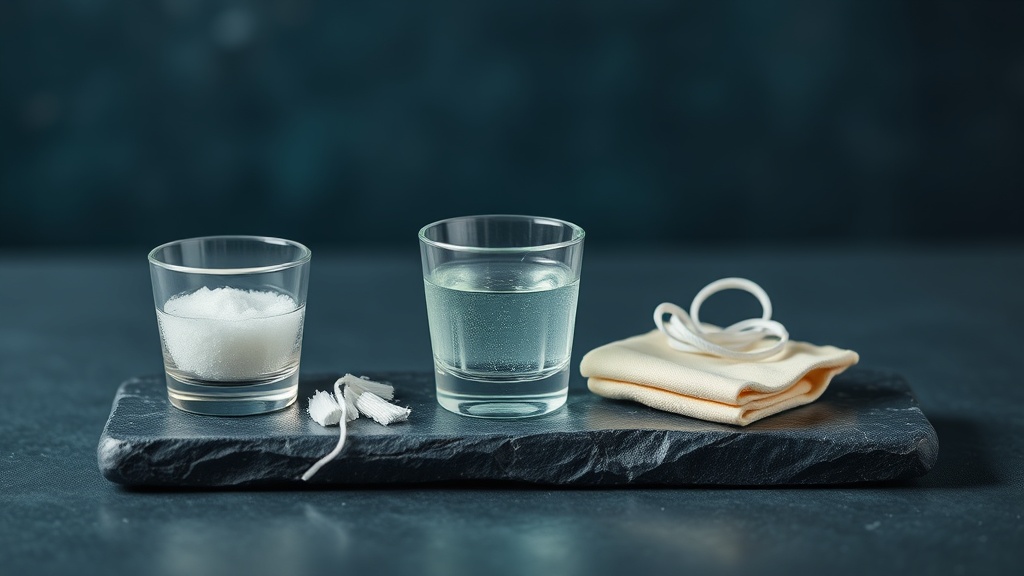
A simple quick-relief kit calms the ache within minutes, but it never repairs the tooth causing it.
What the research actually shows
Every claim below maps to a named, peer-reviewed source in the Sources section. According to PubMed.
| Claim | Evidence | Source |
|---|---|---|
| A combination of ibuprofen and acetaminophen relieves acute dental pain effectively, often with fewer side effects than opioid options. | JADA analysis of systematic reviews and randomized trials. | Moore and Hersh, 2013 |
| Eugenol from clove inhibits sodium currents in dental sensory neurons, giving it a genuine local numbing effect. | Patch-clamp study of dental afferent neurons. | Park et al., 2006 |
| Eugenol-based material is highly cytotoxic to pulp cells while setting, so it should not be packed into an open tooth. | Cell-viability testing of ZOE dental materials. | Lee et al., 2016 |
| A bicarbonate rinse buffers acids and raises oral pH, consistent with the soothing effect of a simple alkalising or salt rinse. | Clinical plaque-pH study. | Blake-Haskins et al., 1997 |
| Pain that lingers or arises spontaneously reflects symptomatic irreversible pulpitis and needs professional care, not quick home fixes. | Systematic review of pain in irreversible pulpitis. | Nogueira et al., 2018 |
How fast each step works, and its limit
| Quick step | Roughly how fast | Honest limit |
|---|---|---|
| Over-the-counter pain reliever, per label | 20 to 40 minutes | Masks pain; does not touch the cause |
| Cold compress on the cheek | Within minutes | Temporary numbing; swelling still needs review |
| Warm salt-water rinse | Within minutes | Soothes gum and debris only |
| Gentle flossing to remove trapped food | Immediate if food is the trigger | No help if decay or a crack is the cause |
| Clove oil dab, sparingly | A few minutes | Irritates tissue; unsafe on open teeth |
The mistakes that make tooth pain worse
When a tooth is screaming, it is tempting to reach for things that backfire. Do not place an aspirin tablet directly against the gum next to a sore tooth; the old folk trick does nothing for the nerve and the acid can chemically burn the soft tissue. Do not overshoot the dose on pain relievers in the hope of faster results, because exceeding label limits risks real harm without extra benefit; if the stated dose is not holding the pain, that is information for a dentist, not a reason to take more. Go easy on heat: a hot compress or a hot drink can increase blood flow and pressure in an inflamed pulp and sharpen the throb, which is why cold is usually the friendlier choice. Keep clove oil to a tiny amount on a swab and off the gums, since the same eugenol that numbs can also irritate and damage tissue. And resist poking at the tooth with picks or pins, which can injure the gum and introduce bacteria. The safest fast plan is gentle, label-abiding, and short, always pointed toward getting seen.
Evidence you can act on.
Occasional emails — new research, new protocols, no noise.
The fast-relief checklist
Work through these now for comfort, then arrange a dental visit. None of them treats the cause of the pain.
- 1
Rinse with warm salt water
30 secondsHalf a teaspoon of salt in a glass of warm water, swished gently and spat out, clears debris and soothes the gum around the tooth. Safe to repeat several times a day.
- 2
Take an over-the-counter pain reliever as directed
per labelAn anti-inflammatory reliever is the most dependable quick step. Confirm it suits you with a pharmacist, take it with food, and stay within the label limits.
- 3
Apply a cold compress to your cheek
10 to 15 minutesA wrapped cold pack on the outside of the cheek numbs the area and eases mild swelling. Keep a cloth against the skin and rest between rounds.
- 4
Gently floss and avoid triggers
1 minuteCarefully remove any trapped food, which can be the whole problem. Then keep away from hot, cold, sweet, and acidic things and chew on the other side until you are seen.
- 5
Keep your head raised and clove oil minimal
as neededProp your head up, especially at night, to reduce throbbing. If you use clove oil, apply a tiny amount to a swab on the sore spot only, never on the gum or in an open tooth.

Raising your head and using cold rather than heat helps quiet the throb while you wait to be seen.
Fast relief is only meant to get you through until a dentist can help. See a dentist promptly for tooth pain that is severe, throbbing, spontaneous, or that keeps coming back as relief wears off. Seek urgent professional or medical care right away if you have facial or gum swelling, fever, a foul taste or discharge, difficulty swallowing or breathing, or pain that stops you sleeping, as these can signal a spreading infection that no home step can treat. If you are relying on pain relief around the clock, you need to be seen now, not later.
Frequently asked questions
Sources
- 1.
- 2.
- 3.
- 4.
- 5.

Fix your breath at the source.
The complete science-backed protocol — engineered to eliminate volatile sulfur compounds at the biological source.
Start the Breath Protocol →Related reading
Educational purposes only. The content on this page is not medical advice and is not a substitute for consultation with a qualified dental or medical professional.
More from the library
 Guides8 min
Tooth Nerve Pain Relief: A Comfort Toolkit That Buys You Time
You can calm the ache for a while; here is how to do it sensibly, and why it is only ever a bridge to professional care.
Read →→ Causes8 min
Tooth Nerve Pain: What Causes It and When It Is Serious
The sharp, throbbing, or lingering ache of an irritated tooth nerve is a signal worth understanding, and acting on.
Read →→ Ingredients8 min
Salt-Water Rinse for Toothache: How and Why It Soothes
The oldest toothache remedy is also one of the safest; here is what it really does, and what it cannot.
Read →→ Guides8 min
Home Remedies for Toothache: What Works, What Does Not
Some toothache remedies genuinely soothe, some do little, and none replace a dentist. Here is the honest rundown.
Read →→ Answers8 min
How to Get Rid of White Spots on Teeth: Your Options, Ranked
An honest, evidence-based ladder of options, from what you can do at home to what only a dentist can fix.
Read →→ Ingredients8 min
Hydroxyapatite Toothpaste Benefits: What the Evidence Actually Supports
A calm, science-first look at what hydroxyapatite toothpaste can genuinely do for your enamel, and where the evidence stops.
Read →→