Baby Bottle Tooth Decay: Causes and How to Protect Little Teeth
Baby bottle tooth decay comes from sugary liquids pooling on baby teeth; simple daily habits lower the risk.
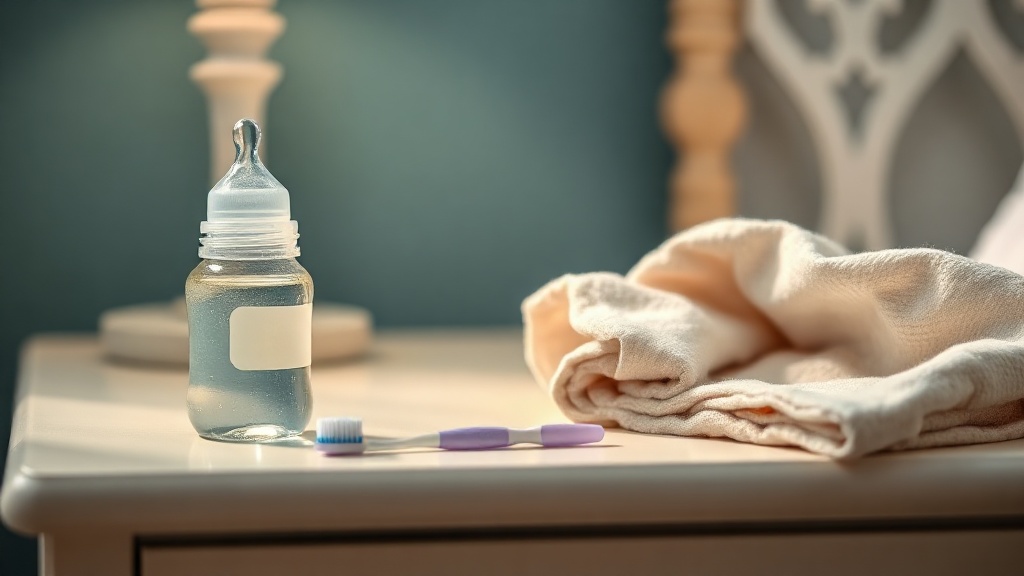
- Baby bottle tooth decay, known clinically as early childhood caries, happens when sugary liquids such as milk, formula, and juice sit on a baby teeth for long stretches, especially during sleep, feeding the bacteria that make enamel-dissolving acid.
- It is common and serious: early childhood caries affects roughly half the world preschoolers and is the most common chronic disease of childhood. Severe cases can lead to pain, infection, and dental surgery under general anesthesia.
- The single biggest lever is the feeding pattern. Never settle a baby to sleep with a bottle of anything but water, and do not let a child sip juice or milk from a bottle or cup all day long.
- The upper front teeth are usually affected first, because pooled liquid collects behind the top lip. The earliest sign is a dull white line along the gumline, and caught there a dentist can often help the enamel harden back up.
- Simple daily care protects little teeth: wipe or brush after feeds, book a first dental visit by age 1, and ask a pediatric dentist about fluoride varnish. This is about reducing risk, not any product that cures decay.
Baby bottle tooth decay is early tooth decay caused by sugary liquids such as milk, formula, and juice pooling on a baby teeth, most often from bottles at bedtime or all-day sipping. Bacteria turn the sugar into acid that dissolves enamel. It is largely avoidable: give only water at sleep, wipe or brush after feeds, and see a pediatric dentist by age 1.
How baby bottle tooth decay happens
New baby teeth are covered in enamel that is thinner and softer than an adult, so it dissolves more easily. Decay begins with a simple chain: certain mouth bacteria, chiefly Streptococcus mutans, feed on sugars and release acid, and that acid pulls minerals out of the enamel surface. A single feed is not the problem, because saliva quickly buffers the acid and helps the enamel recover. The damage comes from time and repetition. When a baby drifts off with a bottle of milk, formula, or juice, the liquid pools around the teeth for a long stretch while saliva flow, the mouth natural rinse, slows right down during sleep. Hour after hour the teeth sit in a sugary, acidic bath with none of the usual protection. The same thing happens with a bottle or sip cup carried around all day, keeping the teeth bathed between meals. The upper front teeth are usually hit first because liquid collects behind the top lip, while the lower front teeth are partly shielded by the tongue. It is also worth knowing where the bacteria come from: studies show most infants pick up their S. mutans strain from a caregiver, often through shared spoons or cleaning a pacifier by mouth, which is why a caregiver own dental health is part of the picture.
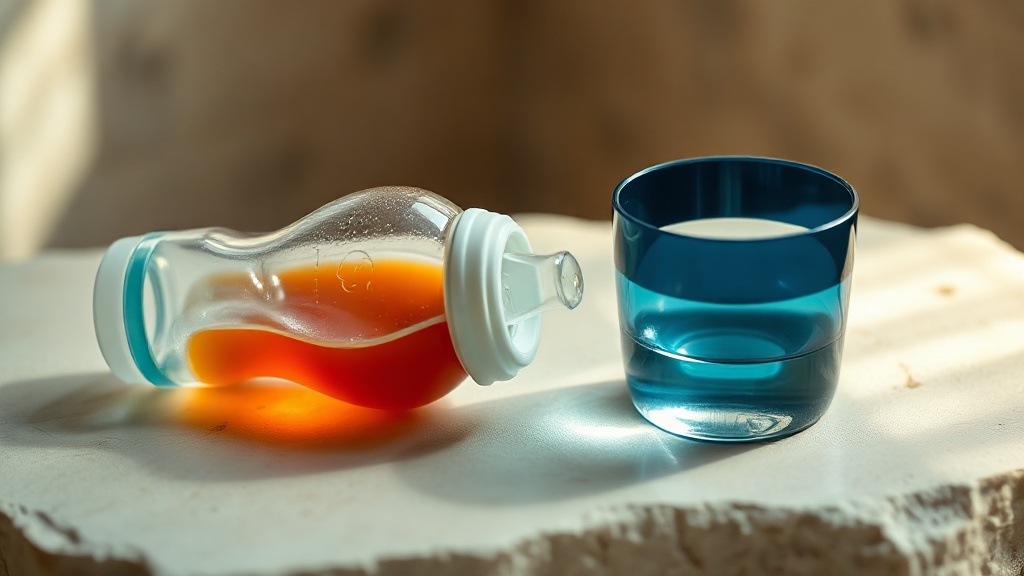
A bottle left for sleep bathes the teeth in sugar for hours; water in a cup does not.
What the research actually shows
Every claim below maps to a named, peer-reviewed source in the Sources section. According to PubMed.
| Claim | Evidence | Source |
|---|---|---|
| Early childhood caries affects about 48% of preschoolers worldwide and is the most prevalent chronic childhood disease. | Global systematic review, 64 reports across 29 countries. | Uribe et al., 2021 |
| Sugar-sweetened beverage intake at 12 months raised later caries risk, while breastfeeding itself was not a risk factor. | Birth cohort of 3,505 pairs. | Duan et al., 2025 |
| 100% fruit juice behaves like a sugary soft drink for the teeth, despite being natural. | Review of juice and child health. | Auerbach et al., 2018 |
| About 71% of infants acquire a decay-linked S. mutans strain identical to their mother, a caregiver-to-child route. | Genotyping study of mother-infant pairs. | Li and Caufield, 1995 |
| Professionally applied fluoride varnish reduced caries in baby teeth by about 37%, a dentist option for young children. | Cochrane systematic review. | Marinho et al., 2013 |
What drives baby bottle tooth decay
| Habit | Why it feeds decay | Lower-risk swap |
|---|---|---|
| A bottle in bed | Liquid pools on the teeth for hours while saliva flow drops during sleep | Water only at sleep; finish milk or formula before lying down |
| All-day sipping of juice or milk | Keeps the teeth bathed in sugar acid between meals | Milk and juice at mealtimes only; water in the everyday sip cup |
| Sweetened pacifiers or dipping in honey or sugar | Puts direct, prolonged sugar on brand-new teeth | A plain pacifier, never sweetened or dipped |
| Sharing spoons or cleaning a pacifier by mouth | Passes decay bacteria from caregiver to baby | Rinse with water, and keep your own mouth healthy |
| No wiping or brushing after feeds | Leaves sugar and plaque on the teeth overnight | Wipe the gums or brush after the last feed of the day |
Breastfeeding, milk, and the nuance parents deserve
Parents often hear that milk causes baby bottle tooth decay and worry they are harming their child by nursing or offering a bottle. The honest picture is more reassuring. Large reviews find that breastfeeding up to about 12 months is associated with lower decay risk, not higher, and in one big birth cohort breastfeeding was not a risk factor at all, while sugary drinks at 12 months were. Risk mainly emerges with prolonged, on-demand nursing through the night after the first teeth are in, particularly when it is combined with other sugars in the diet, because the mechanism is the same as the bottle: liquid pooling on the teeth for long periods while saliva is low. So the real driver is not milk as a substance but frequency and pooling, how often teeth are bathed in fermentable sugar and for how long. That reframing is freeing, because it points at habits a family can adjust without guilt: wiping the teeth after a night feed, avoiding the propped or bedtime bottle, and keeping added sugars and juice to a minimum. Research also shows that simple dietary guidance for caregivers meaningfully lowers early childhood caries, so a calm conversation with a pediatric dentist, rather than shame, is what moves the needle.
Evidence you can act on.
Occasional emails — new research, new protocols, no noise.
How to protect your baby teeth
These habits target the two things that cause decay, sugar and time on the teeth. They lower risk; they are not a cure, and a pediatric dentist should anchor the plan.
- 1
Water only at sleep
every nap and nightThis is the habit that matters most. If your baby needs a bottle to settle, fill it with plain water. Finish any milk or formula feed before laying your baby down, so the teeth are not bathed in it through the night.
- 2
Move from bottle to cup around age 1
by 12 to 18 monthsAim to retire the bottle around the first birthday, and do not let a bottle or sip cup become an all-day drip of milk or juice. A cup used at mealtimes gives the mouth long sugar-free stretches to recover.
- 3
Wipe and brush after feeds
twice dailyAfter the last feed of the day, wipe the gums with a clean damp cloth or brush the teeth with a rice-grain smear of toothpaste, dentist-guided for the amount and type. Bedtime cleaning matters most because saliva is lowest overnight.
- 4
Watch the sugar clock
every dayKeep juice small and to mealtimes, and remember that 100% juice acts like soda on the teeth. Offer water and plain milk the rest of the time. How often sugar reaches the teeth matters as much as how much.
- 5
First dental visit by age 1, then keep it up
from the first birthdayA pediatric dentist can spot the earliest white-line stage, apply fluoride varnish, and tailor a plan to your child risk. Establishing a dental home early also builds comfort and catches problems while they are still small.
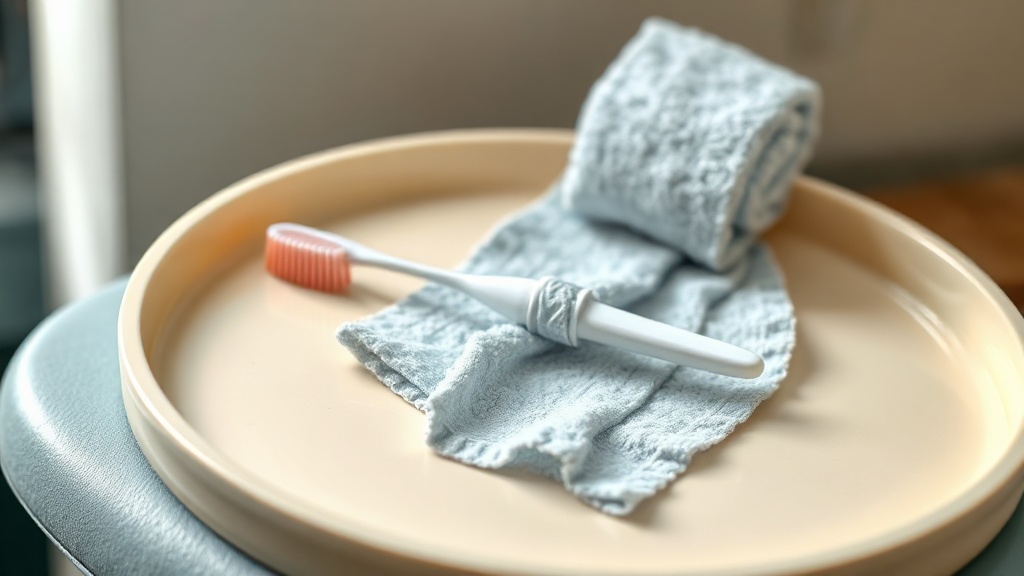
Wiping the gums after feeds and a first visit by age 1 are the foundation of protecting baby teeth.
See a pediatric dentist if you notice dull white lines or chalky patches along the gumline of the upper front teeth, any brown spots, pitting, or a hole, or if your child seems to have pain or trouble eating. The white-line stage is the moment to act, because a dentist can often help the enamel harden back up before it becomes a cavity. Even without any warning signs, plan a first visit by the first birthday to establish a dental home and get advice tailored to your child.
Frequently asked questions
Sources
- 1.
- 2.
- 3.
- 4.
- 5.
- 6.
- 7.
- 8.
- 9.
- 10.
- 11.
- 12.

Fix your breath at the source.
The complete science-backed protocol — engineered to eliminate volatile sulfur compounds at the biological source.
Start the Breath Protocol →Related reading
Educational purposes only. The content on this page is not medical advice and is not a substitute for consultation with a qualified dental or medical professional.
More from the library
 Guides9 min
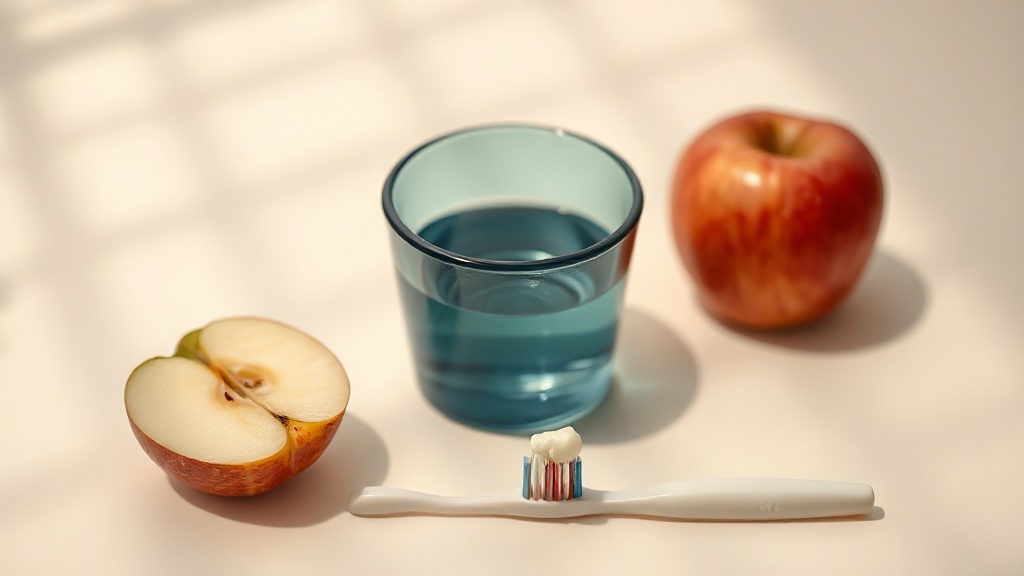
Early Childhood Caries: Gentle Prevention for Little Smiles
What early childhood caries is, why it happens, and the calm daily habits - diet, bottle routines, brushing, dental visits - that lower a young child's risk.
Read →→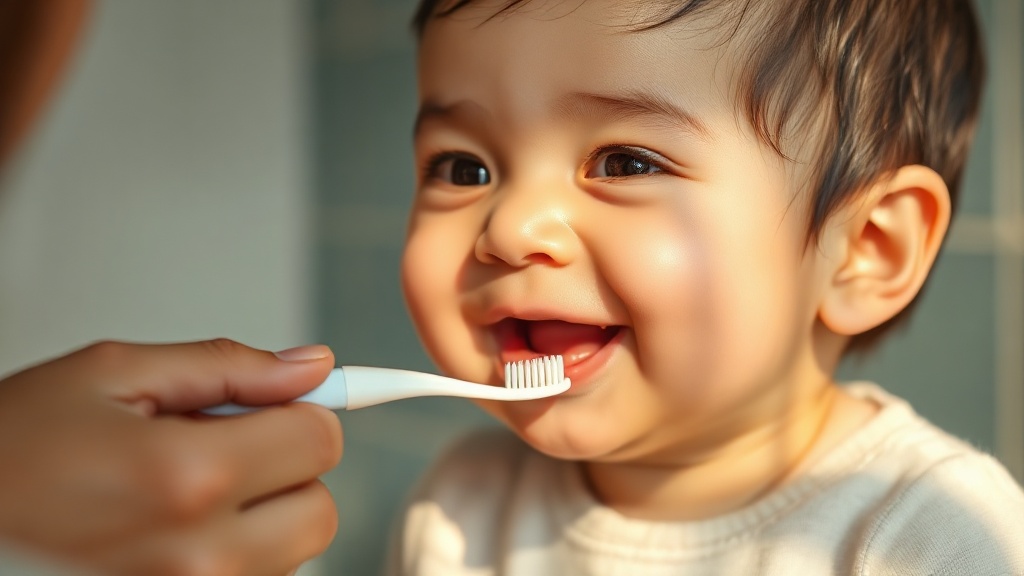 Answers8 min
When to Start Brushing Baby Teeth (Age-by-Age Guide)
A straight answer on when and how to start brushing, how much toothpaste to use at each age, and why a tiny smear is both safe and effective.
Read →→ Guides8 min
Fluoride Varnish for Kids: What Parents Should Know
A calm, honest look at the sticky coating your dentist paints on your child's teeth - what it does, how safe it really is, and why the temporary yellow tint is nothing to worry about.
Read →→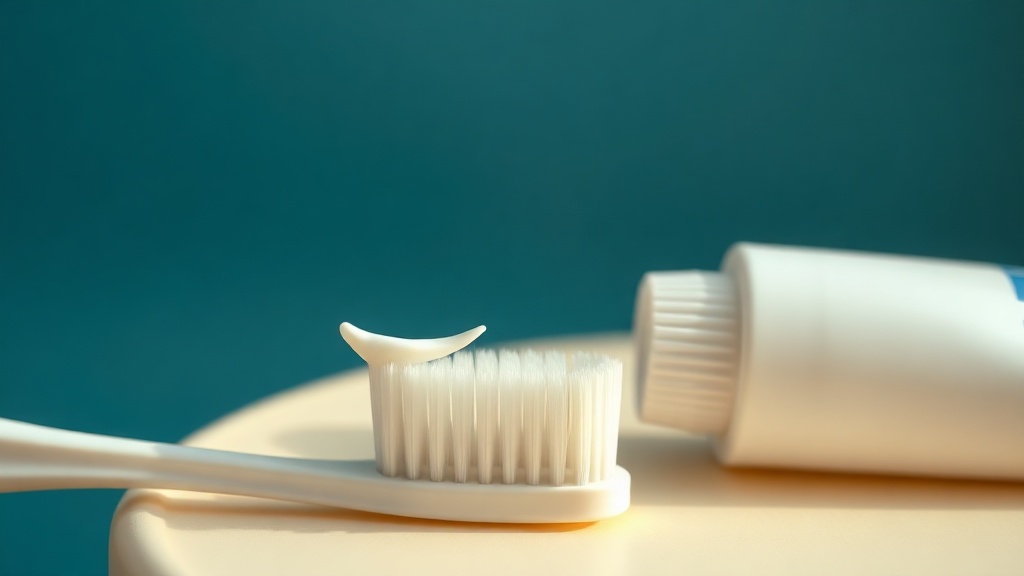 Best Of8 min
Best Baby Toothpaste: An Honest, Dentist-Informed Guide
What actually matters in a baby's first toothpaste - how much to use, why a swallowed smidge is fine, and how to weigh fluoride against fluoride-free honestly.
Read →→ Best Of8 min
Best Teething Gel for Babies: Safer Soothing Options Compared
Why the honest best is non-medicated relief - and why the FDA warns against benzocaine and lidocaine teething gels for babies and toddlers.
Read →→ Best Of8 min
Best Toothbrush for Kids by Age (2026 Buying Guide)
A calm, honest guide to choosing a child toothbrush by age — soft bristles, small head, and the habits that matter more than any brand.
Read →→