When to Start Brushing Baby Teeth: An Age-by-Age Guide
A straight answer on when and how to start brushing, how much toothpaste to use at each age, and why a tiny smear is both safe and effective.
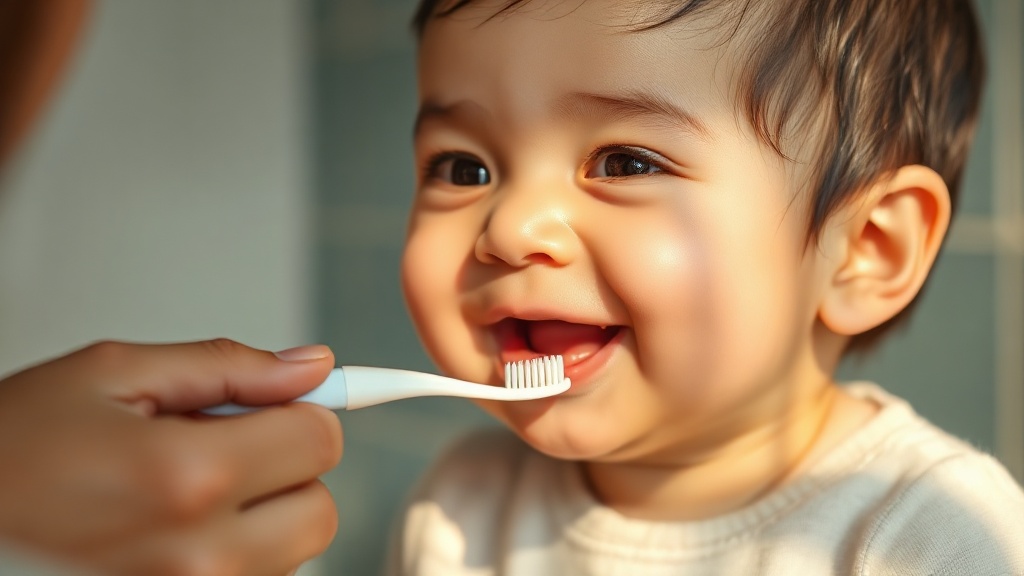
- Start brushing the moment the first tooth appears — usually around 6 months. Before that, wipe your baby gums with a clean damp cloth once or twice a day.
- From the first tooth to age 3, use only a rice-grain smear of fluoride toothpaste on a soft baby brush, twice a day. From age 3 to 6, move up to a pea-sized amount.
- A smear this small is safe even though babies swallow most of it, because fluorosis risk depends mainly on the amount of paste swallowed, not its concentration.
- Fluoride toothpaste is the most proven way to keep little teeth strong; if you choose a fluoride-free paste, be extra careful about the amount used and about sugary drinks and snacks.
- Book a first dental visit by around your child first birthday, and supervise or help with brushing until about age 7 or 8.
Start brushing as soon as the first tooth appears, usually around 6 months, using a soft baby brush and a rice-grain smear of fluoride toothpaste twice a day. Before the first tooth, wipe the gums with a clean damp cloth. Move to a pea-sized amount at age 3, and see a dentist by age one.
When to start: the very first tooth
The simplest answer is the right one: start brushing the day you see the first tooth, which for most babies is around six months. A tooth is barely through the gum before the same bacteria and sugars that cause decay in adult teeth can start working on it, and baby enamel is thinner and more vulnerable than adult enamel. That is why dentists no longer suggest waiting. Before that first tooth arrives, you are not idle either — gently wiping your baby gums with a clean, damp cloth or a piece of gauze once or twice a day, especially after the last feed of the evening, clears milk residue and gets your baby used to having their mouth cared for. When the tooth does appear, you simply swap the cloth for a soft baby toothbrush and add a smear of toothpaste. Making mouth care a calm, everyday routine from the start does more than clean teeth: it turns brushing into something normal and unremarkable, which pays off enormously through the toddler years when cooperation can be hard to win.
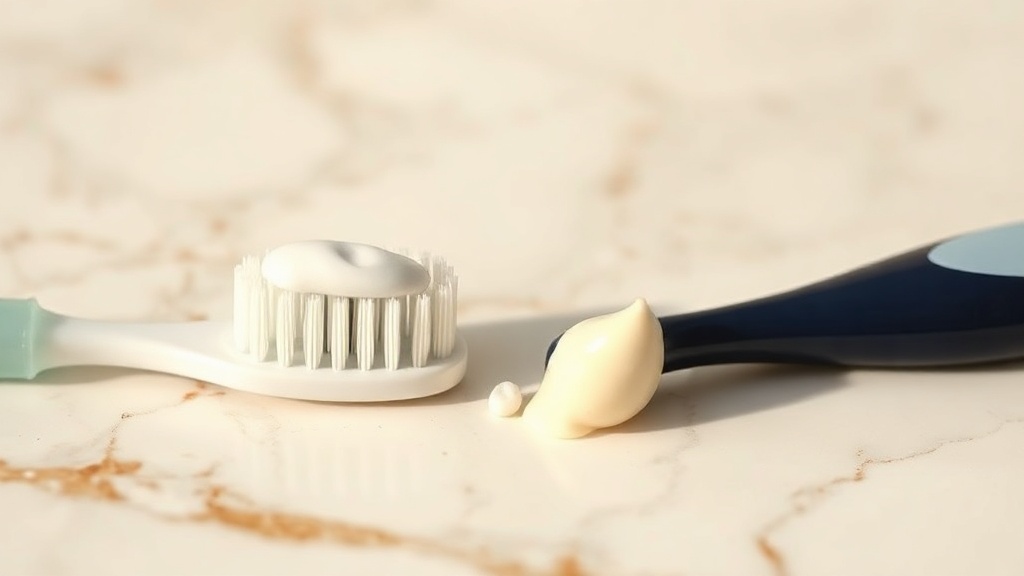
Under 3, a rice-grain smear; ages 3 to 6, a pea-sized amount. The size of the dab is what keeps it safe.
What the research shows about brushing and fluoride
Every claim below maps to a named, peer-reviewed source in the Sources section. According to PubMed.
| Claim | Evidence | Source |
|---|---|---|
| Brushing with fluoride toothpaste reduces the amount of new decay compared with non-fluoride toothpaste. | Systematic review of 70 trials in 42,300 children; about a 24% reduction in caries increment. | Marinho et al., 2003 (Cochrane) |
| Very low-fluoride toothpaste offers little benefit; a meaningful effect needs roughly 1,000 ppm fluoride or more. | Cochrane review found no significant benefit below about 550 ppm versus placebo. | Walsh et al., 2010 (Cochrane) |
| Choosing the fluoride level for a young child means balancing protection for the teeth against the risk of mild fluorosis. | Cochrane review of fluoride toothpaste concentrations in children. | Walsh et al., 2019 (Cochrane) |
| Fluorosis risk is driven mainly by how much paste is swallowed, not by its concentration — which is why a tiny smear is used. | Review of fluoride dose and fluorosis; variability is mainly a function of the amount used. | Davies et al., 2003 |
| Simple feeding and diet advice to caregivers early in life lowers the chance of early childhood decay. | Cochrane review; dietary counseling reduced early childhood caries by about 15%. | Gomersall et al., 2024 (Cochrane) |
An age-by-age brushing guide
| Age | What to use | How to do it |
|---|---|---|
| Birth to first tooth | A clean, damp soft cloth or gauze | Gently wipe the gums once or twice a day, especially after the last evening feed |
| First tooth to age 3 | A rice-grain smear of fluoride toothpaste on a soft baby brush | Brush twice a day; the smear is small enough to be safe even though little ones swallow most of it |
| Ages 3 to 6 | A pea-sized amount of fluoride toothpaste | Brush twice a day; encourage spitting out, and skip rinsing with lots of water afterwards |
| Ages 6 and up | A pea-sized amount, child brushing with help | Supervise or assist until about age 7 or 8, when hand skills are up to the job |
How much toothpaste, and why the amount matters
The size of the dab is the whole safety story. Fluoride strengthens enamel and is the single most proven ingredient for keeping little teeth healthy, but swallowing a lot of it repeatedly while the adult teeth are still forming can cause dental fluorosis — usually faint white flecks on the permanent teeth. The key insight from the research is that this risk tracks the amount of paste swallowed far more than its concentration. That is exactly why the guidance is not weaker toothpaste but a smaller amount of ordinary-strength toothpaste: a rice-grain smear under age three, a pea-sized amount from three to six. Used that way, a baby who swallows most of their smear is still well within safe limits. It also helps to teach spitting out rather than rinsing with water once your child is old enough, so a thin film of fluoride stays on the teeth a little longer. Some parents prefer a fluoride-free paste, often to avoid fluorosis entirely or as a personal preference. That is a valid choice to make with your dentist, but be honest with yourself about the trade-off: fluoride-free pastes have less evidence behind them, so if you use one, it is worth being especially consistent with the amount, with twice-daily brushing, and with keeping sugary drinks and snacks occasional.
Evidence you can act on.
Occasional emails — new research, new protocols, no noise.
A simple routine from the first tooth
None of this treats a medical condition — it is everyday care that keeps enamel strong and builds a lifelong habit. Keep it short, calm, and consistent.
- 1
Wipe the gums before the first tooth
1-2x dailyFrom birth, wrap a clean, damp cloth or gauze around your finger and gently wipe your baby gums, especially after the last feed. It clears milk residue and makes mouth care familiar before any teeth arrive.
- 2
Switch to a soft brush and a rice-grain smear at the first tooth
twice dailyWhen that first tooth appears, use a small soft-bristled baby brush and a rice-grain smear of fluoride toothpaste. Brush all surfaces gently, morning and night.
- 3
Move to a pea-sized amount around age 3
twice dailyFrom about age three, once your child can begin to spit, step up to a pea-sized amount. Encourage them to spit out the extra rather than rinse it away with water.
- 4
Make the bedtime brush non-negotiable
every nightThe night-time brush matters most, because saliva flow drops during sleep and leaves teeth less protected. A quick, cheerful, never-skipped bedtime brush is one of the highest-value habits you can build.
- 5
Supervise, and see a dentist by age one
ongoingHelp or supervise brushing until around age seven or eight, when your child hand skills catch up. Book a first dental visit by the first birthday so any questions about fluoride, diet, or technique can be answered in person.

Before the first tooth, a clean damp cloth over the gums keeps mouth care familiar from the start.
Book a first dental visit by around your child first birthday, and sooner if you spot anything unusual. White, chalky, or brown spots along the gum line of a new tooth can be an early sign of decay that a dentist should assess — this is not something to watch and wait on. A pediatric dentist can also confirm the right toothpaste and amount for your child, weigh in honestly on fluoride versus fluoride-free for your situation, and check your brushing technique. If your child resists all mouth care, or you are unsure how much paste to use, that is exactly the kind of thing an early visit is for.
Frequently asked questions
Sources
- 1.
- 2.
- 3.
- 4.
- 5.
- 6.
- 7.

Fix your breath at the source.
The complete science-backed protocol — engineered to eliminate volatile sulfur compounds at the biological source.
Start the Breath Protocol →Related reading
Educational purposes only. The content on this page is not medical advice and is not a substitute for consultation with a qualified dental or medical professional.
More from the library
 Guides9 min
Kids Toothpaste: How to Choose by Age
A clear, honest hub for choosing a childs toothpaste — by age and amount, by ingredient, and by what the evidence actually supports.
Read →→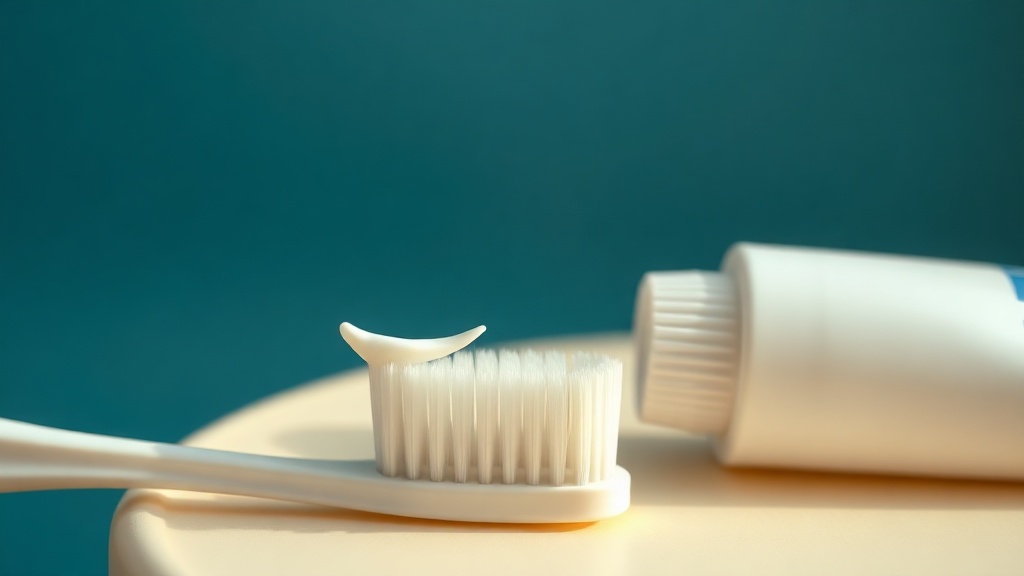 Best Of8 min
Best Baby Toothpaste: An Honest, Dentist-Informed Guide
What actually matters in a baby's first toothpaste - how much to use, why a swallowed smidge is fine, and how to weigh fluoride against fluoride-free honestly.
Read →→ Best Of8 min
Fluoride Toothpaste for Kids: How Much Is Safe (2026)
Fluoride is the best-proven way to protect a child teeth from decay - and using the right small amount for their age is what keeps it both effective and safe.
Read →→ Guides9 min
Early Childhood Caries: Gentle Prevention for Little Smiles
What early childhood caries is, why it happens, and the calm daily habits - diet, bottle routines, brushing, dental visits - that lower a young child's risk.
Read →→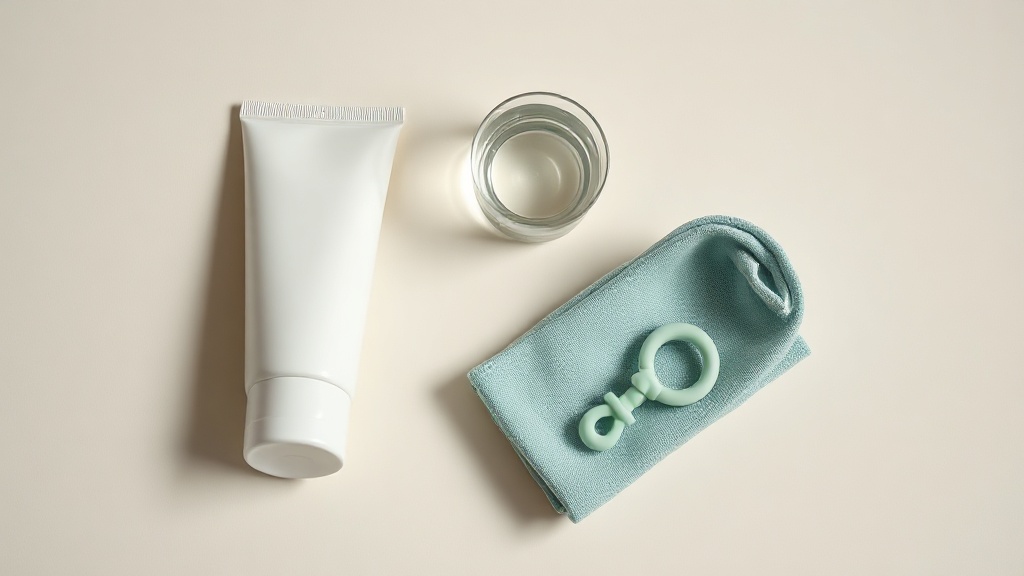 Best Of8 min
Best Teething Gel for Babies: Safer Soothing Options Compared
Why the honest best is non-medicated relief - and why the FDA warns against benzocaine and lidocaine teething gels for babies and toddlers.
Read →→ Best Of8 min
Best Toothbrush for Kids by Age (2026 Buying Guide)
A calm, honest guide to choosing a child toothbrush by age — soft bristles, small head, and the habits that matter more than any brand.
Read →→