Best Whitening Toothpaste for Sensitive Teeth
For sensitive teeth, the best whitening toothpaste is low-abrasion and desensitising — gentle stain removal, not harsh polishing.
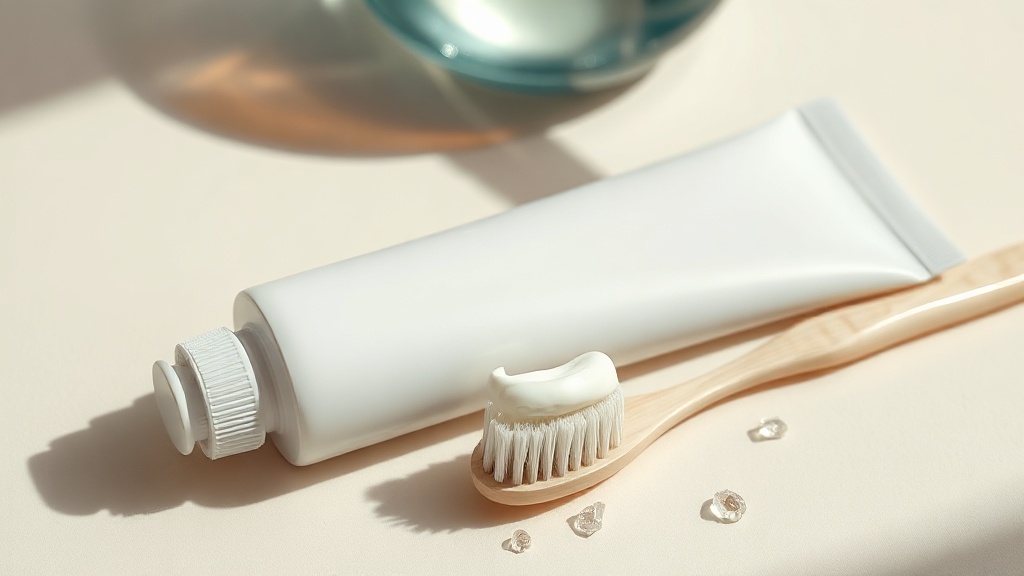
- Whitening toothpaste does not bleach teeth — it lifts surface stains by gentle abrasion. That matters for sensitive teeth, because the most aggressively whitening pastes are often the most abrasive, which is exactly what irritates exposed dentine.
- The best whitening toothpaste for sensitive teeth is a low-abrasion paste that removes stains gently and includes a desensitising active such as potassium nitrate, stannous fluoride or nano-hydroxyapatite.
- Stain removal and abrasiveness are not the same thing: research shows a low-abrasion paste can clean stains just as well as a harsh one, so you do not have to trade comfort for a brighter surface.
- Potassium nitrate is the classic anti-sensitivity active. The evidence for it is real but modest, so give any sensitive-teeth paste a few weeks of consistent use before judging it.
- Skip charcoal and gritty extra-whitening pastes if your teeth are sensitive — studies find charcoal whitens less and abrades more, making it one of the worst choices for tender teeth.
For sensitive teeth, the best whitening toothpaste is a low-abrasion paste that gently removes surface stains and contains a desensitising active such as potassium nitrate, stannous fluoride or nano-hydroxyapatite. Whitening toothpaste cannot bleach teeth, so choose comfort and gentle stain removal over harsh, gritty formulas.
How whitening toothpaste works — and why abrasion matters
It is worth being clear about what a whitening toothpaste can and cannot do. Unlike strips or professional gels, toothpaste does not contain enough active agent to bleach the inside of the tooth. Instead it works mechanically, using mild abrasives to scrub away the surface stains that coffee, tea, wine and tobacco leave on the enamel. That is a genuine, useful effect — but it is polishing, not bleaching. The catch for sensitive teeth is that many pastes marketed as extra-whitening simply crank up the abrasiveness to remove more stain, and abrasion is precisely what aggravates sensitivity. When enamel is thin, or gum recession has exposed the softer dentine underneath, a gritty paste can wear at those vulnerable surfaces and open the microscopic tubules that carry cold and sweetness to the nerve. The reassuring news, confirmed by laboratory testing, is that how well a paste removes stain and how abrasive it is are not tightly linked. A well-formulated low-abrasion paste can clean surface stains just as effectively as a harsh one — so for sensitive teeth, gentle is not a compromise, it is the smart choice.
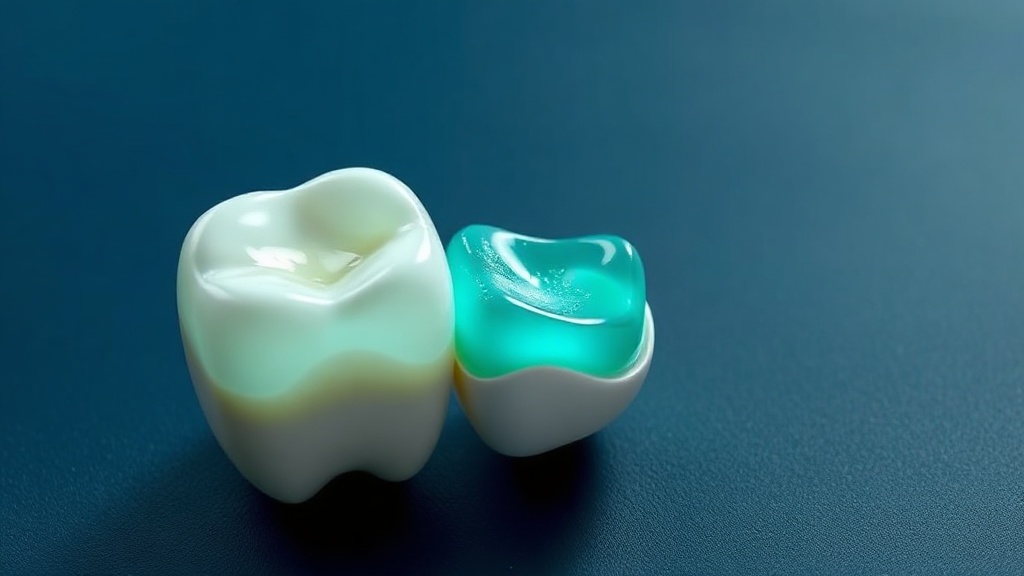
The best sensitive-teeth formulas do two jobs at once: a desensitising active calms the nerve pathway while low-abrasion particles lift surface stains without scratching the enamel.
What the evidence supports for sensitive teeth
Every claim below maps to a named, peer-reviewed source in the Sources section. According to PubMed.
| Claim | Evidence | Source |
|---|---|---|
| Whitening toothpastes work by abrasion, not bleaching — the harsher the paste, the greater the wear risk for sensitive teeth. | In-vitro brushing study: commercial whitening dentifrices acted through abrasiveness, while gentler formulas cleaned without extra enamel roughness. | Schwarzbold et al., 2020 |
| Stain removal and abrasiveness are not directly coupled — a low-abrasion paste can remove stain as well as a harsh one. | Testing of 26 dentifrices: abrasivity (RDA 36-269) did not track stain-removal ability. | Schemehorn et al., 2011 |
| Baking soda is a low-abrasivity, acid-buffering agent that removes stains safely — a gentle option for tender teeth. | Review: baking-soda dentifrices are effective and safe for stain removal, often out-cleaning higher-abrasion pastes. | Li, 2017 |
| Potassium nitrate, the classic anti-sensitivity active, reduces sensitivity — though the effect is modest. | Meta-analysis: potassium nitrate and sodium fluoride lowered the odds of tooth sensitivity (pooled OR 0.45). | Wang et al., 2015 |
| Nano-hydroxyapatite is shade-neutral but shortens how long whitening-related sensitivity lasts — a gentle add-on, not a bleach. | Randomised trial: a nano-hydroxyapatite paste cut days of sensitivity (36 vs 76) with equivalent colour change. | Browning et al., 2011 |
Choosing a whitening toothpaste for sensitive teeth
| What to look for | Why it helps sensitive teeth | Good sign on the label |
|---|---|---|
| Low abrasion (low RDA) | Removes surface stain without wearing exposed dentine | Low-abrasion, gentle, or baking-soda based |
| Potassium nitrate | Calms the nerve signal behind sensitivity over a few weeks | Listed as an anti-sensitivity active |
| Stannous fluoride | Helps with both sensitivity and stain, and supports enamel | Stannous fluoride in the actives |
| Nano-hydroxyapatite | Shortens sensitivity and helps replace lost surface minerals | Hydroxyapatite or n-HA on the label |
| No charcoal or heavy grit | Charcoal whitens less and abrades more — worst for tender teeth | Avoid charcoal and extra-strength polishing claims |
How the desensitising ingredients actually work
Three actives do most of the heavy lifting in a good sensitive-teeth whitening paste, and it helps to know how each behaves. Potassium nitrate is the classic one: rather than plugging the tooth, it works on the nerve itself, gradually calming the signal that makes cold or sweet foods feel sharp. Its evidence base is real but modest — reviews find it lowers the chance of sensitivity, while one analysis judged the size of that benefit subtle — so it rewards patience and consistent daily use over a few weeks. Stannous fluoride takes a different route, forming a protective layer over the tooth surface that both eases sensitivity and helps hold stains at bay, which makes it a useful all-rounder. Nano-hydroxyapatite, a synthetic version of the mineral enamel is built from, deposits onto the surface and into the microscopic openings that transmit sensitivity; studies show it does not change the colour of the tooth but can shorten how long whitening-related sensitivity lasts. None of these ingredients bleach, and none is a magic fix — they simply make gentle, everyday stain removal comfortable for teeth that would otherwise flinch.
Evidence you can act on.
Occasional emails — new research, new protocols, no noise.
How to choose and use one well
The right paste only helps if you use it in a way that protects sensitive teeth. Follow these steps to get gentle brightening without flare-ups.
- 1
Match the paste to your sensitivity
at purchaseLook for a low-abrasion whitening paste that names a desensitising active — potassium nitrate, stannous fluoride or hydroxyapatite. If a paste leads with charcoal, extra whitening power or a visibly gritty texture, put it back.
- 2
Use a soft brush and a light hand
twice dailyAbrasion comes from pressure and bristle stiffness as much as from the paste. A soft-bristled brush and gentle, small circular strokes clean stains while sparing exposed dentine. Let the ingredients do the work, not force.
- 3
Give it three to four weeks before judging it
3-4 weeksAnti-sensitivity actives like potassium nitrate build their effect gradually. Use the paste consistently, morning and night, for at least a few weeks before deciding whether it is helping you.
- 4
Protect enamel around acidic foods
ongoingSensitivity often traces back to enamel wear, so wait about half an hour after acidic food or drink before brushing, and rinse with water in the meantime. This keeps softened enamel from being brushed away.
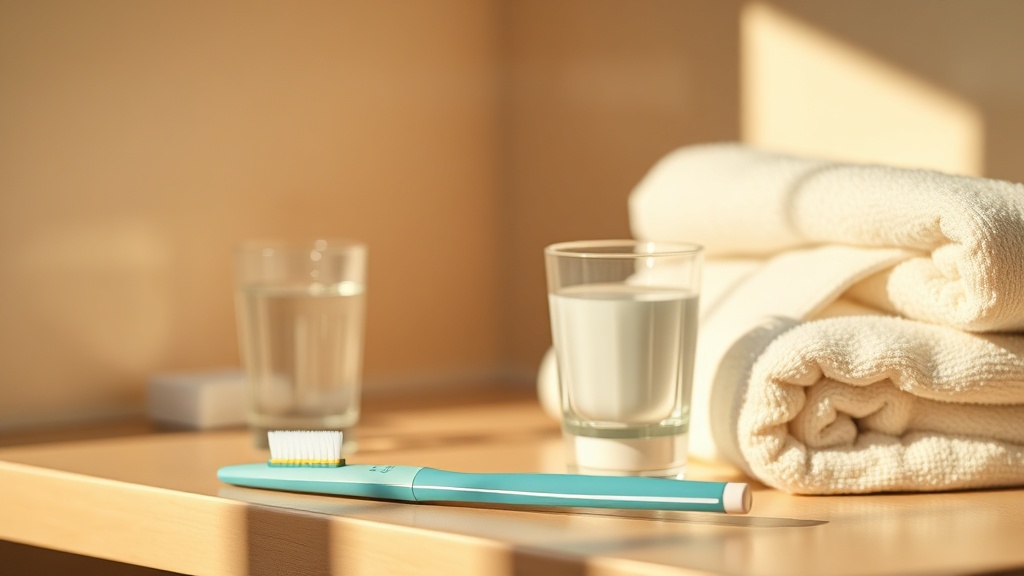
For sensitive teeth, a soft brush, a low-abrasion paste and a gentle daily routine matter as much as the tube you choose.
Ongoing sensitivity is worth a dentist's attention, not just a new toothpaste. Book a visit if sensitivity is sharp, lingers after the cold or sweet trigger is gone, is focused on one tooth, or comes with visible gum recession or worn, notched areas near the gumline. These can point to exposed dentine, a cracked tooth or a bite issue that a paste alone will not resolve — and a professional can rule out anything that needs treatment before you keep whitening.
Frequently asked questions
Sources
- 1.
- 2.
- 3.
- 4.
- 5.
- 6.
- 7.
- 8.

Fix your breath at the source.
The complete science-backed protocol — engineered to eliminate volatile sulfur compounds at the biological source.
Start the Breath Protocol →Related reading
Educational purposes only. The content on this page is not medical advice and is not a substitute for consultation with a qualified dental or medical professional.
More from the library
 Best Of9 min
Best Fluoride-Free Whitening Toothpaste: An Honest, Evidence-Based Guide (2026)
Which fluoride-free whitening ingredients hold up to the research — and which are marketing. An honest buyer's guide.
Read →→ Answers9 min
Does Teeth Whitening Hurt? Why It Happens and How to Prevent It
The sting is common but manageable — and the real levers are lower concentration and shorter wear time, not gimmicks.
Read →→ Guides8 min
Sensitive Teeth After Whitening: Why It Happens and How to Soothe It
That post-whitening zing is common and almost always temporary. Here is what is happening, and how to calm it.
Read →→ Best Of8 min
Best Teeth Whitening Powder (2025): Peroxide-Free & Enamel-Safe Picks
Whitening powders lift surface stain by polishing, not bleaching. The safe pick removes stain at low abrasivity; the trendy one quietly wears enamel.
Read →→ Answers8 min
Does Teeth Whitening Damage Enamel? The Evidence-Based Answer
The honest, evidence-based answer to whether whitening harms enamel — what peroxide really does to the surface, why sensitivity is not damage, and the DIY methods that actually cause wear.
Read →→ Answers8 min
Does Baking Soda Whiten Teeth? What the Evidence Says
An honest look at what baking soda can and cannot do for a whiter smile.
Read →→