The Best Mouth Sore Rinse: From Salt Water to Medicated Rinses, Compared
From a homemade salt-water swish to a medicated antiseptic rinse, a good mouth sore rinse cleans and soothes while the sore heals on its own. Here is the whole rinse spectrum, honestly compared.
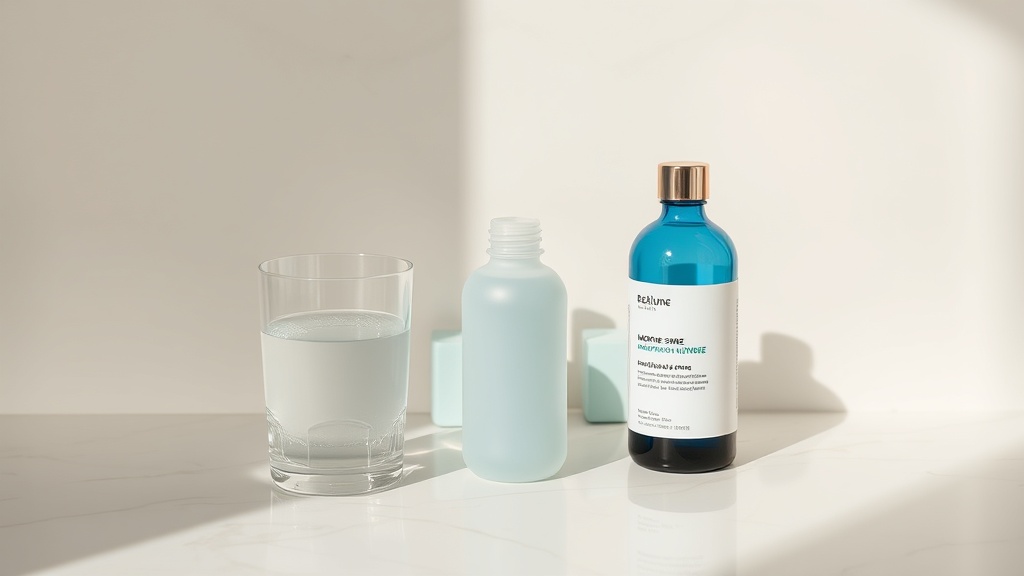
- A rinse cannot cure a mouth sore. The best one keeps the sore clean and eases discomfort while the ulcer settles on its own within a week or two.
- The rinse spectrum runs from homemade — warm salt water, weak baking soda — through soothing hyaluronic acid rinses to medicated antiseptic rinses like chlorhexidine.
- For gentle everyday care, start with saline or a soothing alcohol-free rinse; step up to a short course of an antiseptic rinse only for multiple or stubborn sores.
- Skip strong, high-alcohol cosmetic rinses on an open sore — they sting sharply and do nothing for healing.
- See a professional if a sore lasts more than two to three weeks, is unusually large, keeps returning in crops, or comes with fever or sores elsewhere on the body.
The best mouth sore rinse depends on the sore. For gentle daily care, a warm salt-water or soothing alcohol-free rinse cleans without stinging. For several or stubborn sores, a short course of a chlorhexidine antiseptic rinse eased pain in trials. Hyaluronic acid rinses add a soothing film. Avoid high-alcohol rinses on an open sore. None cures it — a rinse buys a cleaner, calmer week.
What rinsing a mouth sore actually achieves
A mouth sore of the everyday kind is a canker sore, known clinically as recurrent aphthous stomatitis: a shallow ulcer with a pale centre and red halo on the soft lining of the mouth. It is not a cold sore, which is a viral blister on the outer lip, and the two call for different products. The trigger of a canker sore is thought to be an immune and inflammatory response in predisposed people, and there is no curative treatment — the ulcer heals over on its own. Rinsing fits this reality neatly. A rinse reaches places a gel or patch cannot, bathing sores tucked into folds, under the tongue, or scattered in several spots at once. What it does is threefold: it flushes away food debris and bacteria so the raw area stays clean, it can lower the local bacterial load when the rinse is antiseptic, and, in soothing formulas, it lays down a comforting film that softens the sting. What a rinse cannot do is change the biology of the ulcer or shorten its fundamental course. The other side of rinsing is that whatever you swish touches the whole mouth, so the wrong choice backfires: a strong, high-alcohol cosmetic rinse hits an open sore like a splash of antiseptic on a graze, burning without healing. The art of a good mouth sore rinse, then, is matching the gentleness of the rinse to the state of the sore — clean and soothe first, reach for stronger antiseptics only when the situation earns it.
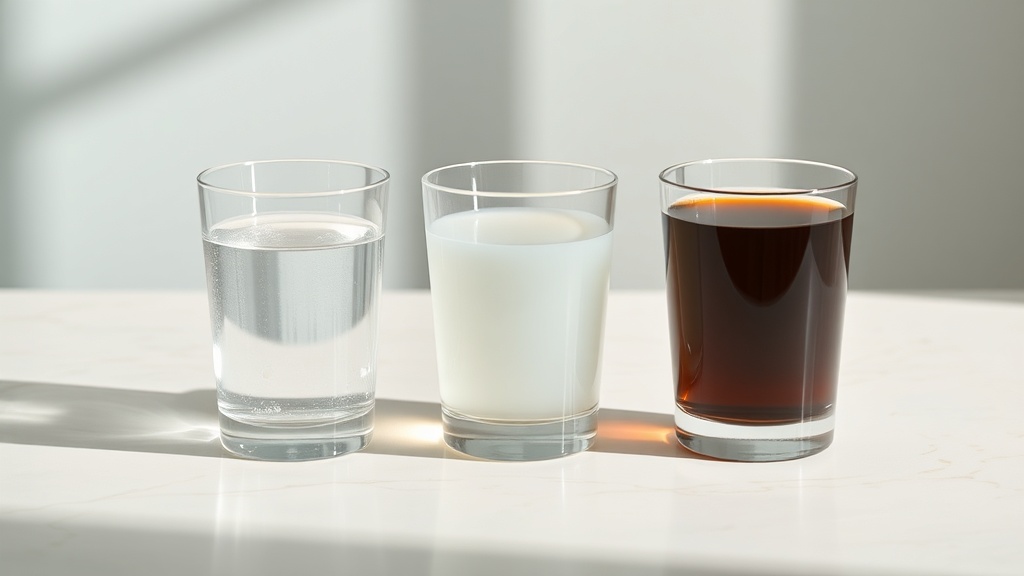
Mouth sore rinses form a spectrum: homemade saline, soothing alcohol-free formulas, and short-course medicated antiseptics.
What the research actually shows
Every claim below maps to a named, peer-reviewed source in the Sources section. According to PubMed.
| Claim | Evidence | Source |
|---|---|---|
| A chlorhexidine rinse and a topical corticosteroid each reduced ulcer pain, with no significant difference between them, showing a medicated antiseptic rinse can ease symptoms. | Randomized controlled trial across 35 ulcer episodes. | Miles et al., Oral Surg Oral Med Oral Pathol 1993 |
| In a network meta-analysis, chlorhexidine helped prolong the interval between ulcers and reduce recurrence, while probiotics were favoured for longer-term control. | Network meta-analysis of 72 trials (5,272 subjects, 29 interventions). | Liu et al., Medicina 2022 |
| A systematic review of nine trials found topical hyaluronic acid — used in several soothing rinses — eased pain and shortened healing time, with no reported side effects. | Systematic review of 9 clinical trials (538 patients). | Al-Maweri et al., Clin Oral Investig 2021 |
| A systematic review of topical immunomodulators found several agents can reduce aphthous ulcer symptoms, supporting a role for medicated topical care beyond a simple rinse when sores are stubborn. | Systematic review of topical immunomodulators for oral mucosal conditions. | Elad et al., Expert Opin Emerg Drugs 2011 |
| Aphthous ulcers are the most common oral mucosal ulcer, affecting roughly 5 to 25 percent of people, and at present there is no curative treatment — they resolve on their own. | Narrative review of recurrent aphthous stomatitis. | Conejero Del Mazo et al., Med Clin 2023 |
The rinse options, compared
| Rinse | How it helps | Best when | Honest limit |
|---|---|---|---|
| Warm salt water (saline) | Flushes and gently soothes the raw area | Everyday hygiene while a sore settles | Comfort only; no trial evidence it speeds healing |
| Weak baking-soda rinse | Neutralises acidity; mild soothing | Acidic food has been stinging the sore | Keep it weak and gentle; a comfort measure |
| Soothing alcohol-free rinse | Cleans without stinging an open sore | You want a ready-made gentle option | Gentle by design; not a strong antibacterial |
| Hyaluronic acid rinse | Lays a soothing film; eased pain in trials | Low-risk comfort with some evidence | Evidence promising but studies small |
| Chlorhexidine antiseptic rinse | Lowers bacterial load; eased pain in trials | Several or hard-to-reach sores, short course | Prolonged use stains teeth and alters taste |
| Prescription medicated rinse | Combines actives your dentist selects | Stubborn cases, on professional advice | Prescription only; not a self-serve option |
How to climb the rinse ladder without overshooting
Think of mouth sore rinses as a ladder you climb only as far as you need. The bottom rung is the gentlest and, for most single sores, all you need: a warm salt-water swish flushes and soothes the raw spot, and a weak baking-soda rinse takes the edge off when acidic food has been aggravating it. Neither has a trial proving it heals faster, but both are safe, cheap and genuinely comforting, and they keep the sore clean while your body does the work. The next rung up is a ready-made soothing rinse — an alcohol-free formula or a hyaluronic acid rinse, the latter of which was linked in small trials to less pain and quicker settling with no reported side effects. You reach the top rung only when the situation calls for it: several sores at once, ones tucked where a gel cannot reach, or an unusually stubborn ulcer. There, a short course of a chlorhexidine antiseptic rinse earns its place, having eased ulcer pain in trials and helped prolong the gap between flare-ups in a large analysis — but it comes down again quickly, because weeks of chlorhexidine stain teeth and dull taste. Above even that sit prescription medicated rinses your dentist may assemble for a difficult case, which are not a self-serve option. The mistake to avoid is starting at the top: reaching for the harshest rinse for a single ordinary sore, or worse, a burning high-alcohol cosmetic rinse that stings without helping. Climb only as high as the sore requires, and no further.
Evidence you can act on.
Occasional emails — new research, new protocols, no noise.
How to rinse a mouth sore well
A rinse works best when it is gentle, well-aimed and not overdone. This sequence gets the most out of any mouth sore rinse.
- 1
Confirm it is a canker sore, not a cold sore
one minuteA canker sore is a single round ulcer inside the mouth on soft tissue. A cold sore blisters on the outer lip and is viral. If it is on the lip border or blistering, a mouth sore rinse is not the right approach.
- 2
Start gentle with saline
about 30 secondsDissolve a little salt in warm water, swish it slowly so it bathes the sore, then spit. Repeat a few times a day, especially after meals. This is the safe, soothing baseline before anything stronger.
- 3
Step up only if needed
as requiredIf one gentle rinse is not enough, move to a soothing alcohol-free or hyaluronic acid rinse. Reserve a chlorhexidine antiseptic rinse for multiple or stubborn sores, and keep that course short.
- 4
Swish gently, never force it
about 30 secondsTake a small amount, move it slowly around the mouth so it reaches the sore without stinging, then spit. Do not hold a rinse painfully long or overdo the frequency — more is not better here.
- 5
Protect the sore between rinses
while it settlesGo easy on sharp, acidic and spicy foods, and try an SLS-free toothpaste, which some people find gentler. A sore that is not being re-irritated between rinses is a more comfortable sore.
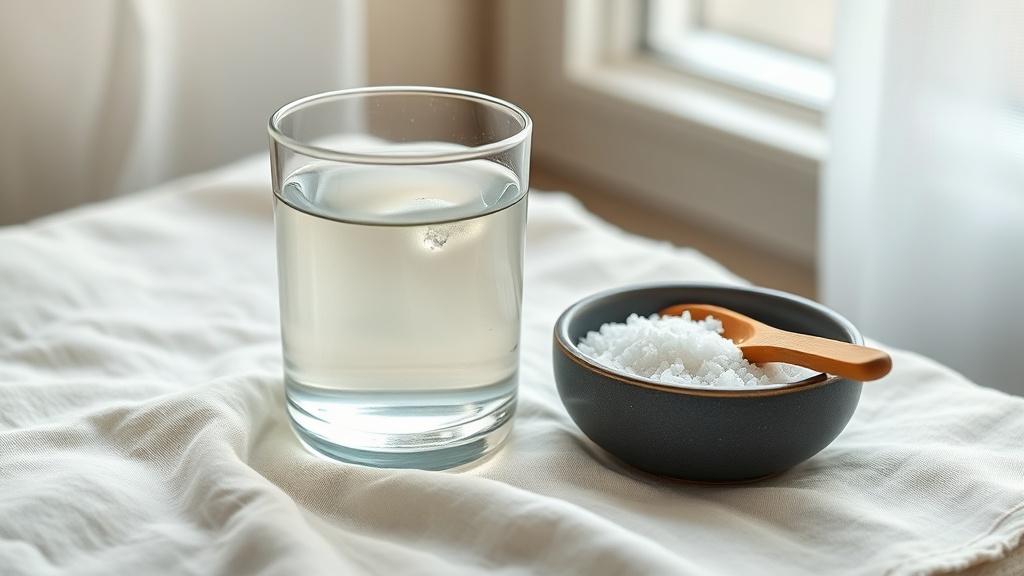
Start at the bottom of the ladder: a warm saline swish is the safe, soothing baseline before any stronger rinse.
Most mouth sores settle on their own within a week or two. See a dentist or doctor if a sore lasts longer than two to three weeks, is unusually large or deep, keeps returning in crops, makes eating or drinking very difficult, or comes with a fever, swollen glands, or sores elsewhere on the body. A single ulcer that will not heal should always be assessed in person, and any prescription medicated rinse should come from that professional rather than being improvised at home.
Frequently asked questions
Sources
- 1.
- 2.
- 3.
- 4.
- 5.
- 6.

Fix your breath at the source.
The complete science-backed protocol — engineered to eliminate volatile sulfur compounds at the biological source.
Start the Breath Protocol →Related reading
Educational purposes only. The content on this page is not medical advice and is not a substitute for consultation with a qualified dental or medical professional.
More from the library
 Best Of9 min
The Best Canker Sore Medicine: OTC Options Compared
Canker sores (aphthous ulcers) settle on their own — the right over-the-counter product mainly buys comfort and protection while they do. Here is what the evidence supports.
Read →→ Best Of8 min
The Best Mouthwash for Bad Breath, by Active Ingredient
There is no single winner, only the right rinse for the right job. Here is how the active ingredients compare on the evidence, and which suits everyday fresh breath.
Read →→ Best Of8 min
The Best Alcohol-Free Mouthwash for Fresh Breath
Skip the burn. Alcohol-free rinses can freshen breath just as well, if you choose by active ingredient rather than by that stinging tingle. Here is what the evidence supports.
Read →→ Answers7 min
Does Mouthwash Kill Good Bacteria? What the Evidence Says
Antibacterial rinses do not tell friendly bacteria from unfriendly ones. Here is what that means for your breath, and how to use mouthwash without working against yourself.
Read →→ Guides8 min
How to Get Rid of Bad Breath Permanently: An Evidence-Based Plan
The honest version: "permanently" means ongoing control, not a one-time fix. Here is the daily routine the research actually supports, and when to get help.
Read →→ Guides7 min
Bad Breath Even After Brushing? The Biological Reason (and Fix)
You brushed, flossed and rinsed — and the smell is still there. The reason usually isn't hygiene; it's where the odour-causing bacteria actually live.
Read →→