Does Mouthwash Kill Good Bacteria?
Antibacterial rinses do not tell friendly bacteria from unfriendly ones. Here is what that means for your breath, and how to use mouthwash without working against yourself.

- Antibacterial mouthwashes are not selective: they cannot tell odour-causing bacteria from the helpful species that keep your mouth balanced, so both take a hit.
- That is not automatically bad. A short-term drop in bacteria is why a rinse can freshen breath, and the mouth naturally repopulates within hours to days.
- The concern is heavy, long-term use of strong rinses like chlorhexidine, which the evidence links to tooth staining and altered taste after about four weeks.
- Milder cosmetic rinses that neutralise odour, such as zinc-based products, act on the smell chemically rather than by wiping out bacteria wholesale.
- The practical takeaway: use strong rinses in short bursts, favour alcohol-free everyday options, and rebuild balance with cleaning and probiotics rather than relying on a rinse.
Yes, antibacterial mouthwash kills good bacteria along with the bad, because it cannot distinguish between them. For most people this is temporary and the mouth repopulates quickly. The real caution is heavy, long-term use of strong rinses, which can stain teeth and alter taste, so short bursts and milder daily options are wiser.
Why mouthwash cannot pick its targets
A healthy mouth is home to hundreds of bacterial species living in balance. Some produce the volatile sulfur compounds behind bad breath; many others are neutral or actively helpful, competing for space and keeping the odour producers in check. The trouble is that broad antibacterial agents in mouthwash, like chlorhexidine and cetylpyridinium chloride, work by disrupting bacterial cell membranes. That mechanism is indiscriminate: it damages whatever bacterial cell it contacts, friendly or not. So when a rinse lowers your total bacterial load, it is not surgically removing the odour producers; it is thinning the whole community. This is precisely why a strong rinse can leave your breath fresher for a few hours, and also why leaning on it every day, for months, can be counterproductive. Knock the community back often enough and you may disturb the balance that was helping keep odour bacteria contained in the first place.
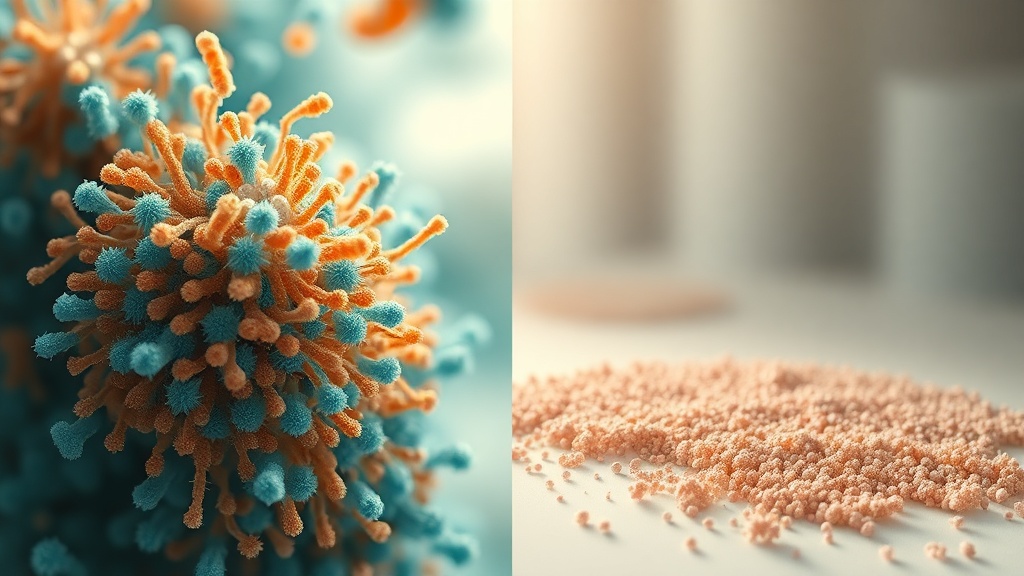
A balanced microbiome keeps odour producers in check; broad rinses thin the whole community rather than targeting the culprits.
What the research actually shows
Every claim below maps to a named, peer-reviewed source in the Sources section. According to PubMed.
| Claim | Evidence | Source |
|---|---|---|
| Chlorhexidine is a strong, broad antibacterial that reduces plaque effectively, but with about four weeks or more of use it causes extrinsic tooth staining and taste disturbance. | Cochrane systematic review of chlorhexidine mouthrinse. | James et al., Cochrane 2017 |
| A rinse combining chlorhexidine, cetylpyridinium chloride and zinc lowered peak VSCs by about 120 ppb, but also caused significantly more tooth and tongue staining than placebo. | Cochrane review of mouthrinses for halitosis. | Fedorowicz et al., Cochrane 2008 |
| Cetylpyridinium chloride suppresses odour by inhibiting the growth and the odour-producing genes of anaerobic bacteria, cutting methyl mercaptan and hydrogen sulfide production in lab studies. | Laboratory study of gene and enzyme expression in P. gingivalis and F. nucleatum. | Liu et al., Arch Oral Biol 2013 |
| Zinc-based rinses freshen breath differently: zinc ions convert volatile sulfur compounds into non-volatile, non-smelly zinc sulfides, a cosmetic deodorant action rather than a bacterial wipe-out. | Review of the microbiology and cosmetic treatment of halitosis. | Loesche & Kazor, Periodontol 2000, 2002 |
How different rinses act on your bacteria
| Rinse type | How it works | Effect on good bacteria | Best used |
|---|---|---|---|
| Chlorhexidine | Broad membrane disruption | Reduces good and bad alike | Short courses only; staining risk after ~4 weeks |
| Cetylpyridinium chloride | Inhibits growth and odour genes | Broad, but milder than chlorhexidine | Everyday freshening, alcohol-free versions |
| Zinc-based (cosmetic) | Neutralises VSCs chemically | Minimal wipe-out; acts on the smell | Daily cosmetic odour control |
| Alcohol-free essential-oil | Mild antibacterial + freshening | Modest, short-lived | Daily use where dryness is a concern |
When killing bacteria is fine, and when it backfires
Reducing bacteria is not inherently harmful. After a dental deep-clean, or during a short course prescribed by a dentist, a strong rinse like chlorhexidine has a clear job to do, and the mouth recovers its balance afterward. The problem is treating a strong antibacterial rinse as a permanent daily habit for the sake of fresh breath. Two honest downsides emerge with heavy long-term use. First, side effects: chlorhexidine in particular stains teeth and alters taste after several weeks. Second, dependence on masking: if you rinse away odour every morning without addressing why the odour keeps returning, you never fix the underlying source, which is usually the biofilm on the tongue. A drier mouth from alcohol-based rinses can even make matters worse over time, because saliva is your natural defence against odour bacteria. The smarter pattern is to reduce when useful, then rebuild, rather than to sterilise on repeat.
Evidence you can act on.
Occasional emails — new research, new protocols, no noise.
How to use mouthwash without working against yourself
You do not have to give up mouthwash. You just want it to help your microbiome recover rather than keeping it permanently knocked back.
- 1
Match the rinse to the job
onceReserve strong antibacterial rinses like chlorhexidine for short courses or specific reasons a dentist suggests. For daily fresh-breath use, choose a milder, alcohol-free rinse, or a zinc-based cosmetic rinse that neutralises odour rather than wiping out bacteria wholesale.
- 2
Clean mechanically first
dailyRinsing is far more effective after you have physically removed the biofilm. Scrape your tongue and brush and floss first, so the rinse is polishing an already-clean mouth rather than trying to do the heavy lifting on its own.
- 3
Do not rinse straight after brushing with fluoride
habitWait a while after brushing before using a separate mouthwash, so you do not immediately wash away the concentrated fluoride from your toothpaste. A simple option is to use rinse at a different time of day.
- 4
Rebuild balance rather than sterilise
over weeksAfter cleaning, help friendly species re-establish. Staying hydrated supports saliva, and an oral probiotic such as S. salivarius K12 aims to nudge the microbiome toward less odour-producing bacteria. This repopulate step is the opposite of relying on a rinse to keep everything permanently suppressed.
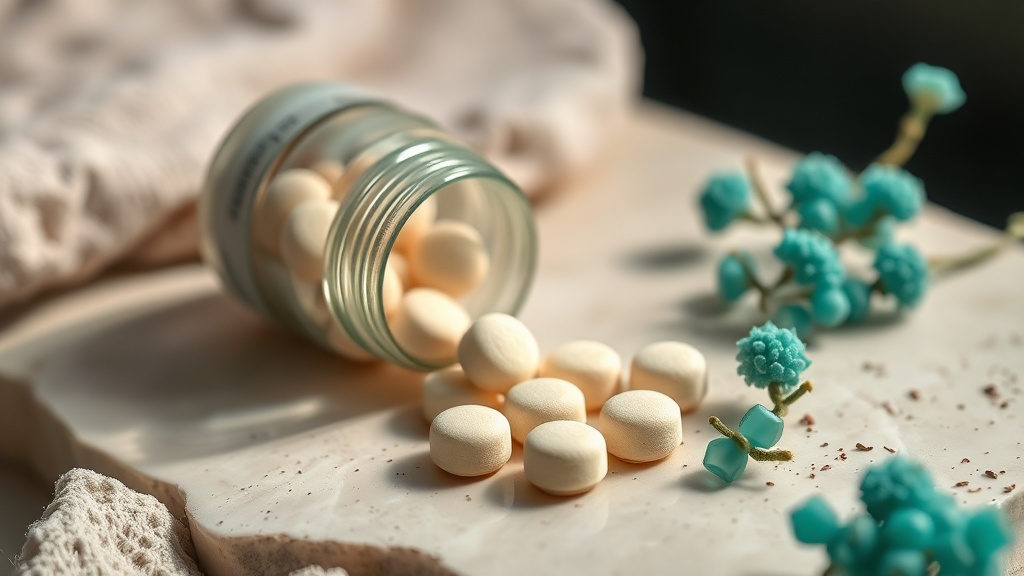
Rebuild, do not just reduce: an oral probiotic aims to help friendly bacteria re-establish after cleaning.
If you feel you need a strong antibacterial rinse every day just to keep breath tolerable, or you notice tooth staining, altered taste, a persistent dry mouth, or bleeding gums, see a dentist. These signal either overuse of a strong rinse or an underlying issue like gum disease or dry mouth that a rinse only masks. A dentist can tell you whether a medicated rinse is appropriate and for how long.
Frequently asked questions
Sources
- 1.
- 2.
- 3.
- 4.
- 5.
- 6.

Fix your breath at the source.
The complete science-backed protocol — engineered to eliminate volatile sulfur compounds at the biological source.
Start the Breath Protocol →Related reading
Educational purposes only. The content on this page is not medical advice and is not a substitute for consultation with a qualified dental or medical professional.
More from the library
 Best Of8 min
The Best Mouthwash for Bad Breath, by Active Ingredient
There is no single winner, only the right rinse for the right job. Here is how the active ingredients compare on the evidence, and which suits everyday fresh breath.
Read →→ Ingredients7 min
S. salivarius K12: The Fresh-Breath Probiotic, Explained
The idea is not to sterilise your mouth. It is to repopulate it with the right bacteria.
Read →→ Guides8 min
How to Get Rid of Bad Breath Permanently: An Evidence-Based Plan
The honest version: "permanently" means ongoing control, not a one-time fix. Here is the daily routine the research actually supports, and when to get help.
Read →→ Guides7 min
Bad Breath Even After Brushing? The Biological Reason (and Fix)
You brushed, flossed and rinsed — and the smell is still there. The reason usually isn't hygiene; it's where the odour-causing bacteria actually live.
Read →→ Ingredients9 min
Probiotics for Bad Breath: Do Oral Probiotics Actually Work?
Oral probiotics try to fix bad breath at the source, by shifting which bacteria live on your tongue. The idea is promising; the evidence is still early.
Read →→ Best Of7 min
Copper Tongue Scraper Benefits: What the Evidence Supports
Copper scrapers are having a moment — but which benefits are backed by research and which are marketing? Here is the honest, evidence-based breakdown.
Read →→