The Best Mouthwash for Bad Breath
There is no single winner, only the right rinse for the right job. Here is how the active ingredients compare on the evidence, and which suits everyday fresh breath.
- There is no single best mouthwash for bad breath: the right choice depends on the active ingredient and how often you plan to use it.
- For everyday cosmetic freshness, zinc-based rinses stand out because they neutralise odour compounds chemically, with little disruption to your bacteria.
- Cetylpyridinium chloride (CPC) is a solid all-rounder that reduces odour-producing bacteria and, in alcohol-free form, suits daily use.
- Chlorhexidine is the most powerful but the most compromising: strong on bacteria, yet linked to tooth staining and taste changes after about four weeks.
- No rinse is a standalone answer; the evidence for lasting fresh breath points to cleaning the tongue first and using rinse as a finishing touch.
The best mouthwash for bad breath depends on the active ingredient. For daily freshness, a zinc-based cosmetic rinse or an alcohol-free cetylpyridinium chloride rinse is the sensible pick. Chlorhexidine is stronger but causes staining with long-term use, so reserve it for short courses. Any rinse works best after cleaning the tongue, not instead of it.
What actually makes a mouthwash work for breath
Mouthwashes tackle bad breath in one of two broad ways, and knowing which one you are buying is the whole game. The first approach is antibacterial: agents like chlorhexidine and cetylpyridinium chloride reduce the population of anaerobic bacteria on the tongue and gums that produce volatile sulfur compounds (VSCs), the gases behind the smell. The second approach is chemical neutralisation: zinc ions bind the sulfur in VSCs and convert them into non-volatile, odourless zinc sulfides, so the smell is deactivated rather than the bacteria removed. This second, cosmetic mechanism is why zinc rinses can freshen breath with minimal collateral effect on your microbiome. Many effective products combine ideas, for instance zinc plus CPC. Alcohol is a separate consideration: it contributes a sharp bite but no real antibacterial benefit for breath, and it can dry the mouth, which over time can make odour worse. That is why alcohol-free formulations are increasingly the default recommendation.
The label matters more than the brand: match the active ingredient to whether you want daily cosmetic freshness or a short antibacterial course.
What the research actually shows
Every claim below maps to a named, peer-reviewed source in the Sources section. According to PubMed.
| Claim | Evidence | Source |
|---|---|---|
| A rinse combining chlorhexidine, cetylpyridinium chloride and zinc lactate reduced peak VSCs by about 120 ppb versus a slight rise on placebo, the clearest halitosis effect in the review. | Cochrane systematic review of mouthrinses for halitosis (5 RCTs, 293 participants). | Fedorowicz et al., Cochrane 2008 |
| That same effective rinse caused significantly more tooth and tongue staining than placebo, illustrating the tradeoff of strong antibacterial formulas. | Same Cochrane review of mouthrinses. | Fedorowicz et al., Cochrane 2008 |
| Cetylpyridinium chloride suppressed methyl mercaptan production by about 70% and hydrogen sulfide by about 83% in odour-causing bacteria, by inhibiting their growth and odour genes. | Laboratory study of P. gingivalis and F. nucleatum. | Liu et al., Arch Oral Biol 2013 |
| Zinc-containing rinses neutralise VSCs by converting them to non-volatile zinc sulfides, a cosmetic deodorant action that supports fresh-breath use with minimal microbiome disruption. | Review of the microbiology and cosmetic treatment of halitosis. | Loesche & Kazor, Periodontol 2000, 2002 |
Best mouthwash for bad breath, by active ingredient
| Active ingredient | Best for | Evidence on breath | Main tradeoff |
|---|---|---|---|
| Zinc (cosmetic) | Daily cosmetic freshness | Neutralises VSCs chemically | Freshens rather than deeply cleans; pair with tongue cleaning |
| Cetylpyridinium chloride (CPC) | Everyday all-rounder | Cuts odour-bacteria growth and odour genes | Choose alcohol-free to avoid dryness |
| Chlorhexidine | Short antibacterial courses | Strongest measured VSC reduction (with zinc/CPC) | Tooth and tongue staining, taste changes after ~4 weeks |
| Alcohol-free essential oils | Sensitive or dry mouths | Mild, short-lived freshening | Gentle but modest; not a deep solution |
| Alcohol-based (classic) | Short-term sharp freshness | Little breath-specific benefit | Dries the mouth, which can worsen odour over time |
Why the strongest rinse is rarely the best choice
It is tempting to reach for the most powerful antibacterial rinse, on the logic that if odour comes from bacteria, more killing is better. The evidence pushes back on that. Chlorhexidine genuinely produces the largest measured reductions in odour compounds, but it earns those numbers at a cost: with about four weeks or more of use it stains teeth and blunts taste, and broader Cochrane analysis of halitosis interventions found the overall certainty of evidence for any single rinse to be low. So the best everyday mouthwash is usually not the strongest one. For most people wanting fresher breath day to day, a zinc-based cosmetic rinse or an alcohol-free CPC rinse offers a better balance: meaningful freshening without the staining, the dryness, or the disruption of the friendly bacteria that help keep odour in check. Save chlorhexidine for a short, purposeful course, ideally on a dentist's advice. And remember what no rinse can do: reach into the tongue biofilm the way a scraper does. Mouthwash is a finisher, not a foundation.
Evidence you can act on.
Occasional emails — new research, new protocols, no noise.
How to choose and use your mouthwash
Pick by ingredient and intended frequency, then use it in a sequence that actually helps.
- 1
Decide daily or short-course
onceIf you want an everyday fresh-breath rinse, choose zinc-based or alcohol-free CPC. If you have a specific reason for a strong antibacterial burst, chlorhexidine can suit a short course, but plan to stop before staining sets in around the four-week mark.
- 2
Read for the active ingredient, not the marketing
onceIgnore vague promises on the front of the bottle and check the active ingredients. Zinc, CPC, chlorhexidine and alcohol each behave differently, and the ingredient tells you far more than the brand name about what the rinse will do.
- 3
Clean the tongue before you rinse
dailyScrape the tongue and brush and floss first, so the rinse polishes an already-clean mouth. A rinse cannot lift the tongue biofilm out of its grooves the way a scraper can, so cleaning first is what lets the mouthwash actually help.
- 4
Favour alcohol-free if your mouth runs dry
dailyAlcohol-based rinses can dry the mouth, and a dry mouth breeds more odour bacteria overnight. If you wake with a dry mouth or notice dryness during the day, an alcohol-free formula is the better long-term companion.
- 5
Do not lean on it to mask a returning smell
ongoingIf you find yourself rinsing repeatedly to cover odour that keeps coming back, treat that as a signal to fix the source with better cleaning, hydration and possibly a probiotic, rather than reaching for a stronger rinse.
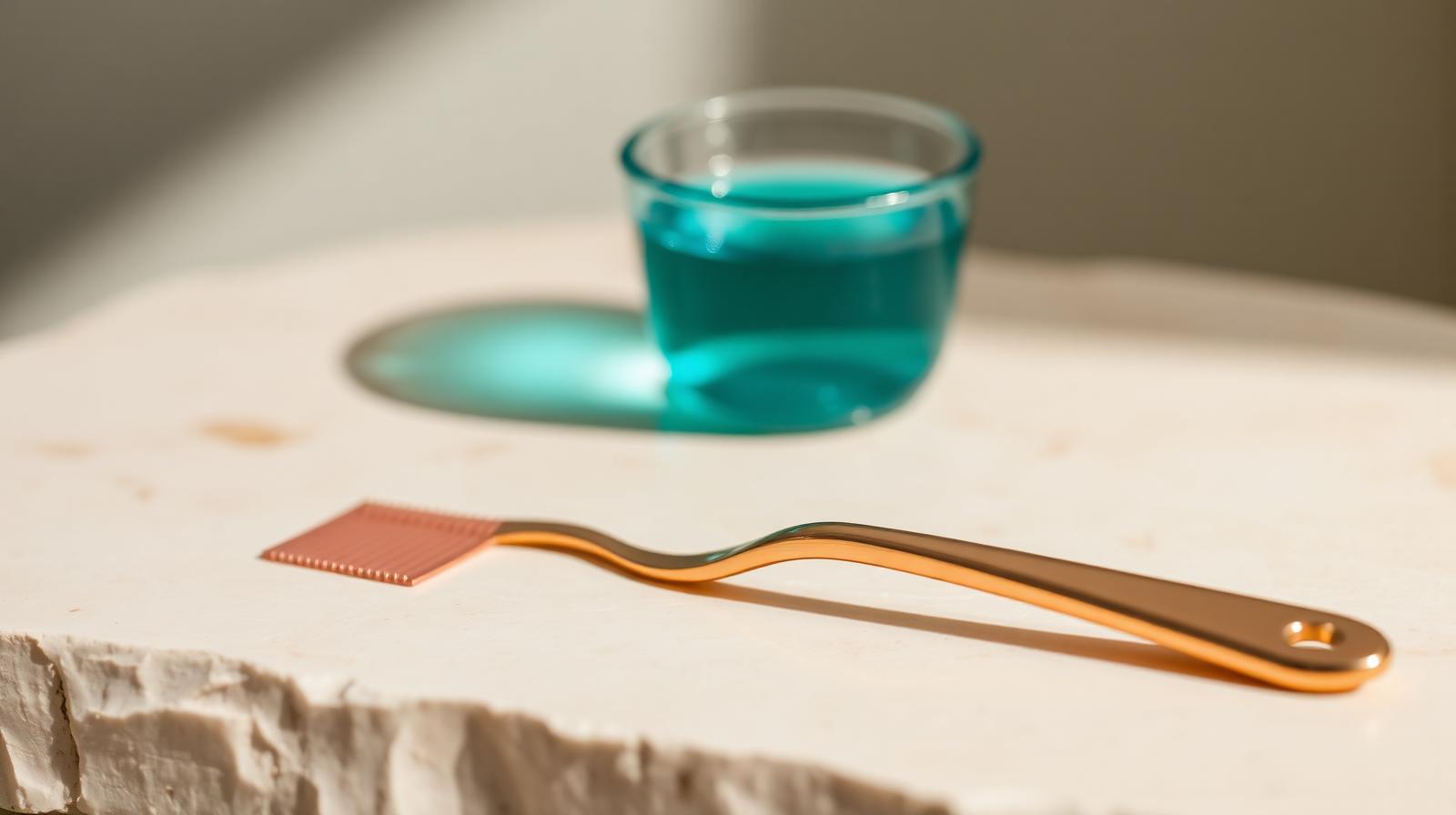
Rinse is a finisher, not a foundation: clean the tongue biofilm first, then let the mouthwash do its cosmetic job.
If bad breath persists despite a good routine and a suitable rinse, or if you notice tooth staining, altered taste, bleeding gums or a persistently dry mouth, see a dentist. A dentist can advise whether a medicated rinse like chlorhexidine is appropriate and for how long, and can check for gum disease or dry mouth that a rinse only masks.
Frequently asked questions
Sources
- 1.
- 2.
- 3.
- 4.
- 5.
- 6.

Fix your breath at the source.
The complete science-backed protocol — engineered to eliminate volatile sulfur compounds at the biological source.
Start the Breath Protocol →Related reading
Educational purposes only. The content on this page is not medical advice and is not a substitute for consultation with a qualified dental or medical professional.
More from the library
 Answers7 min
Does Mouthwash Kill Good Bacteria? What the Evidence Says
Antibacterial rinses do not tell friendly bacteria from unfriendly ones. Here is what that means for your breath, and how to use mouthwash without working against yourself.
Read →→ Guides8 min
How to Get Rid of Bad Breath Permanently: An Evidence-Based Plan
The honest version: "permanently" means ongoing control, not a one-time fix. Here is the daily routine the research actually supports, and when to get help.
Read →→ Guides7 min
Bad Breath Even After Brushing? The Biological Reason (and Fix)
You brushed, flossed and rinsed — and the smell is still there. The reason usually isn't hygiene; it's where the odour-causing bacteria actually live.
Read →→ Ingredients9 min
Probiotics for Bad Breath: Do Oral Probiotics Actually Work?
Oral probiotics try to fix bad breath at the source, by shifting which bacteria live on your tongue. The idea is promising; the evidence is still early.
Read →→ Best Of7 min
Copper Tongue Scraper Benefits: What the Evidence Supports
Copper scrapers are having a moment — but which benefits are backed by research and which are marketing? Here is the honest, evidence-based breakdown.
Read →→ Answers6 min
How Often Should You Scrape Your Tongue?
Once a day? Twice? After every meal? Here is what the research on tongue cleaning actually supports — and why frequency matters less than consistency.
Read →→