How to Get Rid of Bad Breath Permanently
The honest version: "permanently" means ongoing control, not a one-time fix. Here is the daily routine the research actually supports, and when to get help.

- There is no one-time cure for everyday bad breath: because it is driven by living bacteria that regrow daily, lasting freshness means ongoing control, not a single fix.
- About 40% of chronic bad breath has no underlying disease at all; it is physiological and comes from odour-producing bacteria on the back of the tongue.
- The routine with the most support is unglamorous: daily tongue cleaning, thorough brushing and flossing, hydration, and repopulating the mouth with a friendlier microbiome.
- Mouthwash helps, but the strongest antibacterial rinses trade freshness for side effects like tooth staining, so they are a short-term tool rather than a forever habit.
- If breath stays sour despite two to three weeks of a consistent routine, the cause may sit outside the mouth and is worth a professional visit.
You cannot get rid of bad breath with a single permanent fix, because it comes from bacteria that regrow every day. What works is daily control: clean the tongue, brush and floss well, stay hydrated, and support a healthy oral microbiome. Done consistently, this keeps breath fresh long-term and addresses the most common cause.
Why bad breath keeps coming back
The reason bad breath feels impossible to beat permanently is that it is not a stain you scrub off once. It is a living process. The back of the tongue, and the pockets between teeth and gums, host anaerobic bacteria that thrive where oxygen is low. When they break down proteins from food, dead cells and mucus, they release volatile sulfur compounds (VSCs): hydrogen sulfide, which smells of rotten eggs, and methyl mercaptan, a sharper, more offensive odour. These bacteria are a normal part of a healthy mouth. You are not trying to sterilise them out of existence, which is neither possible nor healthy. You are trying to keep their numbers and their food supply low enough that VSC levels stay below the threshold other people can smell. Because the biofilm rebuilds within hours, any single clean is temporary by design. That is exactly why the honest answer to permanent fresh breath is a daily habit, not a product you use once.

Bad breath is a cycle, not a one-off event: imbalanced tongue bacteria keep producing odour-causing VSCs until the routine breaks the loop.
What the research actually shows
Every claim below maps to a named, peer-reviewed source in the Sources section. According to PubMed.
| Claim | Evidence | Source |
|---|---|---|
| Roughly 50% to 60% of people have experienced bad breath, and about 40% of chronic cases have no underlying disease; they are physiological and bacteria-driven. | Cochrane review of interventions for halitosis and a systematic review of physiological halitosis. | Kumbargere Nagraj et al., Cochrane 2019; Scully & Porter, BMJ Clin Evid 2008 |
| A tongue scraper lowered odour-causing VSCs more than a toothbrush (about 75% vs 45% in one trial), but the effect faded within about 30 minutes of a single clean. | Cochrane systematic review of tongue-cleaning trials. | Outhouse et al., Cochrane 2006 |
| An antibacterial rinse (chlorhexidine + cetylpyridinium chloride + zinc) cut peak VSCs by about 120 ppb versus a slight rise on placebo, but caused significant tooth and tongue staining. | Cochrane review of mouthrinses for halitosis. | Fedorowicz et al., Cochrane 2008 |
| The probiotic S. salivarius K12 reduced VSCs in 85% of subjects versus 30% on placebo one week after starting, following a chlorhexidine rinse. | Preliminary controlled study in 23 adults with halitosis. | Burton et al., J Appl Microbiol 2006 |
The daily routine, ranked by what it does
| Step | What it targets | How lasting | Honest caveat |
|---|---|---|---|
| Daily tongue cleaning | The main VSC reservoir on the tongue | Short per clean; strong when daily | Effect fades in ~30 min, so consistency is everything |
| Brushing + flossing | Food and plaque between teeth and at the gumline | Ongoing with twice-daily use | Misses the tongue, so it is not enough on its own |
| Hydration + saliva flow | Overnight and dry-mouth odour | Continuous | Coffee, alcohol and mouth-breathing work against it |
| Oral probiotic (K12) | Repopulating with friendlier bacteria | Aims for a longer microbiome shift | Early-stage evidence; works best alongside cleaning |
| Antibacterial mouthwash | Bacterial load, short-term | Hours | Strong rinses can stain teeth or dry the mouth long-term |
Why permanent means ongoing control, not a one-time cure
It is worth being blunt about the word permanent, because most guides quietly promise something the biology cannot deliver. You can achieve permanently fresh breath in the same way you keep a garden permanently tidy: by tending it, not by finishing it once. If you stop cleaning the tongue and let plaque build, the odour bacteria simply regrow and VSCs climb again within a day or two. This is not a failure of the method; it is how a living mouth works. The good news hidden inside that honesty is that the routine gets easier and faster once it is a habit, and many people find their baseline breath improves over a few weeks as the balance of bacteria shifts. So aim for a system you can keep doing forever, not a heroic one-week blitz. And be sceptical of any product promising to cure bad breath in one use; the evidence for durable results points to consistency, not to a magic bullet.
Evidence you can act on.
Occasional emails — new research, new protocols, no noise.
The evidence-based daily routine
None of this is exotic. The value is in doing all of it, every day, rather than any single heroic step.
- 1
Clean your tongue first, every morning
30 to 60 secondsDraw a metal scraper from as far back as is comfortable toward the tip, rinsing between passes. In trials this lowered VSCs more than brushing the tongue. Do it before eating or drinking, and treat it as non-negotiable because it targets the single biggest source of odour.
- 2
Brush and floss thoroughly, twice a day
4 to 5 minutes totalTwo minutes of brushing plus flossing clears the food and plaque between teeth and along the gumline that feed odour bacteria. Fluoride toothpaste is fine; the point is coverage and consistency, not any single special ingredient.
- 3
Hydrate and protect your saliva
all daySaliva is your built-in rinse. Sip water through the day, especially after coffee or alcohol, and breathe through your nose where you can. A dry mouth lets bacteria and VSCs accumulate, which is why breath is worst first thing in the morning.
- 4
Repopulate with friendlier bacteria
daily, over weeksAfter cleaning, an oral probiotic such as S. salivarius K12 aims to shift the microbiome toward less odour-producing species. Early controlled studies are promising rather than conclusive, and it works best as a finishing step on top of good mechanical cleaning, not instead of it.
- 5
Use mouthwash as a tool, not a crutch
as neededAn alcohol-free rinse can help freshen breath in the short term. Reserve strong antibacterial rinses like chlorhexidine for short courses, because with several weeks of use they can stain teeth and alter taste. If you rely on mouthwash to mask a smell that keeps returning, treat that as a signal to look at the cause instead.
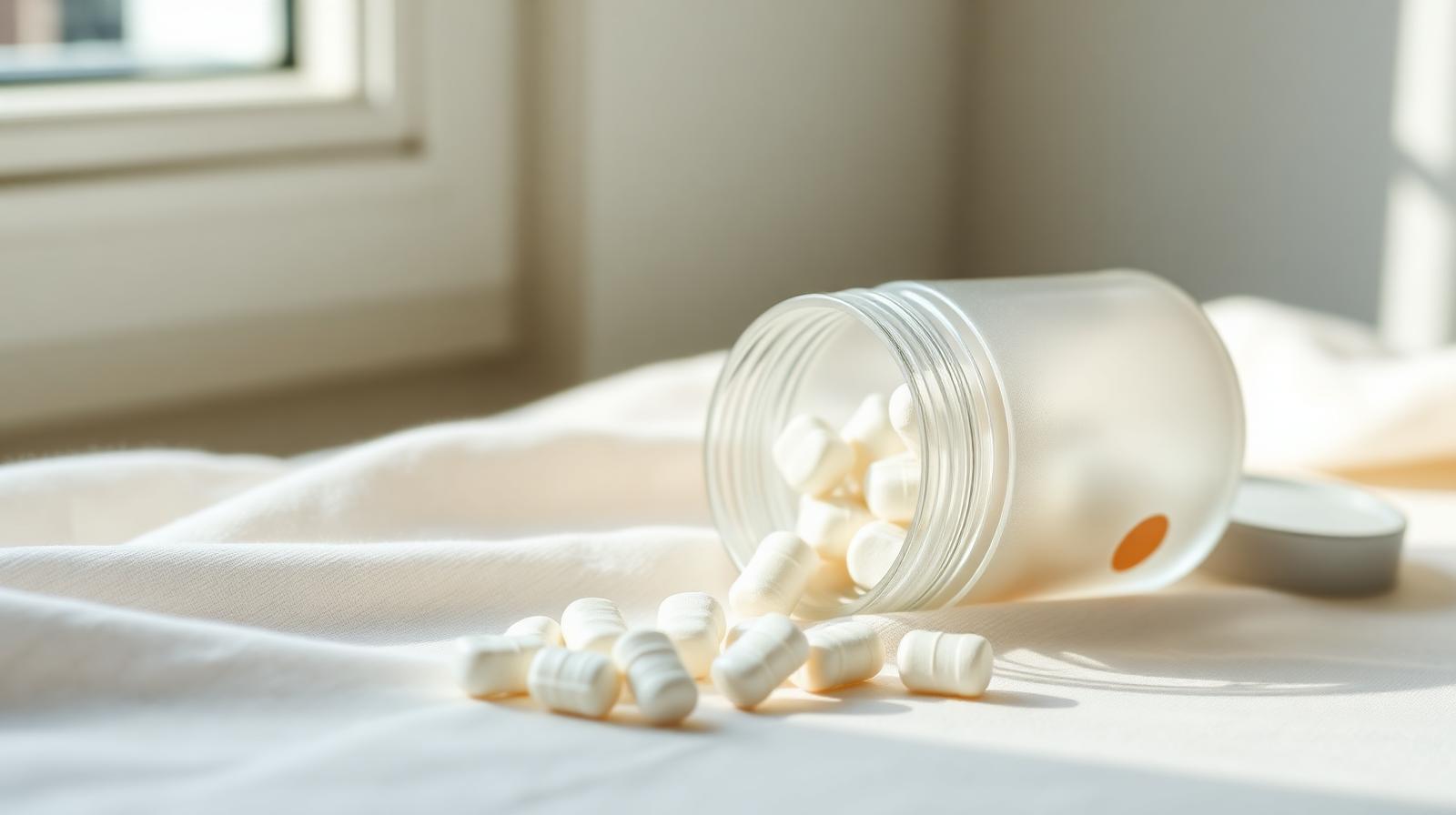
An oral probiotic is the repopulate step: it aims for a longer-lasting microbiome shift once daily cleaning has cleared the biofilm.
If your breath stays sour despite two to three weeks of consistent tongue cleaning, brushing, flossing and hydration, or if it comes with bleeding gums, a persistent bad taste, loose teeth, or a sensation of post-nasal drip, see a dentist or doctor. Around one in ten cases of persistent bad breath starts outside the mouth, in the sinuses, tonsils, stomach or elsewhere, and no amount of home care will fix a cause it cannot reach.
Frequently asked questions
Sources
- 1.
- 2.
- 3.
- 4.
- 5.
- 6.

Fix your breath at the source.
The complete science-backed protocol — engineered to eliminate volatile sulfur compounds at the biological source.
Start the Breath Protocol →Related reading
Educational purposes only. The content on this page is not medical advice and is not a substitute for consultation with a qualified dental or medical professional.
More from the library
 Ingredients7 min
S. salivarius K12: The Fresh-Breath Probiotic, Explained
The idea is not to sterilise your mouth. It is to repopulate it with the right bacteria.
Read →→ Best Of8 min
The Best Mouthwash for Bad Breath, by Active Ingredient
There is no single winner, only the right rinse for the right job. Here is how the active ingredients compare on the evidence, and which suits everyday fresh breath.
Read →→ Guides7 min
Bad Breath Even After Brushing? The Biological Reason (and Fix)
You brushed, flossed and rinsed — and the smell is still there. The reason usually isn't hygiene; it's where the odour-causing bacteria actually live.
Read →→ Ingredients9 min
Probiotics for Bad Breath: Do Oral Probiotics Actually Work?
Oral probiotics try to fix bad breath at the source, by shifting which bacteria live on your tongue. The idea is promising; the evidence is still early.
Read →→ Best Of7 min
Copper Tongue Scraper Benefits: What the Evidence Supports
Copper scrapers are having a moment — but which benefits are backed by research and which are marketing? Here is the honest, evidence-based breakdown.
Read →→ Answers6 min
How Often Should You Scrape Your Tongue?
Once a day? Twice? After every meal? Here is what the research on tongue cleaning actually supports — and why frequency matters less than consistency.
Read →→