How to Choose a Cavity-Protection Toothpaste
An ingredient-first buyer guide to anti-cavity toothpaste, judged by the evidence rather than the packaging.
- A cavity-protection toothpaste earns the name through its active ingredient, not its marketing. The best-proven active is fluoride, which cut new cavities by about a quarter across 70 trials.
- Concentration is not a detail. Standard toothpastes deliver 1,000 to 1,500 ppm fluoride and clearly work, whereas anything below roughly 500 ppm has shown no meaningful anti-cavity benefit.
- For high-risk mouths, prescription-strength 5,000 ppm fluoride paste is a genuine step up, following the same dose-response that makes fluoride effective in the first place.
- Hydroxyapatite is the credible fluoride-free option: it matched 1,450 ppm fluoride for cavity prevention in an 18-month adult trial, though the wider evidence is rated low-certainty and it is weaker under direct acid attack.
- CPP-ACP pastes remineralize early lesions but are not superior to fluoride, so they are best seen as an add-on for sensitivity or erosion rather than your main cavity defence.
Choose a toothpaste by its active ingredient. For most people a standard 1,000 to 1,500 ppm fluoride paste is the best-evidenced cavity protection. Higher-risk mouths benefit from prescription 5,000 ppm fluoride. If you want fluoride-free, hydroxyapatite is the strongest alternative. CPP-ACP is a useful add-on, not a replacement for fluoride.
What makes a toothpaste actually protect against cavities
Most of what sells a toothpaste, the colour of the gel, the promise of freshness, the word natural, has nothing to do with whether it stops cavities. What matters is a remineralizing active ingredient that can survive in your mouth long enough to rebuild enamel between acid attacks. Fluoride does this by getting drawn into the enamel surface, where the mineral it helps form is more acid-resistant than the original tooth, so the surface both repairs faster and dissolves more slowly next time. This is why decades of trials keep landing on the same conclusion: fluoride at an effective concentration is the reference standard against which every other active is measured. Newer actives like hydroxyapatite work by supplying the tooth with ready-made building blocks of the same mineral enamel is made from, while CPP-ACP delivers calcium and phosphate in a stabilised form. All three can help. The honest job of a cavity-protection toothpaste is simply to keep one of these proven actives in contact with your teeth twice a day, which is why the buying decision comes down to which active, at what strength, matched to how much protection you actually need.
Cavity protection comes from the active ingredient inside the tube, not the claims printed on it.
What the research actually shows
Every claim below maps to a named, peer-reviewed source in the Sources section. According to PubMed.
| Claim | Evidence | Source |
|---|---|---|
| Fluoride toothpaste reduces new cavities by about 24% versus non-fluoride paste, a benefit firmly established over half a century. | Review of 70 trials. | Marinho et al., Cochrane 2003 |
| Effect rises with concentration: 1,000 to 1,500 ppm works with a clear dose-response, while below ~500 ppm shows no significant benefit. | Cochrane review of fluoride concentrations. | Walsh et al., Cochrane 2019 |
| Fluoride-free hydroxyapatite toothpaste was non-inferior to 1,450 ppm fluoride over 18 months in adults (89.3% vs 87.4% caries-free). | 18-month randomized controlled trial in adults. | Paszynska et al., 2023 |
| Hydroxyapatite equals fluoride for remineralization but the evidence is very low certainty, and it does not resist acid demineralization the way fluoride does. | Systematic review and meta-analysis. | Wierichs et al., 2022 |
| CPP-ACP remineralizes early lesions versus placebo but is not significantly better than fluoride. | Systematic review of long-term remineralization. | Li et al., J Dent 2014 |
The main options, matched to who they suit
| Toothpaste type | Best-evidenced role | Who it suits |
|---|---|---|
| Standard fluoride, 1,000 to 1,500 ppm | Proven everyday cavity protection | Almost everyone |
| Prescription fluoride, 5,000 ppm | Stronger protection following the dose-response | High-risk mouths, dentist-directed |
| Hydroxyapatite (n-HA) | Non-inferior to fluoride in one adult trial; low-certainty overall | Those wanting fluoride-free, lower-risk |
| CPP-ACP paste | Remineralizes early lesions; add-on, not superior to fluoride | Sensitivity or erosion, alongside fluoride |
| Charcoal or purely natural pastes | No proven anti-cavity active; often just abrasive | Not a cavity-protection choice |
How to match a toothpaste to your risk
The right toothpaste depends less on brand and more on how prone you are to decay. If you rarely get cavities, a standard 1,000 to 1,500 ppm fluoride paste is genuinely all the evidence asks of you, and paying more buys little extra protection. If you are higher risk, because you have had several recent cavities, wear braces, have a dry mouth, exposed roots or a sugar-heavy diet, then following the fluoride dose-response upward makes sense, and a dentist may prescribe a 5,000 ppm paste that delivers markedly more fluoride per brush. If you specifically want to avoid fluoride, hydroxyapatite is the one alternative with real supporting data, but be honest with yourself that the evidence base is thinner and that it appears weaker under direct acid attack, so it suits lower-risk mouths best. CPP-ACP pastes are worth adding if sensitivity or acid erosion is part of your picture, layered on top of fluoride rather than instead of it. In every case the mechanics matter as much as the tube: brush for two minutes twice a day, and at night spit without rinsing so the active stays on your teeth.
Evidence you can act on.
Occasional emails — new research, new protocols, no noise.
How to choose and use one well
Buying the right paste is only half of it; using it properly is what turns the active ingredient into real protection.
- 1
Read the active ingredient, not the front label
one minute in the aisleTurn the box over and find the active. For cavity protection you want a stated fluoride concentration in the 1,000 to 1,500 ppm range, or hydroxyapatite if you are going fluoride-free. Ignore words like natural, whitening or charcoal, which say nothing about anti-cavity power.
- 2
Match the strength to your risk
once, with your dentistIf you get cavities easily, ask your dentist whether a prescription 5,000 ppm fluoride paste is right for you. If you are low-risk, a standard paste is enough and a stronger one is not necessary.
- 3
Brush two minutes, twice a day
2 minutes, morning and nightCoverage and time are what let the active work. Reach every surface, especially the gumline and the grooves of the back teeth where cavities start.
- 4
Spit, do not rinse
nightlyAfter the night brush, spit out the excess but skip the water rinse. Leaving a thin film of the active on your teeth overnight measurably extends its remineralizing effect.
- 5
Treat it as one lever among several
ongoingEven the best toothpaste cannot outrun constant sugar. Pair it with fewer sugar moments, cleaning between the teeth, and regular check-ups for the full effect.
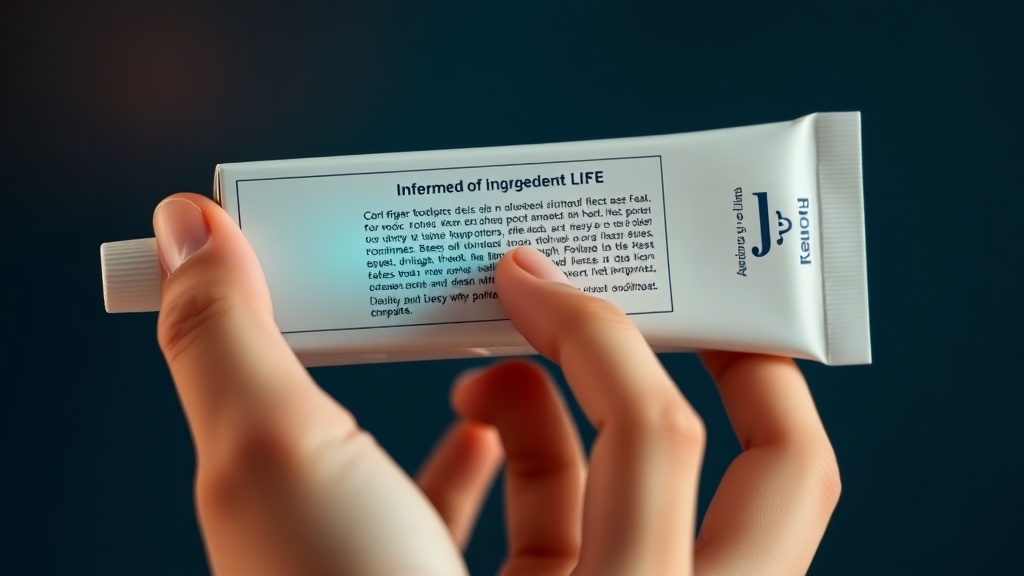
The active-ingredient panel tells you far more about cavity protection than the front of the box ever will.
A toothpaste is a maintenance tool, not a diagnosis. If you already have sensitivity, a visible white or brown spot, a rough or catching edge, or a hole, see a dentist rather than switching pastes and hoping. A dentist can tell you whether a spot is an early lesion that the right paste can still remineralize or a cavity that needs restoring, and can prescribe higher-strength fluoride or apply professional varnish and sealants that no over-the-counter tube can match. Choosing a good toothpaste is a smart step, but it works best as part of professional care, not as a substitute for it.
Frequently asked questions
Sources
- 1.
- 2.
- 3.
- 4.
- 5.
- 6.

Fix your breath at the source.
The complete science-backed protocol — engineered to eliminate volatile sulfur compounds at the biological source.
Start the Breath Protocol →Related reading
Educational purposes only. The content on this page is not medical advice and is not a substitute for consultation with a qualified dental or medical professional.
More from the library
 Ingredients8 min
How Fluoride Toothpaste Remineralizes Teeth
The chemistry behind fluoride's remineralizing power, and the honest line between the early lesions it can rebuild and the cavities it cannot.
Read →→ Comparisons8 min
Hydroxyapatite vs Fluoride: Which Toothpaste Is Right for You?
Two ways to strengthen enamel, one big difference in how much evidence stands behind each.
Read →→ Best Of8 min
How to Choose the Best Remineralizing Toothpaste
How to pick a remineralizing toothpaste by the evidence — not the marketing — and match it to your needs.
Read →→ Guides8 min
How to Prevent Cavities: What Actually Works
The handful of habits that genuinely lower cavity risk, ranked by the strength of the science behind them.
Read →→ Answers8 min
How to Get Rid of White Spots on Teeth: Your Options, Ranked
An honest, evidence-based ladder of options, from what you can do at home to what only a dentist can fix.
Read →→ Ingredients8 min
Hydroxyapatite Toothpaste Benefits: What the Evidence Actually Supports
A calm, science-first look at what hydroxyapatite toothpaste can genuinely do for your enamel, and where the evidence stops.
Read →→