Natural Remedies for Cavities: The Honest Truth
Where remineralization genuinely works, where it does not, and how to catch decay while it is still reversible.
- The honest headline: you can genuinely remineralize the earliest damage — the chalky white-spot stage before a hole forms — but once a cavity has broken through into a true hole, no natural remedy, oil pull, or diet can grow the tooth back.
- Enamel has no living cells, so it cannot heal like skin. What it can do is rebuild its mineral lattice from calcium and phosphate when the surface is still intact and the acid attack is stopped.
- Fluoride and nano-hydroxyapatite are the two ingredients with real evidence for tilting that mineral balance back toward repair at the white-spot stage — they support enamel structure, they are not magic.
- Sugar-free, xylitol-based habits and healthy saliva help by reducing the acid attacks, which gives the surface a chance to remineralize — a supporting role, not a cure.
- A cavitated cavity is a repair job, not a home project. The realistic goal at home is to catch and reverse damage early and to keep new damage from starting; anything past the white-spot stage belongs to a dentist.
You can remineralize the earliest, pre-cavity damage — the white-spot stage — using fluoride or nano-hydroxyapatite, a lower-acid diet, and healthy saliva. You cannot naturally reverse a cavitated cavity, an actual hole; that needs a dentist. Natural habits are powerful for preventing decay and catching it early, not for undoing a hole once it has formed.
The see-saw inside every tooth
Enamel is not a static shell. All day long it sits on a see-saw between two opposite processes. On one side is demineralization: when the bacteria in plaque feed on sugar and refined carbohydrate they produce acid, and that acid pulls calcium and phosphate out of the enamel surface. On the other side is remineralization: saliva, and any fluoride or hydroxyapatite present, push those minerals back into the lattice. In a healthy mouth the two roughly balance. Tip the see-saw toward acid too often and the surface starts to lose more than it regains — and the first visible sign is a dull, chalky white spot. Crucially, at that white-spot stage the outer surface is still intact, which means the damage is genuinely reversible: give the tooth the right minerals and fewer acid attacks and it can rebuild. The point of no return is cavitation. Once the weakened surface collapses into an actual hole, bacteria move inside where no brush, rinse or remedy can reach, and the structure cannot re-grow on its own. Everything sensible about home care lives on the reversible side of that line.
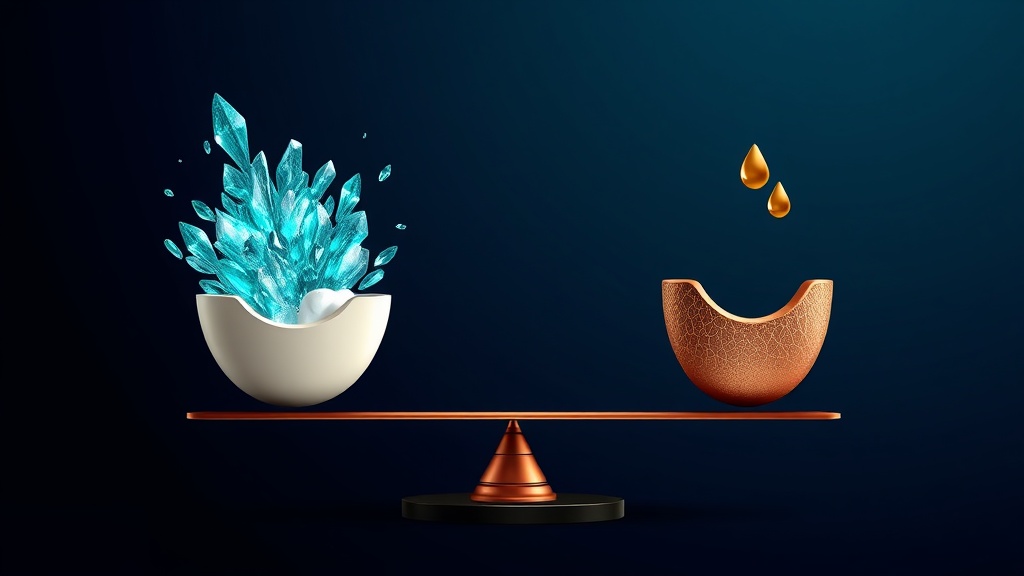
Enamel constantly trades minerals: a white spot can still rebuild, but a collapsed, cavitated surface cannot re-grow naturally.
What the research actually shows
Every claim below maps to a named, peer-reviewed source in the Sources section. According to PubMed.
| Claim | Evidence | Source |
|---|---|---|
| CPP-ACP, a milk-derived calcium-phosphate complex, can help remineralize early enamel lesions by delivering minerals to the surface. | Review of CPP-ACP and enamel remineralization. | CPP-ACP review, 2016 |
| Combining nano-hydroxyapatite with fluoride improved remineralization of early white-spot lesions in clinical testing. | Clinical study of nano-hydroxyapatite plus fluoride on white-spot lesions. | J Dent study, 2024 |
| A hydroxyapatite-based nano treatment remineralized incipient — early, non-cavitated — enamel lesions. | Evaluation of a hydroxyapatite nanomaterial on incipient enamel lesions. | J World Fed Orthod study, 2024 |
| Fluoride-releasing materials measurably remineralized and resisted further demineralization of the enamel around them. | Study of remineralization and anti-demineralization at the enamel surface. | BMC Oral Health study, 2024 |
| Sugar-free xylitol products modestly reduced new decay by cutting the acid challenge, supporting rather than replacing remineralization. | Systematic review of xylitol-containing products for preventing caries. | Cochrane review, 2015 |
Can it be reversed? It depends on the stage
| Stage of decay | Reversible naturally? | What actually helps |
|---|---|---|
| Healthy enamel under a daily acid challenge | Yes — this is normal repair | Saliva, fluoride or nano-hydroxyapatite, fewer sugar hits |
| Early white-spot lesion (no hole) | Often, if caught early | Fluoride or nano-hydroxyapatite, xylitol, saliva, professional monitoring |
| Cavitated cavity (an actual hole) | No | A dentist — a filling or restoration |
| Decay reaching the nerve | No | A dentist — prompt professional care |
Why reverse your cavities claims mislead
The internet is full of promises that oil pulling, activated charcoal, or a special mineral diet will make cavities disappear. The grain of truth is real — early white spots can remineralize — but it gets stretched into something false. Diet and habits shape the environment: fewer, less frequent sugar exposures mean fewer acid attacks, which absolutely helps enamel hold and rebuild its minerals. What no food, oil or powder can do is rebuild collapsed structure. Once enamel has cavitated, the mineral scaffold it would rebuild on is simply gone, and the bacteria driving the damage now sit inside the tooth where nothing you swish can reach them. Some popular remedies are worse than useless: highly abrasive charcoal and DIY scrubs can wear enamel down further, and time spent oil pulling in the hope of closing a hole is time a small cavity spends becoming a bigger one. The honest framing is empowering, not discouraging — you have real, evidence-backed control over preventing decay and reversing it at the earliest stage, and knowing where that power ends is what gets a cavity fixed while it is still small.
Evidence you can act on.
Occasional emails — new research, new protocols, no noise.
How to support enamel and catch decay early
None of this treats disease or promises to close a hole. It tilts the see-saw toward repair and helps you catch damage while it is still reversible.
- 1
Cut the frequency of acid attacks
ongoingIt is how often, not just how much. Every sugary or acidic sip restarts the acid clock, so grazing and constant sipping are harder on enamel than the same treat eaten at once. Cluster sweets with meals and let the mouth recover in between.
- 2
Give saliva every advantage
all daySaliva is your built-in remineralizing fluid. Stay hydrated, chew sugar-free xylitol gum to stimulate flow, and take dry mouth seriously — many medications reduce saliva and quietly raise decay risk.
- 3
Use a remineralizing agent daily
twice dailyA fluoride toothpaste, or a nano-hydroxyapatite paste, leaves minerals at the surface where they are needed. After brushing, spit but do not rinse, so a thin protective film stays on the enamel.
- 4
Feed the surface, do not scrub it away
twice dailySkip harsh, abrasive charcoal scrubs and aggressive brushing, which can wear enamel and expose softer surfaces. Gentle, thorough brushing with a soft brush protects the very structure you are trying to strengthen.
- 5
Get white spots checked early
at your check-upA dentist can confirm whether a mark is a reversible white spot or a cavity that has crossed the line, monitor it, and apply a professional-strength fluoride varnish. Catching cavitation early is the whole game.
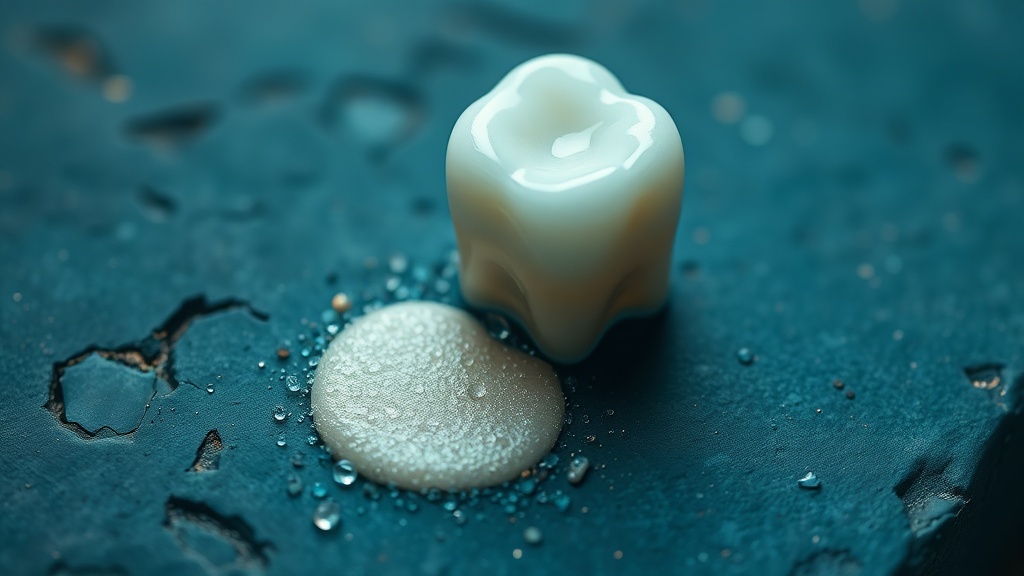
A chalky white spot is decay you can still turn around — the moment to act, before the surface breaks.
See a dentist for any hole you can feel, a dark or brown spot, sensitivity to sweet or cold, ongoing tooth pain, or a white spot you are not sure about. Only a professional can tell a reversible white spot from a cavity that needs a filling — and catching it at the right moment is what keeps a small problem from becoming a big one. Home care supports enamel; it does not replace an exam.
Frequently asked questions
Sources
- 1.
- 2.
- 3.
- 4.
- 5.

Fix your breath at the source.
The complete science-backed protocol — engineered to eliminate volatile sulfur compounds at the biological source.
Start the Breath Protocol →Related reading
Educational purposes only. The content on this page is not medical advice and is not a substitute for consultation with a qualified dental or medical professional.
More from the library
 Guides8 min
Remineralizing Tooth Powder: The Hydroxyapatite Angle, Honestly
What nano-hydroxyapatite is, how a mineral powder supports enamel, what the studies genuinely show, and the honest caveats the marketing tends to skip.
Read →→ Guides8 min
Tooth Powder: What It Is and How It Compares to Toothpaste
A plain-English look at what tooth powder is, why the abrasivity number matters more than the marketing, and how the format really stacks up against ordinary paste.
Read →→ Answers9 min
How to Remove Plaque From Teeth at Home (and When You Can't)
A practical, science-based routine for controlling soft plaque yourself — and an honest line on where home care stops and the dentist begins.
Read →→ Best Of9 min
Best Toothpaste for Bad Breath: What Ingredients Actually Matter
The active ingredient, not the brand on the tube, decides whether a toothpaste actually helps freshen your breath.
Read →→ Guides8 min
How to Get Rid of Bad Breath Permanently: An Evidence-Based Plan
The honest version: "permanently" means ongoing control, not a one-time fix. Here is the daily routine the research actually supports, and when to get help.
Read →→ Guides7 min
Bad Breath Even After Brushing? The Biological Reason (and Fix)
You brushed, flossed and rinsed — and the smell is still there. The reason usually isn't hygiene; it's where the odour-causing bacteria actually live.
Read →→