
How to Remove Plaque From Teeth
A practical, science-based routine for controlling soft plaque yourself — and an honest line on where home care stops and the dentist begins.
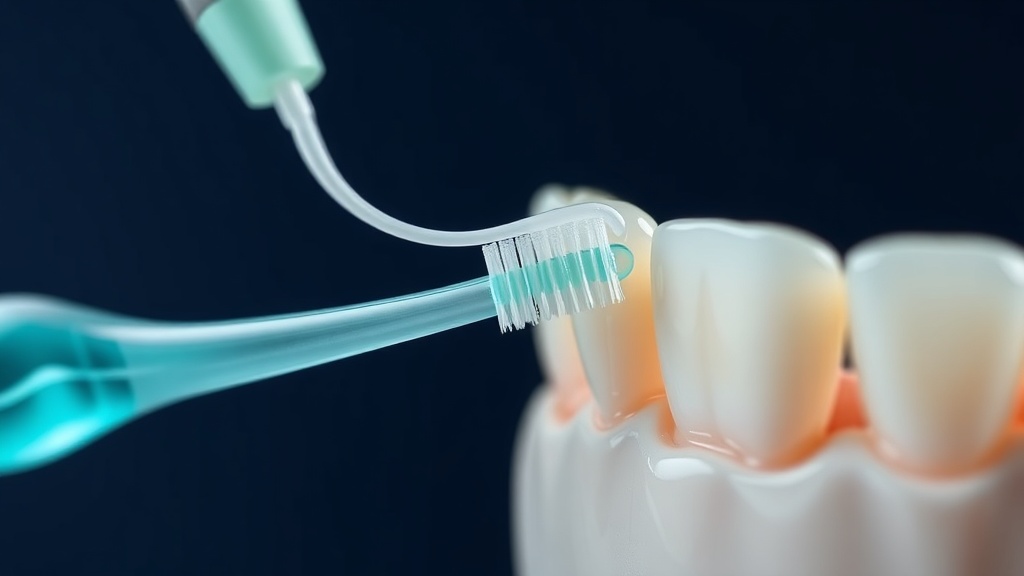
- Soft plaque is removable at home: consistent brushing plus cleaning between the teeth physically breaks up the daily bacterial film before it can build up.
- The tools that matter most are simple — a toothbrush for the surfaces, floss or interdental brushes for the gaps a brush cannot reach, and a scraper for the tongue's coating.
- Technique beats force. Gentle, thorough, twice-daily cleaning along the gumline removes more plaque than occasional hard scrubbing, and it protects your gums while doing it.
- There is a hard limit: once plaque hardens into tartar, no amount of home brushing removes it. That is a job for a dental professional's scaling instruments.
- The realistic goal is control, not a one-time deep clean — you are keeping a film that constantly re-forms in check, every single day.
To remove plaque from teeth at home, brush gently for two minutes twice a day along the gumline, clean between your teeth daily with floss or interdental brushes, and scrape your tongue. This disrupts the soft bacterial film before it hardens. Once plaque has calcified into tartar, only a dental professional can remove it.
What you are actually removing
The plaque you are trying to remove is a biofilm — a living, sticky layer of bacteria that builds itself onto your teeth within hours of the last clean. That single fact shapes everything about how to deal with it. Because plaque is a physical film held together by a matrix the bacteria produce, the reliable way to remove it is physical: dragging a brush and a thread through it to break the structure apart. Rinsing alone does not do it, and neither does any product that promises to simply wash plaque away, because the film clings on against water. It also re-forms constantly, which is why removing plaque is really a daily maintenance task rather than a one-off event. The stakes of keeping up with it are simple: plaque that is left in place does not just sit there — within a day or two it begins to take up minerals from your saliva and harden into tartar, at which point it is no longer something you can clean off. So the entire aim of a home routine is to keep disrupting the soft film everywhere it collects, especially the gumline and the contact points between teeth, before it ever gets the chance to set.
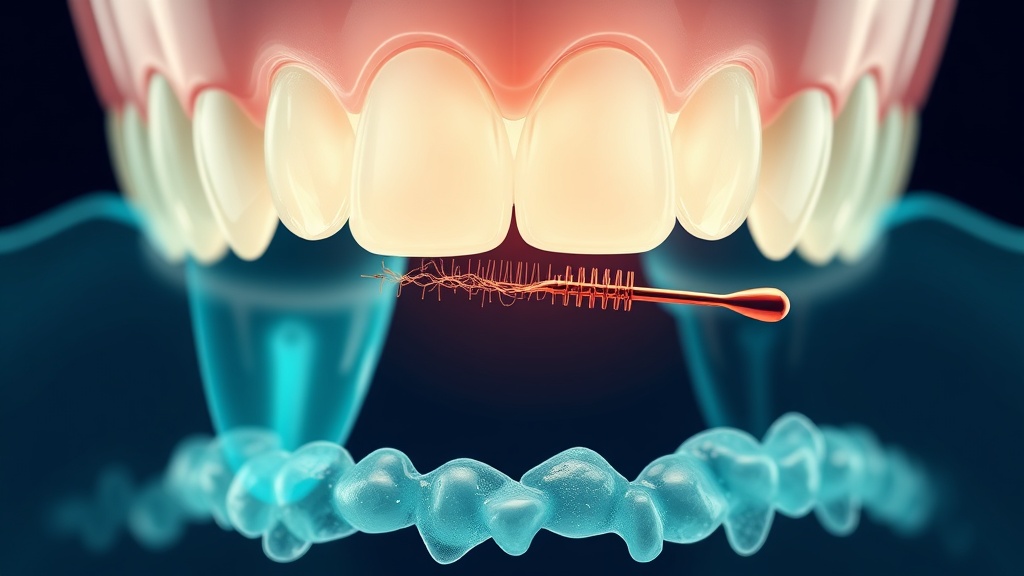
Plaque is a physical film, so it is removed physically — a brush clears the open surfaces while a thread reaches the contact points a brush cannot.
What the research actually shows
Every claim below maps to a named, peer-reviewed source in the Sources section. According to PubMed.
| Claim | Evidence | Source |
|---|---|---|
| Daily mechanical disruption of plaque is the foundation of control; interdental cleaning added to brushing reduces plaque and gum inflammation. | Cochrane review of home interdental cleaning devices. | Worthington et al., 2019 |
| Plaque is a biofilm that re-forms continuously, so it has to be removed repeatedly rather than cleared once. | Review of dental plaque as a biofilm. | Marsh, 2003 |
| Plaque left in place calcifies into tartar, a hardened deposit that requires professional removal. | Review of calculus formation and removal. | White, 1997 |
| Cleaning the tongue's coating with a scraper lifts the odour-producing biofilm a toothbrush tends to miss. | Cochrane review of tongue scraping. | Outhouse et al., 2006 |
| Chemical adjuncts such as chlorhexidine reduce plaque and gum inflammation, but as a short-term supplement to mechanical cleaning, not a replacement. | Cochrane review of chlorhexidine mouthrinse. | James et al., 2017 |
The plaque-control toolkit
| Tool | What it removes | How often |
|---|---|---|
| Toothbrush | Plaque on the front, back and chewing surfaces | Twice daily, 2 minutes |
| Floss / interdental brush | Plaque between teeth and at the gumline | Once daily |
| Tongue scraper | The soft coating on the tongue | Once or twice daily |
| Antibacterial / anti-tartar rinse | Lowers bacterial load; slows hardening | As an adjunct, as directed |
| Dental scaling (professional) | Hardened tartar you cannot remove | Every 6-12 months |
Technique that actually works — and its honest limit
The difference between a routine that controls plaque and one that misses it is rarely effort — it is where and how you clean. Plaque collects most stubbornly in the places brushing tends to skim: the gumline, and the contact surfaces between adjacent teeth. Angling the brush slightly toward the gums and cleaning between the teeth every day targets exactly those hideouts, and studies of interdental cleaning added to brushing show real reductions in plaque and gum inflammation. Just as important is what not to do: scrubbing hard and fast with a stiff brush does not remove more plaque, it just abrades gums and enamel, so gentle and thorough beats vigorous every time. Cleaning the tongue belongs in the routine too, because its coating is a biofilm reservoir a brush glides over. The honest limit of all this is worth stating plainly. Home care is superb at controlling soft plaque, but it does nothing for tartar once plaque has hardened. No brushing technique, rinse or gadget removes calcified deposits — that requires a dental professional. So think of your daily routine as the half of the job you own completely, with the professional cleaning covering the half you physically cannot.
Evidence you can act on.
Occasional emails — new research, new protocols, no noise.
Your at-home plaque-control routine
Removing plaque is a daily habit, not a single event. This simple sequence disrupts the soft film everywhere it collects. None of it treats a disease — it keeps your mouth clean and the biofilm from building up or hardening.
- 1
Brush for two minutes, twice a day
2 minutes, twice dailyUse a soft brush, angle it slightly toward the gumline, and work methodically around every surface so nowhere gets skipped. Two gentle minutes removes far more plaque than a fast, hard thirty seconds. Electric or manual both work — the technique and consistency matter more than the tool.
- 2
Clean between your teeth every day
once dailyThis is the step most people skip and the one that reaches the plaque a brush cannot — the surfaces where teeth touch and just under the gumline. Floss, floss picks, or interdental brushes all work; the best one is whichever you will do daily. Ease it gently against each tooth rather than snapping it into the gum.
- 3
Scrape your tongue
20-30 secondsThe tongue holds its own biofilm coating that a brush mostly glides over. A few gentle back-to-front passes with a scraper lift it and freshen the whole mouth. Keep the pressure light so you do not irritate the surface.
- 4
Add a rinse as a supplement, not a substitute
as directedAn antibacterial or anti-tartar rinse can lower the overall bacterial load and slow how fast plaque hardens. Use it to support the mechanical steps, not to replace them — no rinse breaks up an established film the way a brush and floss do. Alcohol-free formulas are gentler on the mouth.
- 5
See a dentist for what you cannot remove
every 6-12 monthsEven a perfect home routine leaves some hardened tartar over time, especially in hard-to-reach spots. A professional scale-and-polish removes it and smooths the surface so plaque has less grip. Ask your dentist how often you personally need one — it varies with how quickly you form tartar.
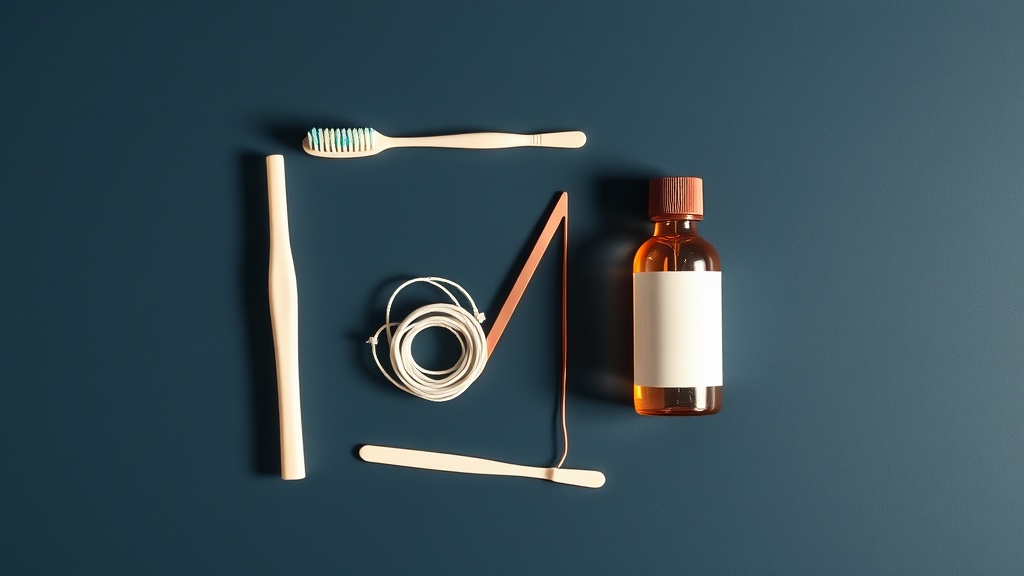
The whole home toolkit is simple: a brush for the surfaces, an interdental cleaner for the gaps, a scraper for the tongue, and a rinse as a supplement.
See a dentist if you can feel hard, rough deposits that brushing will not shift, if your gums bleed easily, feel tender or are pulling back from the teeth, or if plaque keeps building quickly no matter how carefully you clean. These are signs to have tartar professionally removed and your gums assessed in person. Do not try to scrape hardened deposits off with metal tools at home — you are more likely to damage enamel or gums than to remove them.
Frequently asked questions
Sources
- 1.
- 2.
- 3.
- 4.
- 5.

Fix your breath at the source.
The complete science-backed protocol — engineered to eliminate volatile sulfur compounds at the biological source.
Start the Breath Protocol →Related reading
Educational purposes only. The content on this page is not medical advice and is not a substitute for consultation with a qualified dental or medical professional.
More from the library
 Comparisons9 min
Plaque vs Tartar: What's the Difference, Really?
The honest, science-based difference between the soft biofilm you can clear yourself and the calcified deposit that needs a professional.
Read →→ Answers9 min
How to Get Rid of White Tongue: The Coating, Cleared Honestly
The honest, science-based way to clear the soft coating behind a white tongue — and how to tell simple biofilm from a patch that needs a professional.
Read →→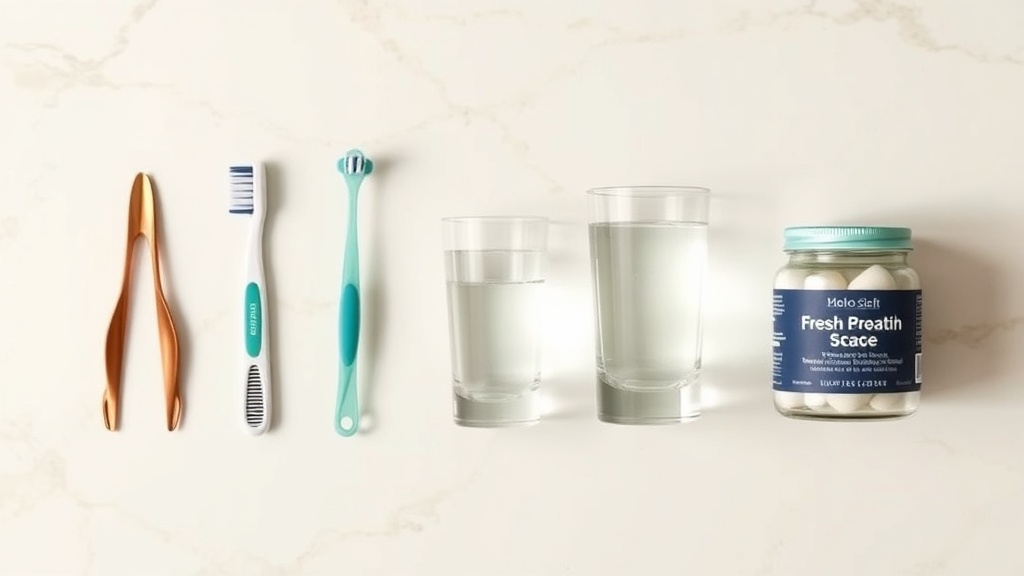 Guides9 min
How to Fix Bad Breath: A Practical, Step-by-Step Action Plan
The practical fix-it plan: four everyday moves — tongue, teeth, hydration, and microbiome — that target where bad breath actually starts.
Read →→ Best Of8 min
The Best Mouthwash for Bad Breath, by Active Ingredient
There is no single winner, only the right rinse for the right job. Here is how the active ingredients compare on the evidence, and which suits everyday fresh breath.
Read →→ Guides8 min
How to Get Rid of Bad Breath Permanently: An Evidence-Based Plan
The honest version: "permanently" means ongoing control, not a one-time fix. Here is the daily routine the research actually supports, and when to get help.
Read →→ Guides7 min
Bad Breath Even After Brushing? The Biological Reason (and Fix)
You brushed, flossed and rinsed — and the smell is still there. The reason usually isn't hygiene; it's where the odour-causing bacteria actually live.
Read →→