Tooth Powder: What It Actually Is (and How It Compares to Paste)
A plain-English look at what tooth powder is, why the abrasivity number matters more than the marketing, and how the format really stacks up against ordinary paste.
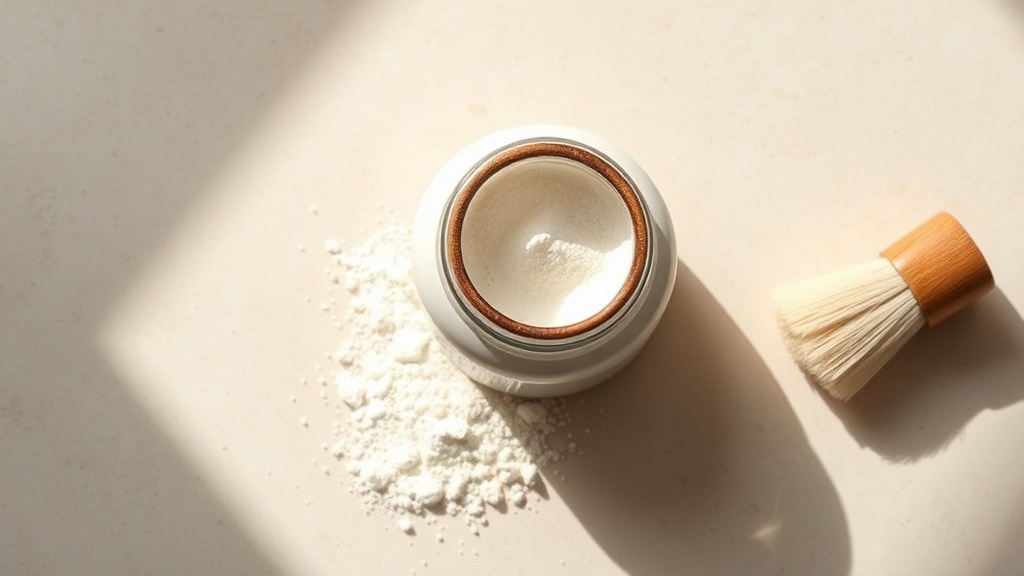
- Tooth powder is essentially toothpaste with the water removed: a dry blend of a fine abrasive, flavour, and sometimes extras like baking soda, clays or hydroxyapatite that you dip a damp brush into.
- Its core job is the same as paste: mechanically lift plaque and food debris so the odour-producing bacteria behind bad breath have less to feed on.
- The number that matters most is RDA (relative dentin abrasivity), a lab measure of how much a formula can wear exposed dentin. Natural or homemade does not automatically mean gentle.
- Most tooth powders contain no fluoride, so switching is a trade-off to understand rather than a free upgrade if you rely on fluoride for enamel support.
- Powder is a format choice, not a cure. Fresher breath comes from consistent, complete cleaning plus tongue care and hydration, whichever vehicle you brush with.
Tooth powder is toothpaste with the water taken out: a dry mix of a fine abrasive plus flavour and optional actives like baking soda or hydroxyapatite. You dip a damp brush into it. It cleans much like paste, but abrasiveness varies widely and most versions skip fluoride, so choose by the ingredient list, not the marketing.
What tooth powder actually is
Long before the squeezable tube, people cleaned their teeth with powders. A tooth powder is simply a dentifrice with the water and the gel-forming binders left out, so what remains is dry: a fine abrasive to polish the tooth surface, a little flavour and sweetener, sometimes a foaming agent, and often a functional extra such as baking soda, kaolin or bentonite clay, activated charcoal, or hydroxyapatite. You wet the brush, tap it into the powder, and brush as normal. Mechanically, that is the same act as brushing with paste. The bristles and the mild abrasive disrupt and remove the sticky bacterial film called plaque, along with food debris and surface stains. That physical removal is the point, because the bacteria that produce the volatile sulfur compounds behind most bad breath live in that film and on the tongue, and they thrive on what you leave behind. The single technical idea worth learning is abrasivity, measured in the lab as relative dentin abrasivity, or RDA. Every dentifrice sits somewhere on that scale. A gentle formula polishes; an aggressive one, used with a heavy hand, can gradually wear exposed dentin at the gumline. Powder is not inherently more or less abrasive than paste. It depends entirely on what abrasive the maker chose and how coarse it is.
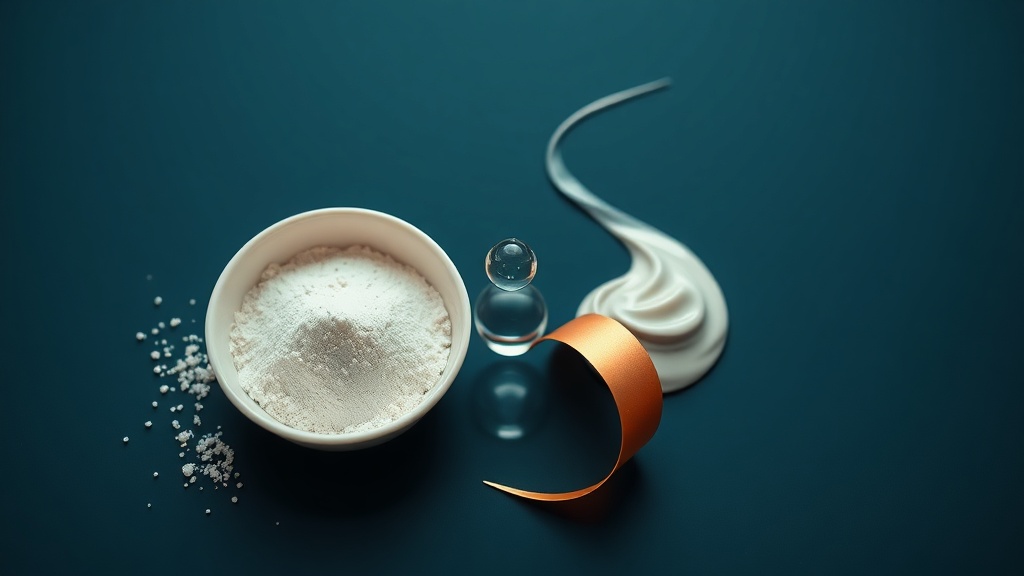
Tooth powder is paste with the water removed: the same cleaning job, delivered as a dry blend of abrasive, flavour and optional actives.
What the research actually shows
Every claim below maps to a named, peer-reviewed source in the Sources section. According to PubMed.
| Claim | Evidence | Source |
|---|---|---|
| RDA (relative dentin abrasivity) is the standard laboratory measure of how abrasive a dentifrice is, but experts caution it should not be used alone to judge clinical safety, because tooth wear is multifactorial. | Review of dentifrice abrasivity testing methods. | Gonzalez-Cabezas et al., 2013 |
| Measured abrasivity of marketed toothpastes spans a very wide range, with equivalent RDA values recorded from roughly 26 up to 166 across ordinary and whitening products. | Profilometry (RDA-PE) testing of five toothpastes on bovine dentin. | Kim et al., 2022 |
| Baking soda, a common tooth-powder base, has low abrasivity while still exhibiting antibacterial properties against oral microorganisms and effective plaque removal. | Review of sodium bicarbonate dentifrices in JADA. | Myneni, 2017 |
| Most bad breath is produced by sulfur-compound-making bacteria in the mouth, so reducing their number by removing plaque and tongue coating is the mechanism that freshens breath. | Clinical review of halitosis in the BMJ. | Scully & Porter, 2008 |
| Cleaning the tongue reduces oral malodour, making it an important companion habit to whatever you brush with. | Cochrane systematic review of tongue scraping. | Outhouse et al., 2006 |
Tooth powder versus toothpaste, side by side
| Feature | Tooth powder | Toothpaste |
|---|---|---|
| Water content | None; you add moisture from the damp brush | Roughly a fifth to a third water, ready to use |
| Fluoride | Often none; you must check the label | Usually present in mainstream brands |
| Abrasivity | Varies widely; can be low or high by formula | Varies too, but ranges are well characterised |
| Feel and foam | Minimal foam, slightly gritty | Foamy and smooth |
| Packaging and waste | Compact, often jarred and plastic-free | Tube, generally more packaging |
The abrasivity question, honestly
Here is where a good guide has to be blunt, because the marketing rarely is. Words like natural, gentle, and charcoal say nothing about how abrasive a powder is. Abrasivity is a physical property of the specific abrasive particle and its size, not of the brand story. Charcoal powders are a good example: several have tested as fairly abrasive and offer no proven enamel benefit, yet they are sold as a gentle cleanse. On the other end, baking soda scores low on abrasivity while still cleaning well, which is why it remains a sensible base. The reason this matters is that enamel does not grow back, and the soft dentin beneath your gumline is far easier to wear. The lab number, RDA, is a useful screen and the long-standing standard, but researchers stress it is only one variable. How hard you press, how stiff your brush is, and how often you brush all feed into real-world wear as much as the powder does. So the honest takeaway is not powder good or powder bad. It is this: pick a powder with a known, moderate abrasive, use a soft brush, and let the bristles and a light touch do the work. If a product will not tell you what its abrasive is, treat that silence as information.
Evidence you can act on.
Occasional emails — new research, new protocols, no noise.
How to use tooth powder well
None of this treats a disease; it simply gets the most cleaning out of the format while protecting your enamel and gums.
- 1
Wet the brush, then tap into the powder
5 secondsDampen a soft-bristled brush and press it gently into the powder so a thin layer clings to the bristles. You want a light dusting, not a caked load. Tip excess back into the jar; more powder does not mean more clean, it mostly means more grit.
- 2
Brush gently for two minutes
2 minutesUse small circles and a light touch, letting the bristles reach the gumline without scrubbing at it. Because abrasivity is partly in your hands, easing off the pressure is the simplest way to keep any powder on the safe side.
- 3
Clean your tongue
20 secondsThe back of the tongue is where most odour bacteria and their sulfur gases collect, and a brush or scraper across it does more for fresh breath than any single change of dentifrice. Make it a fixed part of the routine.
- 4
Decide your fluoride strategy
one-timeIf your chosen powder has no fluoride, decide deliberately how you are supporting your enamel, whether through a separate fluoride or hydroxyapatite product or a conversation with your dentist. Do not let it be an accidental gap.
- 5
Watch for sensitivity or receding gums
ongoingNew sensitivity, a notch forming at the gumline, or gums that look lower than before are signs to switch to a lower-abrasivity option and lighten your technique, and to check in with a professional.
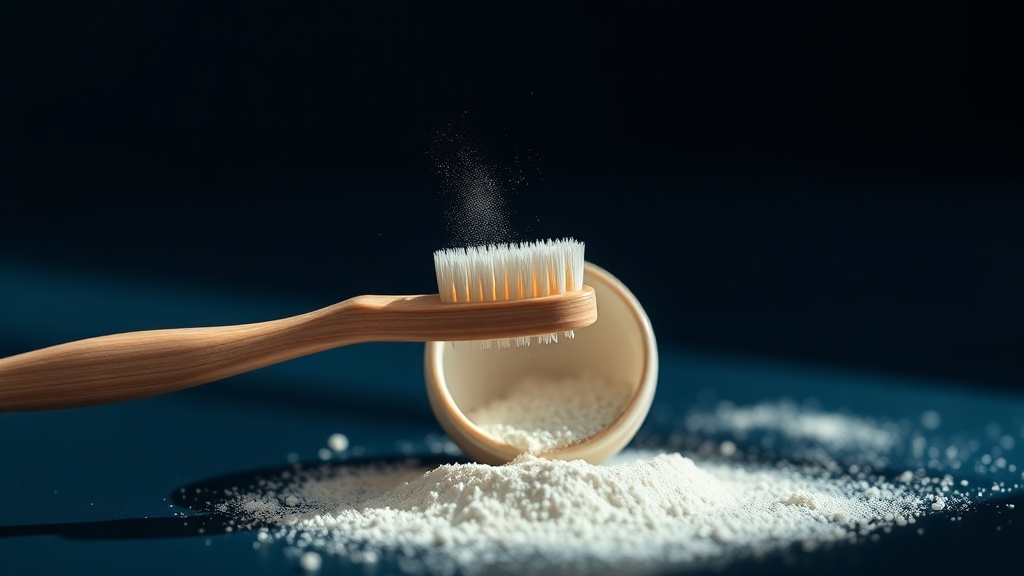
A light dusting on a damp soft brush is all it takes; a gentle touch matters more than the amount of powder.
Tooth powder is a cosmetic and hygiene choice, not a fix for a problem. See a dentist if bad breath persists despite thorough daily cleaning, if you notice new tooth sensitivity, if your gums look like they are receding or a groove is forming at the gumline, or if you see unusual wear on your teeth. Lasting odour or visible wear should be assessed in person rather than self-managed with a change of dentifrice.
Frequently asked questions
Sources
- 1.
- 2.
- 3.
- 4.
- 5.
- 6.

Fix your breath at the source.
The complete science-backed protocol — engineered to eliminate volatile sulfur compounds at the biological source.
Start the Breath Protocol →Related reading
Educational purposes only. The content on this page is not medical advice and is not a substitute for consultation with a qualified dental or medical professional.
More from the library
 Guides8 min
Remineralizing Tooth Powder: The Hydroxyapatite Angle, Honestly
What nano-hydroxyapatite is, how a mineral powder supports enamel, what the studies genuinely show, and the honest caveats the marketing tends to skip.
Read →→ Best Of9 min
Best Toothpaste for Bad Breath: What Ingredients Actually Matter
The active ingredient, not the brand on the tube, decides whether a toothpaste actually helps freshen your breath.
Read →→ Guides9 min
How to Fix Bad Breath: A Practical, Step-by-Step Action Plan
The practical fix-it plan: four everyday moves — tongue, teeth, hydration, and microbiome — that target where bad breath actually starts.
Read →→ Best Of8 min
The Best Mouthwash for Bad Breath, by Active Ingredient
There is no single winner, only the right rinse for the right job. Here is how the active ingredients compare on the evidence, and which suits everyday fresh breath.
Read →→ Guides8 min
How to Get Rid of Bad Breath Permanently: An Evidence-Based Plan
The honest version: "permanently" means ongoing control, not a one-time fix. Here is the daily routine the research actually supports, and when to get help.
Read →→ Guides7 min
Bad Breath Even After Brushing? The Biological Reason (and Fix)
You brushed, flossed and rinsed — and the smell is still there. The reason usually isn't hygiene; it's where the odour-causing bacteria actually live.
Read →→