How Often Can You Use Whitening Strips? Safe Frequency Explained
One course does most of the work; the smart move is occasional touch-ups, not back-to-back use.
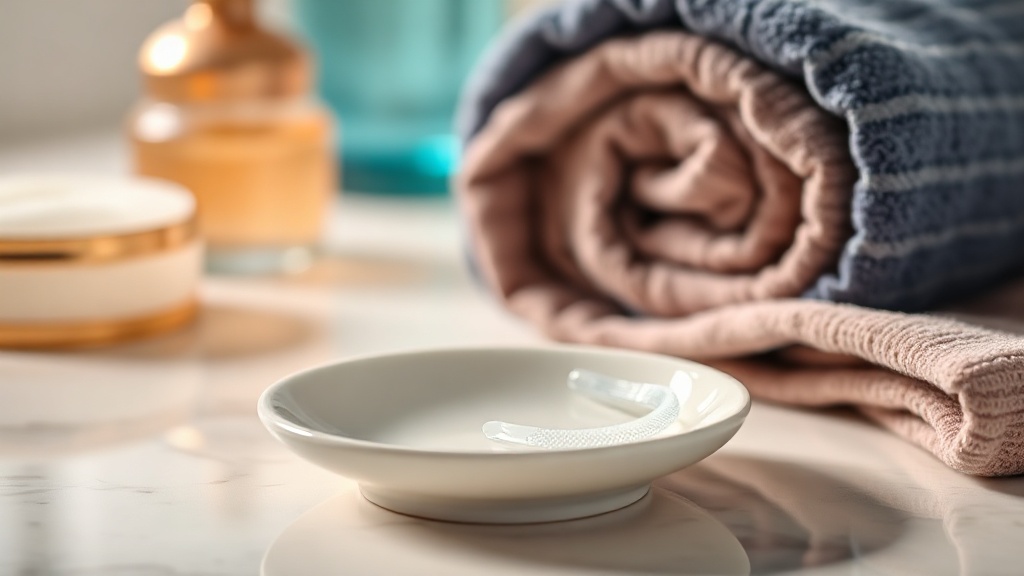
- Whitening strips are designed as a short course — typically once a day for about 10 to 14 days — not as an everyday habit you keep up indefinitely.
- That single course does most of the work: a standard two-week course lightens teeth several shade units, and the colour is genuinely durable.
- Using strips more often, or back-to-back for weeks, does not make teeth whiter — it mainly adds sensitivity, because dose and strength buy discomfort, not extra colour.
- After a course, a little early fading is normal and then the shade plateaus. You maintain it with short touch-ups every few months, not daily strips.
- Between courses, support your enamel with a mineral or fluoride toothpaste and good hydration; any surface softening from peroxide is temporary and recovers.
Use whitening strips as a course, not a daily routine: usually once a day for about 10 to 14 days, then stop. That single course delivers most of your whitening, and results last for months to years. Repeating strips continuously does not add colour — it mainly adds sensitivity. Maintain with a short touch-up every few months instead.
How strips work — and why they come as a course
Whitening strips carry a thin layer of hydrogen or carbamide peroxide that sits against the teeth so the gel can diffuse in and break down the coloured molecules inside. What makes them effective is contact time repeated over consecutive days, which is why they are sold as a defined course rather than a single dramatic session. In a classic double-blind trial, a two-week, twice-daily strip course lightened teeth by nearly four shade units, while a placebo strip barely moved the colour at all — and independent reviews rank strips at the top of over-the-counter options precisely because that daily-for-two-weeks pattern delivers a real, measurable change. The important insight is that the benefit comes from finishing the course, not from continuing it forever. Research on at-home whitening shows the result depends far more on cumulative contact time than on cranking up the strength, so the sensible design is a short run of daily applications that adds up to the full effect, after which the teeth have essentially reached what that product can achieve. Going beyond the recommended number of strips does not keep pushing the colour lighter in step with the extra exposure; instead you hit a ceiling, and further use mostly trades comfort for no additional whiteness.

A course builds most of the colour change; after it, the shade settles and holds rather than climbing with every extra strip.
What the research actually shows
Every claim below maps to a named, peer-reviewed source in the Sources section. According to PubMed.
| Claim | Evidence | Source |
|---|---|---|
| A standard two-week strip course lightened teeth by 3.7 shade units, versus 0.87 for a placebo strip. | Randomised, double-blind, placebo-controlled trial of 5.3% hydrogen peroxide strips. | Kugel & Kastali 2000 |
| After a whitening course, teeth stayed lighter than baseline two years later, though most people noticed mild relapse. | Double-blind randomised clinical trial with 2-year follow-up. | Meireles et al. 2010 |
| At 4.5 years, colour rebound averaged only about 2 shade units and the result stayed clinically meaningful. | 4.5-year follow-up of a randomised controlled trial. | Hortkoff et al. 2025 |
| Using more concentrated gel bought more sensitivity, not more whitening. | Systematic review and meta-analysis of carbamide peroxide concentrations. | de Geus et al. 2018 |
| Any enamel softening from peroxide is reversible, with microhardness recovering within about a week of remineralisation. | Laboratory study of bleaching and four remineralising agents. | Melo et al. 2022 |
Course, maintenance, and overuse
| Phase | Typical frequency | What you gain or risk |
|---|---|---|
| Initial course | Once daily for about 10-14 days | Most of your total colour change |
| Let the colour settle | Stop when the course ends | Shade stabilises; a little early fading is normal |
| Maintenance touch-up | A few days every few months | Tops the brightness back up as it slowly fades |
| Daily or back-to-back use | Not recommended | More sensitivity, no extra whitening |
Why more is not better — and how long results really last
The reason 'more strips' is the wrong instinct is that whitening is durable, so you do not need to keep chasing it. Long-term studies are reassuring: after a single course, teeth remain lighter than they started two years on, and even at four and a half years the average rebound is only around two shade units, still a clinically visible improvement. There is a predictable pattern to this. A noticeable share of the initial change — roughly 45% in one long study — is lost in the first few weeks to months, and then the colour plateaus rather than continuing to fade. That early dip is normal regression, not failure, and it is exactly why the right response is patience and the occasional touch-up rather than another full course straight away. Overusing strips, by contrast, has a real downside and no real upside: higher cumulative peroxide exposure increases the chance of sensitivity, while meta-analyses show that pushing concentration or dose harder buys discomfort without buying extra whiteness. The enamel side of the ledger is more reassuring than it sounds — the brief surface softening peroxide causes is reversible and recovers with remineralisation — but that is a reason to whiten sensibly, not a licence to whiten constantly. Put together, the picture is simple: do the course, let it settle, and top it up now and then.
Evidence you can act on.
Occasional emails — new research, new protocols, no noise.
How to use whitening strips safely over time
Getting the frequency right is mostly about respecting the course and then easing off. None of this treats a disease — it is a cosmetic routine designed to keep your smile bright without overdoing it.
- 1
Do one full course as directed
about 10-14 daysFollow the pack: usually one application a day for the stated number of days. Completing the course is what delivers the result — there is no benefit to doubling up or extending it beyond the instructions.
- 2
Then stop and let the colour settle
a few weeksResist starting again immediately. Some early fading is expected before the shade plateaus, so judge your true result a few weeks after finishing, not on the final day of strips.
- 3
Maintain with short touch-ups
every few monthsWhen you notice the brightness slipping, a brief touch-up of a few days is usually enough to top it up. Spacing maintenance months apart keeps results steady while keeping total peroxide exposure low.
- 4
Ease off if your teeth zing
as neededIf strips cause sensitivity, shorten the wear time or skip a day rather than powering through. Since a stronger dose does not whiten more, there is nothing to gain from tolerating discomfort.
- 5
Support your enamel between courses
dailyUse a fluoride or mineral toothpaste and stay well hydrated. Any surface softening from peroxide is temporary and recovers with remineralisation, and good daily care helps that process along.
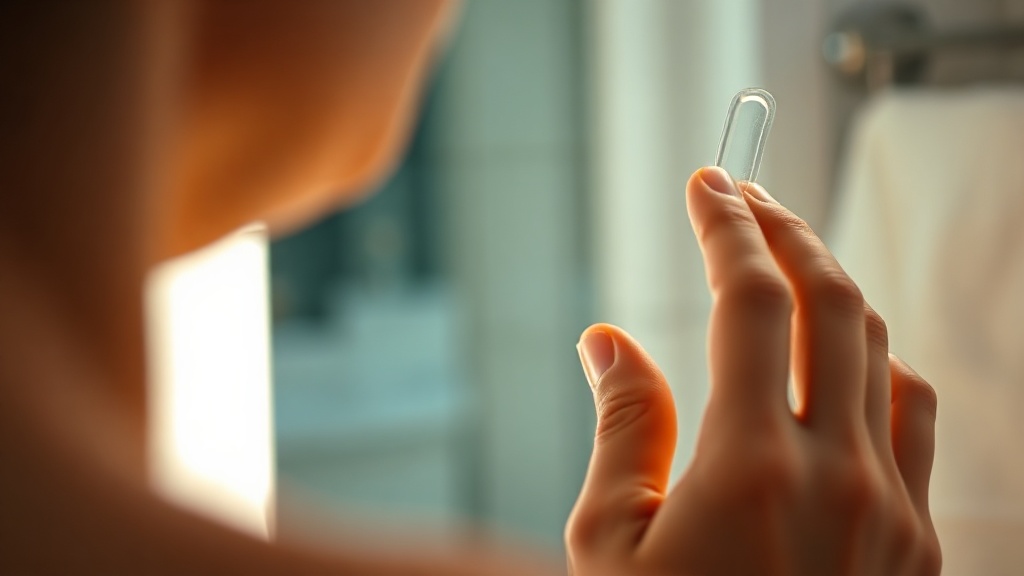
Applied once daily for a short course — then maintained occasionally — strips stay both effective and comfortable.
Strips are a cosmetic product for healthy teeth and gums. Check in with a dentist before whitening if you have untreated decay, exposed roots, gum problems, crowns or veneers on your front teeth, or if you are unsure why a tooth looks dark. And if whitening causes gum soreness or a tooth that aches on its own and does not settle within a few days, have it assessed in person rather than continuing.
Frequently asked questions
Sources
- 1.
- 2.
- 3.
- 4.
- 5.
- 6.
- 7.
- 8.

Fix your breath at the source.
The complete science-backed protocol — engineered to eliminate volatile sulfur compounds at the biological source.
Start the Breath Protocol →Related reading
Educational purposes only. The content on this page is not medical advice and is not a substitute for consultation with a qualified dental or medical professional.
More from the library
 Answers9 min
Does Teeth Whitening Hurt? Why It Happens and How to Prevent It
The sting is common but manageable — and the real levers are lower concentration and shorter wear time, not gimmicks.
Read →→ Answers8 min
Does Teeth Whitening Damage Enamel? The Evidence-Based Answer
The honest, evidence-based answer to whether whitening harms enamel — what peroxide really does to the surface, why sensitivity is not damage, and the DIY methods that actually cause wear.
Read →→ Answers8 min
Can You Whiten Veneers? The Truth About Porcelain and Composite
Peroxide only lightens natural tooth structure, so a veneer's shade is essentially fixed — but surface stain is a different story.
Read →→ Answers8 min
Can You Whiten Crowns? What Works and What Doesn't
The honest, evidence-based answer to whether teeth whitening works on crowns, veneers and fillings — and what to do instead.
Read →→ Answers8 min
Does Baking Soda Whiten Teeth? What the Evidence Says
An honest look at what baking soda can and cannot do for a whiter smile.
Read →→ Best Of9 min
Best Fluoride-Free Whitening Toothpaste: An Honest, Evidence-Based Guide (2026)
Which fluoride-free whitening ingredients hold up to the research — and which are marketing. An honest buyer's guide.
Read →→