Do Whitening Strips Damage Enamel?
An evidence-based look at whether whitening strips harm enamel: what peroxide really does to the surface, why softening is reversible, and how sensitivity differs from damage.
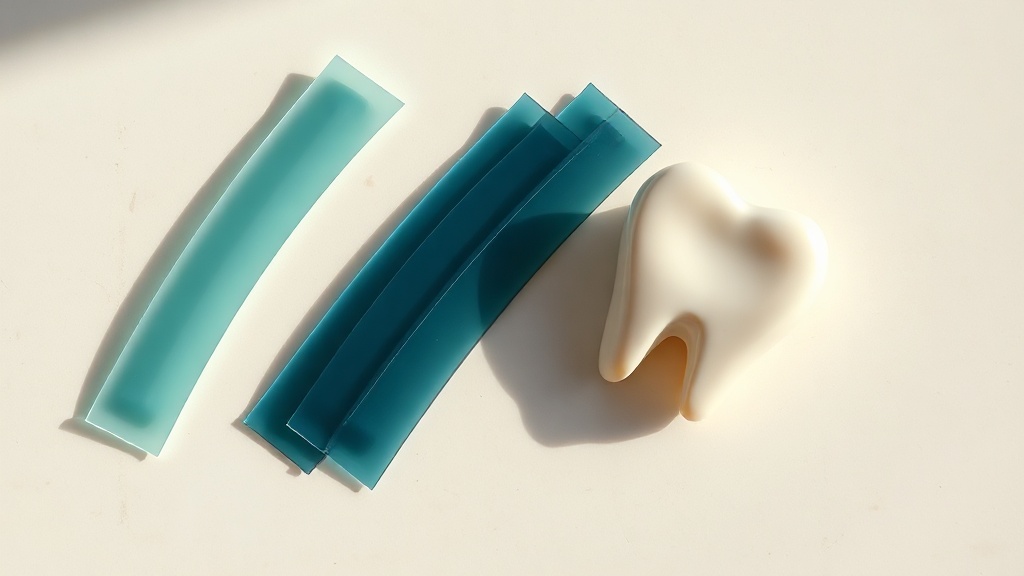
- The honest answer: used as directed, whitening strips do not strip enamel away. Peroxide temporarily softens the very surface of the enamel, but that softening is reversible, it is not erosion.
- Lab studies show a real, measurable dip in surface microhardness after strong peroxide, yet a week of ordinary saliva and remineralising toothpaste recovers much of it, and in living mouths the enamel's mineral ratio is unchanged.
- What people often call damage is usually sensitivity: peroxide passes through the enamel to reach the dentine, which can cause temporary zinging that fades once you stop. Sensitivity is not the same as structural harm.
- The real risk is misuse: higher concentrations and longer, more frequent wear buy more sensitivity without much extra whitening, so following the instructions is your safety margin.
- Strips versus professional whitening: at typical over-the-counter concentrations, strips whiten effectively and, in trials, raise no more enamel concern than supervised bleaching.
Used as directed, whitening strips do not damage enamel in any lasting way. The peroxide temporarily softens the enamel's surface layer, but saliva and fluoride or remineralising toothpaste reverse that within days, and studies find no change in the enamel's mineral content in living mouths. The common downside is temporary sensitivity, not structural harm.
How whitening strips actually work on enamel
Whitening strips carry a thin layer of hydrogen peroxide, or carbamide peroxide, which breaks down into it. Peroxide is a small molecule, so it does not sit on top of the tooth like paint. Instead it diffuses through the enamel to reach the coloured molecules held mostly in the dentine underneath and oxidises them into colourless fragments. That is genuine bleaching, and it is why strips change the shade of the whole tooth rather than just polishing the outside. Passing through enamel does have a temporary effect on the surface itself: in the laboratory, a strongly concentrated peroxide gel can lower the enamel's surface microhardness for a while, a softening you can picture as the surface becoming briefly more porous. The crucial point is that softening is not the same as dissolving or eroding enamel away. The mineral is still there, it is simply less hard for a short time, and the mouth is remarkably well equipped to firm it back up again within days.
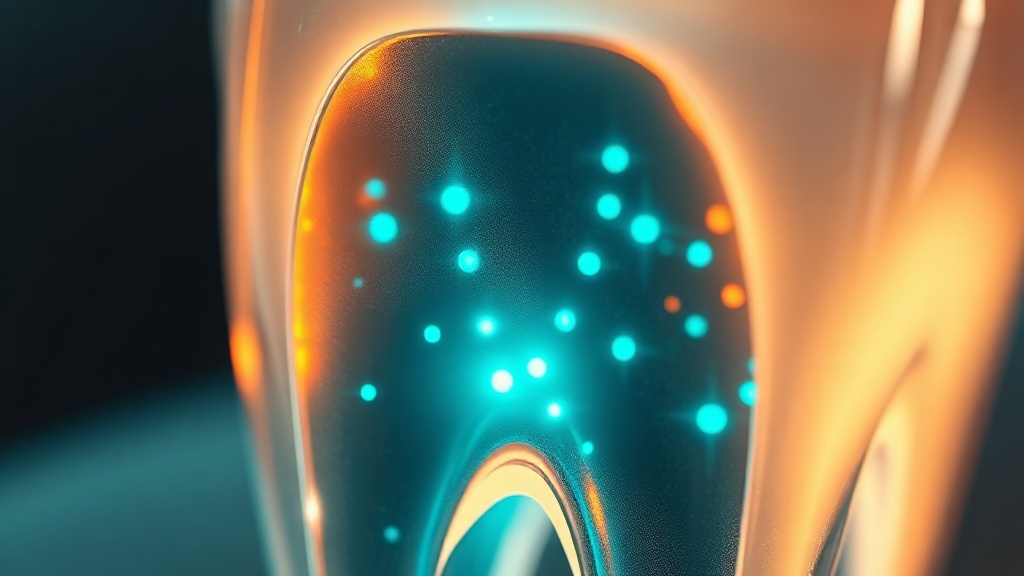
Peroxide diffuses through the enamel to reach and oxidise colour in the dentine, which is why strips change the whole tooth's shade.
What the research actually shows
Every claim below maps to a named, peer-reviewed source in the Sources section. According to PubMed.
| Claim | Evidence | Source |
|---|---|---|
| Peroxide whitens by diffusing through enamel to oxidise coloured molecules mainly in the dentine; efficacy tracks concentration and time. | Reference review of the bleaching mechanism. | Joiner, 2006 |
| A strongly concentrated bleaching gel lowered enamel surface microhardness by roughly 18% in one session, but a week of remineralising agents recovered 16 to 33% back toward baseline. | Laboratory enamel microhardness study. | Melo et al., 2022 |
| In living mouths, the enamel's calcium-to-phosphorus ratio was unchanged after hydrogen-peroxide, carbamide-peroxide or LED whitening versus baseline. | In-vivo randomised clinical trial. | Kury et al., 2020 |
| Peroxide gels saturated with calcium and phosphorus fully prevented surface softening with no loss of whitening. | Enamel bleaching laboratory study. | Andrade et al., 2021 |
| At whitening doses, hydrogen peroxide produces no acute or subacute systemic toxicity; concerns appear only at concentrations never reached in dental use. | Review of adverse effects of tooth-whitening products. | Goldberg et al., 2009 |
What raises and lowers the risk
| Factor | Effect on enamel and comfort | In your control? |
|---|---|---|
| Following the directed time and frequency | Keeps surface softening transient and fully recoverable | Yes |
| Higher peroxide concentration | More sensitivity, little extra whitening | Yes, choose lower |
| Leaving strips on far longer than directed | More surface softening and more sensitivity | Yes |
| Using a fluoride or remineralising toothpaste | Helps the surface re-harden between sessions | Yes |
| Worn enamel, exposed roots or cracks | Greater sensitivity risk; check with a dentist first | Partly |
Sensitivity is not the same as damage
The single biggest reason people believe strips harm enamel is the feeling of sensitivity, that brief cold or electric zing during or after whitening. It is real and common, indeed most people using stronger in-office peroxide report some discomfort, but it is a nerve response to peroxide and oxygen passing through the tooth, not a sign the enamel is being eaten away. It reliably settles once you stop. The evidence-based ways to reduce it are lower concentration and shorter wear time rather than exotic additives, and studies show higher-concentration gels mostly buy more sensitivity instead of more whitening. That is the practical safety lesson. Strips at ordinary over-the-counter strengths, worn for the time printed on the box, sit squarely in the well-tested zone. When people run into trouble it is almost always from doubling up, leaving strips on overnight, or whitening over existing problems such as exposed roots or cracks, where the peroxide reaches the nerve too easily. Match the product to the instructions and lasting enamel damage is simply not the concern; short-term comfort is.
Evidence you can act on.
Occasional emails — new research, new protocols, no noise.
How to whiten with strips without harming your enamel
These steps keep whitening in the safe, well-studied zone. This is cosmetic care, not treatment for any disease.
- 1
Start with a lower-concentration strip
per kitBecause higher peroxide mostly adds sensitivity rather than whitening, there is little reason to start strong. A lower-concentration strip worn correctly reaches a similar result with noticeably less discomfort, which makes it the sensible default for most people.
- 2
Follow the time on the box, and no longer
usually about 30 minutesThe directed wear time is exactly where surface softening stays transient and recoverable. Leaving strips on far longer does not whiten meaningfully more, it simply increases softening and sensitivity. Set a timer and take them off on schedule rather than by feel.
- 3
Use a remineralising or fluoride toothpaste between sessions
dailySaliva naturally re-hardens the enamel surface after whitening, and a fluoride or calcium and phosphate toothpaste helps it along. Studies show pairing whitening with minerals can prevent surface softening without dulling the whitening result at all.
- 4
Space out your whitening courses
as directedWhitening is not a daily-forever habit. Complete a course, then maintain occasionally, rather than re-applying constantly. Over-whitening is the main way people turn a safe cosmetic into a nagging sensitivity problem.
- 5
Check with a dentist first if you have worn enamel, gum recession or cracks
oncePeroxide reaches the nerve more easily through exposed dentine or damaged enamel. If you already have sensitivity, a quick professional check protects both your comfort and your enamel before you start a course of strips.
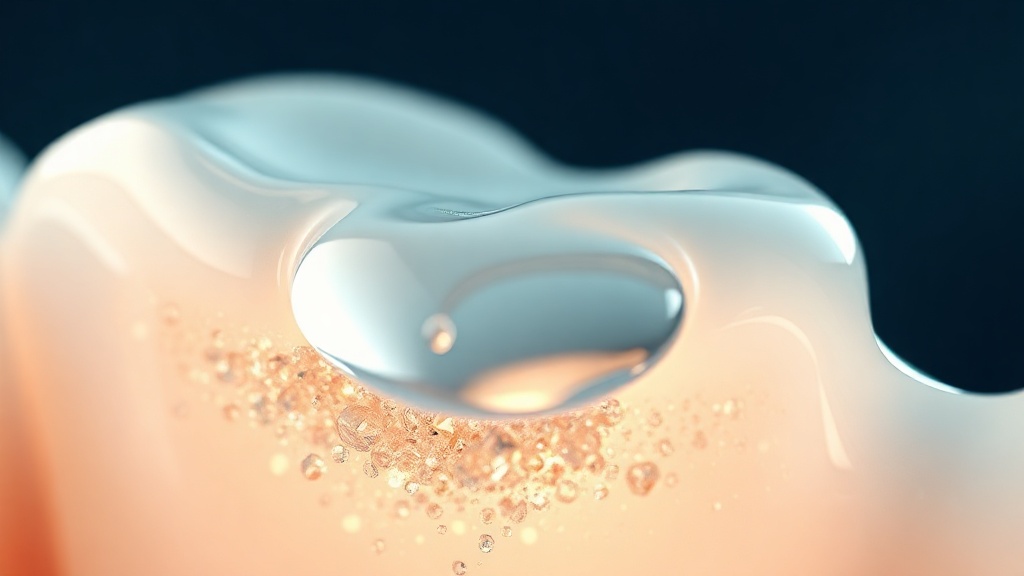
Saliva and remineralising toothpaste re-harden the enamel surface after whitening, which is why the softening is temporary.
See a dentist before or during whitening if you get sharp, lasting sensitivity that does not settle within a day or two of stopping, if your gums whiten, blanch or sting where the gel touches, or if you have visible enamel wear, exposed roots, cracks or a lot of dental work. A professional can tailor the concentration, shield exposed areas, and rule out causes of discolouration that whitening cannot change.
Frequently asked questions
Sources
- 1.
- 2.
- 3.
- 4.
- 5.
- 6.
- 7.
- 8.
- 9.

Fix your breath at the source.
The complete science-backed protocol — engineered to eliminate volatile sulfur compounds at the biological source.
Start the Breath Protocol →Related reading
Educational purposes only. The content on this page is not medical advice and is not a substitute for consultation with a qualified dental or medical professional.
More from the library
 Answers8 min
Does Teeth Whitening Damage Enamel? The Evidence-Based Answer
The honest, evidence-based answer to whether whitening harms enamel — what peroxide really does to the surface, why sensitivity is not damage, and the DIY methods that actually cause wear.
Read →→ Answers9 min
Does Teeth Whitening Hurt? Why It Happens and How to Prevent It
The sting is common but manageable — and the real levers are lower concentration and shorter wear time, not gimmicks.
Read →→ Answers9 min
How Often Can You Use Whitening Strips? Safe Frequency Explained
One course does most of the work; the smart move is occasional touch-ups, not back-to-back use.
Read →→ Guides8 min
The Safest Way to Whiten Teeth (Dentist-Backed, Enamel-First)
Whitening and enamel safety are not a trade-off. The gentlest approach is modest peroxide, patience, and minerals — not the harshest scrub.
Read →→ Answers8 min
Does Baking Soda Whiten Teeth? What the Evidence Says
An honest look at what baking soda can and cannot do for a whiter smile.
Read →→ Best Of9 min
Best Fluoride-Free Whitening Toothpaste: An Honest, Evidence-Based Guide (2026)
Which fluoride-free whitening ingredients hold up to the research — and which are marketing. An honest buyer's guide.
Read →→