Does Hydrogen Peroxide Whiten Teeth?
The one whitening ingredient that truly bleaches, how concentration and time drive the result, and how to use it safely.
- Yes, hydrogen peroxide genuinely whitens teeth. Unlike baking soda, charcoal or whitening rinses, which only polish surface stains, peroxide is the ingredient that actually bleaches the tooth.
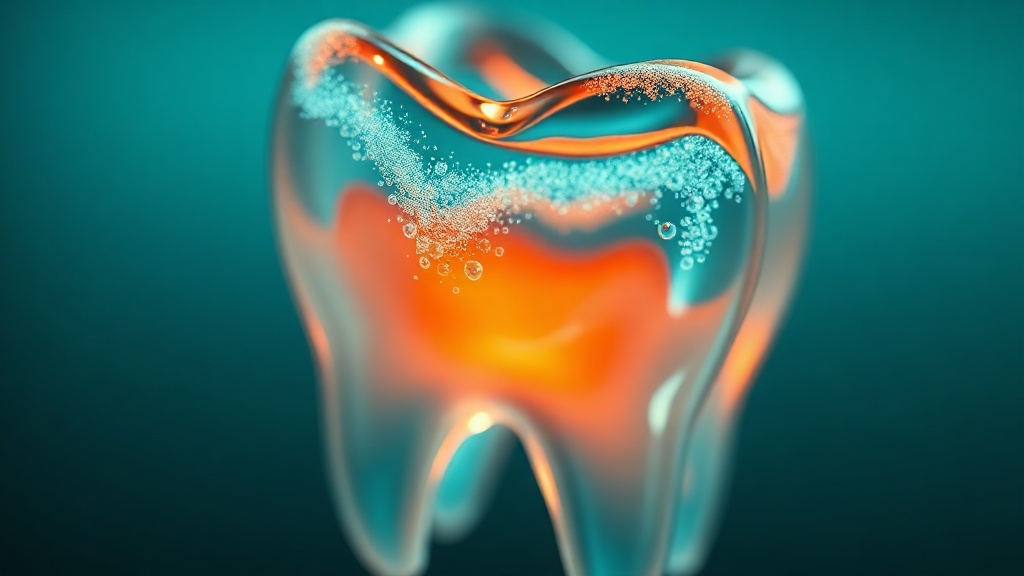
- It works by oxidation: the small peroxide molecule diffuses through the enamel and breaks apart the coloured molecules deep in the tooth, mainly in the dentine, lightening the colour from within.
- The two levers that decide your result are concentration and time. Higher concentrations act faster, but lower concentrations reach a similar endpoint if you leave them on longer.
- Carbamide peroxide is simply a slower-release form: it breaks down into hydrogen peroxide once it is on the teeth, so it works by the same mechanism at a gentler pace.
- Used correctly, peroxide is a safe cosmetic. It can briefly soften enamel and cause temporary sensitivity, but the softening is reversible with remineralisation, and lower concentrations cut the sensitivity without sacrificing whiteness.
Yes. Hydrogen peroxide is the active ingredient behind almost all real teeth whitening. It diffuses through the enamel and oxidises the coloured molecules inside the tooth, genuinely lightening its colour rather than just cleaning the surface. How much you whiten depends on the peroxide concentration and how long it stays in contact with the teeth.
How hydrogen peroxide whitens: the chemistry
Most things sold as whiteners only clean the outside of the tooth. Hydrogen peroxide is different, and understanding why answers the question completely. Peroxide is a small, unstable molecule that readily gives up oxygen. Because it is so small, it can pass through the enamel and into the dentine beneath, the layer that carries most of a tooth's colour. The stains that make teeth look yellow or brown are large organic molecules with a particular chemical structure, a chain of alternating double bonds, that happens to absorb light in a way our eyes read as colour. When peroxide releases its oxygen next to these molecules, it oxidises them, snapping those chains into smaller fragments that absorb less visible light. The pigment does not simply get scrubbed away; it is chemically broken down into paler, smaller pieces, so the tooth genuinely looks lighter. This is true bleaching, and it is why peroxide can change a tooth's shade in a way that no abrasive paste can. Carbamide peroxide, the other common whitening active, is best thought of as peroxide on a timer: it decomposes into hydrogen peroxide and urea once applied, releasing its peroxide more slowly, which is why carbamide formulas are often used for gentle overnight whitening.
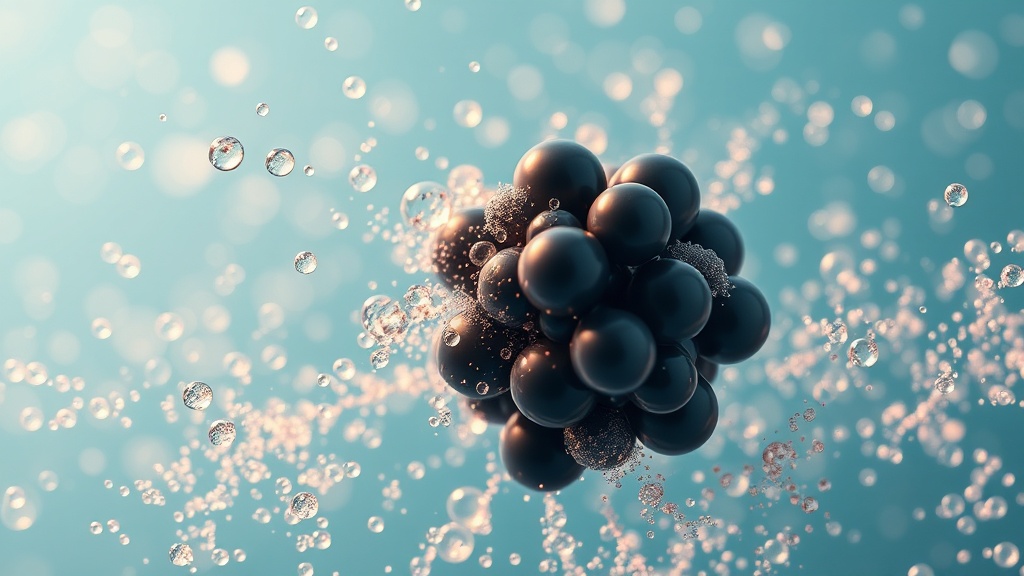
Oxidation in action: peroxide releases oxygen that breaks large coloured stain molecules into smaller, paler fragments, so the tooth reads as lighter.
What the research actually shows
Every claim below maps to a named, peer-reviewed source in the Sources section. According to PubMed.
| Claim | Evidence | Source |
|---|---|---|
| Peroxide whitens by diffusing through enamel to oxidise coloured species, mainly in the dentine, and its efficacy tracks concentration and time. | Reference review of the tooth-bleaching literature. | Joiner, 2006 |
| A 5.3% hydrogen-peroxide gel changed shade by 3.70 Vita units versus 0.87 for placebo over two weeks. | Double-blind, randomized, placebo-controlled trial. | Kugel & Kastali, 2000 |
| Among over-the-counter agents, only hydrogen peroxide achieved true whitening; baking soda and other actives merely removed surface stain. | In vitro comparison of OTC agents against hydrogen peroxide. | Muller-Heupt et al., 2023 |
| A single session of 35% hydrogen peroxide lowered enamel microhardness by about 18%, but one week of remineralising agents restored it toward baseline. | Laboratory microhardness study with four remineralising agents. | Melo et al., 2022 |
| Low or medium hydrogen-peroxide concentrations carried about 33% lower sensitivity risk than high concentrations, with no loss of colour change. | Systematic review and meta-analysis of 25 randomized trials. | Maran et al., 2020 |
Hydrogen peroxide versus surface-only whiteners
| Approach | What it does | Reaches the tooth's real colour? |
|---|---|---|
| Hydrogen peroxide | Oxidises coloured molecules inside the tooth | Yes: genuine bleaching |
| Carbamide peroxide | Breaks down into hydrogen peroxide, more slowly | Yes: same mechanism, gentler pace |
| Baking soda / abrasive pastes | Polishes surface stain off | No: surface-stain removal only |
| Non-peroxide whitening rinses | Slight surface effect | No: effect is barely perceptible |
| Charcoal | Abrades the surface, adds wear risk | No, and it can be harsher on enamel |
Concentration, time, and the sensitivity trade-off
If peroxide is so effective, why not just use the strongest possible gel? Because strength and comfort pull in opposite directions, and time gives you a way around the conflict. Higher concentrations do whiten faster, but the whitening reaction is driven at least as much by how long the peroxide stays in contact with the tooth. In controlled comparisons, a low-concentration gel worn for longer reached a similar shade to a stronger gel used briefly. Concentration mostly buys speed; time buys the actual result. Sensitivity, meanwhile, rises with concentration. Sharp, transient sensitivity is the most common side effect of whitening, and it is more frequent and intense with high-percentage gels. Pooled evidence shows that stepping down to a low or medium concentration cuts the risk of sensitivity by roughly a third without giving up colour change, which is why gentle-but-longer is often the smarter protocol. On enamel safety, the honest picture is reassuring: a strong peroxide session temporarily softens the enamel surface, but that softening reverses within a week of using remineralising agents, and formulating the gel with calcium and phosphate can prevent the softening altogether while keeping the whitening intact. At the low doses used for whitening, peroxide does not produce systemic toxicity. The risks are local, transient and manageable.
Evidence you can act on.
Occasional emails — new research, new protocols, no noise.
How to whiten with peroxide safely
Peroxide whitening is a safe cosmetic when done sensibly. None of this treats a disease; it is simply how to get a real colour change while protecting your enamel and gums.
- 1
Choose a sensible concentration
before you startReach for a moderate concentration rather than the strongest one you can find. Because time matters more than strength, a moderate gel gets you to a similar place with markedly less sensitivity. Very high concentrations are best left to professional, supervised use.
- 2
Respect the contact time
per sessionFollow the product's recommended wear time rather than trying to rush the result with a stronger gel. Consistent daily sessions over a couple of weeks out-perform occasional aggressive ones, because the reaction depends on sustained contact.
- 3
Keep peroxide off your gums
each applicationApply gel only to the tooth surfaces and wipe away any excess before seating a tray or strip. Peroxide that pools on the gums stings and can temporarily blanch the tissue. Careful placement prevents most whitening discomfort.
- 4
Remineralise between sessions
dailyBrush with a fluoride, calcium or potassium-nitrate paste around your whitening course. This helps the enamel surface recover its hardness and blunts sensitivity, so the temporary softening from peroxide never becomes a lasting problem.
- 5
Expect fade, and know when to get help
ongoingWhitening is cosmetic and gradually rebounds, so plan on occasional touch-ups rather than a one-time fix. If you want a faster or deeper change, or if sensitivity becomes sharp and lingering, see a dentist for a supervised, higher-concentration option.
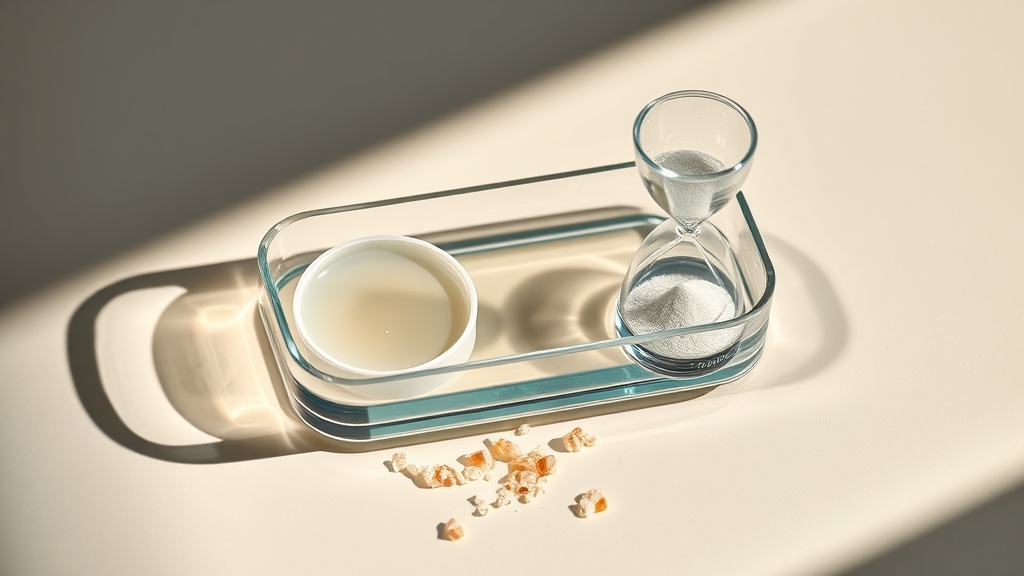
Two levers and a safeguard: the right concentration and enough contact time drive the result, while remineralisation keeps the enamel healthy.
See a dentist before whitening if you have untreated decay, gum recession, exposed roots, cracked teeth, or crowns and veneers on show, since peroxide cannot lighten dental work and can aggravate exposed dentine. A professional can also offer higher-concentration, supervised whitening that reaches further and faster than any home kit, with your gums protected. And if whitening ever causes sharp, lingering pain rather than the usual brief twinges, pause and get it checked.
Frequently asked questions
Sources
- 1.
- 2.
- 3.
- 4.
- 5.
- 6.
- 7.
- 8.
- 9.
- 10.

Fix your breath at the source.
The complete science-backed protocol — engineered to eliminate volatile sulfur compounds at the biological source.
Start the Breath Protocol →Related reading
Educational purposes only. The content on this page is not medical advice and is not a substitute for consultation with a qualified dental or medical professional.
More from the library
 Comparisons8 min
Carbamide Peroxide vs Hydrogen Peroxide for Teeth Whitening: Which Works Better?
An evidence-based comparison of the two whitening peroxides, what actually separates them, and how to choose by format and comfort rather than by the biggest number.
Read →→ Answers8 min
Does Teeth Whitening Damage Enamel? The Evidence-Based Answer
The honest, evidence-based answer to whether whitening harms enamel — what peroxide really does to the surface, why sensitivity is not damage, and the DIY methods that actually cause wear.
Read →→ Answers9 min
Does Teeth Whitening Hurt? Why It Happens and How to Prevent It
The sting is common but manageable — and the real levers are lower concentration and shorter wear time, not gimmicks.
Read →→ Best Of8 min
Best Teeth Whitening Gel (2025): Dentist-Tested Picks for Every Budget
Whitening gel is the only at-home format that genuinely bleaches teeth. Pick the right concentration and delivery, and contact time does the rest.
Read →→ Answers8 min
Does Baking Soda Whiten Teeth? What the Evidence Says
An honest look at what baking soda can and cannot do for a whiter smile.
Read →→ Best Of9 min
Best Fluoride-Free Whitening Toothpaste: An Honest, Evidence-Based Guide (2026)
Which fluoride-free whitening ingredients hold up to the research — and which are marketing. An honest buyer's guide.
Read →→