Snow Teeth Whitening Review: Does the LED Kit Actually Work?
A Snow-style LED whitening kit, judged on what the science actually supports rather than the marketing around the light.
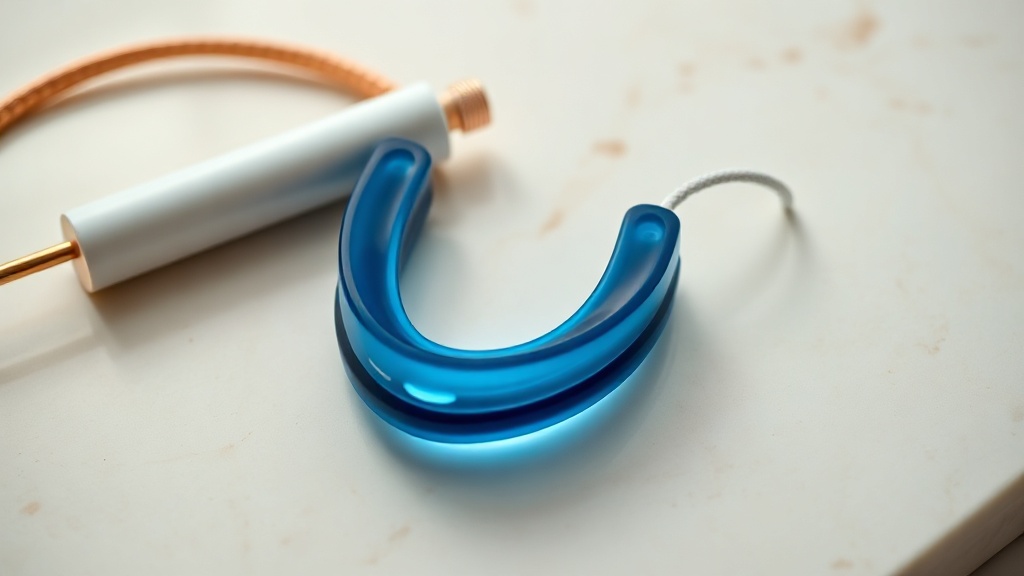
- Snow and similar kits pair a peroxide whitening serum with a glowing blue "activator" light. The honest headline: the serum does the whitening, and the light adds no measurable benefit.
- A network meta-analysis of 28 randomized trials found that no light-activation system improved colour change over light-free peroxide bleaching, at any peroxide concentration.
- A companion analysis of 32 trials found the light does not reduce tooth sensitivity either, so it is not buying you comfort in place of speed.
- What actually drives your result is the peroxide: its concentration and, even more, how long it stays in contact with the teeth. That is the lever that matters.
- Whitening is cosmetic and impermanent. Shade gradually rebounds over months to years, so a kit is best judged on the gel it delivers and how gentle it feels, not on the theatre of the LED.
A Snow-style kit works because of its peroxide serum, not its LED light. Controlled trials show light activation adds no measurable whitening over peroxide alone. So the kit can genuinely brighten teeth as a cosmetic, but you are really paying for the gel and the routine, while the glowing mouthpiece is mostly for show.
How LED whitening kits are supposed to work
Every LED kit sells the same picture: you brush a serum onto your teeth, clip in a mouthpiece that glows blue, and the light "activates" or "accelerates" the whitening. It is a compelling image, but it inverts what is actually doing the work. Tooth whitening is a chemical reaction, not a light show. Peroxide, whether hydrogen peroxide or the carbamide peroxide that breaks down into it, diffuses through the enamel and oxidises the coloured molecules that make teeth look yellow or dull, mostly in the dentine layer underneath. The two factors that decide how much lighter you get are the concentration of that peroxide and the length of time it stays in contact with the tooth. Higher concentrations act faster, but lower concentrations reach almost the same endpoint if you simply leave them on longer. The blue LED is marketed as a catalyst that speeds this reaction up. In the lab and the clinic, that catalytic story does not hold: when researchers compare the identical gel with and without a light, the light does not move the needle. Understanding that one fact reframes the entire purchase: you are buying a peroxide delivery system, and the light is packaging.
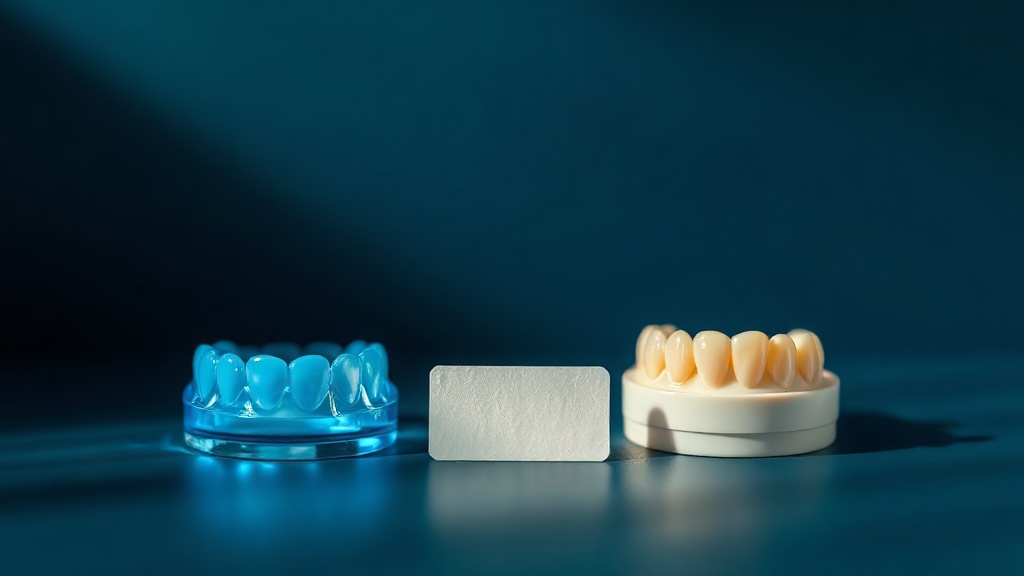
Same gel, same result: in controlled trials the identical peroxide whitens to the same shade whether or not a light is shining on it.
What the research actually shows
Every claim below maps to a named, peer-reviewed source in the Sources section. According to PubMed.
| Claim | Evidence | Source |
|---|---|---|
| No light-activation protocol improved colour change over light-free peroxide bleaching, at high or low peroxide concentration. | Bayesian network meta-analysis of 28 randomized trials. | Maran et al., 2019 |
| Light activation did not change the risk or intensity of tooth sensitivity during in-office bleaching. | Companion network meta-analysis of 32 randomized trials. | Moran et al., 2021 |
| Peroxide whitens by diffusing through enamel to oxidise coloured species; efficacy tracks concentration and time. | Reference review of bleaching mechanism and measurement. | Joiner, 2006 |
| A 5.3% hydrogen-peroxide gel changed shade by 3.70 Vita units versus 0.87 for placebo over two weeks. | Double-blind, randomized, placebo-controlled trial (66 completers). | Kugel & Kastali, 2000 |
| At-home whitening is time-dependent, not concentration-dependent: a lower-concentration gel worn overnight out-whitened a higher one worn for one hour. | Randomized clinical trial, 80 participants, 14 days. | Lopez Darriba et al., 2017 |
Marketing claim versus the evidence
| Kit feature | What the marketing implies | What the evidence supports |
|---|---|---|
| LED "activator" light | Speeds up and boosts whitening | No measurable added whitening or comfort benefit |
| Peroxide serum | Just one part of the system | The actual active ingredient. This is what whitens |
| High concentration | Faster and better results | More sensitivity, not proportionally more whitening |
| Daily wear time | A minor instruction | The real lever. Longer contact drives more colour change |
| "Years of whiteness" | A near-permanent result | Cosmetic and gradual rebound. Upkeep is needed |
Where the LED actually helps (and where it does not)
It would be unfair to call the light useless in every sense. The honest position is that its value is experiential, not chemical. Clipping in a device and watching it glow turns a chore into a ritual, and a ritual is something people are far more likely to complete for the full recommended time. Since contact time is the real driver of results, anything that keeps you consistent is quietly helpful, even if the mechanism is behavioural rather than photochemical. A handful of single studies have reported a small early edge for light-assisted whitening, but that edge tends to disappear within about a month, and the larger pooled analyses wash it out entirely. Any brief brightness you notice right after a session is partly dehydration: teeth lose surface moisture during treatment and look temporarily lighter until they rehydrate over the following hours. So enjoy the light as part of the experience if you like it, but do not let it justify a premium price or, worse, a higher-concentration gel you did not need. The gel and your consistency are the whole game.
Evidence you can act on.
Occasional emails — new research, new protocols, no noise.
How to get a real result from a kit like Snow
None of this treats a disease. It is simply how to turn a peroxide kit into a visible, comfortable cosmetic result while protecting your enamel and gums.
- 1
Judge the serum, not the light
before you buyLook past the mouthpiece and read the active ingredient. Is it hydrogen or carbamide peroxide, and at what percentage? That single line tells you far more about what the kit will do than any claim about the LED. A well-formulated gel with no light beats a weak gel with a dazzling one.
- 2
Favour contact time over strength
per sessionBecause whitening is time-driven, a lower-concentration gel worn for longer reaches almost the same endpoint as a stronger one, with noticeably less sensitivity. If a kit offers a choice, the gentler-but-longer route is usually the smarter trade.
- 3
Manage sensitivity proactively
throughoutSpace your sessions out, shorten the wear time if teeth start to twinge, and brush with a remineralising or potassium-nitrate paste between sessions. Lower concentration and reduced wear time are the two levers with the best evidence for keeping whitening comfortable.
- 4
Protect your gums
each applicationApply gel only to the tooth surfaces and wipe away any excess before seating the tray. Peroxide that pools on the gums stings and can blanch the tissue. Careful placement is the difference between a comfortable session and a sore one.
- 5
Set expectations and maintain
ongoingExpect a real but modest brightening, not a veneer-white transformation, and expect it to fade. Colour rebounds gradually over months to years, so plan on occasional light touch-ups rather than treating one course as permanent.
The peroxide serum is the active ingredient: as it breaks down it releases oxygen that oxidises the stains. That reaction, not the light, is what lifts the shade.
See a dentist before whitening if you have untreated decay, exposed roots, gum recession, cracked teeth, or crowns and veneers on your front teeth, since peroxide will not change the colour of dental work and can aggravate exposed dentine. Book a visit too if whitening triggers sharp, lingering pain rather than the usual brief twinges. A quick check-up first is the safest way to whiten, and a dentist can offer supervised options that reach further than any kit.
Frequently asked questions
Sources
- 1.
- 2.
- 3.
- 4.
- 5.
- 6.
- 7.
Fix your breath at the source.
The complete science-backed protocol — engineered to eliminate volatile sulfur compounds at the biological source.
Start the Breath Protocol →Related reading
Educational purposes only. The content on this page is not medical advice and is not a substitute for consultation with a qualified dental or medical professional.
More from the library
 Reviews8 min
Does HiSmile Actually Work? An Evidence-Based Review
A peroxide-free whitening brand, weighed honestly against the independent evidence: what it can and cannot do.
Read →→ Comparisons8 min
Carbamide Peroxide vs Hydrogen Peroxide for Teeth Whitening: Which Works Better?
An evidence-based comparison of the two whitening peroxides, what actually separates them, and how to choose by format and comfort rather than by the biggest number.
Read →→ Answers9 min
Does Teeth Whitening Hurt? Why It Happens and How to Prevent It
The sting is common but manageable — and the real levers are lower concentration and shorter wear time, not gimmicks.
Read →→ Best Of8 min
Best Teeth Whitening Gel (2025): Dentist-Tested Picks for Every Budget
Whitening gel is the only at-home format that genuinely bleaches teeth. Pick the right concentration and delivery, and contact time does the rest.
Read →→ Answers8 min
Does Teeth Whitening Damage Enamel? The Evidence-Based Answer
The honest, evidence-based answer to whether whitening harms enamel — what peroxide really does to the surface, why sensitivity is not damage, and the DIY methods that actually cause wear.
Read →→ Answers8 min
Does Baking Soda Whiten Teeth? What the Evidence Says
An honest look at what baking soda can and cannot do for a whiter smile.
Read →→