
NASA's Secret to Bone Density: The Nano-Hydroxyapatite Revolution
The space-age origin is the hook, but the real reason nano-hydroxyapatite belongs in your bathroom is quieter: it is the exact mineral your enamel is built from.
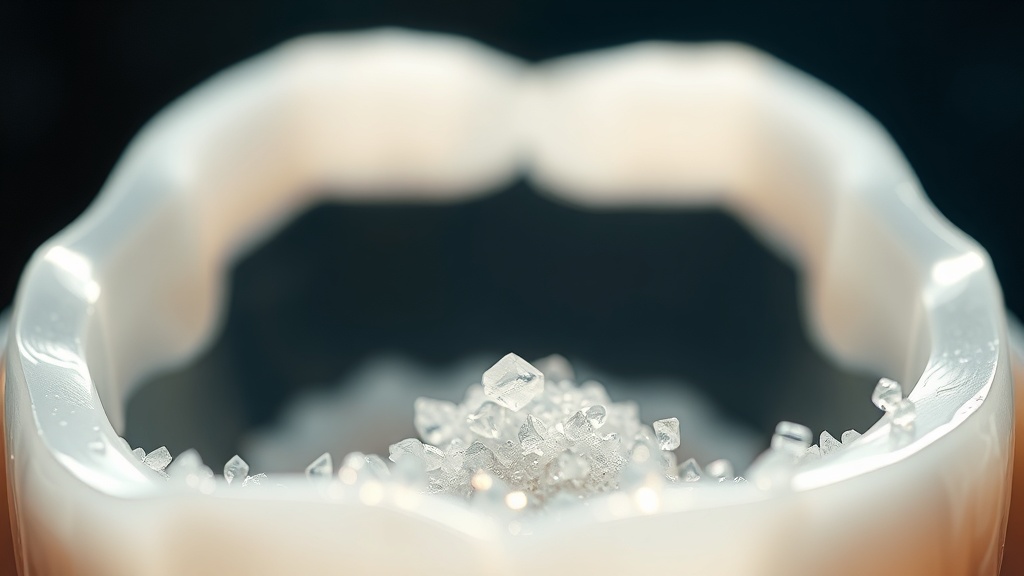
- Nano-hydroxyapatite (n-HAp) is not a foreign chemical. It is a laboratory-made version of hydroxyapatite, the exact mineral that already makes up about 97 percent of your tooth enamel.
- Because the particles are enamel's own building block shrunk to nanometre scale, they can settle into micro-scratches and softened spots on the surface and help rebuild it from the outside in.
- The famous 'NASA invented it for astronauts' story is best treated as origin lore. The ingredient earns its place through remineralisation science, not a space pedigree.
- In head-to-head studies, n-HAp toothpaste has performed comparably to fluoride at helping remineralise the enamel surface. That is an honest 'as good as', not a miracle 'better than'.
- It can also make enamel look smoother and a shade brighter by filling and polishing the surface, though the whitening evidence in real mouths is still early.
Nano-hydroxyapatite is a lab-made copy of the mineral your enamel is already built from. Shrunk to nano scale, it settles into micro-defects and integrates with the surface, helping rebuild and smooth it. The NASA-astronaut origin is mostly marketing lore; the real story is solid biomimetic remineralisation science that rivals fluoride.
The mineral your teeth are already made of
Enamel is the hardest substance your body makes, and it is almost entirely one material: hydroxyapatite, a crystalline calcium phosphate that accounts for roughly 96 to 97 percent of enamel by weight. Here is the catch that shapes everything else. Enamel is not living tissue. It contains no cells, no blood supply, no way to knit itself back together the way skin or bone can. As a 2020 review in F1000Research puts it plainly, once human enamel is formed it cannot be biologically repaired or replaced. So the surface of every tooth is locked in a slow chemical tug-of-war. Each time you eat or drink something acidic, hydrogen ions pull calcium and phosphate out of the crystal lattice, a process called demineralisation. Between meals, saliva pushes some of those minerals back in. Stay balanced and the surface holds. Tip too far toward loss and the enamel softens, roughens, and starts to look dull. Nano-hydroxyapatite changes the maths of that exchange by adding a ready-made supply of the exact mineral the surface is losing. The particles are engineered to roughly the scale of enamel's own crystallites, small enough to nestle into micro-defects, etched grooves and the softened zones where mineral has leached away. There they act as seed material, binding to the surface and giving fresh mineral a scaffold to build on. Scientists call this biomimetic, meaning it imitates the body's own chemistry rather than fighting it. It is less like painting over a wall and more like patching it with the original plaster.
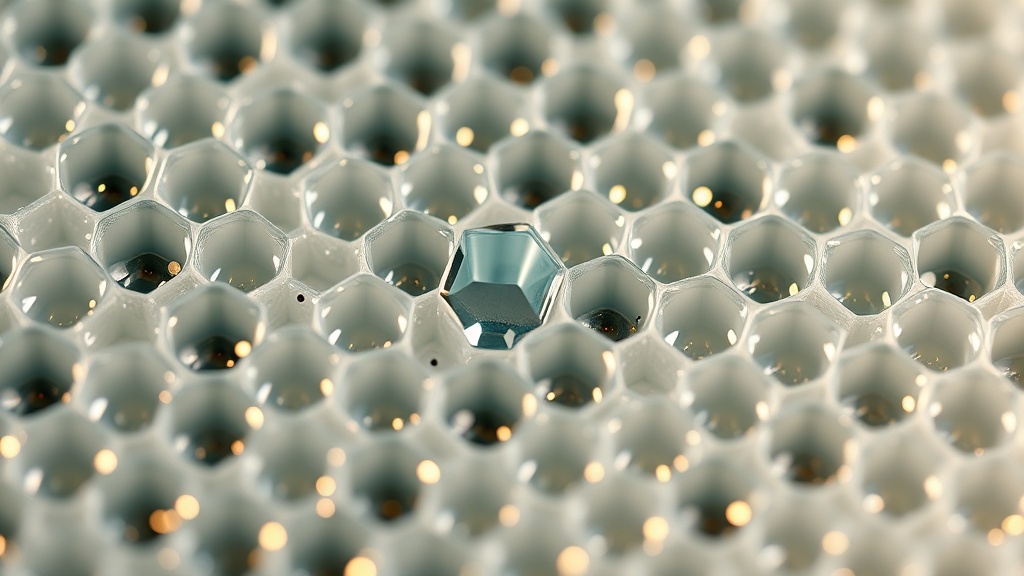
Enamel is built from tightly packed mineral rods. Nano-hydroxyapatite is sized to settle into the gaps and rebuild the surface from the outside in.
What the research actually shows
Every claim below maps to a named, peer-reviewed study. According to PubMed.
| Claim | Evidence | Source |
|---|---|---|
| Enamel cannot repair itself biologically, which is why an external mineral source matters | A narrative review of enamel remineralisation explains that once formed, human enamel cannot be biologically repaired or replaced, and lists nano-hydroxyapatite among the modern biomimetic systems that promote surface remineralisation. | Farooq & Bugshan, F1000Research, 2020 |
| An n-HAp dentifrice remineralised the enamel surface comparably to fluoride in a controlled trial | In a randomised, double-blind, in-situ crossover trial in 30 adults, a nano-hydroxyapatite dentifrice produced mineral gain with no statistically significant difference from a 1,100 ppm fluoride toothpaste. | Najibfard et al., J Clin Dent, 2011 |
| 10 percent hydroxyapatite matched fluoride at rebuilding early enamel lesions in children's teeth | A double-blind randomised crossover study found no statistically significant difference between a 10 percent hydroxyapatite toothpaste and a 500 ppm fluoride toothpaste for remineralisation, with hydroxyapatite giving a more homogenous result. | Amaechi et al., BDJ Open, 2019 |
| An independent 2025 meta-analysis rated hydroxyapatite comparable to fluoride | A systematic review and meta-analysis with no manufacturer-affiliated authors pooled in-situ randomised trials and found no significant difference between fluoride-free hydroxyapatite and fluoride toothpastes for surface remineralisation. | Chatzidimitriou et al., J Dent, 2025 |
| Hydroxyapatite can make enamel look whiter, but the in-mouth evidence is still preliminary | A systematic review reported that laboratory studies consistently show enamel whitening, while the human clinical evidence rests on a handful of small, preliminary trials and needs more support. | Limeback et al., Dent J, 2023 |
Nano-hydroxyapatite vs fluoride, honestly
| Nano-hydroxyapatite | Fluoride | |
|---|---|---|
| How it works | Adds back the actual enamel mineral and fills the surface | Converts surface mineral into a tougher, more acid-resistant form |
| Track record | Newer; strong laboratory data and growing clinical evidence | Decades of large-scale clinical evidence behind it |
| Surface feel | Studies note a smoother, more polished surface | No surface-filling or polishing effect |
| Look of teeth | May make enamel look smoother and slightly brighter | Not positioned as a whitener |
| If swallowed | Made of enamel's own mineral; reviews regard it as safe if swallowed | Needs dose care in young children who swallow paste |
| Honest summary | A credible fluoride-free option that performs comparably | The long-established benchmark it is measured against |
Where the NASA story really comes from
Almost every article about this ingredient opens the same way: NASA developed hydroxyapatite to help astronauts who were losing bone and tooth mineral in the weightlessness of space. It is a great hook. It is also, in the form it is usually told, more legend than documented history. Here is the honest version. Hydroxyapatite did draw serious scientific attention in the space-age decades, when researchers across medicine were exploring it as a biocompatible material for bone. In the late 1970s a Japanese company, Sangi, brought a hydroxyapatite toothpaste to market and has long wrapped it in a space-technology origin story. What no peer-reviewed source establishes is the tidy claim that NASA formulated a toothpaste to regrow astronaut enamel. That part is best read as marketing lore that hardened into 'fact' through repetition. None of this weakens the case for the ingredient, because the case was never really about NASA. It rests on something more mundane and more convincing: dozens of laboratory and clinical studies, run by dental researchers with no connection to the space programme, measuring what hydroxyapatite actually does to the enamel surface. A fair reader should also note that a good share of the most favourable reviews are written by scientists employed by oral-care manufacturers, which is exactly why the independent trials matter. Strip away the astronaut framing and the science underneath still stands. So enjoy the story, then judge the toothpaste on the evidence, not the origin myth.
Evidence you can act on.
Occasional emails — new research, new protocols, no noise.
How to get the most from it
If you want to try a nano-hydroxyapatite toothpaste, a few habits make the difference between a fair test and a wasted one.
- 1
Read the concentration, not just the label
Before you buy'Hydroxyapatite' on the front of the box means little without a meaningful amount inside. The clinical studies that matched fluoride used pastes in the range of about 5 to 20 percent hydroxyapatite. Look for a brand that states its percentage rather than burying it in a fine-print ingredient list.
- 2
Brush twice a day, gently
Morning and nightThe particles need contact time on the surface to bind and build. Two thorough, gentle brushing sessions a day give the mineral its best chance to settle. Scrubbing hard does not speed it up and can wear down the very surface you are trying to smooth.
- 3
Do not rinse it all away
After brushingSpit out the excess but skip the big water rinse. Leaving a thin film of paste behind keeps the mineral in contact with the enamel for longer, which is exactly when the surface work happens.
- 4
Give it weeks, not days
6 to 12 weeksSurface remineralisation is gradual. The trials that showed a benefit ran for weeks, not overnight. Judge a paste by how your teeth look and feel after a couple of months of consistent use, not the first morning.
- 5
Keep the rest of the routine honest
OngoingNo toothpaste outruns a constant acid habit. Cutting back on all-day sipping of soda and citrus, cleaning between the teeth, and seeing your dentist on schedule protect the surface far more than any single tube can.
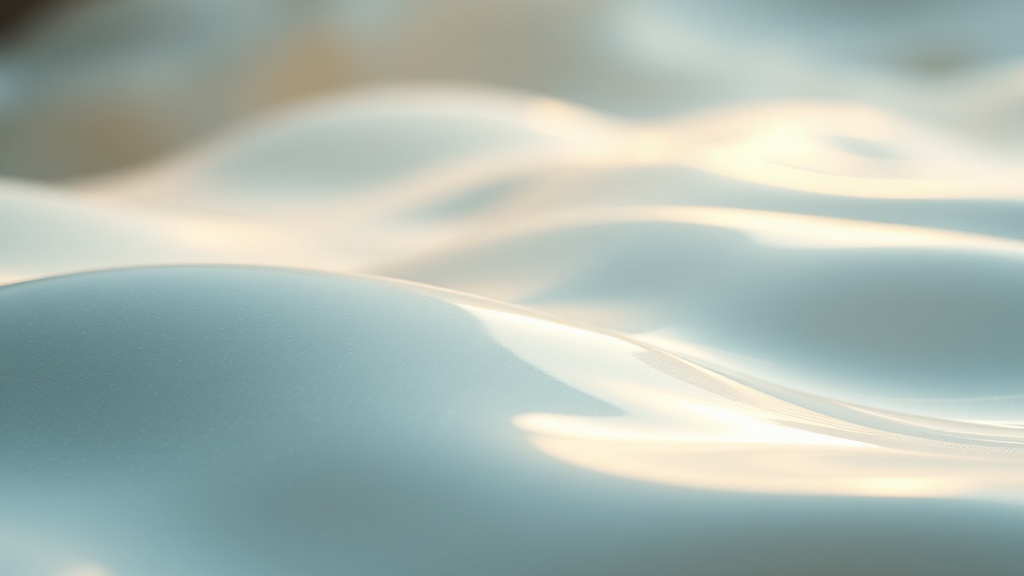
The goal of surface remineralisation: enamel that looks and feels smoother, glossier and a touch brighter.
Chalky white patches, a tooth that has turned sensitive to cold or sweetness, or visible pitting and worn-through spots deserve a professional's eye, because they can point to something a toothpaste cannot handle on its own. Nano-hydroxyapatite is a way to support and smooth the enamel surface, not a substitute for a dental exam. If you are weighing a fluoride-free routine and you or your children are at higher risk, talk it through with your dentist before you switch rather than after.
Frequently asked questions
Sources
- 1.
- 2.
- 3.
- 4.
- 5.
- 6.
- 7.
- 8.
- 9.

Fix your breath at the source.
The complete science-backed protocol — engineered to eliminate volatile sulfur compounds at the biological source.
Start the Breath Protocol →Related reading
Educational purposes only. The content on this page is not medical advice and is not a substitute for consultation with a qualified dental or medical professional.
More from the library
 Comparisons8 min
Hydroxyapatite vs Fluoride: Which Toothpaste Is Right for You?
Two ways to strengthen enamel, one big difference in how much evidence stands behind each.
Read →→ Guides8 min
Does Hydroxyapatite Toothpaste Work? What the Evidence Shows
The fluoride-free ingredient dentists keep debating, measured against the actual clinical trials.
Read →→ Answers8 min
Is Nano-Hydroxyapatite Toothpaste Safe?
The nanoparticle worry, answered by the actual toxicology reviews rather than the headlines.
Read →→ The Journal9 min
The Oral Microbiome: Your Body's Command Center
Most of the bacteria in your mouth are allies — and keeping them in balance may matter far beyond your breath.
Read →→ Answers8 min
How to Get Rid of White Spots on Teeth: Your Options, Ranked
An honest, evidence-based ladder of options, from what you can do at home to what only a dentist can fix.
Read →→ Ingredients8 min
Hydroxyapatite Toothpaste Benefits: What the Evidence Actually Supports
A calm, science-first look at what hydroxyapatite toothpaste can genuinely do for your enamel, and where the evidence stops.
Read →→