The Biochemistry of VSCs: Why Alcohol Mouthwash Is a Biological Trap
The molecules behind the smell are real chemistry — and the rinse that masks them in minutes can quietly keep the cycle spinning.

- Chronic bad breath is, at its core, a chemistry problem — a family of gases called volatile sulfur compounds, or VSCs: hydrogen sulfide, methyl mercaptan and dimethyl sulfide.
- Those gases are made when anaerobic, Gram-negative bacteria — living where oxygen barely reaches, deep on the back of the tongue and in the pockets around the gums — break down the proteins in shed cells, saliva and trapped debris.
- Alcohol-based antiseptic mouthwash masks the smell, but the masking is measured in minutes; in studies the effect fades within about half an hour.
- The trap: harsh rinsing leaves the mouth drier and more acidic and disturbs the whole microbial community, so the fast-growing sulfur-producers rebound — and you reach for the bottle again.
- Working at the source — grooming the tongue gently, keeping the mouth moist, and rebalancing the good bacteria — targets the chemistry instead of chasing the smell.
Chronic bad breath is a biochemical process: anaerobic bacteria on the tongue and in gum pockets break sulfur-containing proteins down into volatile sulfur compounds — the molecules you actually smell. Alcohol mouthwash masks them for minutes while drying the tissues and disturbing the bacterial balance, so the odour rebounds. Rebalancing at the source works with the chemistry, not against it.
The molecules you actually smell
Bad breath has a reputation as a hygiene failure — a sign you did not brush well enough. The chemistry tells a more precise story. What you smell in chronic halitosis is not a vague 'dirtiness' but a small set of specific gas molecules, known collectively as volatile sulfur compounds, or VSCs. The three that dominate are hydrogen sulfide (the note of rotten eggs), methyl mercaptan (closer to rotten cabbage) and dimethyl sulfide. In a classic analysis of mouth air, hydrogen sulfide and methyl mercaptan alone accounted for roughly 90% of the sulfur responsible for the odour. These gases are a by-product of bacteria feeding. Specific species — predominantly anaerobic and Gram-negative — thrive in the low-oxygen corners of the mouth: the fissured surface at the very back of the tongue, and the pockets between gum and tooth. They are proteolytic, meaning they cleave proteins and peptides apart, and they have a particular appetite for the sulfur-bearing amino acids locked inside them. Cysteine is broken down into hydrogen sulfide; methionine into methyl mercaptan. The raw material is ordinary and always present: shed epithelial cells, proteins in saliva, trace blood components, trapped food. The conditions that favour the reaction are just as specific — warm, moist, low in oxygen, low in carbohydrate, and around neutral to slightly alkaline pH. In other words, chronic bad breath is a controlled putrefaction, running quietly in the parts of the mouth a toothbrush rarely reaches.
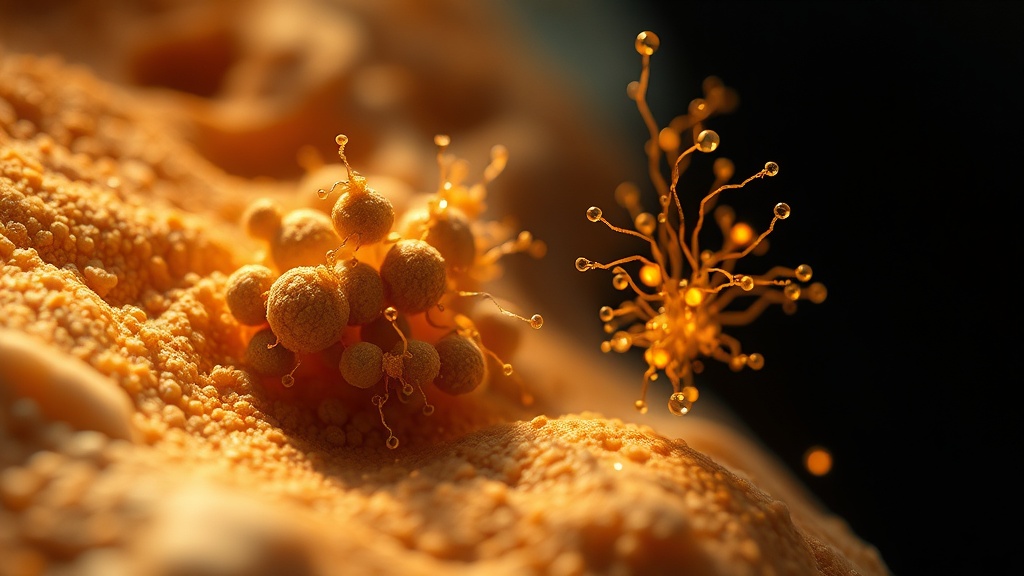
Where the odour is made: anaerobic bacteria on the tongue break sulfur-bearing proteins into the gases you smell.
What the research shows
Every claim below maps to a named, peer-reviewed study. According to PubMed.
| Claim | Evidence | Source |
|---|---|---|
| Volatile sulfur compounds are the chemical basis of oral bad breath | A foundational analysis found that hydrogen sulfide and methyl mercaptan account for roughly 90% of the sulfur in mouth air, with most of the odour emanating from the back of the tongue. | Tonzetich, J Periodontol, 1977 |
| The gases come from Gram-negative anaerobes breaking down proteins | A review attributes oral malodour mainly to volatile sulfur compounds produced by Gram-negative, anaerobic bacteria metabolising proteins from epithelial cells and debris on the tongue and in gum pockets. | Morita & Wang, J Clin Periodontol, 2001 |
| Masking rinses freshen breath only briefly | In a Cochrane review, reductions in volatile sulfur compounds after tongue cleaning or rinsing could not be detected beyond about 30 minutes. | Outhouse et al., Cochrane, 2006 |
| Antiseptic rinsing shifts the whole oral microbiome and acidifies saliva | Seven days of chlorhexidine mouthwash produced a major shift in the salivary microbiome, a significant drop in saliva pH and buffering capacity, and lower nitrite availability in healthy adults. | Bescos et al., Sci Rep, 2020 |
| After treatment, the odour-causing bacteria repopulate and the smell returns | Researchers note that shortly after antimicrobial treatment the problematic bacteria quickly repopulate the tongue and the malodour returns — the rationale for reseeding beneficial strains instead. | Burton et al., Oral Dis, 2005 |
Two ways to answer a bad smell
| Mask it (alcohol antiseptic rinse) | Rebalance it (work at the source) | |
|---|---|---|
| Core idea | Overpower and sterilise — flood the mouth with alcohol and flavour | Reduce the fuel and restore a balanced community |
| The VSC gases | Masked for minutes, then remade | Produced more slowly as the source shrinks |
| The mouth environment | Left drier and more acidic after harsh rinsing | Kept moist and near its natural balance |
| Good bacteria | Knocked back along with the bad | Protected and encouraged |
| Long-term pattern | Fresh, fade, rebound, rinse again | A steadier, more self-regulating baseline |
The trap: why the bottle keeps coming back
Here is the part the label never mentions. An alcohol antiseptic rinse does two things at once, and over time they work against each other. The first is cosmetic and immediate: a strong flush of alcohol and flavour overwhelms your sense of smell and masks the odour. It feels like a fix. But masking is short-lived — the underlying gases are still being produced, and the fresh sensation fades, often within the hour. The second effect is slower and quieter. Alcohol is a solvent and an astringent, and a broad antiseptic does not aim; it knocks back bacteria indiscriminately. That means the beneficial and neutral species — including the nitrate-reducing bacteria tied to wider health — take the hit alongside the sulfur-producers. In controlled studies, a week of antiseptic rinsing produced a major shift in the salivary community, left saliva measurably more acidic with less buffering capacity, and lowered nitrite availability. Antiseptic rinses are also documented to cause soreness, irritation and a burning sensation in the soft tissues. Now the trap closes. A mouth that is drier, more acidic and stripped of its usual residents is not a hostile place for the odour-makers — they are fast, hardy anaerobes, and they repopulate the tongue quickly once the rinse wears off. The smell comes back, so the bottle comes out again, and the pattern repeats. To be honest about what the evidence does and does not show: studies clearly document that the masking is brief and that the bacteria return. Whether breath ends up genuinely worse than before is more the lived feeling of the loop than a proven overshoot — but the loop itself is real, and it is self-reinforcing.
Evidence you can act on.
Occasional emails — new research, new protocols, no noise.
How to work with the chemistry
You cannot out-rinse a process that regenerates every few hours. The durable approach is to shrink the source, keep the environment healthy, and let a balanced community hold the line. None of this is a medical treatment; it is everyday oral wellness.
- 1
Retire the daily antiseptic reflex
Starting todayStop treating a harsh alcohol rinse as a lifelong daily habit. Reserve short, targeted antiseptic courses for the specific situations a dentist actually recommends — not a permanent morning reset that keeps disturbing the community you want on your side.
- 2
Groom the tongue, gently
Once dailyMost of the odour is generated on the back of the tongue, so lightly cleaning that surface removes both the bacteria and the protein they feed on. Gentle is the word — you are grooming a surface, not scrubbing it raw. A soft scraper or brush is plenty.
- 3
Keep the mouth moist
Throughout the dayA dry mouth concentrates the gases; the strongest breath odour of the day tends to show up after long stretches of low saliva flow. Sip water, and if dryness is a pattern, favour alcohol-free options that will not add to it. Saliva is your built-in rinse.
- 4
Neutralise, do not just mask
As preferredSome ingredients work on the molecule rather than the nose. Zinc ions, for example, bind sulfur gases into non-volatile, odourless zinc compounds — a genuinely cosmetic way to lower odour that does not rely on carpet-bombing the bacteria.
- 5
Reseed the good community
As neededBeneficial strains such as Streptococcus salivarius K12 can help crowd out the sulfur-producers. They are most useful in the window right after any antiseptic course, when the tongue is cleared and ready to be repopulated by something better.

The trap, pictured: scorch the surface and the fast-growing residents come back — often thicker than before.
Breath odour that survives gentle tongue care, good cleaning between the teeth and a well-hydrated mouth deserves a professional look. Persistent bad breath can trace back to deep gum pockets, a genuinely dry mouth, sinus or tonsil issues, or something systemic that this article cannot diagnose. A dentist can help find the source. Oral wellness supports that care — it does not replace it — and nothing here is a substitute for a professional assessment.
Frequently asked questions
Sources
- 1.
- 2.
- 3.
- 4.
- 5.
- 6.
- 7.
- 8.
- 9.
- 10.

Fix your breath at the source.
The complete science-backed protocol — engineered to eliminate volatile sulfur compounds at the biological source.
Start the Breath Protocol →Related reading
Educational purposes only. The content on this page is not medical advice and is not a substitute for consultation with a qualified dental or medical professional.
More from the library
 Best Of8 min
The Best Alcohol-Free Mouthwash for Fresh Breath
Skip the burn. Alcohol-free rinses can freshen breath just as well, if you choose by active ingredient rather than by that stinging tingle. Here is what the evidence supports.
Read →→ Answers7 min
Does Mouthwash Kill Good Bacteria? What the Evidence Says
Antibacterial rinses do not tell friendly bacteria from unfriendly ones. Here is what that means for your breath, and how to use mouthwash without working against yourself.
Read →→ Ingredients9 min
Probiotics for Bad Breath: Do Oral Probiotics Actually Work?
Oral probiotics try to fix bad breath at the source, by shifting which bacteria live on your tongue. The idea is promising; the evidence is still early.
Read →→ The Journal9 min
The Oral Microbiome: Your Body's Command Center
Most of the bacteria in your mouth are allies — and keeping them in balance may matter far beyond your breath.
Read →→ Guides8 min
How to Get Rid of Bad Breath Permanently: An Evidence-Based Plan
The honest version: "permanently" means ongoing control, not a one-time fix. Here is the daily routine the research actually supports, and when to get help.
Read →→ Guides7 min
Bad Breath Even After Brushing? The Biological Reason (and Fix)
You brushed, flossed and rinsed — and the smell is still there. The reason usually isn't hygiene; it's where the odour-causing bacteria actually live.
Read →→