Probiotics for Bad Breath: Do Oral Probiotics Actually Work?
Oral probiotics try to fix bad breath at the source, by shifting which bacteria live on your tongue. The idea is promising; the evidence is still early.
- Oral probiotics tackle bad breath differently from rinses and pastes: instead of killing bacteria, they try to repopulate the mouth with friendly strains that crowd out the odour-producing ones.
- The most studied strains are Streptococcus salivarius K12 and M18, along with Weissella cibaria and some Lactobacillus species.
- K12 produces natural antibacterial compounds (BLIS) that can suppress the sulfur-gas-producing bacteria on the tongue; the mechanism is well described.
- The clinical evidence is genuinely promising but still early: meta-analyses show improvements in breath scores, especially short term, while effects on measured sulfur gases are inconsistent.
- Probiotics are best seen as a maintenance layer after cleaning, not a first move or a cure, and the benefit tends to fade once you stop taking them.
Oral probiotics such as S. salivarius K12 and M18 aim to reduce bad breath by shifting the tongue bacteria toward friendly, odour-suppressing strains. Early meta-analyses show improved breath scores, mostly in the short term, though effects on sulfur gases are mixed. They are a promising maintenance layer after good cleaning, not a proven standalone cure.
How oral probiotics target bad breath
Most bad breath is made on the tongue, where anaerobic bacteria break down proteins and release volatile sulfur compounds (VSCs), the gases behind the smell. Rinses and pastes attack that population by killing or neutralising. Oral probiotics take the opposite approach, called bacterial interference or competitive exclusion: introduce large numbers of friendly bacteria so they occupy the surface, compete for food, and leave less room for the odour-makers. The best-studied strain, Streptococcus salivarius K12, goes a step further by producing bacteriocin-like inhibitory substances (BLIS), natural antibacterial molecules that can suppress the specific microbes that generate sulfur gases. The related M18 strain is studied more for plaque and gum bacteria. The logic is seed-and-soil: clean the tongue to clear the soil, then seed it with helpful strains so the surface re-grows in a less odorous direction. It is a genuinely different strategy from masking, and its appeal is that it targets the source rather than the symptom, though as we will see, targeting the source and proving lasting results are not the same thing.
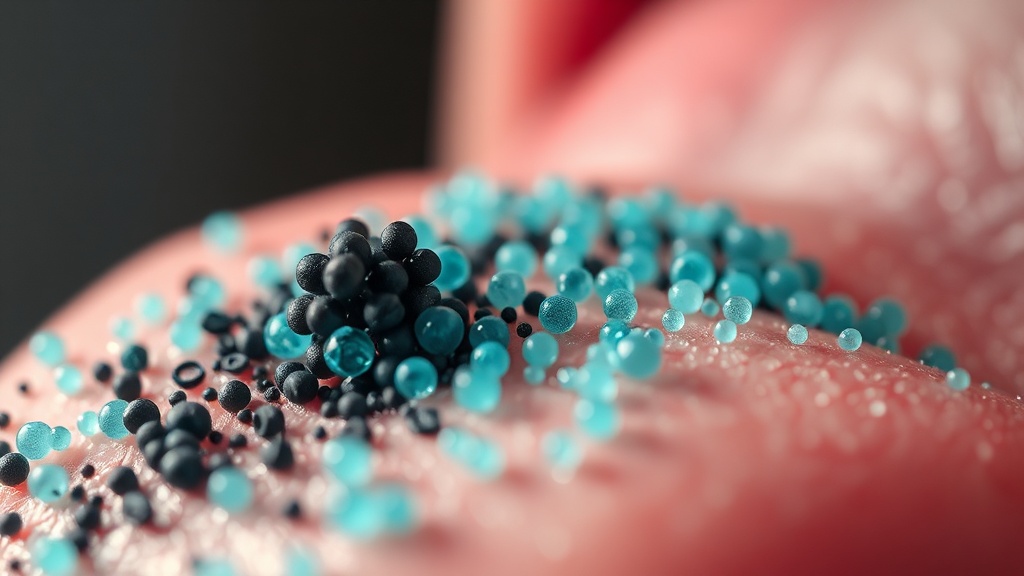
Bacterial interference: friendly strains aim to crowd out the sulfur-gas-producing bacteria on the tongue surface.
What the research actually shows
Every claim below maps to a named, peer-reviewed source in the Sources section. According to PubMed.
| Claim | Evidence | Source |
|---|---|---|
| In a pilot study, volunteers using S. salivarius K12 after a chlorhexidine rinse showed reduced volatile sulfur compound levels, supporting the bacterial-replacement idea. | Preliminary human study of K12 on oral malodour parameters. | Burton et al., J Appl Microbiol 2006 |
| S. salivarius K12 inhibited the growth of bacteria that produce the malodorous sulfur compounds behind bad breath in laboratory testing. | In vitro study of K12 antimicrobial activity against halitosis-associated species. | Masdea et al., Arch Oral Biol 2012 |
| S. salivarius K12 produces bacteriocin-like inhibitory substances (BLIS), the proposed mechanism for its suppression of odour-linked bacteria. | Characterisation of the K12 strain and its inhibitory activity. | Burton et al., 2005 |
| A meta-analysis found probiotics significantly improved organoleptic breath scores (SMD about -1.93) but did not significantly change measured sulfur compounds, an honest split result. | Systematic review and meta-analysis of randomised trials. | Yoo et al., Probiotics Antimicrob Proteins 2019 |
| A later meta-analysis found probiotics reduced breath scores and sulfur compounds in the short term (four weeks or less), with weaker long-term effects and limited, sometimes biased data. | Systematic review and meta-analysis of 7 randomised trials. | Huang et al., BMJ Open 2022 |
Oral probiotic strains for bad breath, compared
| Strain or approach | What it targets | Evidence so far | Honest note |
|---|---|---|---|
| S. salivarius K12 | Sulfur-gas bacteria on the tongue | Pilot and lab data support suppression | Best-studied breath strain; effects fade after stopping |
| S. salivarius M18 | Plaque and gum bacteria | Studied more for gums than breath | Any breath benefit is indirect |
| Weissella cibaria | VSC-producing bacteria | Some trials show VSC reduction | Promising but fewer human studies |
| Lactobacillus strains | General oral balance | Improved breath scores in meta-analyses | Often transient; needs ongoing use |
| Gut or food probiotics | The gut, not the mouth | No direct oral-breath evidence | Gut strains do not colonise the mouth |
Why the evidence is promising but not proven
It is worth being straight about where the science actually sits, because oral probiotics are often oversold. The mechanism is real and the early signals are encouraging, but the clinical picture is mixed. Two meta-analyses tell the honest story: both found that probiotics improved the organoleptic score, the human judgement of breath, yet their effect on machine-measured sulfur gases was inconsistent, significant in one short-term analysis and not in another. The benefit is also clearest in the short term, roughly four weeks or less, and the underlying trials are few, small and sometimes at risk of bias. On top of that, colonisation is transient: when people stop taking K12, the strain gradually disappears from the mouth over the following weeks, so the improvement is not self-sustaining. None of this means probiotics do not help; it means they are a promising adjunct rather than a proven cure. The sensible way to read the evidence is that an oral probiotic can be a useful maintenance layer on top of good cleaning and hydration, taken consistently, with realistic expectations rather than a promise of a permanent fix.
Evidence you can act on.
Occasional emails — new research, new protocols, no noise.
How to try an oral probiotic sensibly
If you want to test whether a probiotic helps your breath, give it a fair trial in the right order.
- 1
Clean before you seed
dailyScrape the tongue, brush and floss first. Probiotics work by re-populating a surface, so clearing the existing coating gives the friendly strains a clean bed to establish on, matching the seed-and-soil logic.
- 2
Choose a studied strain
onceLook for a product built around Streptococcus salivarius K12, or K12 with M18, since those have the most direct breath and oral evidence. Weissella cibaria is another option. A generic gut probiotic will not colonise the mouth.
- 3
Use it at the right moment
dailyTake the lozenge after cleaning, ideally last thing at night, and let it dissolve slowly rather than chewing and swallowing it. Avoid eating, drinking or rinsing straight afterwards so the strains have time to settle.
- 4
Give it a few consistent weeks
ongoingThe benefit shows up over weeks, not overnight, and it is transient, so consistency matters. Since the strain clears after you stop, judge it over a sustained trial and expect to keep taking it if it helps.
- 5
Keep the fundamentals in place
ongoingA probiotic is a layer on top of tongue cleaning, brushing, flossing and hydration, not a replacement for them. If your breath only stays fresh while the basics are solid, that is the routine doing its job, with the probiotic supporting it.

Seed after you clear: a probiotic lozenge is a maintenance layer taken after tongue cleaning, and its effect fades once you stop.
If bad breath persists despite good cleaning, hydration and a consistent oral probiotic trial, or if you notice bleeding gums, a persistently dry mouth or an unusual taste, see a dentist. Probiotics can support a healthy mouth but cannot resolve an underlying cause like gum disease or dry mouth, which needs professional assessment.
Frequently asked questions
Sources
- 1.
- 2.
- 3.
- 4.
- 5.
- 6.

Fix your breath at the source.
The complete science-backed protocol — engineered to eliminate volatile sulfur compounds at the biological source.
Start the Breath Protocol →Related reading
Educational purposes only. The content on this page is not medical advice and is not a substitute for consultation with a qualified dental or medical professional.
More from the library
 Ingredients7 min
S. salivarius K12: The Fresh-Breath Probiotic, Explained
The idea is not to sterilise your mouth. It is to repopulate it with the right bacteria.
Read →→ Best Of8 min
The Best Mouthwash for Bad Breath, by Active Ingredient
There is no single winner, only the right rinse for the right job. Here is how the active ingredients compare on the evidence, and which suits everyday fresh breath.
Read →→ Guides8 min
How to Get Rid of Bad Breath Permanently: An Evidence-Based Plan
The honest version: "permanently" means ongoing control, not a one-time fix. Here is the daily routine the research actually supports, and when to get help.
Read →→ Guides7 min
Bad Breath Even After Brushing? The Biological Reason (and Fix)
You brushed, flossed and rinsed — and the smell is still there. The reason usually isn't hygiene; it's where the odour-causing bacteria actually live.
Read →→ Best Of7 min
Copper Tongue Scraper Benefits: What the Evidence Supports
Copper scrapers are having a moment — but which benefits are backed by research and which are marketing? Here is the honest, evidence-based breakdown.
Read →→ Answers6 min
How Often Should You Scrape Your Tongue?
Once a day? Twice? After every meal? Here is what the research on tongue cleaning actually supports — and why frequency matters less than consistency.
Read →→