Sugar-Free Gum for Dry Mouth: What Works
It is not the flavour and it is not magic, it is the chewing. Here is why sugar-free gum is one of the few dry-mouth self-care steps with real evidence behind it, and where it stops helping.
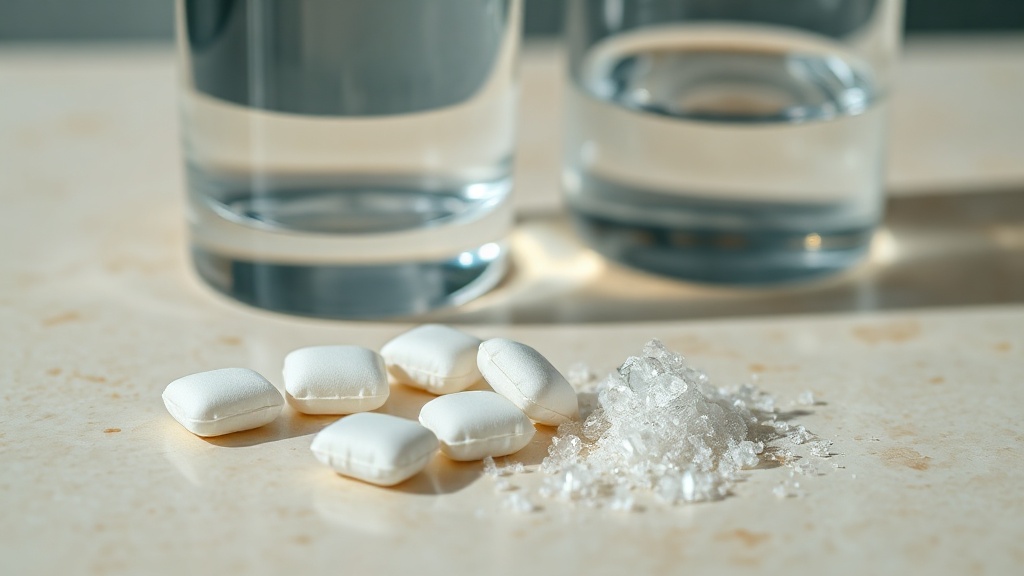
- Chewing sugar-free gum is one of the best-supported self-care steps for a dry mouth: a meta-analysis found it significantly raised unstimulated saliva flow (effect size 0.44) in older and medically compromised people.
- The active part is the chewing, not the flavour. Mastication is what signals the salivary glands, while the mint or fruit taste adds freshness, not saliva.
- Choose xylitol-sweetened, sugar-free gum. Xylitol will not feed decay the way sugar does, though its own decay-fighting evidence on its own is limited, so treat it as a tooth-friendly sweetener, not a treatment.
- Honest limit: gum only helps where your glands still have some working reserve, and in severe dryness from radiation or advanced Sjogren it does little; a rise in flow does not always feel like relief.
- One safety rule that never bends: xylitol gum is highly toxic to dogs, so keep every piece and wrapper well away from pets.
Yes, sugar-free gum genuinely helps most dry mouths, and the reason is the chewing, not the flavour. Mastication stimulates your salivary glands to release more saliva, and a meta-analysis confirmed a real rise in flow. Choose a xylitol-sweetened gum, keep it away from dogs, and know it works only where some gland function remains.
How chewing gum actually stimulates saliva
The relief from gum is mechanical, not chemical. Every time you chew, the pressure and movement in your jaw fire a reflex, sensed by the muscles and the taste system and relayed along the facial and glossopharyngeal nerves, that tells your salivary glands to switch on. It is the act of chewing that does the work, which is why researchers keep finding the same thing: when people chewed gum continuously, their saliva flow and pH stayed clearly above resting levels for as long as they kept going, then settled back afterwards. A 2023 meta-analysis in older and medically compromised people, exactly the group most troubled by dry mouth, pulled the trials together and found gum chewing significantly raised unstimulated saliva flow, with a moderate effect size of 0.44. Notice what is not doing the work: the flavour. Mint or fruit makes the experience pleasant and freshens the breath, and menthol can create a cooling sensation that feels like relief, but the taste is a passenger. The often-repeated idea that peppermint stimulates saliva through the vagus nerve is simply the wrong anatomy, because the vagus does not supply the major salivary glands. So when you reach for gum, you are using one of the few dry-mouth tools whose mechanism is genuinely well understood, and the instruction is simple: chew, and keep chewing a while.
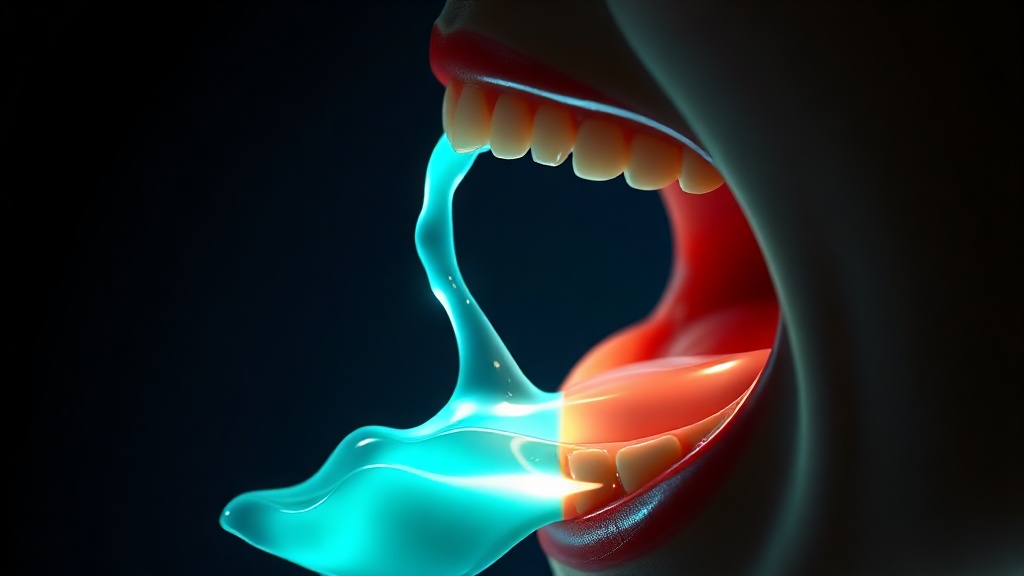
Chewing fires a reflex along the facial and glossopharyngeal nerves that tells the salivary glands to release more saliva.
What the research actually shows
Every claim below maps to a named, peer-reviewed source in the Sources section. According to PubMed.
| Claim | Evidence | Source |
|---|---|---|
| Chewing gum significantly increased unstimulated salivary flow (effect size 0.44) in elderly and medically compromised people with dry mouth. | Meta-analysis of 6 randomized trials. | Dodds et al., 2023 |
| During two hours of continuous gum chewing, salivary flow rate and pH stayed significantly above resting levels, showing mastication as the driver. | Controlled crossover study. | Dawes and Kubieniec, 2004 |
| Saliva stimulants such as gum only help where residual gland function remains; no topical reliably relieves severe dry mouth. | Cochrane review of 36 randomized trials. | Furness et al., 2011 |
| An independent US Preventive Services Task Force review found the evidence for xylitol holding back tooth decay on its own to be very limited. | USPSTF evidence review. | Chou et al., 2023 |
| Saliva flow can rise without the sensation of dryness improving, so a measured increase does not guarantee relief. | Cochrane non-pharmacological review. | Furness et al., 2013 |
Sugar-free gum vs other quick options
| Option | What it does | Best moment | Honest limit |
|---|---|---|---|
| Sugar-free (xylitol) gum | Chewing stimulates your own saliva | After meals, daytime dryness | Needs some gland reserve; no use while asleep |
| Saliva substitute spray or gel | Coats and moistens from outside | When you cannot chew, before speaking | Relief is brief and modest |
| Sips of water | Wets the mouth momentarily | Anytime | Washes away fast; can mean night-time trips to the toilet |
| Sugar-free lozenges or mints | Sucking also stimulates saliva | Discreet daytime use | Same gland-reserve limit as gum |
| Overnight adhering disc | Slow-release comfort while asleep | Night | Evidence is thin; comfort, not a saliva switch |
Where gum stops helping (the honest limits)
Gum is real, but it is not a saviour, and pretending otherwise sets people up for disappointment. The first limit is the gland itself: chewing can only draw out saliva if there is still working tissue to respond. In severe dryness, such as after head-and-neck radiation or with advanced Sjogren, the glands may have too little reserve, and chewing does little. The second limit is the gap between flow and feeling. More measured saliva does not always register as a less-dry mouth; several trials found the objective flow went up while people did not report feeling much better. The third is what gum is not: it will not carry you through the deep, overnight dryness that ruins sleep, because you cannot chew while asleep, and it does not address why your mouth is dry in the first place. Medications are the most common reason, and that belongs in a conversation with your prescriber, never a decision to stop a drug on your own. And a word on the sweetener: xylitol is a sensible choice because it does not feed decay the way sugar does, but independent reviews rate its own power to hold back tooth decay as limited. Treat gum as a genuinely useful comfort habit with clear edges, not a fix.
Evidence you can act on.
Occasional emails — new research, new protocols, no noise.
How to get the most from sugar-free gum
Gum works best when you use the chewing deliberately, choose the right sweetener, and keep it in its lane as a daytime comfort tool.
- 1
Reach for it after meals and when dryness peaks
5 to 20 minutesChewing after eating clears food and gets saliva moving when your mouth needs it most. Aim for a real stretch of chewing rather than a few token seconds, because the longer you chew, the more the studies show flow improves.
- 2
Choose xylitol-sweetened, sugar-free gum
every timeSugar-free is non-negotiable in a dry mouth, where the teeth are already exposed. Xylitol is a tooth-friendly sweetener that will not feed decay, which is why dry-mouth products favour it, though it is the chewing, not the xylitol, doing the saliva work.
- 3
Go gentle on strong flavours if your mouth is sore
as neededVery strong mint or cinnamon can sting fragile, dry tissue. If that is you, pick a mild flavour. You lose nothing that matters, because the freshness is a bonus and the chewing is the active part.
- 4
Pair it with the rest of your routine
all dayGum is a daytime tool. Keep water handy, use a saliva substitute or spray when you cannot chew, and consider a slow-release overnight product for the hours you are asleep and cannot rely on chewing at all.
- 5
Keep every piece away from dogs
alwaysThis is the one hard safety rule. Xylitol is highly toxic to dogs and can cause dangerous blood-sugar crashes and liver injury. Store gum where pets cannot reach it, and pick up any dropped pieces and wrappers straight away.

Gum is a useful daytime habit with clear edges, one comfort layer among several, not a cure for the underlying dryness.
See your dentist or doctor if dry mouth is constant, if it started or worsened after a new medication, if you have dry eyes alongside it, or if you are noticing new sensitivity or decay. Gum is a comfort tool, not a diagnosis, and a professional can find the cause and protect your teeth. If a medication is the likely trigger, raise it with the person who prescribed it, and never stop or change a prescribed medicine on your own.
Frequently asked questions
Sources
- 1.
- 2.
- 3.
- 4.
- 5.
- 6.
- 7.
- 8.
- 9.

Fix your breath at the source.
The complete science-backed protocol — engineered to eliminate volatile sulfur compounds at the biological source.
Start the Breath Protocol →Related reading
Educational purposes only. The content on this page is not medical advice and is not a substitute for consultation with a qualified dental or medical professional.
More from the library
 Answers8 min
How to Produce More Saliva Naturally: 12 Ways to Stimulate Salivary Flow
The honest answer: the physical act of chewing and tasting is your strongest natural saliva switch — here is how to use it, and when it will not be enough.
Read →→ Best Of8 min
Dry Mouth Lozenges: What Actually Works, and What to Look For
How dry-mouth lozenges really work, which type fits which situation, and the honest limits of what a lozenge can do.
Read →→ Best Of8 min
Best Dry Mouth Mints: What Actually Helps (2026)
A calm, honest look at sugar-free mints for dry mouth: how they help, their real limits, and safer picks for sensitive mouths.
Read →→ Guides8 min
Home Remedies for Dry Mouth: Practical Habits That Help
The everyday habits that genuinely ease a dry mouth, what the evidence says about each, and the popular acidic home fixes that can quietly wear down your teeth.
Read →→ Guides8 min
How to Fix Dry Mouth: An Evidence-Based Guide
Dry mouth is usually manageable once you know what is driving it and which supportive habits actually move the needle.
Read →→ Guides8 min
Dry Mouth at Night: Why It Happens and How to Sleep Easier
Nighttime dryness is common because your saliva naturally slows while you sleep, and a few targeted habits can make a real difference.
Read →→