Dry Mouth at Night: Why It Happens and How to Sleep Easier
Nighttime dryness is common because your saliva naturally slows while you sleep, and a few targeted habits can make a real difference.

- Dry mouth often feels worst at night because salivary flow naturally slows during sleep, so the mouth loses its steady rinse-and-buffer system for hours.
- Mouth breathing dries the tongue and palate directly, letting odour compounds escape into the air, which is why nighttime dryness and morning breath so often travel together.
- Medications are the leading cause of dry mouth overall, and many people take them at night, so a medication review with a prescriber is often the highest-impact change.
- Simple bedroom habits help: a humidifier, an alcohol-free saliva gel, sipping water, and avoiding late caffeine or alcohol, which are dehydrating.
- Because saliva protects enamel, hours of nightly dryness raise decay risk, so fluoride and regular dental checkups matter alongside comfort measures.
Dry mouth is worse at night because saliva flow naturally slows during sleep and many people breathe through the mouth. To sleep easier, humidify the bedroom, use an alcohol-free saliva gel, sip water, avoid late caffeine and alcohol, and ask your prescriber whether a nighttime medication is drying you out.
Why the mouth dries out overnight
Saliva production is not constant across the day. It rises when you eat and slows dramatically during sleep, so for several hours overnight your mouth has far less of the fluid that normally washes away debris, buffers acids, and keeps bacteria in check. On top of that natural dip, two things commonly stack up at night. First, mouth breathing: if you sleep with your mouth open because of nasal congestion or habit, air flows across the tongue and palate and dries them directly. Research using a sulphide monitor showed that as the mouth becomes drier, more volatile sulphur compounds escape into mouth air and pH falls, which is why nighttime dryness and morning breath are so closely linked. Second, timing of medicines: many drugs that reduce saliva are taken in the evening, so their drying effect peaks just as your natural flow is at its lowest. The result is a mouth that feels parched, sticky, and stale by morning.

Overnight, low saliva plus mouth breathing lets volatile compounds build up, driving that dry, stale morning feeling.
What the research actually shows
Every claim below maps to a named, peer-reviewed source in the Sources section. According to PubMed.
| Claim | Evidence | Source |
|---|---|---|
| As the mouth becomes drier, more volatile sulphur compounds escape into mouth air and pH on the tongue falls; mouth breathing accelerates this by drying the tongue and palate. | Study using a sulphide monitor and induced dry-mouth conditions. | Kleinberg et al., Int Dent J 2002 |
| Medications are the leading cause of dry mouth; drugs for urinary incontinence and antidepressants showed the strongest associations in older adults. | Systematic review and meta-analysis of medication classes and xerostomia. | Tan et al., J Am Geriatr Soc 2017 |
| Saliva substitutes and gels can relieve the feeling of dryness, though no single topical product is clearly superior. | Cochrane review of 36 randomised trials of topical dry-mouth therapies. | Furness et al., Cochrane Review 2011 |
| Saliva protects teeth through buffering, remineralisation and antimicrobial action, so hours of nightly dryness undermine that protection. | Narrative review of saliva physiology and oral health. | Llena-Puy, Med Oral Patol Oral Cir Bucal 2006 |
Nighttime dry-mouth remedies, compared
| Remedy | How it helps at night | Best for | Caveats |
|---|---|---|---|
| Bedroom humidifier | Adds moisture to the air you breathe | Mouth breathers; dry climates | Needs regular cleaning to stay hygienic |
| Alcohol-free saliva gel | Coats tissues for longer than water | Severe overnight dryness | Reapply if you wake; gels last longer than sprays |
| Water by the bed | Quick relief on waking | Mild dryness | Frequent waking to drink can disrupt sleep |
| Nasal breathing support | Reduces mouth breathing | Congestion-driven dryness | Address the cause of blockage with a clinician |
| Evening medication review | Removes or reschedules a drying drug | Anyone on nighttime medicines | Only your prescriber should adjust timing or dose |
When nighttime dryness needs more than a humidifier
Bedroom habits ease mild dryness, but they cannot fix a cause rooted in your medications or an underlying condition. If you take several drugs, particularly at night, your risk climbs; the more medications on board, the higher the anticholinergic burden and the more likely dryness becomes. A medication review with your prescriber or pharmacist can identify whether a drug is the culprit and whether the dose or timing can be adjusted, though that decision belongs to them, not to self-experimentation. Persistent nighttime dryness paired with dry eyes, joint pain, or a history of head-and-neck radiotherapy can point to Sjogren syndrome or salivary gland damage, which may warrant prescription saliva-stimulating medicines. And loud snoring or gasping alongside a dry mouth can be a clue to sleep-disordered breathing, which is worth raising with a doctor because it has consequences beyond a dry mouth.
Evidence you can act on.
Occasional emails — new research, new protocols, no noise.
An evening routine for a less dry mouth
Build these steps into the hour before bed. The aim is to add moisture, reduce mouth breathing, and protect your teeth through the dry overnight stretch.
- 1
Hydrate early, ease off stimulants
eveningSip water through the evening and keep a glass by the bed, but taper large drinks close to bedtime so you are not woken repeatedly. Avoid late caffeine and alcohol, both of which are dehydrating and can worsen overnight dryness.
- 2
Set up the bedroom air
before sleepRun a clean humidifier in the bedroom, especially in dry or heated rooms. More moisture in the air you breathe reduces how quickly the tongue and palate dry out, which is particularly helpful if you breathe through your mouth.
- 3
Coat and protect before lights out
at bedtimeAfter brushing with a fluoride toothpaste, apply an alcohol-free saliva gel or use a moisturising spray. Gels tend to last longer than sprays through the night. Avoid alcohol-based rinses, which can add to the drying feeling.
- 4
Tackle the cause, not just the symptom
ongoingIf congestion drives mouth breathing, address it with a clinician. If you take nighttime medicines, ask your prescriber whether any could be causing dryness. Keep up regular dental visits, since nightly dryness raises decay risk.
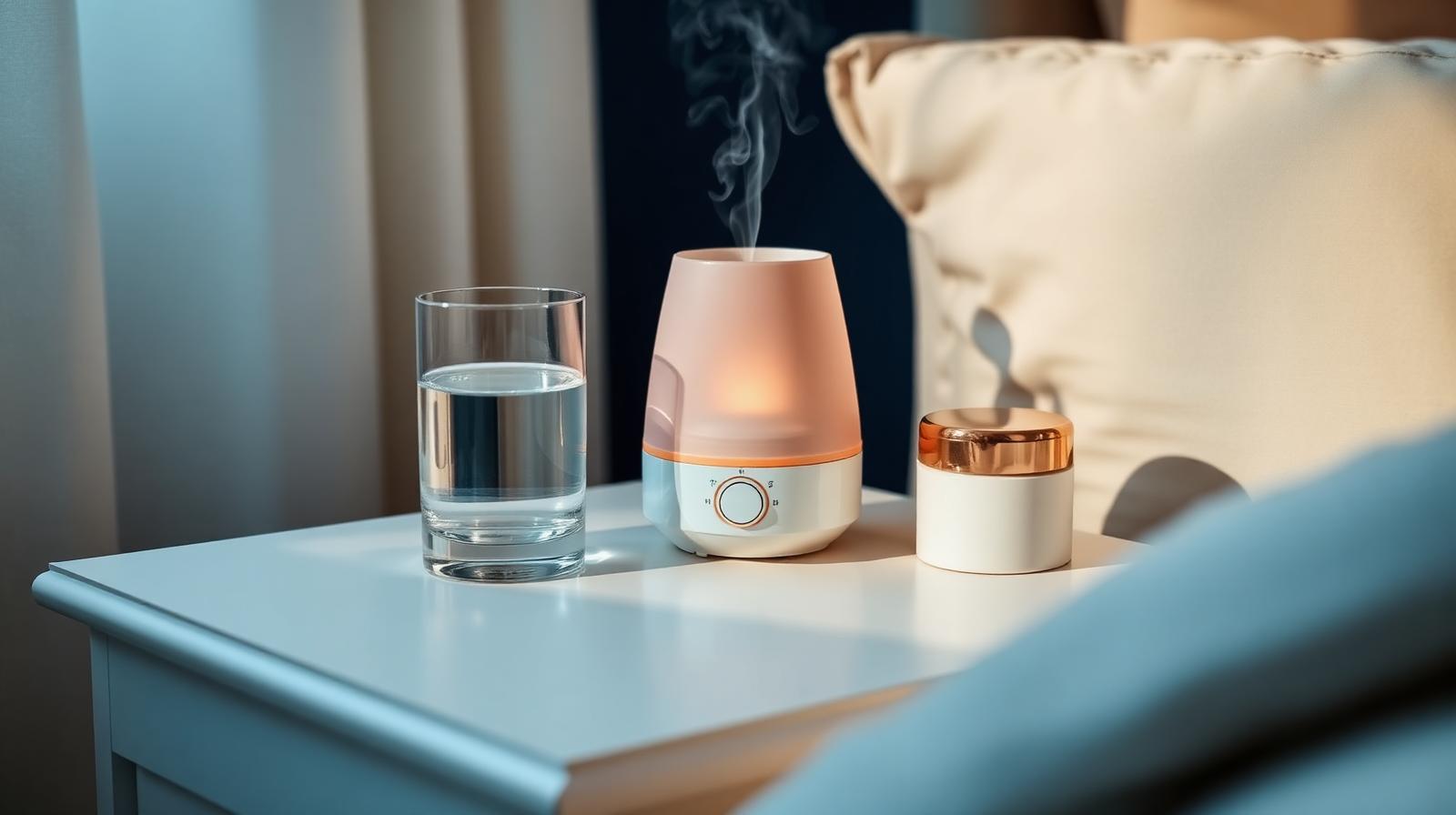
Layering hydration, humid air, and a bedtime saliva gel helps carry you through the low-saliva overnight window.
See a doctor or dentist if nighttime dryness is constant, comes with dry eyes or joint pain, follows a new medication, or accompanies loud snoring and gasping. These can signal Sjogren syndrome, medication effects, or sleep-disordered breathing that need proper assessment rather than home care alone.
Frequently asked questions
Sources
- 1.
- 2.
- 3.
- 4.

Fix your breath at the source.
The complete science-backed protocol — engineered to eliminate volatile sulfur compounds at the biological source.
Start the Breath Protocol →Related reading
Educational purposes only. The content on this page is not medical advice and is not a substitute for consultation with a qualified dental or medical professional.
More from the library
 Guides8 min
How to Fix Dry Mouth: An Evidence-Based Guide
Dry mouth is usually manageable once you know what is driving it and which supportive habits actually move the needle.
Read →→ Guides8 min
What Causes Dry Mouth? The Common Triggers, Explained
Dry mouth almost always has an identifiable trigger, and knowing yours is the first step toward relief.
Read →→ Best Of8 min
Best Mouthwash for Dry Mouth: What to Look For
The best dry-mouth rinse is the one that soothes without drying, and the label tells you more than the marketing.
Read →→ Answers8 min
Does Dry Mouth Cause Bad Breath?
Low saliva and bad breath are closely linked, and understanding the connection points straight to what helps.
Read →→ Reviews8 min
XyliMelts Side Effects: An Honest, Evidence-Based Review
An honest look at what XyliMelts adhering discs feel like overnight, what side effects people report, and where the evidence for comfort really stands.
Read →→ Answers8 min
Can You Cure Dry Mouth? What Actually Helps
Dry mouth is usually a symptom, not a disease — here is why it is managed rather than cured, and the realistic steps that bring relief.
Read →→