Dry Mouth Lozenges: What Actually Works, and What to Look For
How dry-mouth lozenges really work, which type fits which situation, and the honest limits of what a lozenge can do.
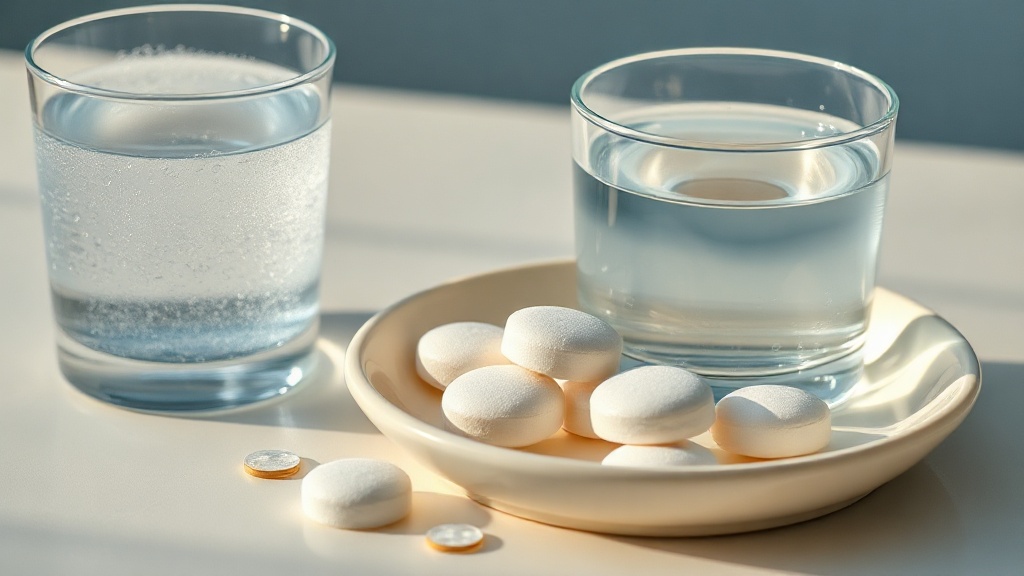
- A lozenge helps mainly through the simple act of sucking, which prompts your mouth to make more saliva, and through a moist, coating film that makes a dry mouth feel more comfortable.
- The honest evidence is modest. No lozenge, spray or gel reliably relieves dry mouth for everyone, and a rise in saliva does not always translate into feeling less dry.
- Xylitol is the sweetener to look for. It is tooth-friendly and non-cariogenic, which matters because a dry mouth already leaves teeth less protected against decay.
- Slow-dissolving adhering discs are the standout for night-time, because most lozenges fade within an hour while a disc can last through sleep. The evidence for them is promising but thin.
- Two safety points: acid-based lozenges can erode enamel, so look for added fluoride, and xylitol is highly toxic to dogs, so keep every product well out of their reach.
The best dry-mouth lozenges are sugar-free and built around xylitol, which cues saliva through sucking without feeding decay. For night-time dryness, a slow-dissolving adhering disc lasts far longer than an ordinary lozenge. Relief is real but modest, so treat lozenges as comfort and protection rather than a cure, and keep xylitol away from dogs.
How a dry-mouth lozenge actually works
It is worth being clear about what a lozenge does and does not do, because the marketing often blurs it. Most of the benefit comes from two ordinary things. The first is the act of sucking. Your salivary glands respond to that mechanical and taste stimulation by releasing more saliva, and the effect can be surprisingly large: in a study of healthy volunteers, sucking a flavoured lozenge raised salivary flow several-fold, and most of that rise came from the sucking itself rather than the flavour. The second is coating. A lozenge that contains a humectant, a moisture-holding ingredient like glycerin or cellulose gum, leaves a lubricating film that simply makes the mouth feel less parched for a while. Neither of these repairs whatever is causing the dryness, and that is the honest ceiling of what a lozenge can offer. It also explains a frustration many people report: your saliva can measurably increase and your mouth can still feel dry, because the sensation of dryness and the actual volume of saliva do not always move together. So the right expectation is comfort and protection through the day, topped up whenever your mouth feels tacky, not a permanent fix that you take once and forget. It also helps to know the two jobs a lozenge can do, because they are not the same. A sialogogue works by prompting your own glands to release more saliva, usually through taste or the act of sucking, which is only useful if the glands still have some reserve to draw on. A humectant does something simpler: it lays down a moisture-holding film that makes the mouth feel lubricated for a while without adding any real saliva. Many products blend both, and the sugar-free, xylitol-based ones are the sensible default because they deliver either effect without feeding the bacteria that cause decay in a mouth that is already short on its natural defence.

Most of a lozenge's benefit is the sucking action cueing saliva, plus a moist film that makes the mouth feel less parched.
What the research actually shows
Every claim below maps to a named, peer-reviewed source in the Sources section. According to PubMed.
| Claim | Evidence | Source |
|---|---|---|
| No topical product reliably relieves dry-mouth symptoms for everyone; the single clearest signal was a spray, and it improved dryness by only about two points on a ten-point scale. | Cochrane review of 36 randomised trials, 1,597 participants. | Furness et al., 2011 |
| Sucking a flavoured lozenge raised salivary flow several-fold in healthy people, with most of the rise driven by the sucking action itself. | Controlled swallow-and-flow study in volunteers. | Kapila et al., 1984 |
| A 1% malic-acid sialogogue improved dry-mouth symptom scores versus placebo across the pooled trials. | Systematic review and meta-analysis, 5 trials, 244 patients. | Liu et al., 2022 |
| A slow-dissolving overnight xylitol disc raised perceived oral wetness more than threefold and eased morning discomfort, though the trial was small and uncontrolled. | Pilot study, 15 subjects, before-and-after design. | Burgess & Lee, 2011 |
| In severe dryness with very low measured flow, xylitol lozenges, gum and spray showed no flow benefit and no product outperformed the others, offering coating rather than salivary rescue. | Controlled comparison in severe hyposalivation. | Stewart et al., 1998 |
The main types, compared honestly
| Type of lozenge | How it helps | Best for | What to watch |
|---|---|---|---|
| Sugar-free xylitol lozenge | Sucking cues saliva; xylitol is tooth-friendly and non-cariogenic | Everyday daytime dryness where some gland function remains | Keep well away from dogs, as xylitol is toxic to them |
| Overnight adhering disc | Dissolves slowly and coats for hours, lasting through sleep | Night-time and first-thing-in-the-morning dryness | Evidence is promising but thin; not a proven cure |
| Malic-acid (gustatory) lozenge | A tart acid strongly prompts the mouth to water | People who still respond with a burst of saliva | Acid can erode enamel; choose ones with added fluoride and xylitol |
| Humectant or glycerin lozenge | Adds a moist, lubricating film for comfort | Soothing when saliva flow is very low | Relief is short-lived; comfort more than saliva |
| Ordinary sugared hard candy | Prompts saliva by sucking | Not recommended | Feeds decay bacteria in a mouth that is already vulnerable |
When a lozenge is not enough, and when it shines
The evidence draws a useful line. Where dryness is mild to moderate and the glands still have some reserve, a lozenge can genuinely help, because there is saliva to cue. Where dryness is severe and measured flow is very low, the picture changes: careful comparisons found that in that situation lozenges, gum and sprays gave no meaningful rise in flow and none clearly beat the others. That is not a reason to abandon them, but it reframes what they are for. In severe dryness a lozenge or disc becomes a source of coating and comfort rather than a way to restore saliva, and the smarter move is to pair it with the protective basics and a professional's guidance. The place lozenges genuinely shine is overnight. Almost nothing else works while you sleep, because ordinary lozenges fade within about an hour and you cannot suck one with your eyes closed. A slow-dissolving disc that sticks to the gum and releases over hours is the one format built for that gap, which is why it keeps coming up for people whose worst dryness is on waking. Just hold the evidence honestly: the direct study behind those discs was small and uncontrolled, so think promising rather than proven. It is also worth naming the placebo factor honestly, because it runs through this whole category. In careful trials of dry-mouth products, the dummy version often brings real relief too, simply because sucking on something and expecting comfort both genuinely help. That is not a reason to dismiss lozenges; it is a reason to keep your expectations grounded and to judge a product by how it actually feels for you over a week or two, rather than by a bold claim on the packet. If a simple sugar-free lozenge makes your day more comfortable, it is doing its job, and there is rarely a need to pay a premium for one making outsized promises.
Evidence you can act on.
Occasional emails — new research, new protocols, no noise.
How to choose and use them well
A few simple rules get you most of the benefit a lozenge can offer, without the pitfalls. None of this treats a disease; it keeps a dry mouth comfortable and better protected.
- 1
Choose sugar-free, ideally with xylitol
—Sugared lozenges and hard candy feed the bacteria that cause decay, which is the last thing a dry mouth needs. Xylitol gives you the sucking benefit with a sweetener that does not fuel cavities.
- 2
Match the format to the moment
—Reach for an ordinary lozenge or gum for daytime tackiness, and a slow-dissolving adhering disc for night-time and morning dryness, which is exactly the window most products cannot cover.
- 3
Be cautious with acid lozenges
—Tart, malic-acid lozenges can prompt a strong saliva response, but the acid can wear at enamel over time. If you use them, favour products that add fluoride and xylitol, and do not suck them constantly.
- 4
Keep every product away from dogs
—Xylitol is harmless to people at these amounts but is highly toxic to dogs, causing dangerous drops in blood sugar. Store lozenges and discs where a pet can never reach them.
- 5
Treat lozenges as one layer, not the whole answer
ongoingCombine them with steady sips of water, fluoride toothpaste and good tongue care. If dryness is severe or constant, or it is affecting your teeth, see a dentist or your doctor rather than relying on lozenges alone.

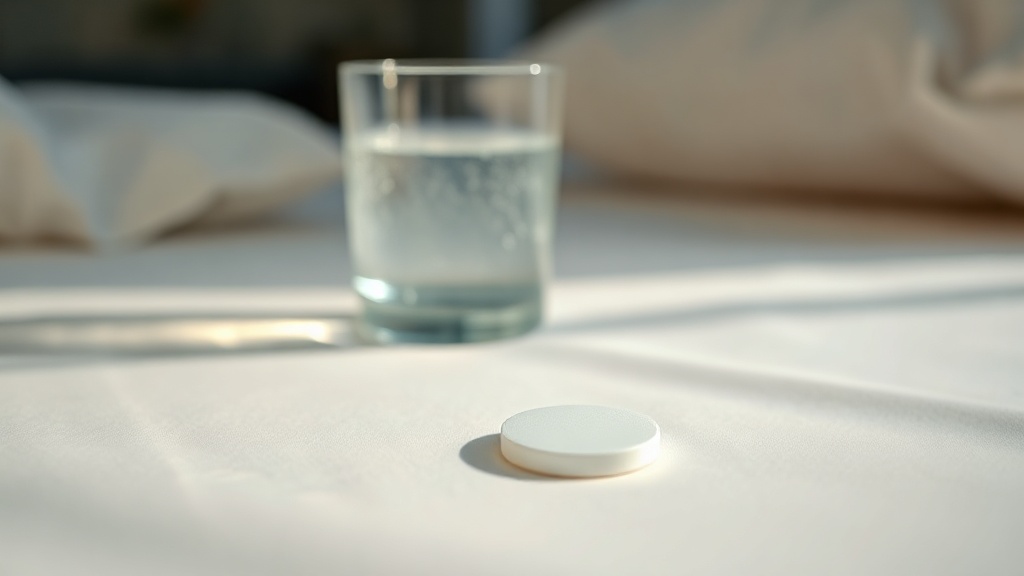
Overnight is where a slow-dissolving disc earns its place, covering the hours ordinary lozenges cannot.
Lozenges are a comfort tool, not a diagnosis. See a dentist if a dry mouth is bringing new sensitivity, cavities, a sore or cracked tongue, or a burning feeling, since a dry mouth leaves teeth and soft tissue more exposed and worth watching. See your doctor if the dryness is persistent and unexplained, if your eyes are dry too, or if you suspect a medication is behind it, because those point to causes a lozenge cannot address. If a medicine is the likely trigger, raise it with the prescriber rather than stopping anything yourself.
Frequently asked questions
Sources
- 1.
- 2.
- 3.
- 4.
- 5.
- 6.
- 7.

Fix your breath at the source.
The complete science-backed protocol — engineered to eliminate volatile sulfur compounds at the biological source.
Start the Breath Protocol →Related reading
Educational purposes only. The content on this page is not medical advice and is not a substitute for consultation with a qualified dental or medical professional.
More from the library
 Reviews8 min
XyliMelts Side Effects: An Honest, Evidence-Based Review
An honest look at what XyliMelts adhering discs feel like overnight, what side effects people report, and where the evidence for comfort really stands.
Read →→ Best Of8 min
Best Mouthwash for Dry Mouth: What to Look For
The best dry-mouth rinse is the one that soothes without drying, and the label tells you more than the marketing.
Read →→ Guides8 min
How to Fix Dry Mouth: An Evidence-Based Guide
Dry mouth is usually manageable once you know what is driving it and which supportive habits actually move the needle.
Read →→ Guides8 min
Dry Mouth at Night: Why It Happens and How to Sleep Easier
Nighttime dryness is common because your saliva naturally slows while you sleep, and a few targeted habits can make a real difference.
Read →→ Guides8 min
What Causes Dry Mouth? The Common Triggers, Explained
Dry mouth almost always has an identifiable trigger, and knowing yours is the first step toward relief.
Read →→ Answers8 min
Does Dry Mouth Cause Bad Breath?
Low saliva and bad breath are closely linked, and understanding the connection points straight to what helps.
Read →→