Home Remedies for Dry Mouth: Practical Habits That Help
The everyday habits that genuinely ease a dry mouth, what the evidence says about each, and the popular acidic home fixes that can quietly wear down your teeth.
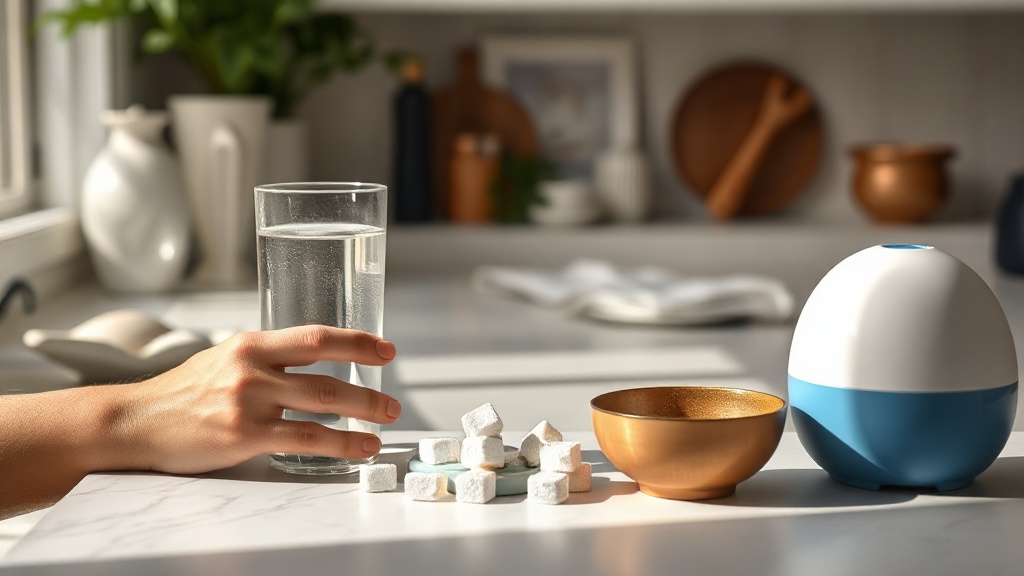
- The most reliable home habits for dry mouth are simple: sip water often, chew sugar-free gum, run a humidifier at night, and breathe through your nose — small changes that keep the mouth more comfortably moist.
- Chewing sugar-free gum is the strongest self-care signal in the research, because the act of chewing itself nudges saliva flow — as long as your glands still make some saliva.
- Water eases the feeling but does not replace saliva, so think in terms of habits you repeat through the day rather than a single fix.
- Skip the popular acidic home fixes — lemon water and apple cider vinegar can spark a little saliva through sourness but erode enamel, a bad trade when a dry mouth already leaves teeth exposed.
- Home habits are for comfort and protection, not a substitute for care: if dry mouth is persistent, severe, or started with a new medicine, see a dentist or doctor, and never stop a prescribed drug on your own.
The best home remedies for dry mouth are practical habits: sip water regularly, chew sugar-free gum, use a bedroom humidifier, breathe through your nose, and cut back on caffeine and alcohol. Keep up fluoride brushing to protect teeth. Avoid acidic fixes like lemon water, which erode enamel. Persistent dry mouth deserves a dental check.
Why simple home habits actually help
Dry mouth is what you feel when the thin film of saliva that normally coats your mouth runs low or turns thick. Most good home remedies work by supporting that film in one of three ways: adding moisture, coaxing your own glands to make a little more saliva, or removing the things that dry you out. Sipping water and running a humidifier add moisture from the outside. Chewing is the real workhorse for your own supply — the simple mechanical act of chewing sugar-free gum drives saliva flow, and in studies of older and medically complex people it raised unstimulated flow by a modest but real amount. The honest caveat is that chewing only helps where some working gland tissue remains; it cannot rescue a mouth that has almost no reserve. Removing drying triggers is the quietest win of all: caffeine, alcohol, and mouth breathing each pull moisture out, and easing off them costs nothing. None of this replaces saliva outright — which is exactly why dry mouth responds better to a handful of small habits repeated through the day than to any single heroic fix.
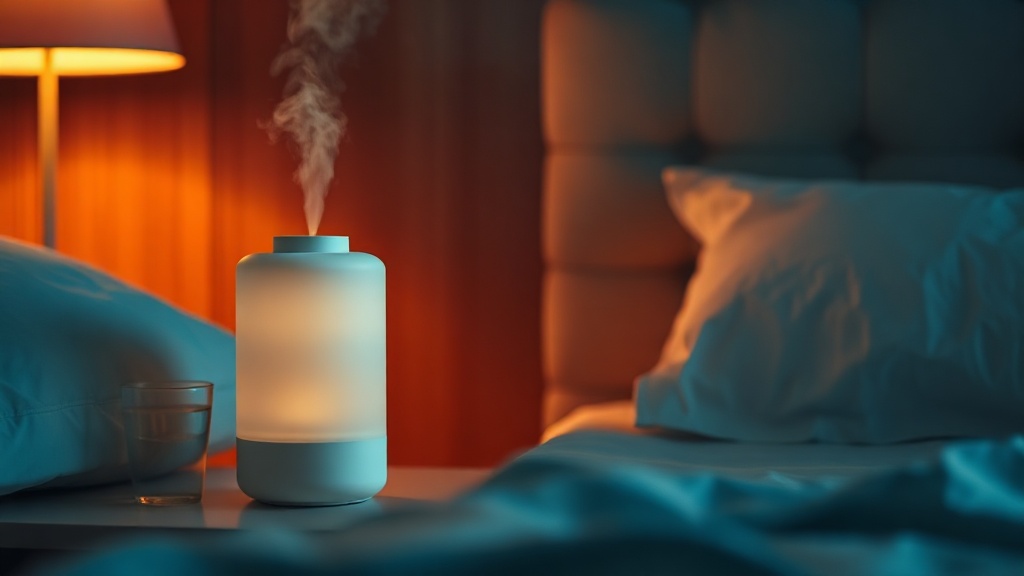
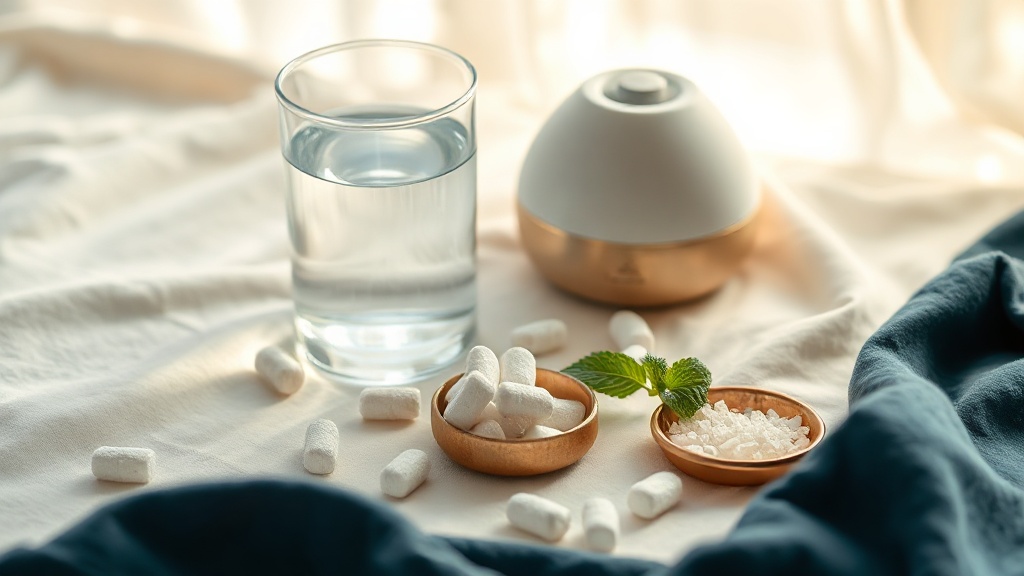
A cool-mist humidifier reduces the overnight evaporation that leaves many people parched by morning.
What the research actually shows
Every claim below maps to a named, peer-reviewed source in the Sources section. According to PubMed.
| Claim | Evidence | Source |
|---|---|---|
| Chewing sugar-free gum modestly raises saliva flow in older and medically compromised people — the strongest self-care signal for dry mouth. | Systematic review and meta-analysis (note: one author is a gum manufacturer). | Dodds et al., 2023 |
| No topical product reliably resolves dry mouth; the best-supported spray improved dryness by only about two points on a ten-point scale — home habits are for comfort, not a fix. | Cochrane review of 36 randomised trials, 1,597 participants. | Furness et al., 2011 |
| Adding moisture to night air with heated humidification significantly reduced night-time and early-morning mouth dryness. | Controlled pilot in dry-mouth patients. | Hay & Morton, 2006 |
| Evaporative water loss from the mouth happens mainly during mouth breathing, which is why nose breathing helps protect the mouth overnight. | Physiological study of oral moisture and evaporation. | Dawes, 2004 |
| Acidic saliva stimulants are erosive to enamel, so trials co-formulate them with fluoride and xylitol to offset the damage — a reason to avoid acidic DIY rinses. | Randomised trial of a 1% malic-acid spray with erosion safeguards. | Niklander et al., 2018 |
At-home habits and what the evidence says
| Habit | What it does | How well it is supported |
|---|---|---|
| Sip water through the day | Rinses and moistens, eases the feeling briefly | Helpful for comfort; does not replace saliva |
| Chew sugar-free gum | Chewing drives saliva flow where glands still work | Strongest self-care signal; flow rises modestly |
| Run a bedroom humidifier | Adds moisture to night air, less evaporation | Reduced night-time dryness in studies |
| Breathe through your nose | Stops the palate film drying out overnight | Mouth breathing measurably worsens dryness |
| Cut back on caffeine, alcohol, salty and spicy foods | Removes drying and irritating triggers | Sensible; supported by mechanism |
| Acidic DIY rinses (lemon water, vinegar) | Sour taste sparks saliva but acid erodes enamel | Not recommended as a habit — erosion risk |
The acidic home-remedy trap
Search for dry-mouth home remedies and you will quickly meet lemon water, sucking on citrus, and apple cider vinegar. There is a grain of truth behind them: a sour taste is one of the strongest natural triggers for saliva, so an acidic sip really can make your mouth water for a moment. The problem is the acid itself. Acidic stimulants are erosive to tooth enamel, and researchers who study them deliberately add fluoride and xylitol to their formulas specifically to offset that erosion — a signal of how real the risk is. For a dry mouth this is a bad bargain, because low saliva already means less of the natural buffering that normally protects your teeth from acid. There is a second catch worth knowing: in careful trials, even the inactive placebo spray significantly reduced dry-mouth scores, which tells you that much of the relief people feel from a home hack is expectation rather than the ingredient. Freshening your mouth is fine — leaning on acid as a daily saliva trick is not. Reach for sugar-free, tooth-friendly options instead, and rinse with plain water if you do have something acidic.
Evidence you can act on.
Occasional emails — new research, new protocols, no noise.
A simple daily dry-mouth comfort routine
You do not need a cabinet full of products. A few repeatable habits, morning to night, keep the mouth more comfortable and protect your teeth while you and your dentist sort out the cause. None of this treats a disease.
- 1
Start the day hydrated
morningHave a glass of water on waking and keep a bottle within reach. Sip steadily rather than gulping — the goal is a mouth that stays moist through the day, not a one-time flood. A glass of water after coffee helps offset caffeine drying.
- 2
Chew sugar-free gum after meals
10-20 minThe chewing motion is what drives saliva, so a piece of sugar-free gum (xylitol-sweetened is tooth-friendly) after eating is one of the best-supported home moves. Longer chewing gives more benefit. It works only if your glands still make some saliva.
- 3
Set up the bedroom for night dryness
overnightRun a cool-mist humidifier and aim to breathe through your nose. Both cut the overnight evaporation that leaves so many people parched by morning. If congestion keeps forcing you to mouth-breathe, mention it to a clinician.
- 4
Protect teeth with fluoride
twice dailyA dry mouth loses some of saliva natural acid-buffering, so brushing with fluoride toothpaste matters more, not less. Ask your dentist whether a higher-fluoride paste is right for you, and keep regular check-ups.
- 5
Skip the acidic hacks
alwaysGive lemon water, citrus-sucking, and apple cider vinegar a miss as daily habits — the sourness sparks saliva but the acid erodes enamel. Choose sugar-free lozenges or gum instead for the same mouth-watering effect without the wear.
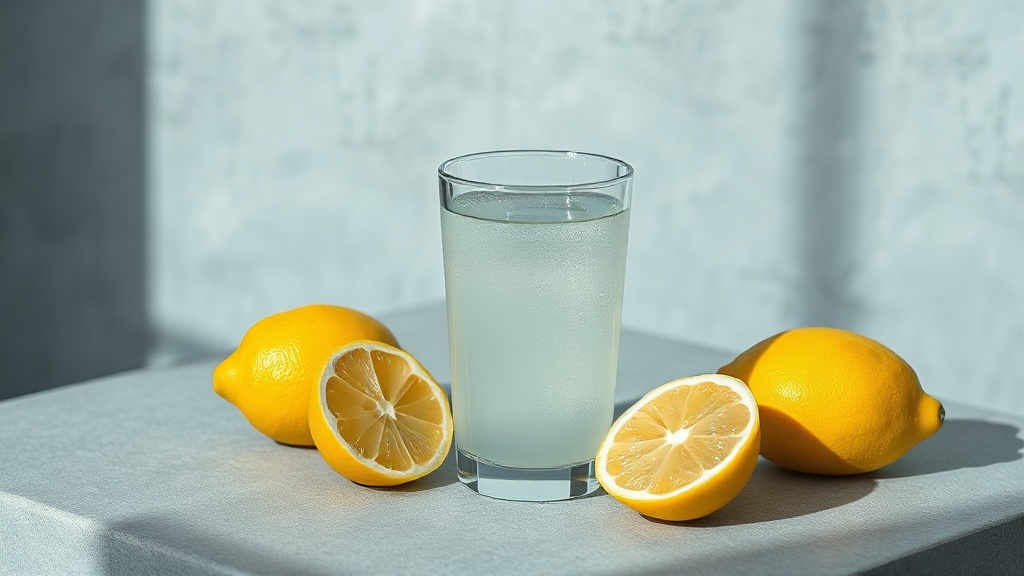
Acidic fixes like lemon water spark saliva through sourness but erode enamel — best avoided as a daily habit.
Home habits ease comfort but do not address an underlying cause. See a dentist or doctor if dry mouth lasts for weeks, disturbs your sleep or eating, or began after a new medication, and especially if it comes with dry eyes, a burning mouth, unhealed sores, or new cavities. Never stop a prescribed medicine on your own — ask your prescriber whether an adjustment is possible. A dentist can also recommend high-fluoride products and saliva substitutes suited to you.
Frequently asked questions
Sources
- 1.
- 2.
- 3.
- 4.
- 5.
- 6.

Fix your breath at the source.
The complete science-backed protocol — engineered to eliminate volatile sulfur compounds at the biological source.
Start the Breath Protocol →Related reading
Educational purposes only. The content on this page is not medical advice and is not a substitute for consultation with a qualified dental or medical professional.
More from the library
 Guides9 min
Natural Remedies for Dry Mouth: Herbs, Foods & Rinses
The home and natural remedies for dry mouth that the evidence actually supports, and the popular ones worth skipping.
Read →→ Ingredients8 min
Sugar-Free Gum for Dry Mouth: What the Evidence Says
It is not the flavour and it is not magic, it is the chewing. Here is why sugar-free gum is one of the few dry-mouth self-care steps with real evidence behind it, and where it stops helping.
Read →→ Guides8 min
What Causes Dry Mouth? The Common Triggers, Explained
Dry mouth almost always has an identifiable trigger, and knowing yours is the first step toward relief.
Read →→ Guides8 min
How to Fix Dry Mouth: An Evidence-Based Guide
Dry mouth is usually manageable once you know what is driving it and which supportive habits actually move the needle.
Read →→ Guides8 min
Dry Mouth at Night: Why It Happens and How to Sleep Easier
Nighttime dryness is common because your saliva naturally slows while you sleep, and a few targeted habits can make a real difference.
Read →→ Best Of8 min
Best Mouthwash for Dry Mouth: What to Look For
The best dry-mouth rinse is the one that soothes without drying, and the label tells you more than the marketing.
Read →→