White Film on the Tongue: What It Is and How to Gently Clear It
A thin white film is usually the tongue's normal coating — soft, removable, and easy to keep thin with the right gentle routine.
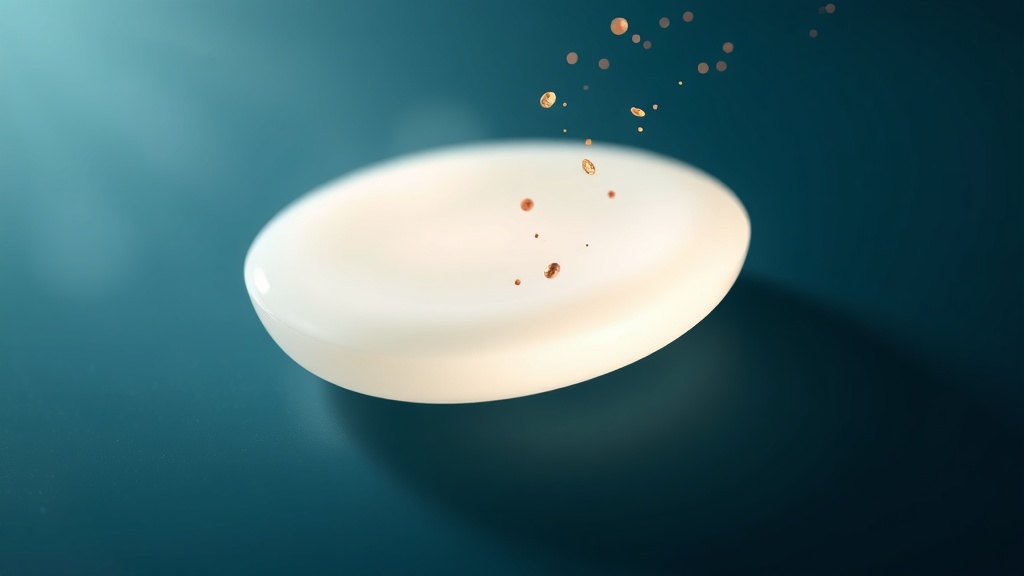
- A thin white film on the tongue is almost always a normal tongue coating — a soft layer of shed surface cells, tiny food particles, mucus and the bacteria that live on them.
- It is a surface layer, not a stain set in the tissue, which is exactly why it lifts away when you clean the tongue and drifts back when you do not.
- The coating matters for breath because the tongue's surface is the mouth's single largest reservoir of the sulfur-producing bacteria behind everyday odour.
- A film that wipes away and returns is normal; a white patch that will not budge, or comes with soreness or burning, deserves a professional's eye rather than harder scrubbing.
- You manage a white film, you do not cure it — a light daily clearing habit keeps it thin, because a healthy tongue always carries some coating.
A white film on the tongue is normally a soft coating of dead surface cells, food particles, mucus and bacteria that settles between the tongue's tiny projections. Because it rests on the surface rather than staining the tissue, it usually wipes away with gentle tongue cleaning, and it stays reassuringly thin when you clear it a little each day.
What that white film actually is
Look closely at your tongue and you will see it is not smooth — its surface is carpeted with thousands of tiny projections called papillae. Between and around these projections sits a natural coating, and that coating is what you notice as a white film. It is built from the same everyday material the whole mouth sheds and collects: keratin-rich cells that flake from the tongue's surface, tiny food particles, mucus that drifts down from the back of the nose, and the large community of bacteria that feed on all of it. The pale colour comes mostly from those shed cells and trapped debris catching the light. Crucially, this is a surface layer, not a stain worked into the tissue — which is why it lifts away when you clean the tongue and re-forms when you do not. A completely bare, uniformly pink tongue is actually the exception; almost everyone carries at least a faint coating, and a thin white film is simply the normal, healthy version of it.
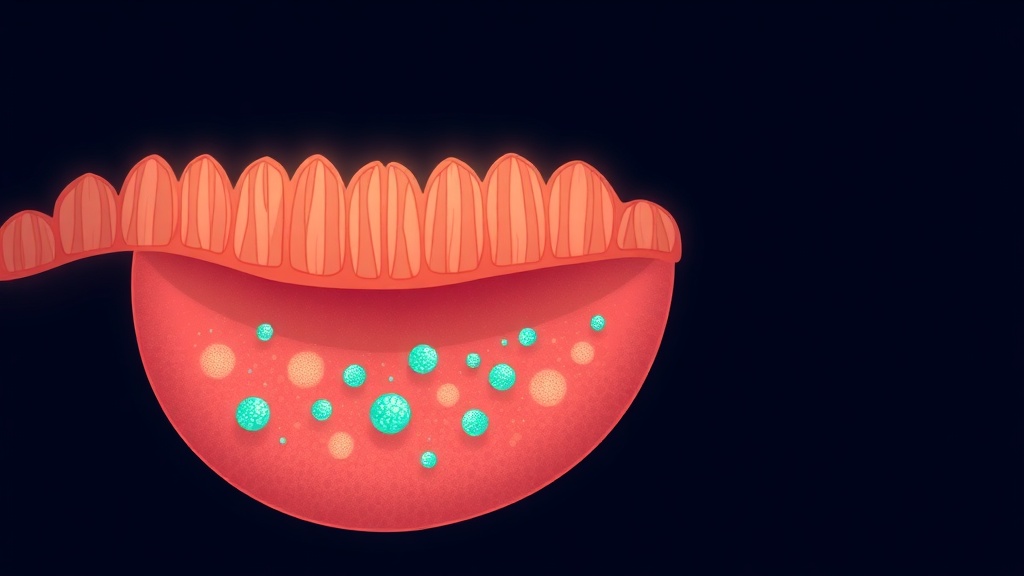
The white film is a soft surface layer nestled between the tongue's papillae — shed cells, debris and bacteria — not a stain set in the tissue.
What the research actually shows
Every claim below maps to a named, peer-reviewed source in the Sources section. According to PubMed.
| Claim | Evidence | Source |
|---|---|---|
| The tongue's surface is regarded as the most important reservoir of the volatile sulfur compounds behind oral malodour. | Journal of Breath Research overview of halitosis sources. | Tangerman & Winkel, 2010 |
| In people with oral malodour the tongue-coating microbiome is more diverse and richer in specific anaerobes than in people without it. | 16S microbiome study of 28 periodontally healthy adults. | Ye et al., 2019 |
| Oral malodour largely reflects anaerobic bacteria in tongue coatings, so management centres on reducing that coating by brushing or scraping. | Archives of Oral Biology review of oral malodour. | Hughes & McNab, 2008 |
| Tongue scraping produces a small but measurable reduction in coating and odour compounds compared with doing nothing. | Cochrane systematic review of tongue scraping. | Outhouse et al., 2006 |
| Anaerobic bacteria on the tongue dorsum break down sulfur-containing proteins into the gases responsible for the smell. | Review of the microbiology and treatment of halitosis. | Loesche & Kazor, 2002 |
Reading your white film
| What you see | What it usually points to | Sensible response |
|---|---|---|
| A thin white film that wipes away | Everyday tongue coating | Gentle daily cleaning |
| A thicker layer after sleep or a cold | Coating built up while saliva flow was low | Hydrate, clear gently — it thins out |
| Film with morning breath or a stale taste | Coating hosting odour-producing bacteria | Add tongue cleaning to your routine |
| A white patch that will NOT wipe off | Something set within the tissue, not surface coating | See a dentist rather than scrub |
| White film plus soreness or burning | Irritation or another cause | Have it looked at in person |
Why the film keeps coming back
If your tongue films over quickly no matter how well you brush, the reason is usually mechanical, not a hygiene failure. Longer, more crowded papillae simply hold onto more material, so some people have a surface that traps coating more readily than others. Anything that slows saliva — the mouth's built-in rinse — lets the layer build faster: sleeping (which is why the film is thickest first thing in the morning), breathing through the mouth, dehydration, and a soft diet that never scrubs the tongue as you chew. Smoking and alcohol dry the mouth and nudge the bacterial balance in the same direction. Because a healthy tongue always carries some coating, the honest goal is a thin film, not a bare surface — chasing a perfectly clean pink tongue by scrubbing hard only irritates the delicate tissue. A light, regular clearing habit is what keeps the layer from thickening into the kind that dulls taste and feeds stale, morning-breath odour.
Evidence you can act on.
Occasional emails — new research, new protocols, no noise.
How to keep the film thin
You can keep the film thin without scrubbing or harsh products. The aim is simply to lift the loose surface layer before it thickens — gently, and a little each day. None of this treats a disease; it just keeps the tongue tidy.
- 1
Clear your tongue gently, once a day
under a minuteUse a soft tongue scraper or the back of a soft toothbrush and make a few light passes from back to front, rinsing the tool between strokes. Keep the pressure gentle — the goal is to lift the film, not to polish the tissue. The evidence for scraping is modest but real, and most people notice fresher breath straight away.
- 2
Reach the back, where it counts
dailyMost of the coating and the odour-producing bacteria sit toward the rear of the tongue, so extend as far back as is comfortable without triggering a gag. If you are sensitive, start further forward and work a little further back over several days until it feels natural.
- 3
Keep your saliva flowing
all daySaliva is the tongue's natural cleanser, so a moist mouth self-clears far better than a dry one. Sip water through the day — especially after coffee, alcohol and sleep — and breathe through your nose where you can, since mouth-breathing dries the surface and thickens the film.
- 4
Support the whole mouth
twice dailyBrush, floss, and if you like, finish with an alcohol-free rinse. This lowers the overall bacterial load so the film re-forms more slowly. Be honest about the limit, though: a rinse alone will not strip a coating the way physical clearing does — it works alongside tongue cleaning, not instead of it.
- 5
Go gently and do not overdo it
—Stop if the tongue starts to feel sore or raw. Hard, repeated scraping, or a metal edge dragged with force, can irritate the surface and does nothing extra for your breath. Thin, not raw, is the target — a light daily habit beats an aggressive weekly scrub every time.
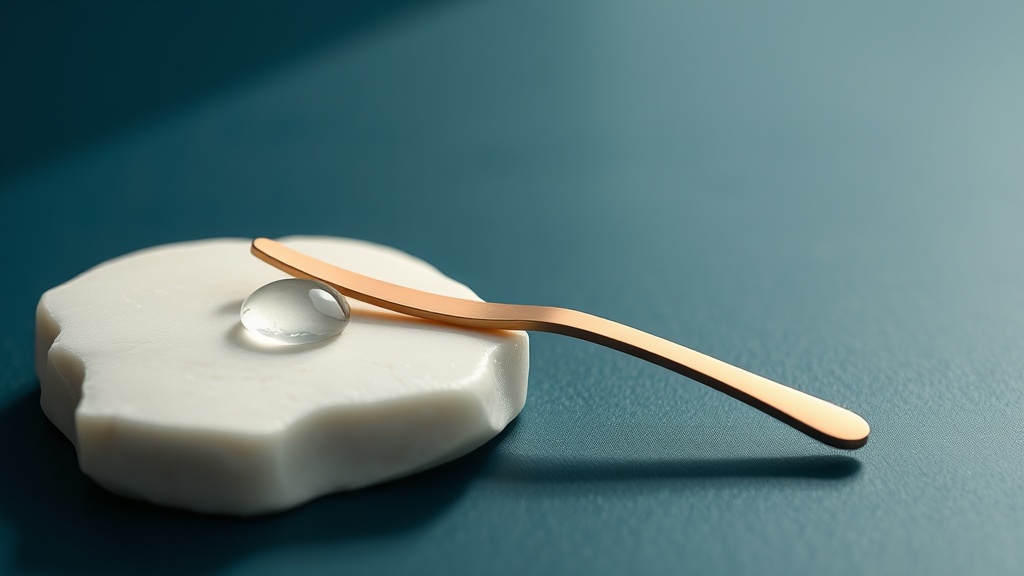
A gentle daily pass with a soft scraper or brush lifts the loose film before it thickens — light pressure is all it takes.
Most white films are harmless and clear with gentle cleaning. See a dentist or doctor if a white patch will not wipe away, if it is sore, raised, bleeding or fixed in one spot, if it keeps returning despite good tongue care, or if it comes with a burning feeling or trouble swallowing. A coating that behaves like a stuck patch rather than a soft, removable layer should always be assessed in person rather than scrubbed harder.
Frequently asked questions
Sources
- 1.
- 2.
- 3.
- 4.
- 5.
- 6.

Fix your breath at the source.
The complete science-backed protocol — engineered to eliminate volatile sulfur compounds at the biological source.
Start the Breath Protocol →Related reading
Educational purposes only. The content on this page is not medical advice and is not a substitute for consultation with a qualified dental or medical professional.
More from the library
 Answers9 min
How to Get Rid of White Tongue: The Coating, Cleared Honestly
The honest, science-based way to clear the soft coating behind a white tongue — and how to tell simple biofilm from a patch that needs a professional.
Read →→ Guides8 min
The Best Way to Clean Your Tongue for Fresh Breath
Most bad breath starts on the back of the tongue — here is the gentle, evidence-based way to clean it for fresher breath.
Read →→ Answers6 min
How Often Should You Scrape Your Tongue?
Once a day? Twice? After every meal? Here is what the research on tongue cleaning actually supports — and why frequency matters less than consistency.
Read →→ Best Of7 min
Copper Tongue Scraper Benefits: What the Evidence Supports
Copper scrapers are having a moment — but which benefits are backed by research and which are marketing? Here is the honest, evidence-based breakdown.
Read →→ Guides8 min
How to Get Rid of Bad Breath Permanently: An Evidence-Based Plan
The honest version: "permanently" means ongoing control, not a one-time fix. Here is the daily routine the research actually supports, and when to get help.
Read →→ Guides7 min
Bad Breath Even After Brushing? The Biological Reason (and Fix)
You brushed, flossed and rinsed — and the smell is still there. The reason usually isn't hygiene; it's where the odour-causing bacteria actually live.
Read →→