The Best Way to Clean Your Tongue for Fresh Breath
Most bad breath starts on the back of the tongue — here is the gentle, evidence-based way to clean it for fresher breath.

- Most everyday bad breath starts on the back of the tongue, where a soft coating of bacteria and debris shelters the sulfur-producing microbes behind the smell — so cleaning the tongue is the single highest-return step for fresher breath.
- Mechanical cleaning genuinely works: in a Cochrane review, scraping or brushing the tongue measurably lowered the volatile sulfur compounds (VSCs) that carry oral odour.
- A scraper tends to out-perform an ordinary toothbrush for this job because it lifts the coating off in a single pass instead of pushing it around, and it tends to trigger less gagging on the sensitive back third.
- The effect is real but short-lived — VSCs can climb back toward baseline within roughly half an hour — which is why tongue cleaning is a daily habit, not a one-time fix.
- Technique matters more than force: reach the back third gently, use light pressure, rinse the tool between passes, and finish with hydration or a rinse rather than scrubbing hard enough to hurt.
The best way to clean your tongue is to gently scrape from back to front with a tongue scraper — two or three light passes, rinsing the tool between strokes, once or twice a day. A scraper reaches the odour-rich back third more comfortably than a toothbrush and lifts the coating away, freshening breath. The effect fades within hours, so doing it consistently is what really counts.
Why the tongue decides how your breath smells
If you want fresher breath, the back of your tongue is where the work is. The surface of the tongue is not smooth; it is carpeted with tiny papillae, and between them sit grooves and pockets that trap food debris, shed cells and mucus. Bacteria settle into that sheltered coating and organise into a biofilm — and the posterior third of the tongue, near the throat, is the most sheltered, lowest-oxygen spot of all. That matters because the microbes behind oral malodour are anaerobes: they thrive without oxygen and, as they break down the sulfur-containing proteins in that trapped debris, they release volatile sulfur compounds (VSCs) such as hydrogen sulfide and methyl mercaptan. Those gases are the actual smell of bad breath. Reviews of the microbiology of oral malodour consistently point to the tongue dorsum as the main intra-oral reservoir for these odour-producing bacteria. That is the whole reason tongue cleaning outranks almost everything else for freshness: brushing your teeth and rinsing barely touch this coating, so if you skip the tongue you leave the single largest source of the smell undisturbed.

The odour lives in the coating: bacteria and debris shelter in the grooves of the tongue's back third, where oxygen is lowest and sulfur gases are highest.
What the research actually shows
Every claim below maps to a named, peer-reviewed source in the Sources section. According to PubMed.
| Claim | Evidence | Source |
|---|---|---|
| Mechanical tongue cleaning — scraping or brushing — measurably reduces the volatile sulfur compounds that carry oral odour compared with no cleaning. | Cochrane systematic review of tongue scraping for halitosis. | Outhouse et al., Cochrane 2006 |
| Across controlled trials, mechanical tongue cleaning added to toothbrushing had a positive effect on breath odour and reduced tongue coating. | Systematic review of five studies / seven experiments. | Van der Sleen et al., 2010 |
| Tongue cleaning has been reported to reduce VSC concentrations by roughly 20 to 70 percent across the literature, though evidence quality varies. | Cochrane review of interventions for managing halitosis. | Kumbargere Nagraj et al., Cochrane 2019 |
| The dorsum of the tongue is the principal intra-oral reservoir of the anaerobic bacteria that generate odour compounds. | Review of the microbiology and cosmetic management of halitosis. | Loesche & Kazor, Periodontol 2000, 2002 |
| A mouthrinse can add a modest, short-lived freshening effect, but works best as a finisher after mechanical cleaning rather than in place of it. | Cochrane review of mouthrinses for halitosis. | Fedorowicz et al., Cochrane 2008 |
Ways to clean the tongue, compared
| Method | What it does | Evidence on breath | Main limitation |
|---|---|---|---|
| Tongue scraper | Lifts the coating off in one clean pass | Consistent, meaningful VSC reduction | Effect fades within hours; must be daily |
| Tongue brush | Loosens and sweeps the coating away | Close to a scraper in trials | Can push debris around; more gagging for some |
| Toothbrush on the tongue | Better than nothing at all | Smaller reduction than a dedicated tool | Not shaped to reach the back third |
| Mouthwash alone | Masks and chemically neutralises odour | Short-lived; cannot lift the biofilm | A finisher, not the main clean |
| No cleaning | Coating matures overnight | Odour typically worst on waking | Leaves the largest odour source in place |
Why a scraper beats a brush — and why one pass a day is not the whole story
A toothbrush and a tongue scraper do subtly different things. Bristles agitate the coating and sweep some of it away, but they also tend to redistribute part of it and press it back into the grooves. A scraper, by contrast, is a firm edge drawn across the surface: it lifts the coating off in one direction and carries it out of the mouth. That single-pass action is a big part of why scrapers perform so well, and because a slim scraper sits flatter on the tongue than a bushy brush head, many people find they can reach the crucial back third with far less gagging. Head-to-head reviews find both approaches reduce breath odour, so the honest verdict is that the best tool is the one you will use to the back of your tongue every day. There is one caveat worth being clear-eyed about: the freshness does not last. Studies of mechanical cleaning show VSC levels can drift back toward their starting point within about thirty minutes to a few hours, because the bacteria simply regrow. That is not a failure of the method — it is why tongue cleaning is a daily rhythm, ideally paired with hydration and a finishing rinse, rather than a one-time reset.
Evidence you can act on.
Occasional emails — new research, new protocols, no noise.
The best way to clean your tongue, step by step
This is a gentle cosmetic routine to keep the coating cleared and your breath fresher. It supports a clean-feeling mouth; it is not a treatment for any medical condition.
- 1
Pick a proper tongue-cleaning tool
onceA dedicated scraper — stainless steel or copper — gives you a clean edge and reaches flat across the tongue. A soft tongue brush is a fine alternative if scraping makes you gag. Either beats using the side of a toothbrush, which is not shaped for the job.
- 2
Reach the back third first
a few secondsStick your tongue out, relax it, and place the tool as far back as is comfortable without straining. The back third is where the odour concentrates, so starting there matters. Exhaling gently and going slowly helps quiet the gag reflex.
- 3
Draw forward with light pressure, two or three passes
under a minutePull the scraper smoothly from back to front, rinsing off the coating between each pass. Two or three light strokes are plenty. Use gentle pressure only — you are lifting a soft film, not sanding the surface, and hard scraping can bruise or cut the tissue.
- 4
Finish with hydration and an optional rinse
a minuteSwish with water, and if you like, follow with an alcohol-free rinse to neutralise any lingering odour. Sipping water through the day keeps saliva flowing, which is the mouth's own way of washing the coating down before it can build back up.
- 5
Repeat daily — morning is non-negotiable
dailyClean the tongue every morning, when the coating and its smell are at their worst after a night of low saliva flow, and again at night if you can. Consistency, not intensity, is what keeps breath fresh, because the coating rebuilds every single day.
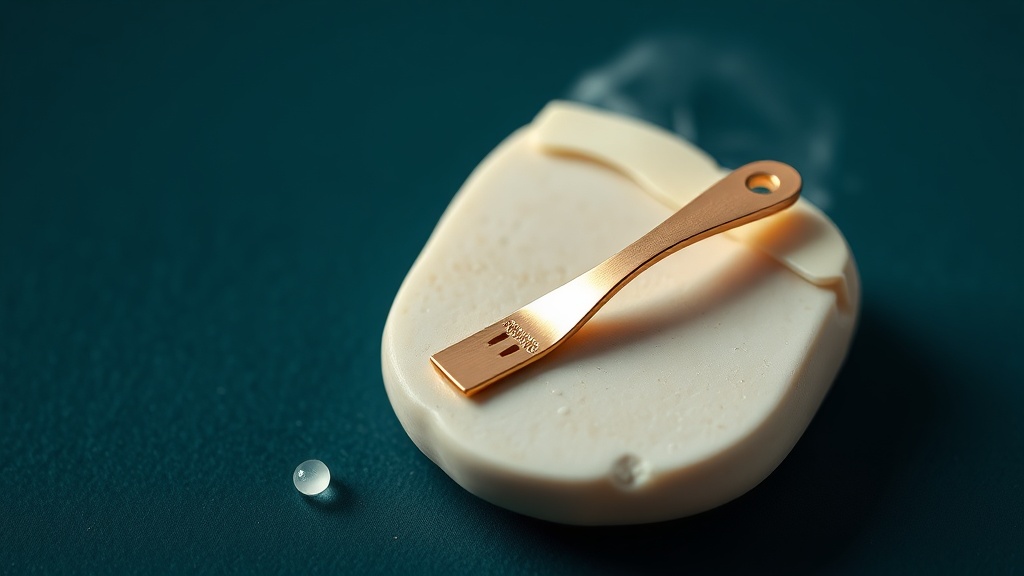
Light pressure, back to front, two or three passes — a scraper lifts the coating away in one clean stroke.
Tongue cleaning is safe and cosmetic, but a few signs deserve a professional look. See a dentist or doctor if bad breath persists despite good daily cleaning, if you have a thick white patch that does not scrape off, a red or sore tongue, burning, or breath odour alongside bleeding gums. Persistent odour can point to gum issues, a dry mouth or something further back that a scraper cannot reach — worth having checked rather than scrubbed harder.
Frequently asked questions
Sources
- 1.
- 2.
- 3.
- 4.
- 5.

Fix your breath at the source.
The complete science-backed protocol — engineered to eliminate volatile sulfur compounds at the biological source.
Start the Breath Protocol →Related reading
Educational purposes only. The content on this page is not medical advice and is not a substitute for consultation with a qualified dental or medical professional.
More from the library
 Answers6 min
How Often Should You Scrape Your Tongue?
Once a day? Twice? After every meal? Here is what the research on tongue cleaning actually supports — and why frequency matters less than consistency.
Read →→ Best Of7 min
Copper Tongue Scraper Benefits: What the Evidence Supports
Copper scrapers are having a moment — but which benefits are backed by research and which are marketing? Here is the honest, evidence-based breakdown.
Read →→ Best Of8 min
The Best Mouthwash for Bad Breath, by Active Ingredient
There is no single winner, only the right rinse for the right job. Here is how the active ingredients compare on the evidence, and which suits everyday fresh breath.
Read →→ Guides8 min
How to Get Rid of Bad Breath Permanently: An Evidence-Based Plan
The honest version: "permanently" means ongoing control, not a one-time fix. Here is the daily routine the research actually supports, and when to get help.
Read →→ Guides7 min
Bad Breath Even After Brushing? The Biological Reason (and Fix)
You brushed, flossed and rinsed — and the smell is still there. The reason usually isn't hygiene; it's where the odour-causing bacteria actually live.
Read →→ Ingredients9 min
Probiotics for Bad Breath: Do Oral Probiotics Actually Work?
Oral probiotics try to fix bad breath at the source, by shifting which bacteria live on your tongue. The idea is promising; the evidence is still early.
Read →→