
Laser Teeth Whitening Cost: Prices, Value, and Cheaper Alternatives (2026)
What laser whitening really costs — and the research showing the light adds no extra whitening over the gel alone.
- Laser or light-activated teeth whitening typically costs about $400 to $1,500 per visit in 2026 — a premium over standard chairside whitening and far above take-home options.
- The laser is really a peroxide gel with a light shone over it. The peroxide does the whitening; the light is marketed as an accelerator.
- Two large network meta-analyses — covering 28 and 32 trials — found that light or laser activation adds no measurable extra whitening and no change in sensitivity over peroxide alone.
- Any short-term edge from the light disappears within about a month, so the finished shade is the same with or without it.
- Because the light changes nothing you can see, cheaper routes — dentist take-home trays or quality strips — reach the same result, and it is wise to budget for occasional touch-ups.
Laser (light-activated) teeth whitening typically costs $400 to $1,500 per visit in 2026, a premium over standard in-office whitening. The catch: strong evidence shows the light adds no measurable whitening over the peroxide gel alone. You are paying for the experience and speed, not a whiter result — take-home trays reach the same shade for far less.
What laser teeth whitening actually is
Despite the name, laser whitening is not a beam that bleaches your teeth. It is the same chemistry as any professional whitening — a hydrogen peroxide gel painted onto the enamel — with a laser or LED light shone over the top. The gel is the part that whitens: peroxide diffuses through the enamel and oxidises the coloured molecules in the dentine beneath, and how much you lighten depends on how concentrated the gel is and how long it stays on. The light is sold as an accelerator, on the idea that it drives the reaction faster or deeper. It is a compelling story, and it photographs beautifully in a clinic, which is part of why practices can charge a premium for it. But the story and the science have parted ways. When researchers pool the trials that actually put a light against no light using the same gel, the light simply does not move the needle on the final color. Understanding that one fact — that you are paying for a light that does not change your result — is the key to spending sensibly, and it is exactly what the evidence below shows.
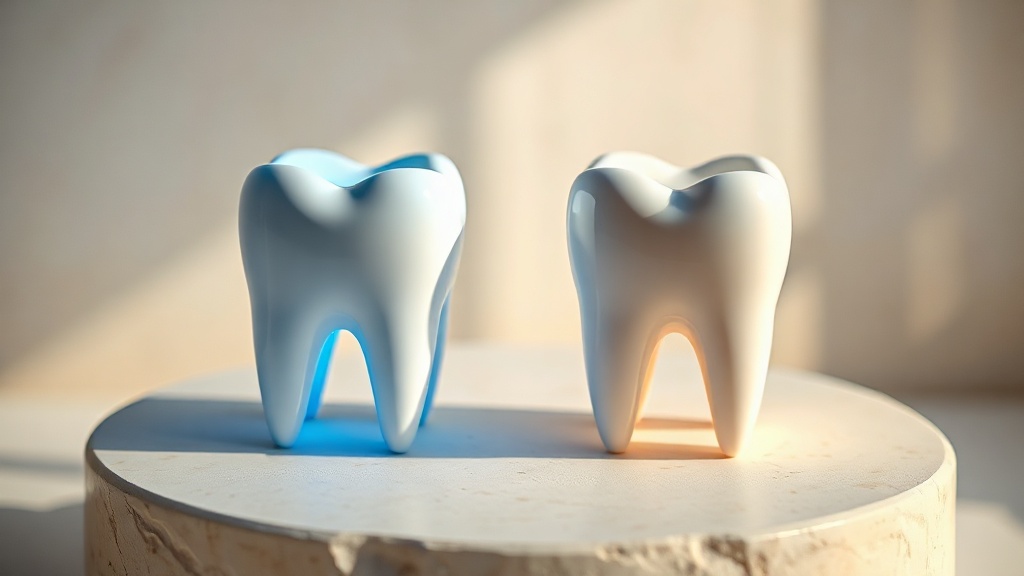
Same gel, same shade: pooled trials show the light or laser adds no measurable whitening over peroxide alone.
What the research says about the light
Every claim below maps to a named, peer-reviewed source in the Sources section. According to PubMed.
| Claim | Evidence | Source |
|---|---|---|
| No light-activation protocol improved color change over light-free peroxide bleaching — the authors note that laser whitening marketing is not supported. | Bayesian network meta-analysis (28 RCTs). | Maran et al., 2019 |
| Light activation did not change the risk or the intensity of tooth sensitivity during in-office bleaching. | Companion network meta-analysis (32 RCTs). | Moran et al., 2021 |
| Any color advantage seen immediately after light-activated bleaching had disappeared one month later. | Randomized clinical trial of four in-office methods (n=40). | Alomari & El Daraa, 2010 |
| At-home 10% carbamide peroxide matched or slightly beat in-office 35% hydrogen peroxide short-term — a far cheaper route to the same shade. | Triple-blind randomized clinical trial (n=130). | Donassollo et al., 2021 |
| There was no shade-guide-unit difference between at-home and in-office whitening overall. | Updated systematic review and meta-analysis (32 studies). | de Geus et al., 2025 |
What you pay for laser vs the alternatives
| Option | Typical US cost | What the light adds | Value verdict |
|---|---|---|---|
| Laser or light-activated in-office | $400 to $1,500 | No measurable extra whitening | You are paying for speed and experience |
| Standard in-office, no light | $300 to $1,000 | Same gel, same final shade | Faster; fair for a firm deadline |
| Dentist take-home custom trays | $200 to $500 | Not needed — no light involved | Best value for the same end shade |
| Over-the-counter whitening strips | $20 to $60 | Not needed | The cheapest evidence-backed route |
So why does it cost more — and is it worth it?
If the light does nothing measurable, why is laser whitening often the most expensive item on the menu? Partly branding: a named laser system and a high-tech in-chair experience feel premium and justify a premium fee. Partly speed and certainty: like any in-office whitening, you walk out brighter the same day, which has genuine value before a wedding or a big event. The honest way to read the price, then, is to separate the two things you are buying. The in-office speed can be worth paying for. The light specifically is not — it adds cost without adding color, and it does not even lower sensitivity, which the second meta-analysis confirmed. So if you love the idea of a quick chairside session, ask what a standard in-office whitening costs without the light upgrade, because the finished shade will be the same. And if your budget matters more than your calendar, dentist-supplied take-home trays reach that same shade for a few hundred dollars less. There is no version of the evidence in which the laser earns its premium by making your teeth whiter.
Evidence you can act on.
Occasional emails — new research, new protocols, no noise.
How to whiten smartly without overpaying
This is about spending well on a cosmetic result, not treating a dental problem. A few simple checks keep you from paying for a light that does not change your smile.
- 1
Treat the light as optional
before you bookGo in knowing the laser or LED is a marketing accelerator, not the ingredient that whitens. That single reframe makes it much easier to compare quotes on what actually matters — the gel, the supervision and the convenience.
- 2
Ask for a no-light in-office price
1 phone callMany practices offer standard chairside whitening without the light upgrade for less. Since the finished shade is the same, this is often the simplest way to keep the speed of an in-office visit while dropping the part of the bill that buys nothing you can see.
- 3
Compare take-home trays for value
1 to 2 weeksDentist-supplied custom trays reach the same end shade as any in-office method for a few hundred dollars less. If you have a week or two before you need to look your best, this is the best value in whitening.
- 4
Guard against sensitivity
discuss with your dentistThe light does not reduce sensitivity, but a lower-concentration gel does — cutting it by about a third while reaching the same color. If your teeth run sensitive, ask for a gentler protocol rather than a fancier light.
- 5
Budget for maintenance
ongoingWhitening stays visible for years but slowly rebounds, so plan for occasional touch-ups instead of one expensive session. Easing off the drinks and habits that stain most will keep your result — and your money — going further.
Cheaper, evidence-backed routes — dentist trays or quality strips — reach the same shade the laser session promises.
See a dentist before whitening if you have crowns, veneers or fillings in your smile line (they will not lighten and can leave an uneven color), if a single tooth looks noticeably darker, if you already have significant sensitivity, or if you are pregnant or breastfeeding. A brief professional check keeps both your smile and your spending on track.
Frequently asked questions
Sources
- 1.
- 2.
- 3.
- 4.
- 5.
- 6.
- 7.
- 8.
- 9.

Fix your breath at the source.
The complete science-backed protocol — engineered to eliminate volatile sulfur compounds at the biological source.
Start the Breath Protocol →Related reading
Educational purposes only. The content on this page is not medical advice and is not a substitute for consultation with a qualified dental or medical professional.
More from the library
 Guides9 min
In-Office Teeth Whitening Cost: What Dentists Charge (2026)
An honest, evidence-based look at chairside whitening prices — and whether the convenience premium is really worth it.
Read →→ Answers9 min
Does Teeth Whitening Hurt? Why It Happens and How to Prevent It
The sting is common but manageable — and the real levers are lower concentration and shorter wear time, not gimmicks.
Read →→ Answers8 min
Does Teeth Whitening Damage Enamel? The Evidence-Based Answer
The honest, evidence-based answer to whether whitening harms enamel — what peroxide really does to the surface, why sensitivity is not damage, and the DIY methods that actually cause wear.
Read →→ Comparisons8 min
Carbamide Peroxide vs Hydrogen Peroxide for Teeth Whitening: Which Works Better?
An evidence-based comparison of the two whitening peroxides, what actually separates them, and how to choose by format and comfort rather than by the biggest number.
Read →→ Answers8 min
Does Baking Soda Whiten Teeth? What the Evidence Says
An honest look at what baking soda can and cannot do for a whiter smile.
Read →→ Best Of9 min
Best Fluoride-Free Whitening Toothpaste: An Honest, Evidence-Based Guide (2026)
Which fluoride-free whitening ingredients hold up to the research — and which are marketing. An honest buyer's guide.
Read →→