Sore Tongue Remedies
Most sore tongues are minor and pass within days. Here is how to ease the discomfort at home, what tends to cause it — from geographic tongue to nutrition — and the signs that call for a professional.

- Most sore tongues are minor — from a burn, a bite, spicy or acidic food, or a dry mouth — and settle on their own within a few days once the trigger is removed.
- Comfort care is the goal: keep the mouth moist, avoid irritants, rinse gently with warm salt water, and stick to bland, cool, soft foods while the surface recovers.
- Geographic tongue — harmless map-like patches that move and change shape — is a common, benign cause of mild soreness and needs no treatment beyond avoiding triggers.
- A smooth, uniformly sore tongue can signal low iron or vitamin B12; if soreness comes with tiredness or pallor, it is worth asking your doctor for a simple blood test.
- Any sore spot, ulcer or colour change that lasts more than two weeks, or comes with a lump or trouble swallowing, should be checked in person rather than self-treated.
To soothe a sore tongue, remove the likely trigger, rinse gently with warm salt water, keep your mouth moist, and choose bland, cool, soft foods while it heals — most settle within days. Avoid spicy, acidic, salty and alcoholic irritants. See a professional if soreness lasts beyond two weeks or comes with a lump or a patch that will not heal.
Why a tongue gets sore
The tongue is packed with nerves and taste buds and has a rich blood supply, so it heals quickly — but that same sensitivity means it registers irritation sharply. Most soreness is simple and mechanical or chemical: a burn from hot food or drink, an accidental bite, a sharp tooth or denture edge, or the sting of spicy, acidic or very salty foods. A dry mouth makes everything rawer, because saliva is what normally protects and lubricates the surface. Beyond these, a few benign patterns are worth knowing. Geographic tongue produces smooth, map-like patches that migrate across the surface and can sting with certain foods, yet it is entirely harmless. A tongue that turns smooth, glossy and uniformly sore can point to a nutritional shortfall — classically low iron or vitamin B12. And some people develop a persistent burning with no visible cause at all, a pattern doctors call burning mouth syndrome. Knowing which of these you are dealing with tells you whether to simply soothe it at home or have it looked at.
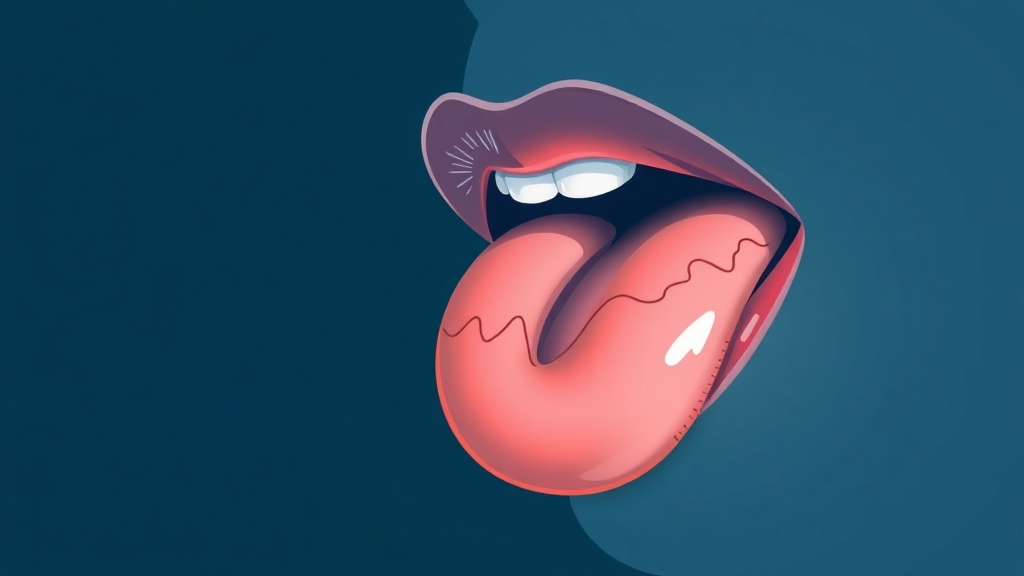
Most soreness eases once the trigger is removed and the surface is kept moist and calm.
What the research actually shows
Every claim below maps to a named, peer-reviewed source in the Sources section. According to PubMed.
| Claim | Evidence | Source |
|---|---|---|
| Geographic tongue occurs in up to about 3% of people, is benign, and is often symptomless, though some feel food sensitivity or a mild burning. | Review of common oral lesions in primary care. | Randall et al., 2022 |
| Geographic tongue (benign migratory glossitis) produces map-like patches that change shape over time; the cause is unknown but it is not dangerous. | Review of geographic tongue and its features. | Horiuchi, 2023 |
| A smooth, sore (atrophic) tongue is significantly associated with deficiencies of iron, vitamin B12 and haemoglobin. | Case-control study of atrophic glossitis and nutritional status. | Sun et al., 2011 |
| Vitamin B12 deficiency is common in atrophic glossitis, and the tongue often improves once the deficiency is corrected. | Case-control study of B12 status and atrophic glossitis. | Chen et al., 2022 |
| Burning mouth syndrome is chronic burning with no dental or medical cause found, and its treatments have only limited evidence. | Systematic review of burning mouth syndrome management. | Reyad et al., 2020 |
Common causes and what they feel like
| Likely cause | What it tends to feel like | Usually serious? |
|---|---|---|
| A burn, bite or sharp edge | Soreness at a spot you can point to | No — settles in a few days |
| Geographic tongue | Map-like patches that move; mild sting with spicy food | No — benign, though it recurs |
| Dry mouth or irritants | General rawness, worse with alcohol, smoking or acidic food | No — but ease the trigger |
| Smooth, uniformly sore tongue | Glossy surface, often with tiredness or pallor | Sometimes — get iron and B12 checked |
| Persistent burning, no visible cause | A scalded feeling, often worse as the day goes on | Have it assessed by a professional |
What actually helps a sore tongue settle
Because most soreness is irritation, the fastest relief comes from taking the irritation away and letting the tongue's quick natural healing do the rest. That means finding and removing the trigger first — swapping a toothpaste that stings (many contain sodium lauryl sulfate, which can irritate a sensitive mouth), easing off spicy, acidic and salty foods, and cutting back on alcohol and tobacco, which both inflame the surface. Keeping the mouth moist is the next lever, since a dry surface feels rawer and heals slower; sipping water and, if needed, using a saliva-supporting product helps. For day-to-day comfort, a gentle warm salt-water rinse or a mild baking-soda rinse can calm the surface, and cool, soft, bland foods give it a rest. None of this is a cure for an underlying condition — it is comfort care that supports the tongue while it recovers. If soreness is driven by a deficiency or by burning mouth syndrome, the home steps ease symptoms, but the underlying cause is something to address with a professional.
Evidence you can act on.
Occasional emails — new research, new protocols, no noise.
Comfort steps while a sore tongue heals
These are gentle comfort measures for minor, short-lived soreness, not treatments for an underlying condition. If the tongue does not settle within a couple of weeks, move on to seeing a professional.
- 1
Find and remove the trigger
—Think back over the last day or two: a hot drink, a sharp tooth or denture, a new toothpaste, or a run of spicy or acidic meals. Removing the cause is usually what lets the tongue settle. If a rough tooth or denture is to blame, ask a dentist to smooth it.
- 2
Rinse gently with warm salt water
twice dailyDissolve about half a teaspoon of salt in a cup of warm water and swish gently a couple of times a day. It is a soothing, cleansing rinse that many people find calms a sore surface. A mild baking-soda rinse works similarly.
- 3
Keep your mouth moist
all dayA dry mouth makes soreness worse and slows healing. Sip water through the day, and if dryness is ongoing, a saliva-supporting spray or lozenge can help. Breathing through your nose rather than your mouth also protects the surface.
- 4
Eat bland, cool and soft
as neededWhile it heals, favour soft, cool, mild foods and skip anything spicy, acidic, salty, crunchy or very hot. Cold water, yoghurt and smooth foods give the tongue a rest, whereas alcohol and carbonated drinks tend to sting.
- 5
Clean gently and switch to a milder toothpaste
twice dailyKeep brushing softly so the mouth stays clean, but consider an SLS-free toothpaste if your usual one stings. Gentle daily hygiene supports healing; harsh scrubbing or strong alcohol mouthwashes can make a sore tongue worse.
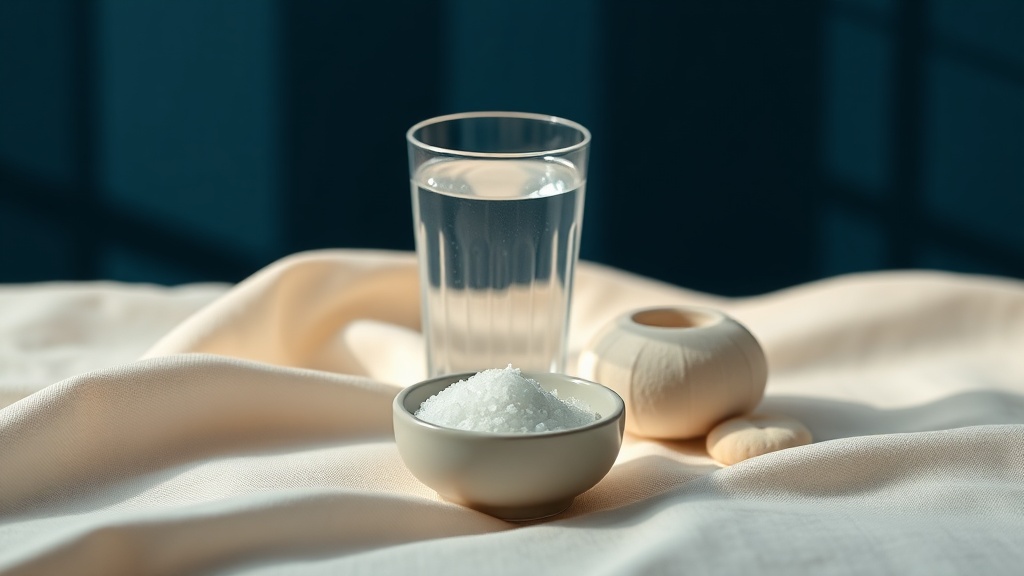
Warm salt-water rinses and cool, bland foods are simple comfort measures while a sore tongue heals.
Home comfort care is for minor, short-lived soreness. See a dentist or doctor if a sore spot, ulcer, or white or red patch lasts more than two weeks, if you feel a lump, or if you have pain on one side only, numbness, or difficulty swallowing — lasting patches that will not rub off can occasionally be a sign of something that needs proper assessment. Also get a check-up if your tongue is smooth and sore alongside tiredness or pallor, which can point to a nutritional deficiency worth a simple blood test.
Frequently asked questions
Sources
- 1.
- 2.
- 3.
- 4.
- 5.

Fix your breath at the source.
The complete science-backed protocol — engineered to eliminate volatile sulfur compounds at the biological source.
Start the Breath Protocol →Related reading
Educational purposes only. The content on this page is not medical advice and is not a substitute for consultation with a qualified dental or medical professional.
More from the library
 Answers9 min
How to Get Rid of White Tongue: The Coating, Cleared Honestly
The honest, science-based way to clear the soft coating behind a white tongue — and how to tell simple biofilm from a patch that needs a professional.
Read →→ Guides8 min
Home Remedies for Bad Breath: What the Evidence and Tradition Say
Salt water, baking soda, parsley and oil pulling, weighed honestly by both evidence and tradition, so you know what removes the source of odour and what only masks it.
Read →→ Best Of8 min
The Best Alcohol-Free Mouthwash for Fresh Breath
Skip the burn. Alcohol-free rinses can freshen breath just as well, if you choose by active ingredient rather than by that stinging tingle. Here is what the evidence supports.
Read →→ Guides8 min
The Best Way to Clean Your Tongue for Fresh Breath
Most bad breath starts on the back of the tongue — here is the gentle, evidence-based way to clean it for fresher breath.
Read →→ Guides8 min
How to Get Rid of Bad Breath Permanently: An Evidence-Based Plan
The honest version: "permanently" means ongoing control, not a one-time fix. Here is the daily routine the research actually supports, and when to get help.
Read →→ Guides7 min
Bad Breath Even After Brushing? The Biological Reason (and Fix)
You brushed, flossed and rinsed — and the smell is still there. The reason usually isn't hygiene; it's where the odour-causing bacteria actually live.
Read →→