Masseter Massage: How to Release a Tight Jaw Muscle
How to gently massage the masseter for comfort and tension relief — pain-free pressure only, and when a tight jaw needs a pro.

- The masseter is the thick, powerful muscle on the side of your jaw — the one you feel bulge when you clench your teeth. When it is overworked by clenching or grinding, it gets tight and tender, and gentle massage can ease that tension and improve comfort.
- Manual soft-tissue therapy of the jaw muscles genuinely relieves muscle-driven jaw pain in the research. A clinician gets there faster, but patient self-massage is described as simple and safe.
- Pressure should always be comfortable, never painful. Masseter massage is a comfort and relaxation technique — it soothes an overworked muscle; it does not cure a joint disorder or a disease.
- Warmth first, then slow, light circles works best. A warm compress relaxes the muscle so the massage does more with less pressure.
- If jaw pain is severe, keeps returning, is one-sided and changing, or comes with locking, swelling or fever, stop self-treating and see a dentist or TMJ-focused clinician.
Masseter massage means gently working the thick jaw muscle in your cheek to ease the tension that builds up from clenching or grinding. Warm the area, then use slow, light fingertip circles at a pressure that feels good, for a minute or two per side. It is a comfort technique for tension relief, not a cure — see a professional if pain persists.
Why the masseter gets tight in the first place
Put your fingers on your cheek, halfway between your cheekbone and the angle of your jaw, and clench. The muscle that leaps up under your fingers is the masseter — one of the strongest muscles in the body for its size, and the single strongest muscular contributor to your bite force. It is built to work hard in short bursts while you chew. The trouble starts when it never gets to switch off. Daytime clenching, night-time grinding, stress and even the habit of resting with your teeth touching keep the masseter in a low, constant contraction it was never designed for. Like any muscle held tense for hours, it fatigues, develops tender knots, and starts to ache — the classic tired, tight-cheek feeling of muscle-driven jaw tension. In people who grind heavily, the masseter can even thicken from the overuse, much as any muscle grows with repeated load. Massage helps because it does for the masseter what it would do for a cramped shoulder or calf: it increases local blood flow, encourages the muscle fibres to release, and interrupts the tension-pain loop. It is working on muscle, not on the joint or the bite — which is exactly why it is a comfort tool, not a structural fix.

The masseter runs from the cheekbone to the jaw angle — the muscle that bulges when you clench, and where tension collects.
What the research actually shows
Every claim below maps to a named, peer-reviewed source in the Sources section. According to PubMed.
| Claim | Evidence | Source |
|---|---|---|
| Manual soft-tissue therapy of the jaw relieves muscle-driven jaw pain; clinician-applied work is fastest, but patient self-therapy is simple and safe. | Clinical study of manual soft-tissue and thermal therapy for myogenic TMD. | Gebska et al., 2023 |
| Manual trigger-point therapy was among the most effective approaches for chronic TMD pain (risk difference around 32%). | Network meta-analysis of 153 randomised trials, 8,713 patients. | Yao/Busse et al., 2023 |
| Jaw exercise therapy produced a meaningful reduction in jaw pain (standardised mean difference around -0.58), a natural companion to massage. | Meta-analysis of 16 randomised trials, 812 participants. | de Melo et al., 2023 |
| The masseter is the single strongest muscular contributor to bite force — the muscle that does the heavy work of chewing and clenching. | Study of jaw-muscle size and bite force. | Raadsheer et al., 1999 |
| Topical menthol rubs ease muscle soreness by cooling, counterirritant analgesia (raising the pressure-pain threshold), not by relaxing the muscle itself. | Human randomised study of topical menthol on muscle soreness. | Stefanelli et al., 2019 |
Three ways to work the masseter
| Technique | How to do it | Good to know |
|---|---|---|
| Outside, fingertip circles | Slow, light circles with two or three fingers over the cheek muscle | The easiest and safest starting point; do this most of the time |
| Outside, knuckle glide | A soft knuckle drawn gently down the muscle from cheekbone to jaw angle | A little firmer; keep it comfortable and slow, never a grind |
| Warm compress first | A warm cloth on the cheek for a few minutes before massaging | Warmth relaxes the muscle so you need less pressure |
| Inside-the-mouth (intraoral) | Thumb inside the cheek, fingers outside, gently pinching the muscle | Only with clean hands and very light pressure; skip if it hurts |
| A soft massage tool | A rounded silicone tool used lightly over the cheek | Fine, but no more effective than fingers; never press hard |
How much pressure is right — the one rule that matters
The most common mistake with masseter massage is treating it like a deep-tissue punishment. It is not. The muscle you are working sits over the jaw joint and near sensitive tissue, and digging hard can leave it more sore, not less. The rule is simple: pressure should feel good, or at most like a satisfying, dull ache that eases as you work — never a sharp or bruising pain. If you find a tender knot, rest a fingertip on it with steady, gentle pressure and let it soften over ten to twenty seconds rather than grinding at it. Keep sessions short: a minute or two per side is plenty, once or twice a day. If you like, a thin layer of a topical menthol balm can add a pleasant cooling relief over the muscle, though it is worth knowing that the comfort comes from the cooling, counterirritant effect on the nerves, not from the menthol relaxing the muscle. Warmth and gentle movement are doing the real work. And massage is at its best as one habit among several — pairing it with jaw rest, gentle exercises and catching daytime clenching does far more than any single technique on its own.
Evidence you can act on.
Occasional emails — new research, new protocols, no noise.
A gentle masseter massage routine
Two or three minutes is all you need. Do this seated, relaxed, with your jaw loose and your teeth slightly apart. Stop any step that hurts — comfort is the whole point.
- 1
Warm the muscle
3-5 minutesHold a warm (not hot) compress against your cheek to relax the masseter before you begin. Warmth means you can get more release with far less pressure, which protects the tissue underneath.
- 2
Find the muscle
a few secondsRest your fingertips on your cheek between the cheekbone and the angle of the jaw and clench gently. The band that firms up is your masseter. Then unclench and let your jaw hang loose — you will work it in this relaxed state.
- 3
Slow, light circles
about 1 minute per sideUsing two or three fingers, make slow circles over the muscle at a pressure that feels good. Cover the whole muscle, from just under the cheekbone down to the jaw angle. Breathe and keep your jaw relaxed throughout.
- 4
Soften any tender spots
10-20 seconds eachIf you meet a tight, tender knot, hold gentle, steady pressure on it and wait for it to ease rather than grinding at it. A dull ache that fades is fine; a sharp pain means ease off.
- 5
Finish with a gentle stretch and rest
under a minuteSlowly open and close your mouth a few times within a comfortable range, then let your jaw rest with lips together and teeth apart. Repeat the whole routine once or twice a day while the muscle is tense.

Slow, light fingertip circles at a comfortable pressure — masseter massage should always feel good, never bruising.
Masseter massage is for easing everyday muscle tension. It is not the answer to every jaw problem. See a dentist or TMJ-focused clinician if jaw pain is severe, keeps returning, or lasts more than a couple of weeks; if it is only on one side and changing; or if you have jaw locking, clicking with pain, swelling, fever, or pain that spreads to the ear or teeth. Do not massage over a recent injury, a hot or swollen area, or an infected tooth. A persistent or one-sided problem should be examined in person so the right plan can be built around your situation.
Frequently asked questions
Sources
- 1.
- 2.
- 3.
- 4.
- 5.
- 6.
- 7.

Fix your breath at the source.
The complete science-backed protocol — engineered to eliminate volatile sulfur compounds at the biological source.
Start the Breath Protocol →Related reading
Educational purposes only. The content on this page is not medical advice and is not a substitute for consultation with a qualified dental or medical professional.
More from the library
 Guides8 min
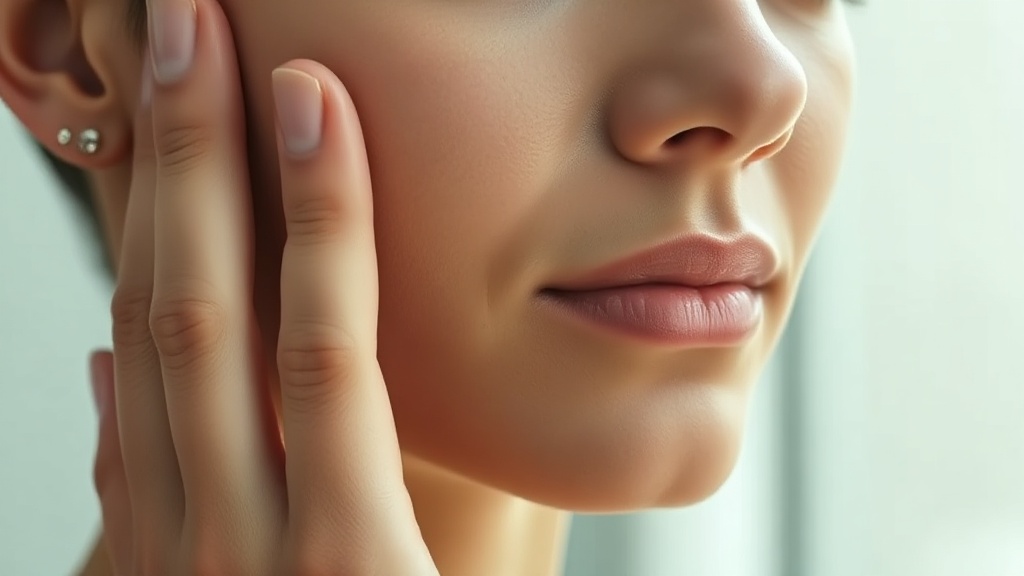
Masseter Tension Relief: Easing a Tight, Overworked Jaw
The masseter is the powerful cheek muscle that closes your jaw; when it is overworked it gets tight — here is how to ease it, and why training it harder backfires.
Read →→ Answers8 min
How to Unclench Your Jaw (Quick Relief in Under a Minute)
Daytime jaw clenching is a common stress habit, not a disorder. You can unclench it in under a minute with a few gentle resets.
Read →→ Guides9 min
Home Remedies for TMJ: 9 Natural Ways to Relieve Jaw Pain at Home
Simple at-home self-care, soft foods, warmth, gentle movement and load reduction, can genuinely ease TMJ jaw discomfort for many people.
Read →→ Guides8 min
TMJ Physical Therapy: Exercises, Timeline, and What to Expect
A clear-eyed look at what physical therapy can and cannot do for jaw pain — and how to start safely.
Read →→ Guides8 min
Jaw Relaxation Exercises: A Step-by-Step Comfort Guide
A step-by-step down-regulation routine for a tight, clenched jaw, built on gentle relaxation rather than force.
Read →→ Guides9 min
Does Mewing Actually Work? An Honest, Evidence-Based Breakdown
The honest, evidence-based answer to whether tongue posture can reshape an adult jaw — what the research really shows, and why forcing it can backfire.
Read →→