
How to Unclench Your Jaw: Quick, Gentle Relief
Daytime jaw clenching is a common stress habit, not a disorder. You can unclench it in under a minute with a few gentle resets.
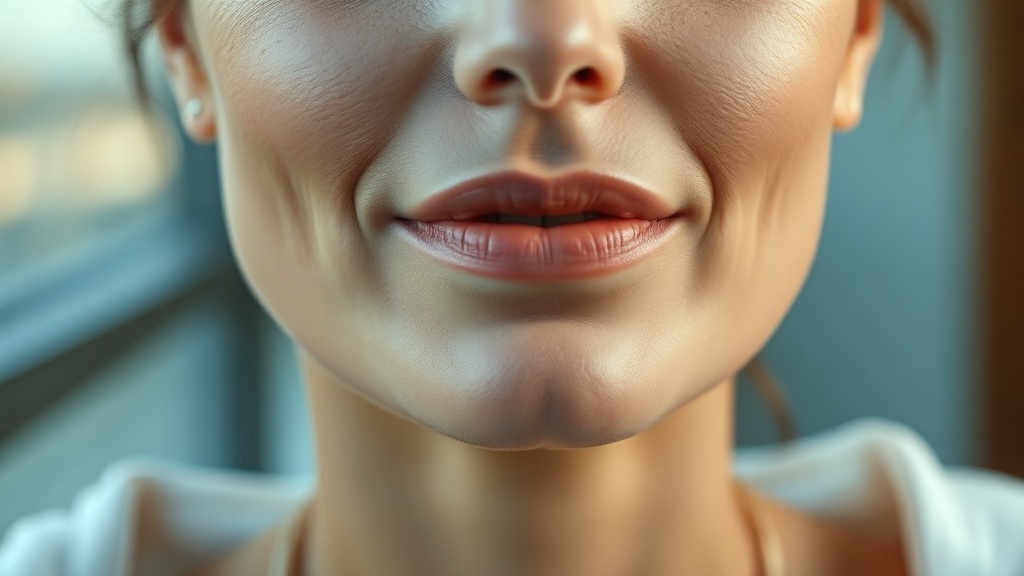
- Daytime jaw clenching is a very common stress habit, not a disease. Around one in five to one in six adults notices themselves clenching while awake, and in otherwise healthy people it is a behaviour rather than a disorder.
- The fastest reset takes seconds: part your teeth, let your tongue rest, drop your shoulders and breathe out slowly. Your jaw is only meant to have its teeth touching for a few minutes a day.
- The real skill is not force, it is awareness. Most clenching happens below your notice, so catching yourself is what actually changes the habit over time.
- Stress is the main driver, and jaw clenching travels with anxiety and low mood, which is why calming the nervous system helps the jaw as much as any jaw-specific move.
- Under-a-minute relief is a comfort habit, not a treatment. If you have persistent pain, headaches, locking, or worn teeth, see a dentist, because ongoing clenching can have consequences worth managing properly.
To unclench your jaw fast, part your teeth so they are not touching, rest the tip of your tongue lightly behind your top teeth, drop your shoulders, and breathe out slowly through your nose. Hold for a few breaths. Repeat whenever you catch yourself clenching, since awareness is what breaks the habit.
Why your jaw clenches in the first place
Here is a fact that surprises most people: your teeth are only meant to touch for a few minutes across an entire day, mostly while chewing. The natural resting position of a relaxed jaw is lips gently together, teeth slightly apart, and tongue resting softly against the roof of the mouth. Clenching breaks that rule. When you concentrate, feel stressed, scroll your phone, or brace against a hard moment, it is remarkably easy to quietly bring your back teeth together and hold them there, sometimes for long stretches without noticing. The muscle doing most of this is the masseter, the thick, powerful band along the angle of the jaw. It is built for short, strong bursts, not for holding a low-grade contraction all afternoon, so when it is kept switched on it fatigues and starts to ache, often referring tension up toward the temple and ear. This is why daytime clenching is best understood as a habit loop rather than a medical event. Something cues it, usually stress or focus, the muscle tightens, and because it happens below your awareness, nothing interrupts it. Unclenching is simply the act of interrupting that loop, and the more often you catch and reset it, the weaker the habit becomes.

A truly relaxed jaw rests with lips together but teeth slightly apart, not pressed together. That gap is the whole goal.
What the research actually shows
Every claim below maps to a named, peer-reviewed source in the Sources section. According to PubMed.
| Claim | Evidence | Source |
|---|---|---|
| Awake bruxism is defined as the awareness of jaw clenching, and its prevalence is reported at about 20 percent of the adult population. | Clinical overview of bruxism physiology. | Lavigne et al., 2008 |
| Awake clenching is present in roughly one in six adults in population-based samples, making it one of the most common oral habits. | Systematic review, 81 studies pooled. | Oliveira et al., 2023 |
| In otherwise healthy people, clenching and grinding should be seen as a behaviour that can be a risk factor, not as a disorder in itself. | International expert consensus on bruxism. | Lobbezoo et al., 2018 |
| For ongoing jaw pain, simple usual care such as reassurance, education and home exercises, plus relaxation and cognitive behavioural approaches, are strongly recommended. | GRADE clinical practice guideline and network meta-analysis. | Busse et al., BMJ 2023 |
| Jaw disorders travel with psychological stress: anxiety and depression were significant associated factors, with anxiety carrying more than double the odds. | Cross-sectional study of 570 patients. | Ye et al., 2022 |
Quick resets, and what each one does
| Reset | What it interrupts | When to use it |
|---|---|---|
| Teeth apart, tongue resting | The clench itself, by returning to the natural resting position | The instant you notice your teeth touching |
| Slow breath out through the nose | The stress signal driving the clench | Any tense moment, focus, or phone scroll |
| Drop the shoulders | The whole upper-body bracing pattern the jaw is part of | When your neck and shoulders feel hiked up |
| Warm hands on the jaw | A fatigued, aching masseter that has been held too long | After a long stretch of concentration |
| A visual reminder cue | The invisibility of the habit, by making it visible | All day, until catching yourself becomes automatic |
Awareness is the real technique
The single most useful thing to understand about daytime clenching is that the technique is not the hard part, the noticing is. Any of the resets below will loosen your jaw in seconds. The trouble is that clenching lives below conscious attention, so most of the day it simply runs unchecked. That is why calling it a behaviour matters, and why the honest evidence frames it that way: in healthy people, clenching is a habit that can be nudged, not a disorder to be fixed. The practical route in is to build cues that drag the habit into view. People tie a reset to recurring moments, a phone unlock, a red light, an email notification, a doorway, so that dozens of times a day they get a small prompt to check: are my teeth touching, are my shoulders up, am I holding my breath. Almost always the answer is yes to at least one, and the reset takes a breath. Because stress is the engine, anything that steadies your nervous system, a longer exhale, a short walk, loosening the shoulders, tends to quiet the jaw as much as any jaw-specific move. Over a couple of weeks, the loop weakens and the resting position starts to hold on its own. None of this stops nighttime grinding, which runs on a different, sleep-driven mechanism, but for the awake habit, patient awareness is what genuinely changes things.
Evidence you can act on.
Occasional emails — new research, new protocols, no noise.
How to unclench your jaw in under a minute
This is a comfort reset you can do anywhere, as often as you like. It should feel easy and pleasant. Use it the moment you catch yourself clenching, and again whenever you remember.
- 1
Notice and part your teeth
2 secondsThe moment you catch your back teeth touching, simply let them come apart. Do not force the jaw down, just stop holding it up. A relaxed jaw hangs slightly open on its own.
- 2
Rest your tongue
5 secondsLet the tip of your tongue rest lightly behind your top front teeth, without pushing. This naturally settles the jaw into its resting position and gently discourages the teeth from meeting again.
- 3
Breathe out slowly
10 to 15 secondsTake a slow breath in through the nose and a longer, unhurried breath out. A long exhale calms the stress response that drives the clench. Two or three of these is enough to feel the jaw soften.
- 4
Drop your shoulders
5 secondsLet your shoulders slide down away from your ears. Jaw clenching is usually part of a wider bracing pattern, so releasing the shoulders and neck helps the jaw let go too.
- 5
Warm and soften, if it aches
1 to 2 minutesIf the muscle feels tired, rest warm palms or a warm cloth against the sides of your jaw for a minute and let it melt. Gentle warmth invites a fatigued masseter to release.
- 6
Set a cue for next time
ongoingPick something you do often, unlocking your phone, a doorway, a notification, and let it remind you to check your jaw. Making the invisible habit visible is what changes it for good.

Tying a quick jaw check to everyday moments, like a work break or a phone unlock, is what turns unclenching into a habit.
Unclenching habits are a comfort skill, not a substitute for care when something more is going on. See a dentist if you have persistent or worsening jaw pain, frequent headaches around the temples, teeth that are visibly worn, chipped or sensitive, or if your jaw catches, clicks painfully, or is hard to open. A jaw that suddenly locks and will not close should be seen the same day. A dentist can examine your jaw and teeth, look at whether nighttime grinding is involved, and talk through options such as a night guard so that ongoing clenching does not quietly cause damage.
Frequently asked questions
Sources
- 1.
- 2.
- 3.
- 4.
- 5.
- 6.
- 7.
- 8.

Fix your breath at the source.
The complete science-backed protocol — engineered to eliminate volatile sulfur compounds at the biological source.
Start the Breath Protocol →Related reading
Educational purposes only. The content on this page is not medical advice and is not a substitute for consultation with a qualified dental or medical professional.
More from the library
 Answers8 min
How to Stop Clenching Your Jaw at Night
Clenching your jaw at night is mostly involuntary and sleep-driven — here is what honestly reduces it and what only a professional can help with.
Read →→ Answers8 min
How to Relax Your Jaw (Simple Techniques That Actually Help)
Quick, everyday techniques to release a tense, clenched jaw, and the simple resting cue worth remembering.
Read →→ Guides8 min
Jaw Tension: Why It Happens and How to Ease It
A tight jaw is usually an over-worked muscle, not a broken joint — here is what drives jaw tension and how to gently let it go.
Read →→ Guides8 min
Teeth Grinding: How to Manage It
Grinding is a behaviour, not a disease to cure — here is what actually helps.
Read →→ Guides8 min
Jaw Relaxation Exercises: A Step-by-Step Comfort Guide
A step-by-step down-regulation routine for a tight, clenched jaw, built on gentle relaxation rather than force.
Read →→ Guides9 min
Does Mewing Actually Work? An Honest, Evidence-Based Breakdown
The honest, evidence-based answer to whether tongue posture can reshape an adult jaw — what the research really shows, and why forcing it can backfire.
Read →→