Home Remedies for TMJ: 9 Gentle Ways to Soothe Jaw Pain at Home
Simple at-home self-care, soft foods, warmth, gentle movement and load reduction, can genuinely ease TMJ jaw discomfort for many people.

- For many people, simple home self-care genuinely eases TMJ discomfort: in a head-to-head trial, dentist-guided self-care with jaw rest, warmth and gentle exercise matched a custom splint at 3, 6 and 12 months.
- The most useful remedies reduce the load on an overworked jaw: soft foods, warmth, gentle movement, self-massage, better screen posture, and calming the stress that fuels clenching.
- Warmth soothes a tired, aching muscle, while a cold pack suits a sharply painful or swollen joint. Both are comfort measures you can use as needed.
- Herbal and topical helpers like menthol rubs work by cooling and distraction, not by relaxing the jaw muscle, so treat them as comfort, not a fix, and patch-test first.
- Home care is a comfort strategy, not a cure. Persistent, one-sided, or worsening pain, locking, or worn teeth belong with a dentist or TMJ-aware physiotherapist.
The most effective home remedies for TMJ ease the load on the jaw: eat soft foods, apply a warm compress to relax the muscles, do slow gentle jaw movements, massage the jaw lightly, improve your screen posture, and calm daily stress. These comfort measures help many people, but persistent or one-sided pain needs a professional.
What is actually going on with TMJ
TMJ is shorthand for the temporomandibular joint, the hinge just in front of each ear, and the muscles that move it. When people say they have TMJ, they usually mean a temporomandibular disorder: pain, tightness, clicking or limited movement in that system. It is common. Around 31 percent of adults carry a sign or symptom at some point, and the jaw is the second most frequent site of musculoskeletal chronic pain after the lower back. The reassuring part is that most jaw trouble is muscular, coming from an overworked masseter and its neighbours, often driven by clenching, grinding, stress, or heavy chewing. That is exactly why home remedies can help so much: if the muscle is what is strained, then resting it, warming it, moving it gently and calming the stress behind it all give real, felt relief. Home care works less well when the problem is inside the joint itself, such as a disc that catches or an inflamed joint, which is the honest reason self-care is a starting point rather than the whole answer. The unifying idea behind every remedy below is load reduction: give an overworked jaw less to do and more chance to settle, and comfort usually follows.

A warm compress is one of the simplest, most soothing home remedies for a tired, aching jaw muscle.
What the research actually shows
Every claim below maps to a named, peer-reviewed source in the Sources section. According to PubMed.
| Claim | Evidence | Source |
|---|---|---|
| Dentist-guided self-care, including jaw rest, thermal packs and gentle exercise, matched a custom hard splint for easing jaw pain at 3, 6 and 12 months. | Randomized controlled trial of 200 people with painful jaw disorders. | Truelove et al., 2006 |
| Simple usual care such as home exercises, stretching, reassurance and education is strongly recommended for ongoing jaw pain, while occlusal splints are only conditionally suggested. | GRADE clinical practice guideline and network meta-analysis. | Busse et al., BMJ 2023 |
| Gentle jaw exercise therapy reduced pain and improved mouth opening, a modest but real benefit for muscle-related jaw problems. | Systematic review and meta-analysis, 16 RCTs, 812 participants. | Idanez-Robles et al., 2022 |
| Light self-massage of the jaw muscles lowered resting muscle tension and eased pain, and was described as a simple and safe approach. | Randomized controlled trial of 82 women with myofascial jaw pain. | Gebska et al., 2023 |
| Topical menthol rubs relieve by cooling and counter-irritation through TRPM8 nerve channels, not by relaxing the jaw muscle, so they offer comfort rather than a cure. | Review of the mechanism of menthol in topical analgesics. | Pergolizzi et al., 2018 |
The nine home remedies, honestly rated
| Remedy | How it helps | Honest note |
|---|---|---|
| Soft-food diet | Rests an overworked jaw by cutting chewing load | The single easiest way to give a sore jaw a break |
| Warm compress | Relaxes a tired, aching muscle | Best for muscle tightness and dull aching |
| Cold pack | Numbs sharp pain and calms swelling | Better than heat for an acutely painful or swollen joint |
| Gentle jaw exercise | Eases pain and restores easy movement | Modest, real benefit; keep it slow and pain-free |
| Light self-massage | Lowers masseter muscle tension | Simple and safe when gentle, never forceful |
| Screen and posture habits | Reduces neck and jaw strain from device use | Heavy phone use is linked with more jaw symptoms |
| Stress and relaxation | Calms the clenching the stress response drives | Longer exhales and short breaks help the jaw too |
| Topical menthol rub | Cooling, distracting comfort over a sore area | Comfort only, not muscle relaxation; patch-test first |
| Load reduction at night | Limits grinding damage and morning soreness | If you grind, ask a dentist about a night guard |
What home remedies can and cannot do
It is worth being honest about the ceiling on home care, because that honesty is what keeps it safe and useful. What these remedies genuinely do is ease muscular jaw discomfort and reduce the load that keeps a jaw irritated. The evidence for that is real: simple self-care held its own against a custom splint over a full year, gentle exercise reliably takes the edge off pain, and light self-massage calms an overworked muscle. What they do not do is change the joint itself, straighten a displaced disc, or resolve an inflamed or structurally damaged joint. They also do not stop nighttime grinding, which is driven by sleep arousals rather than anything you can consciously relax. This is why the smart approach is a short, honest trial. Give the remedies a couple of weeks of consistent, gentle use. Many people find their jaw settles noticeably. If yours does not, or if the pain is sharp, one-sided, or getting worse, that is not a failure of effort, it is a signal that the problem may be coming from inside the joint and deserves a proper look. It is also worth naming what to skip: forceful jaw stretching, hard massage tools jammed into the joint, chewy gum used as exercise, and menthol or clove products used without a patch test, since fragrance ingredients can irritate sensitive skin.
Evidence you can act on.
Occasional emails — new research, new protocols, no noise.
A gentle at-home TMJ comfort routine
Use these as comfort measures, mixing and matching what helps. Everything should feel soothing or neutral, never sharp. None of this replaces a professional assessment of persistent pain.
- 1
Give the jaw a soft-food break
a few days at a timeDuring a flare, switch to soft foods like soups, smoothies, eggs, yoghurt and cooked vegetables, and cut food into small pieces. Skip chewy, crunchy and tough foods, and go easy on wide yawns. Less chewing means less load on a sore jaw.
- 2
Warm it to relax, cool it to calm
10 to 15 minutesFor a tired, aching muscle, hold a warm compress against the jaw to help it relax. If the joint is sharply painful or swollen, a cold pack wrapped in a thin cloth suits better. Use whichever brings more relief, and never apply ice directly to skin.
- 3
Move it gently
a few slow repsOnce pain settles, open and close your mouth slowly within a comfortable range, and add gentle side-to-side movements. Keep everything smooth and pain-free. Slow, easy movement restores mobility without provoking the muscle.
- 4
Massage lightly
30 to 60 secondsRest two fingers on the muscle at the jaw angle and make small, slow circles with gentle pressure. Add the flat area above the ear. Keep it comfortable; digging hard makes a guarded muscle tighten rather than release.
- 5
Fix your screen posture
ongoingBring your phone and screen up to eye level and take regular breaks. Heavy device use and a forward-head posture are linked with more jaw strain, so easing the neck load takes pressure off the jaw as well.
- 6
Calm the stress behind the clench
dailyBecause stress fuels clenching, a few minutes of slower breathing, a short walk, or simply dropping the shoulders through the day helps the jaw as much as any jaw move. Aim to rest with lips together but teeth slightly apart.
- 7
Protect your teeth at night
ongoingIf you grind in your sleep, home relaxation will not stop it, so ask a dentist about a night guard to limit wear and morning soreness. This is comfort and protection, not a way to change the grinding itself.
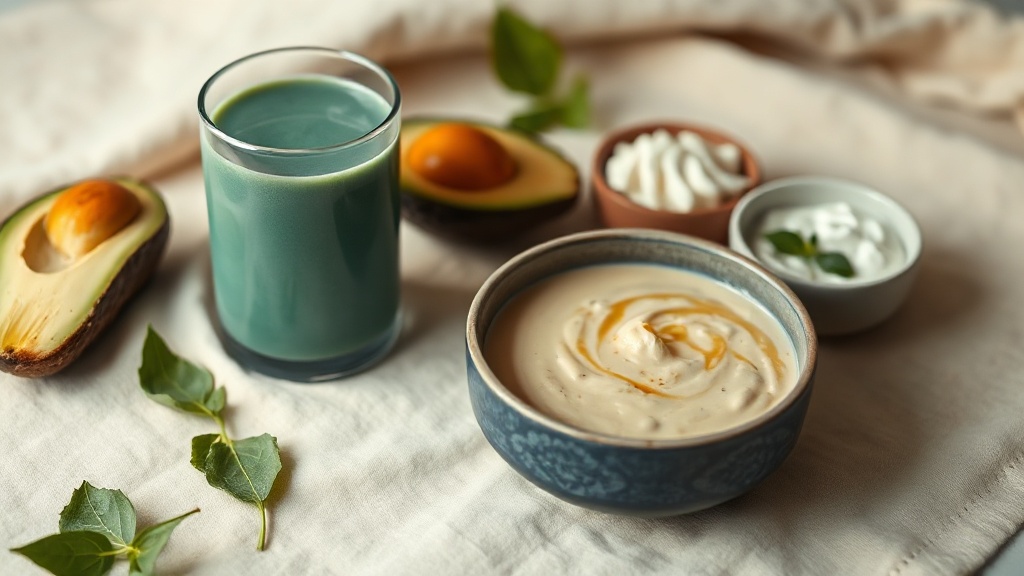
A soft-food break is the simplest load reducer there is, giving an overworked jaw far less to do.
Home remedies are a comfort starting point, not a replacement for care when something more is going on. See a dentist or a TMJ-aware physiotherapist if your jaw pain is persistent, severe, or getting worse, if it is clearly worse on one side, if your jaw locks, catches, or will not open fully, or if you have swelling, fever, or teeth that are visibly worn or chipped. A jaw that suddenly locks and will not close is urgent and should be seen the same day. A professional can examine the joint properly and add care such as manual therapy that self-help alone cannot provide.
Frequently asked questions
Sources
- 1.
- 2.
- 3.
- 4.
- 5.
- 6.
- 7.
- 8.

Fix your breath at the source.
The complete science-backed protocol — engineered to eliminate volatile sulfur compounds at the biological source.
Start the Breath Protocol →Related reading
Educational purposes only. The content on this page is not medical advice and is not a substitute for consultation with a qualified dental or medical professional.
More from the library
 Guides8 min
TMJ Relief: Conservative Comfort Strategies for a Sore Jaw
Conservative comfort strategies for TMJ jaw soreness, plus when to see a dentist or TMJ specialist.
Read →→ Guides8 min
How to Get Rid of TMJ: The Honest, Step-by-Step Conservative-Care Path
The honest conservative-care ladder for managing TMJ (TMD), from self-care to professional treatment, and when to escalate to a specialist.
Read →→ Guides9 min
TMJ Flare-Up: How to Calm Jaw Pain Fast
What a TMJ flare is, why it happens, and the gentle, proven steps that calm jaw pain fastest — plus when to get help.
Read →→ Guides8 min
Jaw Relaxation Exercises: A Step-by-Step Comfort Guide
A step-by-step down-regulation routine for a tight, clenched jaw, built on gentle relaxation rather than force.
Read →→ Guides9 min
Does Mewing Actually Work? An Honest, Evidence-Based Breakdown
The honest, evidence-based answer to whether tongue posture can reshape an adult jaw — what the research really shows, and why forcing it can backfire.
Read →→ Guides8 min
How to Unlock a Locked Jaw: Gentle Self-Relief Steps
Calm, evidence-based ways to coax a recently stuck jaw open again — and the red flags that mean it is time to get help.
Read →→