Does Mewing Actually Work? An Honest, Evidence-Based Breakdown
The honest, evidence-based answer to whether tongue posture can reshape an adult jaw — what the research really shows, and why forcing it can backfire.

- Mewing means resting your tongue against the roof of your mouth in the hope of reshaping the jaw and sharpening the jawline. The honest headline: there is no good evidence it remodels adult facial bone.
- Not a single randomized trial, controlled cohort, or before-and-after X-ray study shows tongue posture changing the adult jaw. The peer-reviewed footprint is essentially commentary, not proof.
- Adult facial bone has finished growing. After roughly the end of the teens there is no meaningful growth window for soft tongue pressure to redirect — the core reason the claim does not hold up.
- Any visible change people report is far more likely posture, camera angle, lower body fat, or expectation than a reshaped skeleton — and forcing hard tongue pressure can trigger clenching and jaw pain.
- If your real interest is jaw pain, breathing, or how you feel about your face, there are honest, evidence-based paths — and a dentist, orthodontist, or doctor is the right guide, not a viral technique.
No — there is no reliable evidence that mewing reshapes an adult jaw. Tongue posture cannot remodel bone that has finished growing, and no controlled study shows it works. Any change people notice is usually posture, camera angle, or body-fat, not the skeleton. Gentle tongue-posture habits are harmless, but forcing them can cause jaw strain.
What mewing claims — and why the biology does not cooperate
Mewing, named after the orthodontists who popularised it, is the practice of resting the whole tongue flat against the roof of the mouth, with the idea that this constant gentle pressure will gradually widen the palate, lift the cheekbones, and carve out a sharper jawline. It is enormously popular online, with tens of thousands of searches a month, and the before-and-after photos look persuasive. The problem is not that people are lying about the pictures; it is that the biology does not support the mechanism. Facial bones are not clay. In children, the facial skeleton is still growing and can be guided to a degree, which is the entire basis of orthodontics. In adults, that growth is essentially finished — research on craniofacial development finds that skeletal growth after the second decade of life is clinically insignificant. There is simply no open growth to push on. On top of that, the forces involved are tiny and intermittent compared with the sustained, calibrated pressure orthodontic appliances apply over years to move teeth — and even those move teeth, not the underlying jawbone. So the claim asks a soft, resting tongue to do something that fully engineered dental hardware cannot: remodel mature adult bone.
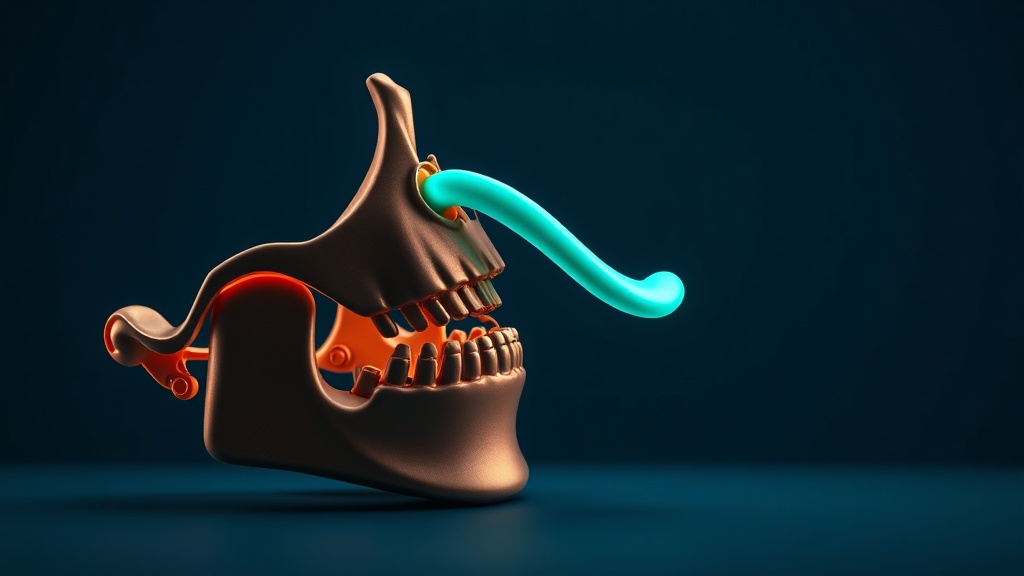
A soft tongue resting against a mature jawbone: gentle tissue pressure cannot remodel bone that has finished growing.
What the research actually shows
Every claim below maps to a named, peer-reviewed source in the Sources section. According to PubMed.
| Claim | Evidence | Source |
|---|---|---|
| Craniofacial skeletal growth is clinically insignificant after the second decade of life — there is no adult growth window for tongue posture to remodel bone. | Craniofacial growth cohort study. | Fudalej et al., 2007 |
| In adults, tongue position showed no significant association with the vertical shape of the face. | Cephalometric analysis of adult tongue posture. | Ghafoor et al., 2024 |
| The most-cited pro-mewing evidence is a high-risk-of-bias attractiveness study of just 12 of the originator's own patients, judged by a lay panel. | Small case series, lay-panel rated. | Mew, 2007 |
| A 6-month chewing trial raised bite force but left masseter thickness and jaw-bone shape unchanged — muscle work did not reshape the jaw. | Randomized controlled trial, 58 adults. | Jung et al., 2024 |
| A thicker chewing muscle makes the lower face wider, shorter, and more square — bulking the jaw muscle broadens the face rather than slimming it. | Facial morphology study of masseter thickness. | Raadsheer et al., 1996 |
Mewing claims vs the evidence
| The claim | What the evidence shows |
|---|---|
| Tongue posture reshapes the adult jawbone | No controlled study supports it; adult facial bone has stopped growing |
| Before-and-after photos prove it works | Posture, camera angle, lighting, and lower body fat change how a jawline looks with no bone change |
| A stronger, bigger jaw muscle sculpts the jawline | A bigger chewing muscle widens and squares the face; it does not slim it |
| Mewing is a free alternative to surgery | Surgeons describe it as promoted for changes only surgery can actually make |
| It is completely risk-free | Gentle rest is harmless, but forcing hard tongue pressure can trigger clenching and jaw pain |
Where the it-worked-for-me stories come from — and the real risks
If mewing does not move bone, why are the testimonials so confident? Several honest explanations fit the photos far better than a remodelled skeleton. Standing taller and holding the head level — which people naturally do while concentrating on posture — genuinely sharpens how a jawline reads in a mirror or a photo. So does better lighting, a higher camera angle, losing a little body fat, or the practised, half-flexed pose people adopt for their after picture. Add the powerful pull of expecting to see a change, and the appearance of transformation is easy to manufacture without a single millimetre of bone moving. There is also a real downside the hype skips over. Pushing the tongue hard against the palate — what enthusiasts call hard mewing — is a recipe for clenching the jaw, and people report exactly that: jaw tension, soreness, even a feeling of the airway tightening when they force the tongue back. That matters because clenching and grinding are how many people slide into jaw-muscle pain in the first place. The most honest point of all is about the goal itself. The research on attractiveness does not support the premise that a harder, more chiselled jaw is universally more appealing; in a landmark study, observers actually preferred slightly softer, more feminised male faces, and a very wide, angular face tends to read as dominant but less attractive. And for some people, the pursuit of the perfect jaw tips into a documented cycle of anxiety and body-image harm worth taking seriously.
Evidence you can act on.
Occasional emails — new research, new protocols, no noise.
A safe, honest approach to tongue posture and your jaw
You are welcome to rest your tongue comfortably against the roof of your mouth — done gently, it is harmless. Just hold realistic expectations, and put your effort where the evidence actually points.
- 1
Keep tongue posture gentle, never forced
whenever you think of itA relaxed resting tongue position, with lips together and teeth slightly apart, is a fine everyday habit and may help you breathe through your nose. What to avoid is hard mewing — straining the tongue upward or back — which invites clenching and jaw strain for no proven structural payoff.
- 2
Judge your jawline honestly
—Before chasing a technique, remember that posture, head position, lighting, camera angle, and body-fat level change how a jawline looks far more than anything a tongue can do. A flattering after-photo is not evidence of a reshaped bone.
- 3
Put effort where it works: overall health and posture
ongoingThe genuinely effective levers for a more defined lower face are the unglamorous ones — a healthy body composition, good upright posture, and staying hydrated. None of them remodel bone either, but they change appearance more reliably and safely than mewing.
- 4
Protect your jaw from clenching
ongoingIf you already tend to clench or grind, be especially wary of forceful tongue or jaw exercises and gadgets. Notice when your teeth are touching during the day and let them part; a tense jaw is easy to aggravate and slow to calm.
- 5
See a professional for real structural questions
as neededIf your interest is really about breathing, a recessed chin, bite problems, or persistent jaw pain, those are questions for an orthodontist, dentist, or doctor. Genuine skeletal change in adults comes from clinical care, not tongue posture — and a professional can tell you honestly what is and is not possible.
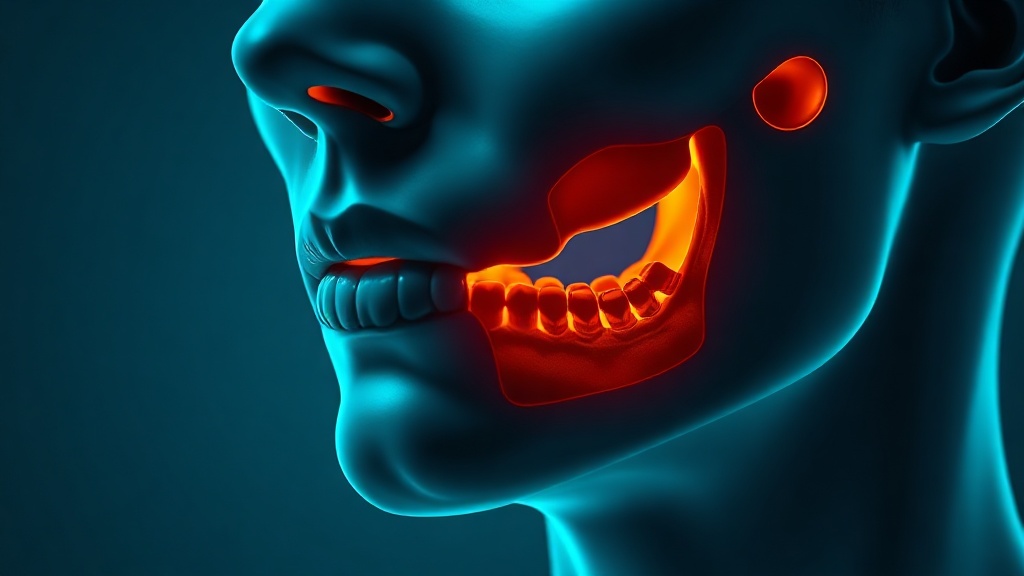
Building the chewing muscle widens and squares the lower face — the opposite of the slim jawline mewing promises.
Mewing is mostly harmless as a gentle habit, but a few situations deserve real guidance. See a dentist, orthodontist, or doctor if you have ongoing jaw pain, clicking, or clenching, if you struggle to breathe through your nose or suspect a sleep or airway problem, or if you are considering jaw surgery or other cosmetic procedures. And if concern about your jaw or face has started to dominate your thoughts, dented your mood, or driven extreme routines, that is worth raising with a doctor or mental-health professional — the pursuit of the perfect jawline is a documented source of anxiety and body-image harm, and support is available.
Frequently asked questions
Sources
- 1.
- 2.
- 3.
- 4.
- 5.
- 6.
- 7.
- 8.
- 9.
- 10.

Fix your breath at the source.
The complete science-backed protocol — engineered to eliminate volatile sulfur compounds at the biological source.
Start the Breath Protocol →Related reading
More from the library
 Guides8 min
How to Mew Properly: The Honest, Evidence-Based Guide
The correct tongue-posture technique, described plainly - and the honest science on why it will not reshape an adult jawbone, and how to keep it from doing harm.
Read →→ Guides8 min
Mewing Before and After: What Actually Changes
Why the dramatic transformation photos are so convincing - and what is really different between the before and the after. It is not the bone.
Read →→ Guides8 min
Proper Tongue Posture: How to Rest Your Tongue Correctly
The calm, neutral resting position for your tongue, lips and jaw, explained honestly.
Read →→ Guides8 min
How to Get a Sharper Jawline: What Works and What Does Not
The jawline advice online is mostly hype. Here is what genuinely changes how defined your jaw looks, what does nothing, and where the real (sometimes medical) levers are.
Read →→ Guides8 min
Jaw Relaxation Exercises: A Step-by-Step Comfort Guide
A step-by-step down-regulation routine for a tight, clenched jaw, built on gentle relaxation rather than force.
Read →→ Guides8 min
How to Unlock a Locked Jaw: Gentle Self-Relief Steps
Calm, evidence-based ways to coax a recently stuck jaw open again — and the red flags that mean it is time to get help.
Read →→