Jaw Tension: Why It Happens and How to Ease It
A tight jaw is usually an over-worked muscle, not a broken joint — here is what drives jaw tension and how to gently let it go.

- Jaw tension is usually a muscle-and-habit story, not a sign that something is broken: everyday clenching, stress, and sustained posture keep the jaw-closing muscles switched on when they should be resting.
- It is extremely common — around 1 in 3 adults report at least one sign or symptom of a jaw-muscle or joint issue, and roughly 1 in 6 notice themselves clenching while awake.
- Most daytime clenching is a habit you can catch and interrupt; most night-time grinding rides on sleep arousals rather than on your bite, so the fix is gentle and behavioural, not forceful.
- Simple, low-cost self-care — jaw rest, warmth, gentle movement, and stress management — matched a custom night splint in a year-long trial, so you can do a great deal at home before spending money.
- Tension that is painful, one-sided, locking, or lasting is a reason to see a dentist or jaw specialist rather than to push through — comfort strategies are for comfort, not for treating a jaw condition.
Jaw tension usually comes from the jaw-closing muscles being over-used — clenching, stress, and sustained postures keep them contracted when they should rest. It is very common and rarely serious, and gentle self-care eases most cases. Persistent, painful, locking, or one-sided tension should be checked by a professional.
What jaw tension actually is
Your jaw is closed by a small group of powerful muscles — chiefly the masseter across the cheek and the temporalis at the temple. At rest, your teeth should be very slightly apart and these muscles almost switched off; the joint and a whisper of muscle tone are all that hold your jaw in place. Tension creeps in when that resting state is lost. Clenching, bracing during concentration, or chewing a lot keeps the muscles contracted for long stretches, and a muscle asked to hold a low-grade contraction all day becomes fatigued, tender, and tight — the same way your shoulders ache after hunching at a desk. There are two separate habits behind most of it. Awake clenching is a daytime behaviour, often tied to stress or focus, and you can learn to catch it. Sleep grinding is different: it rides on brief arousals during sleep rather than on the shape of your bite, which is why forcing your teeth to fit together rarely helps. Neither is a disease — both are behaviours that respond to gentle, consistent change.
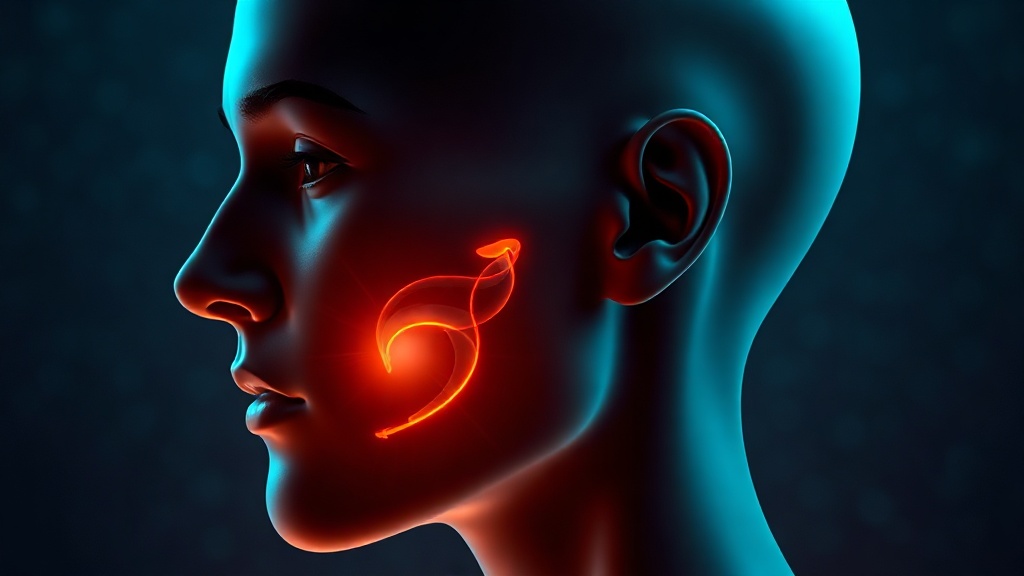
Jaw tension lives in the closing muscles — the masseter and temporalis — when clenching keeps them switched on instead of resting.
What the research actually shows
Every claim below maps to a named, peer-reviewed source in the Sources section. According to PubMed.
| Claim | Evidence | Source |
|---|---|---|
| About 31% of adults show at least one sign or symptom of a jaw-muscle or joint (TMD) issue — making it the second most common musculoskeletal pain complaint after low-back pain. | Systematic review and meta-analysis of global prevalence. | Valesan et al., 2021 |
| Awake jaw-clenching is reported by roughly 1 in 6 adults, and sleep and awake grinding together affect around 22% of people. | Meta-analysis of global bruxism prevalence. | Zielinski et al., 2024 |
| Sleep grinding is driven mainly by brief micro-arousals during sleep, not by the way the teeth meet — so it is arousal-related, not a bite problem. | Review of sleep-bruxism mechanisms. | Lavigne et al., 2008 |
| Dentist-guided self-care (education, jaw rest, warmth, gentle exercise) matched a custom splint for comfort at 3, 6, and 12 months. | 200-person randomized controlled trial. | Truelove et al., 2006 |
| Gentle jaw-exercise therapy produced a moderate reduction in jaw-muscle pain across pooled trials. | Meta-analysis of 16 RCTs (812 participants). | de Melo et al., 2023 |
What actually feeds jaw tension
| Driver | Why it tightens the jaw | Can you change it? |
|---|---|---|
| Daytime clenching or bracing | Keeps the closing muscles contracted for hours, so they fatigue and ache | Yes — catch it and let the jaw rest |
| Stress and anxiety | Raises overall muscle guarding; jaw tension is strongly linked with stress, poor sleep, and low mood | Partly — manage the load, not the jaw alone |
| Sleep grinding | Rides on sleep arousals; protect the teeth and calm the nervous system rather than fixing the bite | Indirectly — better sleep and lower stress help |
| Neck and posture strain | A tired, painful neck refers tension to the jaw; the neck pain itself matters more than posture geometry | Partly — ease the neck and move often |
| Heavy or one-sided chewing | Over-uses the muscle and can leave it fatigued and tight | Yes — spread chewing, go easy on hard gum |
Where the tension really comes from
It is tempting to hunt for a mechanical villain — a bad bite, a crooked tooth, a joint out of place. For most everyday tension, that hunt is a dead end. The stronger thread is your nervous system. Jaw-muscle tension tracks closely with stress, disturbed sleep, and low mood; people with jaw problems are meaningfully more likely to also report anxiety or depression, which is not a judgement but a clue about where relief comes from. The neck is the other quiet player. A tired or sore neck refers tension into the jaw, and research suggests it is the presence of neck pain, rather than the exact angle of your posture, that matters most — so chasing perfect posture is less useful than keeping a neck that moves and rests well. What does not help is forcing the issue: clenching to stretch, chewing harder to strengthen, or hunting for a perfect bite. The muscles calm down when they are asked to do less, warmed, moved gently, and given a calmer nervous system to sit in — not when they are pushed harder.
Evidence you can act on.
Occasional emails — new research, new protocols, no noise.
How to ease a tense jaw
None of this treats a jaw disorder — it simply helps an over-worked muscle let go. Keep everything pain-free; if a step hurts, stop and see a professional.
- 1
Find your resting jaw position
a few times a dayRest with your lips together, teeth slightly apart, and the tip of your tongue sitting gently behind your top front teeth. The simple reminder is lips together, teeth apart. Catching yourself the moment you clench and returning to this position is the single highest-value habit for a tight jaw.
- 2
Warm the muscle before you move it
5 to 10 minutesA warm compress held against the cheek and temple relaxes the closing muscles and eases soreness, making everything that follows more comfortable. Warmth first, gentle movement after — never force a cold, tight jaw to stretch.
- 3
Move the jaw gently, never forcefully
1 to 2 minutesSlowly open and close within a comfortable, pain-free range, and gently glide the jaw side to side. Gentle exercise like this eased jaw-muscle pain in pooled trials, while forceful stretching or wide yawning tends to backfire. If a movement hurts or catches, stop.
- 4
Ease the neck and shoulders too
a few minutes dailyBecause neck pain feeds jaw tension, gentle neck rolls, shoulder drops, and regular breaks from screens help more than you would expect. Set a reminder to unclench and reset your posture every hour rather than holding one position for a long stretch.
- 5
Lower the overall load
ongoingStress, short sleep, a lot of caffeine, and constant gum-chewing all keep the jaw braced. Managing stress and protecting sleep are not soft extras here — dentist-guided self-care of exactly this kind matched a custom splint for comfort over a full year.
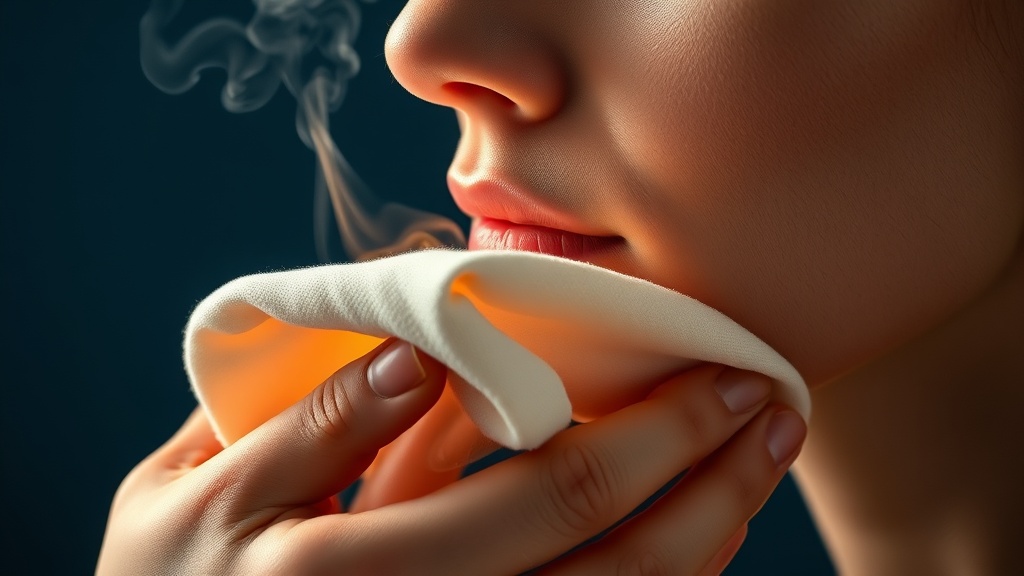
Warmth first: a warm compress relaxes the closing muscles before any gentle movement or massage.
See a dentist or a jaw (TMJ) specialist if the tension is painful and persistent, if your jaw locks open or shut, catches, or will not open fully, if pain is clearly on one side and stays that way, or if you have frequent headaches or ear pain alongside it. A sudden inability to open or close, with severe pain or swelling, needs urgent care. These self-care steps are for comfort and do not treat a jaw condition — a lasting or painful jaw deserves a proper assessment.
Frequently asked questions
Sources
- 1.
- 2.
- 3.
- 4.
- 5.
- 6.
- 7.
- 8.
- 9.

Fix your breath at the source.
The complete science-backed protocol — engineered to eliminate volatile sulfur compounds at the biological source.
Start the Breath Protocol →Related reading
Educational purposes only. The content on this page is not medical advice and is not a substitute for consultation with a qualified dental or medical professional.
More from the library
 Answers8 min
How to Unclench Your Jaw (Quick Relief in Under a Minute)
Daytime jaw clenching is a common stress habit, not a disorder. You can unclench it in under a minute with a few gentle resets.
Read →→ Guides8 min
Masseter Massage: How to Release a Tight Jaw Muscle
How to gently massage the masseter for comfort and tension relief — pain-free pressure only, and when a tight jaw needs a pro.
Read →→ Guides8 min
Teeth Grinding: How to Manage It
Grinding is a behaviour, not a disease to cure — here is what actually helps.
Read →→ Guides8 min
TMJ Relief: Conservative Comfort Strategies for a Sore Jaw
Conservative comfort strategies for TMJ jaw soreness, plus when to see a dentist or TMJ specialist.
Read →→ Guides8 min
Jaw Relaxation Exercises: A Step-by-Step Comfort Guide
A step-by-step down-regulation routine for a tight, clenched jaw, built on gentle relaxation rather than force.
Read →→ Guides9 min
Does Mewing Actually Work? An Honest, Evidence-Based Breakdown
The honest, evidence-based answer to whether tongue posture can reshape an adult jaw — what the research really shows, and why forcing it can backfire.
Read →→