TMJ Relief: Gentle, Conservative Ways to Calm a Sore Jaw
Conservative comfort strategies for TMJ jaw soreness, plus when to see a dentist or TMJ specialist.
- Most jaw soreness people call TMJ is muscle overload from clenching or overuse, not a broken joint, so the first goal is simply to calm and rest the muscle, not to force anything back into place.
- You manage a sore jaw for comfort, you do not cure it at home. TMD (temporomandibular disorder) is a real condition, and lasting or worsening pain belongs with a dentist or TMJ specialist.
- In a 200-person trial, low-cost self-care of jaw rest, warmth, gentle exercise and education worked as well as a hard splint at 3, 6 and 12 months, so the simple measures are not a consolation prize.
- Gentle warmth, a few days of soft food, unclenching through the day and easy range-of-motion movement are the core comfort toolkit. Forcing a wide stretch or chewing hard usually makes an irritated jaw worse.
- A jaw that locks open or shut, follows an injury, or comes with facial swelling, fever, or trouble swallowing or breathing is not a self-care situation. Seek urgent care.
For a sore jaw, ease the load and calm the muscle: rest it with soft food, apply gentle moist heat, keep your teeth apart and lips together to stop clenching, and move it through easy, unforced range-of-motion. This manages discomfort. It does not cure TMD, so see a professional if pain lasts beyond two weeks.
What a sore jaw usually is
The temporomandibular joint (TMJ) is the hinge just in front of each ear, and it is surrounded by the powerful muscles you chew with, chiefly the masseter and temporalis. When people say they have TMJ pain, most of the time the source is those muscles rather than the joint itself. Overworked, over-clenched muscle behaves like any other strained muscle in the body: it aches, it feels tight, and it protests when you push it. A major driver is clenching and grinding, and it helps to know that sleep grinding is largely arousal-driven, tied to brief awakenings through the night, rather than caused by a bad bite that needs correcting. That reframing matters, because it means the sensible response to a sore jaw is not to fight it but to lower the demand on it and let an irritated muscle settle. The joint disc and the joint surfaces can be involved too, which is why some jaws click or catch, but even then the evidence points the same way: calm, load-reducing, conservative care first. Understanding that your jaw is mostly a tired, guarded muscle, not a joint about to fail, takes a lot of the fear out of a flare.

Gentle warmth and rest are the foundation of easing a sore jaw. The aim is comfort, not a forced fix.
What the research actually shows
Every claim below maps to a named, peer-reviewed source in the Sources section. According to PubMed.
| Claim | Evidence | Source |
|---|---|---|
| Low-cost self-care (education, jaw rest, thermal packs, gentle exercise) matched a hard splint and a soft guard for jaw pain at 3, 6 and 12 months. | 200-subject randomized controlled trial. | Truelove et al., 2006 |
| Gentle jaw exercise therapy produced a moderate reduction in TMD pain. | Meta-analysis, 16 RCTs, 812 participants (SMD -0.58). | de Melo et al., 2023 |
| Jaw exercise and an occlusal splint gave no significant difference in pain relief for painful TMD. | Randomized comparison of exercise vs splint. | Zhang et al., 2021 |
| There is insufficient evidence that occlusal splints reduce TMD, with only very low certainty across trials. | Cochrane systematic review of 57 RCTs. | Singh et al., 2024 |
| Grinding and clenching are best understood as a behaviour and risk factor, not a disease to be cured. | International expert consensus. | Lobbezoo et al., 2018 |
What eases a sore jaw, and what tends to backfire
| Approach | Why it helps (or hurts) a sore jaw | How strong is the evidence? |
|---|---|---|
| Gentle moist heat | Relaxes tight chewing muscle and eases aching | Standard, well-supported self-care |
| A few days of soft food | Lowers the mechanical load on an overworked joint and muscle | Standard, well-supported self-care |
| Easy range-of-motion movement | Keeps the jaw moving comfortably and reduces guarding | Moderate (exercise trials) |
| A self-bought hard nightguard | May protect teeth from grinding, but does not cure the pain | Low certainty for pain relief |
| Forcing a wide stretch or chewing hard | Adds load and can inflame an already irritated jaw | Avoid during a flare |
Why rest beats chasing a cure
The most reassuring finding in this whole field is also the most practical: when researchers put simple, inexpensive self-care head to head against the appliances people spend hundreds of dollars on, the self-care held its own. Education, jaw rest, warmth and gentle movement matched splint therapy through a full year of follow-up. That does not mean appliances are useless for everyone, but it does mean the honest starting point for a sore jaw is the cheap, low-risk stuff, not a gadget or an aggressive intervention. It also reframes what you are trying to do. You are not hunting for the one trick that fixes the joint forever, because most muscle-driven jaw pain settles when you stop overloading it and give it time. The internet is full of jaw exercisers, chewing tools and forceful stretching routines that promise to correct or strengthen the jaw, and for a painful TMJ these often do the opposite by piling more work onto the very muscles that are already fatigued. Comfort comes from doing less with the jaw for a while, not more. Patience, in other words, is the active ingredient.
Evidence you can act on.
Occasional emails — new research, new protocols, no noise.
A gentle comfort routine for a sore jaw
None of this treats a disease. It simply lowers the load on an irritated jaw so an overworked muscle can settle. If pain is severe, follows an injury, or is not improving, skip the self-care and see a professional.
- 1
Rest the jaw and shrink the load
a few daysSwitch to soft foods, cut your food into small pieces, skip chewing gum and chewy or crunchy snacks, and try not to open wide, stifling big yawns with a hand under the chin. Giving the muscle less to do is the single most effective comfort step.
- 2
Apply gentle warmth
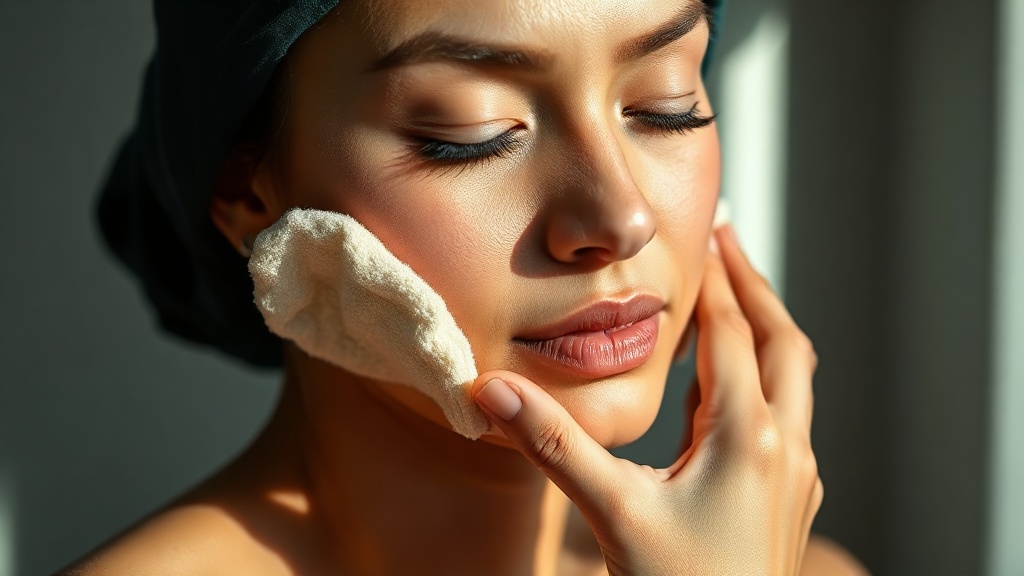
10-15 minutesA warm, moist compress against the cheek relaxes tight chewing muscle and eases the deep ache. If instead the joint itself feels sharply sore or swollen, a cool pack can feel better. Use whichever brings relief, and keep it comfortable rather than intense.
- 3
Catch yourself clenching
throughout the dayThrough the day your resting position should be lips together, teeth slightly apart, tongue resting gently behind the top teeth. Teeth only need to touch when you eat. A sticky note on your screen or a phone reminder helps you notice and release a daytime clench before it builds.
- 4
Move it gently, never forcefully
1-2 minutes, a few times a daySlowly open and close within a comfortable, pain-free range, and glide the jaw a little side to side. The goal is easy, relaxed movement to stop the jaw stiffening up, never a hard stretch. If a movement sharpens the pain, ease off it.
- 5
Lightly massage the cheek muscle
under a minuteRest your fingertips on the fleshy muscle over the angle of the jaw and make slow, light circles. Gentle self-massage can loosen a tight masseter and offer short-term relief. Keep the pressure soft, and stop if it becomes tender rather than soothing.
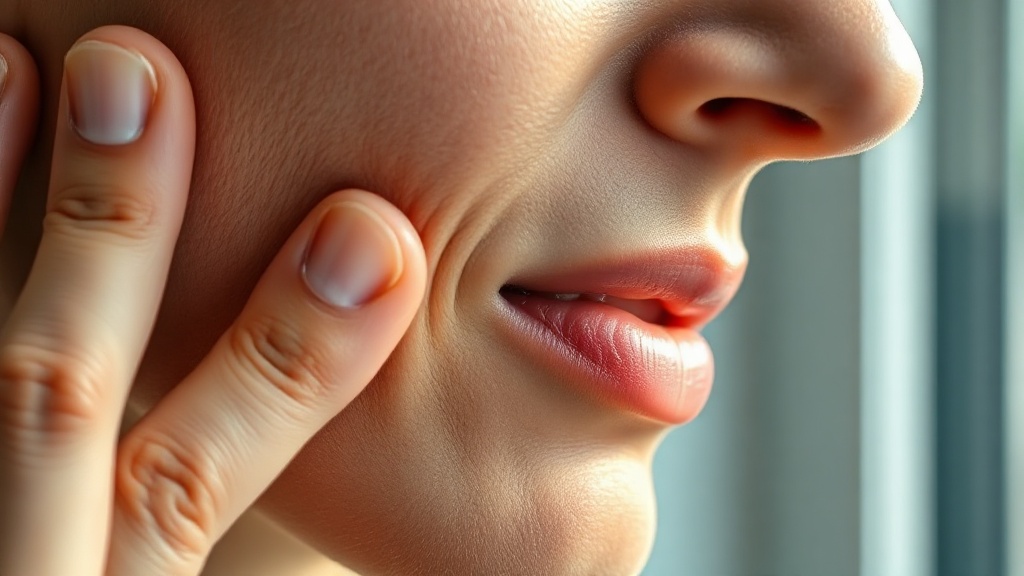
Light, slow self-massage of the cheek muscle can ease a tight jaw. Soft pressure only, never forceful.
Home comfort measures are for mild, short-lived jaw soreness. See a dentist or a TMJ specialist if pain lasts beyond about two weeks, keeps returning, or is getting worse, if your jaw catches, clicks painfully, or will not open or close normally, or if chewing is consistently difficult. Some situations need urgent, same-day care: a jaw locked open or shut, jaw pain after a blow or injury, or pain with facial swelling, fever, or any trouble swallowing or breathing. Sudden crushing jaw pain, especially with chest discomfort, shortness of breath or sweating, can signal a heart problem and is an emergency.
Frequently asked questions
Sources
- 1.
- 2.
- 3.
- 4.
- 5.
- 6.
- 7.
- 8.

Fix your breath at the source.
The complete science-backed protocol — engineered to eliminate volatile sulfur compounds at the biological source.
Start the Breath Protocol →Related reading
Educational purposes only. The content on this page is not medical advice and is not a substitute for consultation with a qualified dental or medical professional.
More from the library
 Guides9 min
TMJ Flare-Up: How to Calm Jaw Pain Fast
What a TMJ flare is, why it happens, and the gentle, proven steps that calm jaw pain fastest — plus when to get help.
Read →→ Guides8 min
TMJ Physical Therapy: Exercises, Timeline, and What to Expect
A clear-eyed look at what physical therapy can and cannot do for jaw pain — and how to start safely.
Read →→ Guides8 min
How to Unlock a Locked Jaw: Gentle Self-Relief Steps
Calm, evidence-based ways to coax a recently stuck jaw open again — and the red flags that mean it is time to get help.
Read →→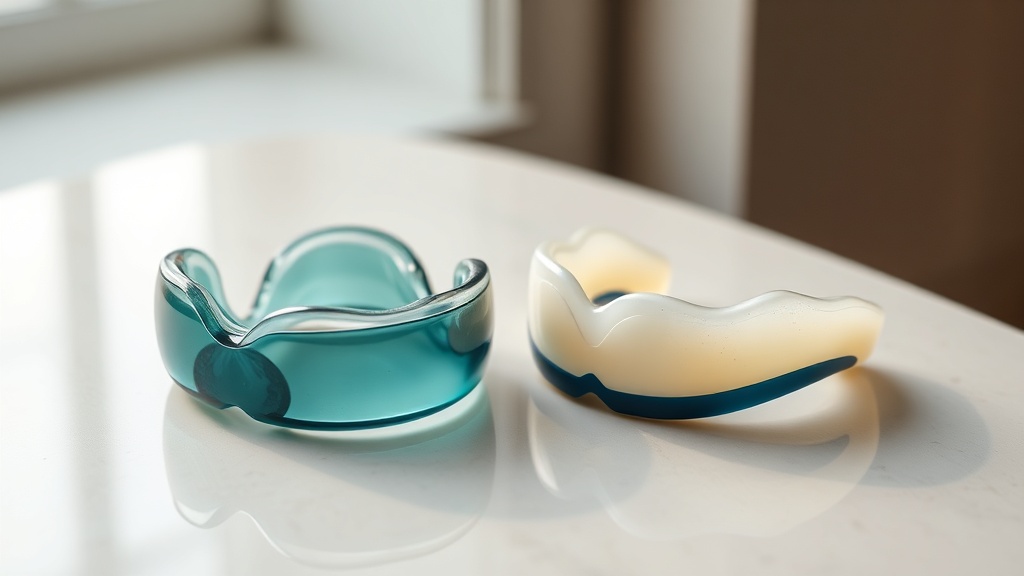 Best Of8 min
Best Mouth Guard for TMJ: An Honest 2026 Buyer's Guide
A night guard reliably protects your teeth from grinding, but the evidence that it eases jaw pain is surprisingly thin, so choose one with clear eyes.
Read →→ Guides8 min
Jaw Relaxation Exercises: A Step-by-Step Comfort Guide
A step-by-step down-regulation routine for a tight, clenched jaw, built on gentle relaxation rather than force.
Read →→ Guides9 min
Does Mewing Actually Work? An Honest, Evidence-Based Breakdown
The honest, evidence-based answer to whether tongue posture can reshape an adult jaw — what the research really shows, and why forcing it can backfire.
Read →→