
How to Stop Grinding Teeth in Your Sleep, Naturally
Grinding your teeth at night is an involuntary, arousal-driven movement — here is what natural care can and cannot do about it.

- Grinding your teeth in your sleep is not a bad habit you can simply decide to quit — it is a largely involuntary movement that rides on top of the brief arousals your brain passes through many times a night.
- A night guard is protection, not a cure: it cushions your teeth from the wear grinding causes, but it does not stop the grinding itself, and you should not expect it to.
- Because sleep grinding is tied to stress, sleep quality and how you breathe at night, the most useful natural steps work on those roots — winding down, protecting your sleep, and breathing through your nose.
- Loud snoring, gasping or pauses in breathing point toward a sleep-breathing problem that a sleep clinician should assess with a proper sleep study — this is not something to self-manage.
- You cannot switch grinding off overnight, but you can lower the load: calmer evenings, better sleep, gentle daytime jaw awareness, and a guard to protect the teeth while you do.
You cannot fully stop sleep grinding by willpower — it is an involuntary, arousal-driven movement, not a habit. Natural steps work on its roots: lower evening stress, protect your sleep, breathe through your nose, and ease daytime jaw tension. A night guard protects your teeth but does not stop the grinding. Persistent loud snoring deserves a sleep clinician.
Why you grind in your sleep
The first thing to understand — and the thing most stop-grinding-tonight advice gets wrong — is that sleep grinding is not something you are choosing to do. In sleep medicine it is called sleep bruxism, and it belongs to a family of movements that happen during the brief arousals your brain cycles through all night. As you shift between sleep stages, your heart rate and breathing briefly rise many times an hour, and researchers have found that rhythmic jaw-muscle activity tends to ride on top of these micro-arousals, which repeat roughly 8 to 14 times per hour of sleep. That is why you can wake with a tired, tight jaw and no memory of anything — the movement is generated below conscious awareness. It also explains why the old idea that a bad bite causes grinding has largely fallen away: the evidence for occlusal factors driving it is limited. Stress and anxiety, by contrast, are well recognised as risk factors. So the honest framing is this: you are not failing to control a habit. You are managing a behaviour with biological roots, and the realistic goal is to reduce how often and how hard it fires — not to command it to stop.

A genuine wind-down lowers a real trigger for grinding: calmer, less stressed evenings mean fewer arousals for the jaw to ride on.
What the research actually shows
Every claim below maps to a named, peer-reviewed source in the Sources section. According to PubMed.
| Claim | Evidence | Source |
|---|---|---|
| Sleep grinding is arousal-driven — rhythmic jaw-muscle activity follows the sleep micro-arousals that repeat about 8 to 14 times per hour, and the evidence that a bad bite causes it is limited. | Clinical overview of bruxism physiology. | Lavigne et al., 2008 |
| Teeth grinding is common: global bruxism prevalence is about 22 percent, with sleep bruxism around 21 percent. | Systematic review and meta-analysis. | Zielinski et al., 2024 |
| In otherwise-healthy people, bruxism should be seen as a behaviour that can be a risk factor — not a disorder to be cured. | International consensus statement. | Lobbezoo et al., 2018 |
| Oral appliances primarily protect the teeth from grinding damage; behavioural strategies such as relaxation, sleep hygiene and biofeedback are the management levers. | Clinical overview for dentists. | Beddis et al., 2018 |
| Low-cost self-care (education, jaw rest, warmth and gentle exercise) matched appliance therapy for jaw comfort at 3, 6 and 12 months. | 200-subject randomized controlled trial. | Truelove et al., 2006 |
What actually moves the needle
| Approach | What it really does | Honest verdict |
|---|---|---|
| A night guard | Cushions teeth from grinding wear; may slightly lower muscle activity | Protects teeth — does not stop grinding |
| Evening wind-down and stress relief | Targets a genuine, well-recognised risk factor | Worth doing — modest but real |
| Nasal breathing and better sleep | Supports calmer, less fragmented sleep | Helpful, especially for mouth-breathers |
| Willing yourself to stop | Cannot reach an involuntary, asleep movement | Does not work |
| Miracle natural cures | No remedy switches off sleep grinding | Skip the hype |
What natural care can and cannot do
So what does a natural approach realistically offer? Quite a lot — as long as you are honest about the target. Because no remedy, herb or exercise switches sleep grinding off, the useful work is lowering the overall load on the system. Reassuringly, simple self-care holds up well against expensive options: in a 200-person trial, dentist-guided self-care — education, jaw rest, warmth and gentle movement — matched appliance therapy for jaw comfort at three, six and twelve months. The levers that matter most are the ones grinding is tied to. Calmer, less stressed evenings reduce a known trigger. Protecting your sleep — consistent hours, a cool dark room, less late caffeine and alcohol — leaves fewer fragmented arousals for grinding to ride on. And how you breathe matters: chronic mouth-breathing and disrupted night-time breathing are part of the picture, which is why gentle nasal-breathing and tongue-posture (myofunctional) work has a real, if modest, evidence base for calmer nights and less snoring. What natural care cannot do is replace medical assessment when the problem is really about breathing — if you snore loudly or gasp, that is a signal to get looked at, not a habit to fix at home.
Evidence you can act on.
Occasional emails — new research, new protocols, no noise.
A natural, honest plan to grind less
None of this is a cure, and none of it treats a disease. Think of it as lowering the load — calmer nights, better sleep and a guard to protect your teeth while your body does the rest.
- 1
Build a real wind-down
30-60 min before bedDim the lights, put screens away, take a warm shower, and do a few minutes of slow breathing or journalling. Stress and anxiety are among the few genuine, modifiable triggers for grinding, so a calmer nervous system at lights-out is time well spent.
- 2
Protect your sleep architecture
nightlyKeep consistent sleep and wake times, a cool dark quiet room, and cut caffeine after early afternoon. Go easy on alcohol near bed — it fragments sleep and can make grinding worse. Fewer, calmer arousals mean fewer chances for the jaw to fire.
- 3
Breathe through your nose
day and nightPractise gentle nasal breathing during the day, and if you are chronically stuffed up, deal with the congestion at its source. Simple tongue-posture and myofunctional exercises support nasal breathing. Never tape your mouth shut to force it — that can be dangerous, especially if any breathing problem is present.
- 4
Release the daytime jaw
a few times a dayGrinding at night often travels with clenching by day. Set a reminder to check in: lips together, teeth apart, tongue resting low. A little warmth and gentle masseter massage eases the muscle and carries into calmer nights.
- 5
Get a guard to protect the teeth
worn nightlyA night guard will not stop the grinding, but it cushions your teeth from the wear and takes the edge off morning soreness. A dentist-fitted guard fits best; our roundup walks through custom versus over-the-counter options honestly.

A night guard is protection, not a fix: it shields the teeth from grinding wear while you work on the roots.
See a dentist if you notice worn or chipped teeth, new sensitivity, morning jaw soreness or headaches, or if a partner hears you grind — a dentist can check your teeth and fit a guard that protects them. See a doctor or sleep clinician if there is loud snoring, gasping, choking, pauses in breathing, or heavy daytime sleepiness: these point toward a sleep-breathing problem that needs a proper sleep study (polysomnography), the standard assessment — phone apps and questionnaires are not a substitute. Grinding in children is common and usually settles on its own, but it is worth mentioning at dental visits.
Frequently asked questions
Sources
- 1.
- 2.
- 3.
- 4.
- 5.
- 6.
- 7.

Fix your breath at the source.
The complete science-backed protocol — engineered to eliminate volatile sulfur compounds at the biological source.
Start the Breath Protocol →Related reading
Educational purposes only. The content on this page is not medical advice and is not a substitute for consultation with a qualified dental or medical professional.
More from the library
 Guides8 min
Teeth Grinding: How to Manage It
Grinding is a behaviour, not a disease to cure — here is what actually helps.
Read →→ Answers8 min
How to Stop Clenching Your Jaw at Night
Clenching your jaw at night is mostly involuntary and sleep-driven — here is what honestly reduces it and what only a professional can help with.
Read →→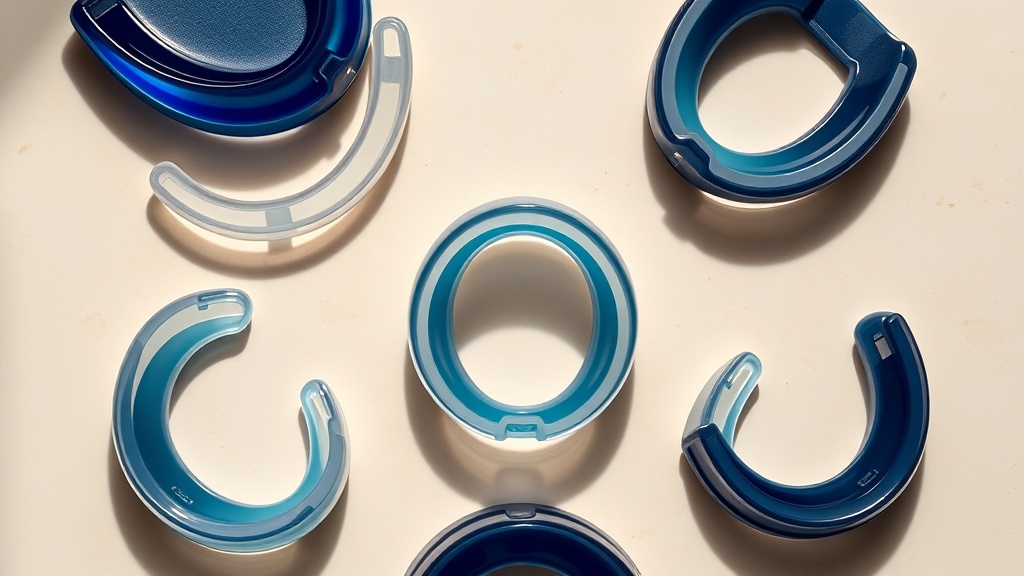 Best Of8 min
The Best Night Guards for Teeth Grinding: An Honest Guide
Custom, boil-and-bite or over-the-counter, soft or hard — an honest look at night guards for grinding, where protection is the real job.
Read →→ Answers8 min
How to Unclench Your Jaw (Quick Relief in Under a Minute)
Daytime jaw clenching is a common stress habit, not a disorder. You can unclench it in under a minute with a few gentle resets.
Read →→ Guides8 min
Jaw Relaxation Exercises: A Step-by-Step Comfort Guide
A step-by-step down-regulation routine for a tight, clenched jaw, built on gentle relaxation rather than force.
Read →→ Guides9 min
Does Mewing Actually Work? An Honest, Evidence-Based Breakdown
The honest, evidence-based answer to whether tongue posture can reshape an adult jaw — what the research really shows, and why forcing it can backfire.
Read →→