
How to Stop Clenching Your Jaw at Night
Clenching your jaw at night is mostly involuntary and sleep-driven — here is what honestly reduces it and what only a professional can help with.

- Clenching your jaw in deep sleep is largely involuntary — it is driven by the brief arousals your brain cycles through at night, not by a choice you can consciously reverse while asleep.
- The clenching you can actually catch is the daytime kind, and that is your biggest real lever: learning to notice and release a clenched jaw by day tends to carry over into calmer nights.
- Stress and anxiety are strongly linked to jaw clenching, so winding down the nervous system in the evening is one of the few levers with genuine leverage.
- A mouth guard does not stop clenching — it protects your teeth and jaw from the force. Willpower alone cannot reach a movement that happens while you are asleep.
- Loud snoring, gasping or pauses in breathing suggest a possible sleep-breathing problem that a clinician should assess with a sleep study — that is a medical matter, not a self-care one.
You cannot consciously stop night-time clenching, because in deep sleep it is involuntary and tied to brief arousals. What works is indirect: catch and release daytime clenching, wind down evening stress, protect your sleep, breathe through your nose, and wear a guard to shield your teeth. If you snore loudly or gasp at night, ask a clinician for a sleep assessment.
Why you clench at night — and why willpower cannot reach it
Jaw clenching comes in two forms, and telling them apart is the key to doing anything useful about the night version. Awake clenching is the semi-conscious bracing you do at your desk or in traffic — roughly one in five adults are aware of it. Sleep clenching is different: it happens while you are unconscious, generated during the brief arousals your brain passes through many times an hour, the same mechanism behind sleep grinding. That is why you can wake with an aching, tight jaw and no memory of doing anything, and why the well-meaning advice to just relax your jaw before bed only goes so far — once you are asleep, there is no conscious you to keep it relaxed. The old assumption that a misaligned bite is to blame has largely faded; stress and arousal, not tooth contact, are the drivers that hold up. So the honest starting point is to drop the idea of stopping it by force. Night clenching is a behaviour with roots in your sleep and stress physiology, and the realistic aim is to lower how often and how hard it fires — while protecting your teeth from the force in the meantime.
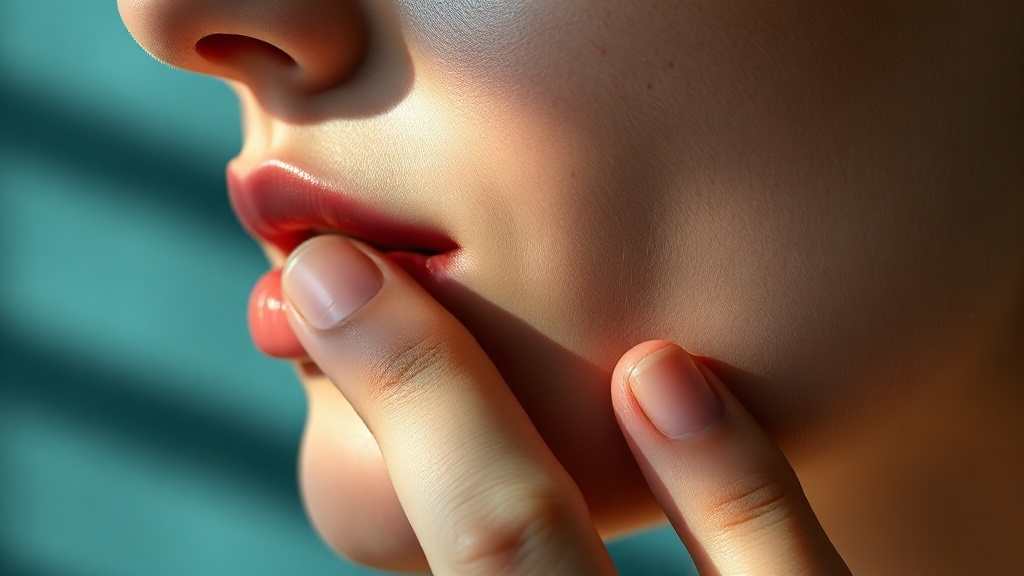
The clenching you can influence directly is the daytime kind: noticing and releasing a braced jaw by day tends to carry into the night.
What the research actually shows
Every claim below maps to a named, peer-reviewed source in the Sources section. According to PubMed.
| Claim | Evidence | Source |
|---|---|---|
| About 20 percent of adults are aware of awake jaw-clenching, while only around 8 percent are aware of sleep grinding — and sleep clenching rides on arousals rather than conscious control. | Clinical overview of bruxism physiology. | Lavigne et al., 2008 |
| Bruxism — clenching or grinding, awake or asleep — is best seen in healthy people as a behaviour that can be a risk factor, not a disorder to be cured. | International consensus statement. | Lobbezoo et al., 2018 |
| Awake bruxism has a global prevalence of roughly 23 percent — clenching by day is genuinely common. | Systematic review and meta-analysis. | Zielinski et al., 2024 |
| Oral appliances primarily protect the teeth; behavioural strategies such as relaxation, sleep hygiene and biofeedback are the management levers, and a sleep-breathing link is recognised. | Clinical overview for dentists. | Beddis et al., 2018 |
| Jaw problems are strongly associated with anxiety (odds ratio about 2.2) and depression (about 1.7) — which is why calming the nervous system is a real lever. | Meta-analysis of psychological comorbidity. | Ye et al., 2022 |
Can you actually control it?
| When it happens | What is going on | What you can realistically do |
|---|---|---|
| Awake, during the day | Semi-conscious bracing, often with stress | Catch and release it — this is your real leverage |
| As you fall asleep | Daytime tension carries over | A wind-down and gentle jaw release help |
| In deep sleep | Involuntary, tied to arousals | Cannot be willed away; lower the load and protect the teeth |
| Alongside snoring or gasping | May involve a breathing disturbance | Get a professional sleep assessment — not a DIY fix |
What actually reduces night clenching
If you cannot switch it off in your sleep, where is the leverage? Mostly in three places, and none of them is a gadget or a cure. The first is daytime awareness. Because awake and sleep clenching share the same over-active jaw-muscle pattern, learning to notice a braced jaw by day and let it soften — lips together, teeth apart, tongue resting low — tends to lower the overall tone your muscles carry into the night. The second is stress. Jaw clenching travels closely with anxiety and low mood, so a genuine evening wind-down is not a soft add-on but one of the few things with real support behind it. The third is sleep and breathing: consistent, protected sleep gives you fewer fragmented arousals for clenching to ride on, and steady nasal breathing supports calmer nights. What none of this does is treat a disease or promise to end the behaviour, and that honesty matters — anyone selling a device that stops clenching for good is overpromising. A guard belongs here too, but in its proper role: it shields your teeth and jaw joints from the force while you work on the roots. And when clenching sits on top of a snoring or breathing problem, the most useful step is not another home remedy but a professional assessment.
Evidence you can act on.
Occasional emails — new research, new protocols, no noise.
A realistic plan to clench less at night
None of this stops clenching by force or treats a disease. It lowers the load — daytime awareness, a calmer nervous system, protected sleep, and a guard to shield your teeth.
- 1
Master the daytime cue
throughout the daySet a few phone reminders. Each time one pings, check your jaw: are your teeth touching? Let them part, rest your tongue low behind your top teeth, and drop your shoulders. This lips-together, teeth-apart resting posture is your single biggest lever, and it carries into the night.
- 2
Wind down the nervous system
30-60 min before bedBecause clenching tracks with stress and anxiety, treat the evening as decompression: dim light, screens away, a warm shower, slow breathing or a few minutes of journalling. A calmer nervous system at lights-out means less tension to carry into sleep.
- 3
Protect and steady your sleep
nightlyKeep consistent sleep and wake times, a cool dark quiet room, caffeine cut off by early afternoon, and alcohol kept modest near bed. Steadier sleep means fewer arousals — and fewer moments for the jaw to clamp down.
- 4
Breathe through your nose
day and nightPractise gentle nasal breathing and clear congestion at its source if you are a habitual mouth-breather; simple myofunctional and tongue-posture work supports it. Do not tape your mouth shut to force nasal breathing — it can be dangerous, particularly if any breathing problem is present.
- 5
Shield your teeth with a guard
worn nightlyA night guard will not stop the clenching, but it cushions your teeth and takes load off the jaw muscles and joints. A dentist-fitted guard fits best and gets worn most consistently — see our honest roundup of the options.
Protected sleep and calm nasal breathing give clenching fewer arousals to ride on — the indirect levers that actually help.
See a dentist if you notice worn, flattened or cracked teeth, new sensitivity, persistent morning jaw soreness or headaches, or a jaw that catches or locks — a dentist can check your teeth and joints and fit a guard that protects them. See a doctor or sleep clinician if you snore loudly, gasp, choke or stop breathing in your sleep, or feel very sleepy by day: these point toward a possible sleep-breathing problem that is assessed with a sleep study (polysomnography), the standard test, rather than with apps or questionnaires. Persistent or worsening jaw pain always deserves an in-person opinion.
Frequently asked questions
Sources
- 1.
- 2.
- 3.
- 4.
- 5.
- 6.
- 7.

Fix your breath at the source.
The complete science-backed protocol — engineered to eliminate volatile sulfur compounds at the biological source.
Start the Breath Protocol →Related reading
Educational purposes only. The content on this page is not medical advice and is not a substitute for consultation with a qualified dental or medical professional.
More from the library
 Answers8 min
How to Unclench Your Jaw (Quick Relief in Under a Minute)
Daytime jaw clenching is a common stress habit, not a disorder. You can unclench it in under a minute with a few gentle resets.
Read →→ Guides8 min
How to Stop Grinding Teeth in Your Sleep, Naturally
Grinding your teeth at night is an involuntary, arousal-driven movement — here is what natural care can and cannot do about it.
Read →→ Best Of8 min
The Best Night Guards for Teeth Grinding: An Honest Guide
Custom, boil-and-bite or over-the-counter, soft or hard — an honest look at night guards for grinding, where protection is the real job.
Read →→ Guides9 min
TMJ Disorder: The Complete Guide
What TMJ disorder really is, how common it is, and the conservative-care-first path most people never hear about.
Read →→ Guides8 min
Jaw Relaxation Exercises: A Step-by-Step Comfort Guide
A step-by-step down-regulation routine for a tight, clenched jaw, built on gentle relaxation rather than force.
Read →→ Guides9 min
Does Mewing Actually Work? An Honest, Evidence-Based Breakdown
The honest, evidence-based answer to whether tongue posture can reshape an adult jaw — what the research really shows, and why forcing it can backfire.
Read →→