
The Best Night Guards for Teeth Grinding
Custom, boil-and-bite or over-the-counter, soft or hard — an honest look at night guards for grinding, where protection is the real job.
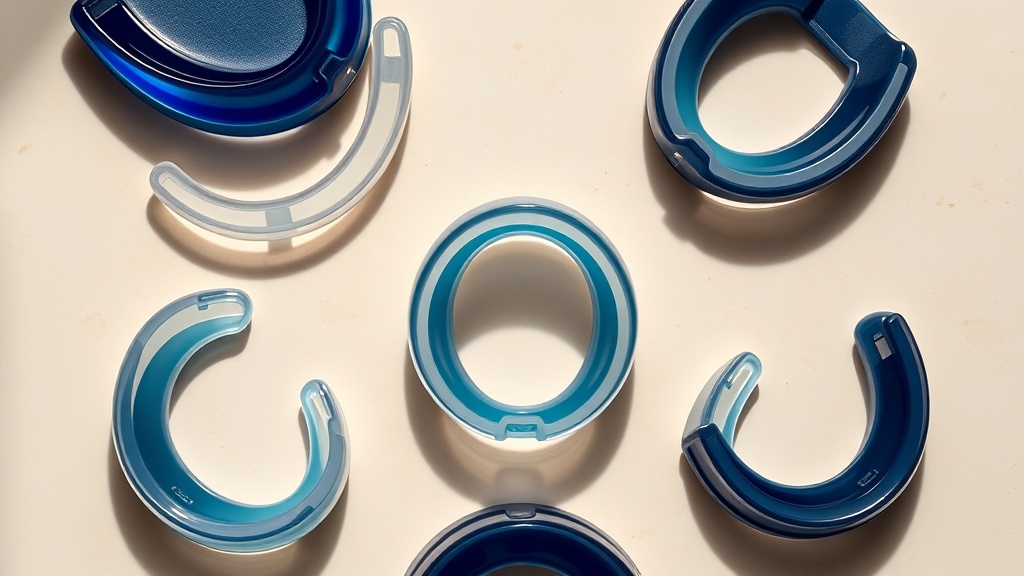
- A night guard is protective gear for your teeth: its real job is to absorb grinding wear, not to stop you from grinding — no guard switches the behaviour off.
- The single most important feature is fit. A well-fitted guard you actually wear beats an expensive one that stays in the drawer, and a loose guard can get chewed or fall out.
- Custom guards made by a dentist fit best and last longest; boil-and-bite guards are a reasonable middle ground; cheap stock guards are usually a short-term stopgap at best.
- Soft versus hard is mostly about comfort and durability — the evidence does not crown a clear winner, so heavy grinders often lean hard or dual-laminate while lighter grinders may prefer soft.
- If a device is really meant to stop snoring, or your bite starts to feel different, that is a job for a professional — snoring points to a possible sleep-breathing issue and bite changes need a dentist.
The best night guard is the one that fits well and gets worn every night. A dentist-made custom guard offers the best fit and durability for heavy grinders; boil-and-bite guards are a solid budget middle path. Soft or hard is a comfort-and-longevity call, not a cure — any guard protects teeth from grinding wear without stopping the grinding itself.
What a night guard actually does
It helps to be clear about the job before you shop. A night guard is a barrier that sits between your upper and lower teeth so that, when you grind in your sleep, the plastic takes the wear instead of your enamel. Clinicians describe oral appliances the same way: they primarily protect the teeth from grinding damage, and they may modestly reduce muscle activity, but they do not stop the underlying behaviour. That distinction matters because grinding is involuntary and arousal-driven — it happens during the brief awakenings your brain cycles through at night, well below conscious control. So a guard manages the consequence, not the cause. Understood that way, the shopping question becomes refreshingly practical: which guard protects your teeth reliably, feels comfortable enough to wear all night, and lasts? Everything below is organised around those three things — protection, comfort and durability — rather than around any promise to end grinding, because no honest guard makes that promise.
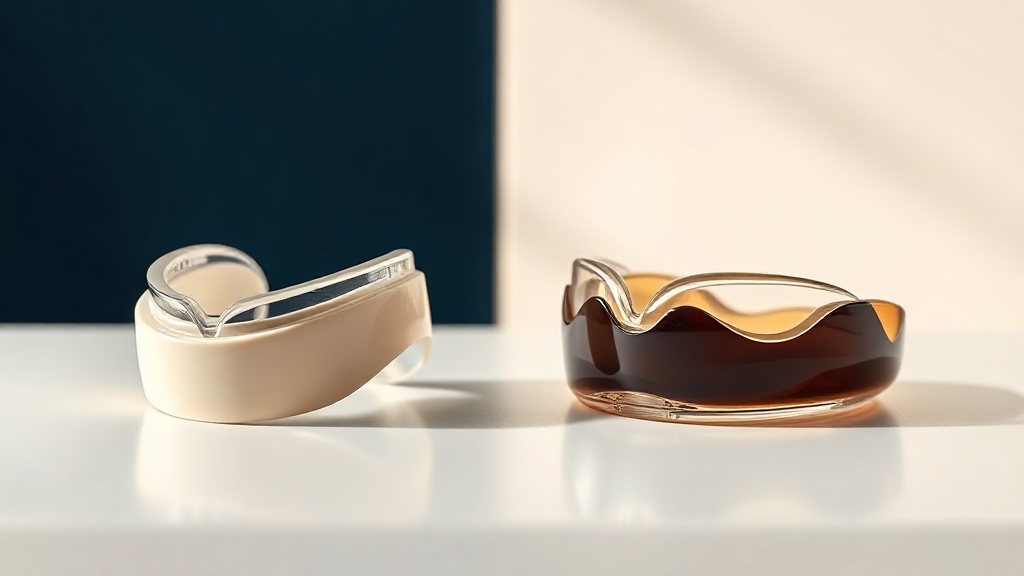
Soft versus hard is a trade-off of comfort against durability — the evidence does not crown a clear winner, so fit and how well you tolerate it decide.
What the research actually shows
Every claim below maps to a named, peer-reviewed source in the Sources section. According to PubMed.
| Claim | Evidence | Source |
|---|---|---|
| Oral appliances primarily protect the teeth from grinding damage and may modestly reduce muscle activity — they are not a cure for the behaviour. | Clinical overview for dentists. | Beddis et al., 2018 |
| A hard splint and a soft mouthguard each performed the same as guided self-care for jaw comfort at 3, 6 and 12 months — neither material proved superior. | 200-subject randomized controlled trial. | Truelove et al., 2006 |
| For jaw-pain (TMD) relief specifically, a Cochrane review found insufficient, very low-certainty evidence that occlusal splints work — so protection, not pain relief, is the reliable benefit. | Cochrane systematic review. | Singh et al., 2024 |
| People who grind show far more attrition-type tooth wear (about seven times the odds) — exactly the wear a guard is designed to absorb. | Cross-sectional clinical study. | Popescu et al., 2025 |
| Because grinding is involuntary and rides on sleep arousals, a guard cannot switch it off; it manages the consequence. | Clinical overview of bruxism physiology. | Lavigne et al., 2008 |
The main types, honestly compared
| Type | Fit and feel | Best for | Honest note |
|---|---|---|---|
| Custom (dentist or lab) | Precise, thin, durable, most comfortable | Heavy or long-term grinders | Costs the most; the gold standard for fit and longevity |
| Dentist-supervised boil-and-bite | Good fit, professionally checked | Those wanting a middle path | Cheaper than lab-made, better fit than pure DIY |
| Over-the-counter boil-and-bite | Moldable at home, variable fit | Lighter grinders on a budget | Bulkier; can loosen or wear through over time |
| Stock / one-size | Poor fit, bulky | A short-term stopgap only | Least comfortable and often ends up not worn |
| NTI-style front-tooth guard | Small, covers front teeth only | Some clenchers, by prescription | Should be fitted and monitored by a dentist; not for everyone |
Soft or hard, custom or over-the-counter
Two decisions cause most of the confusion, so here is the honest version of each. Soft versus hard: soft guards feel cushioned and are easy to tolerate at first, but some people end up chewing them, and they wear through faster; hard and dual-laminate guards are slimmer, far more durable, and preferred for heavy grinding, though they take a night or two to get used to. In the largest trial to compare them, a hard splint and a soft guard performed the same for jaw comfort, so neither is universally best — comfort and durability, not a magic material, should decide. Custom versus over-the-counter: a custom guard made from an impression of your teeth is thinner, fits precisely and lasts years, which is why heavy and long-term grinders usually find it worth the cost; boil-and-bite guards, softened in hot water and bitten into shape at home, fit less exactly and are bulkier, but they are inexpensive and can be a sensible starting point for lighter grinders. The rule that beats every spec sheet: the best guard is the one that fits well enough that you actually wear it all night.
Evidence you can act on.
Occasional emails — new research, new protocols, no noise.
How to choose and use a night guard well
None of these steps stops grinding or treats a disease — they help you pick protection that fits and lasts, and pair it with the habits that actually reduce the behaviour.
- 1
Match the guard to how hard you grind
before you buyIf you wake with sore jaw muscles, have visibly worn or chipped teeth, or a partner hears heavy grinding, lean toward a durable custom or hard guard. Lighter, occasional grinders can reasonably start with a boil-and-bite and upgrade if it wears quickly.
- 2
Decide soft versus hard on comfort and durability
before you buyThere is no evidence winner, so be practical. Choose soft if comfort is the barrier to wearing one at all; choose hard or dual-laminate if you grind heavily and want it to last. A dentist can steer you if you are unsure.
- 3
Get the fit right
at fittingA loose guard falls out or gets chewed and protects nothing. A dentist-fitted guard is best; if you use a boil-and-bite, follow the molding instructions carefully and re-mold if it feels bulky or shifts. It should stay put without you biting to hold it.
- 4
Care for it so it lasts
dailyRinse it after use, brush it gently with a soft brush (skip abrasive toothpaste), let it dry, and store it in a ventilated case. Check it regularly and replace it once it is worn thin, cracked or perforated — a holed guard no longer protects.
- 5
Pair it with work on the roots
ongoingA guard protects the teeth; calmer evenings, better sleep and nasal breathing are what actually reduce the grinding. Use them together — the guard buys your enamel time while you lower the load.
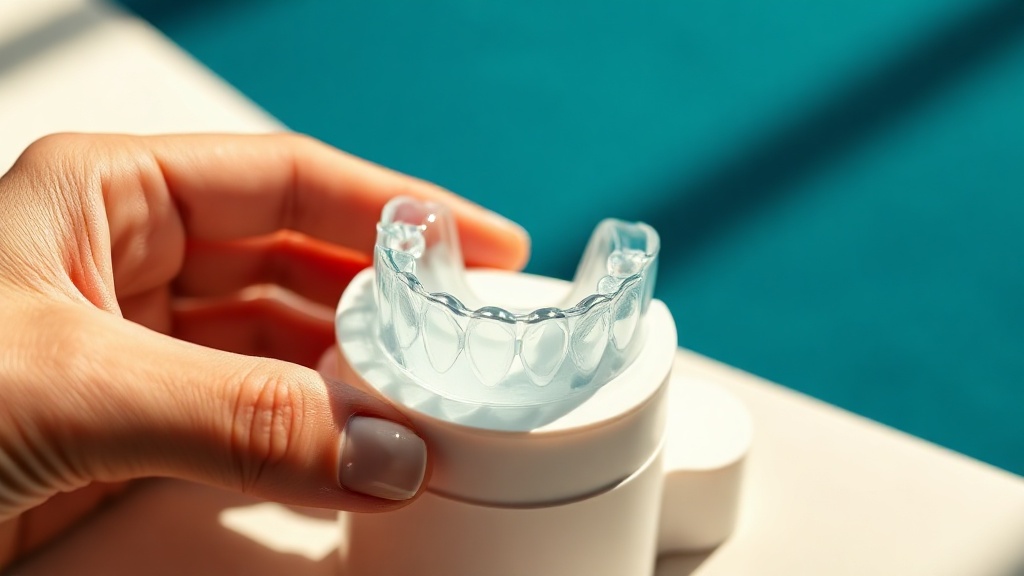
Fit is the feature that matters most: a custom guard made from an impression of your teeth is thin, precise and worn more consistently.
See a dentist if your teeth are visibly worn, cracked or newly sensitive, if you have ongoing jaw soreness or headaches, or if a guard starts to change how your teeth meet — bite changes need checking in person, and a dentist can make a guard that fits properly. See a doctor or sleep clinician if you snore loudly, gasp or stop breathing in your sleep: some devices sold near night guards are actually mandibular advancement splints for snoring, which are medical devices that should be fitted after a proper assessment, not bought blind. When in doubt about which device you need, ask a professional first.
Frequently asked questions
Sources
- 1.
- 2.
- 3.
- 4.
- 5.
- 6.

Fix your breath at the source.
The complete science-backed protocol — engineered to eliminate volatile sulfur compounds at the biological source.
Start the Breath Protocol →Related reading
Educational purposes only. The content on this page is not medical advice and is not a substitute for consultation with a qualified dental or medical professional.
More from the library
 Reviews9 min
NTI Night Guard Review: Honest Look at Benefits, Risks & Cost
An honest review of the NTI anterior night guard - what it does for clenching, the bite-change risk sellers skip, and how it compares to a full night guard and self-care.
Read →→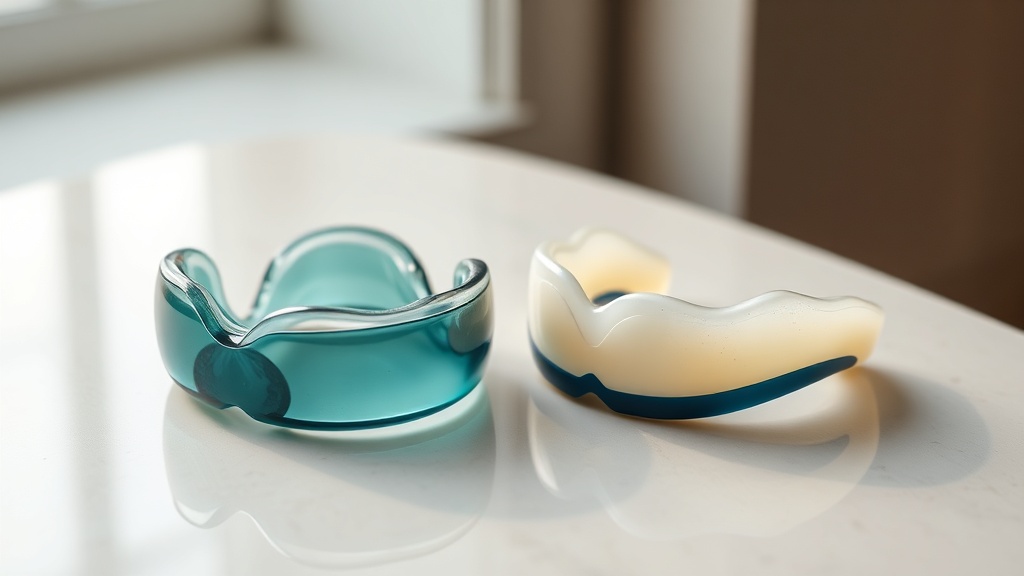 Best Of8 min
Best Mouth Guard for TMJ: An Honest 2026 Buyer's Guide
A night guard reliably protects your teeth from grinding, but the evidence that it eases jaw pain is surprisingly thin, so choose one with clear eyes.
Read →→ Guides8 min
How to Stop Grinding Teeth in Your Sleep, Naturally
Grinding your teeth at night is an involuntary, arousal-driven movement — here is what natural care can and cannot do about it.
Read →→ Guides8 min
Teeth Grinding: How to Manage It
Grinding is a behaviour, not a disease to cure — here is what actually helps.
Read →→ Guides8 min
Jaw Relaxation Exercises: A Step-by-Step Comfort Guide
A step-by-step down-regulation routine for a tight, clenched jaw, built on gentle relaxation rather than force.
Read →→ Guides9 min
Does Mewing Actually Work? An Honest, Evidence-Based Breakdown
The honest, evidence-based answer to whether tongue posture can reshape an adult jaw — what the research really shows, and why forcing it can backfire.
Read →→