How to Prevent Dry Mouth While You Sleep
The practical, evidence-led bedtime plan for a mouth that stays comfortable through the night.

- Nighttime is a distinct problem: your saliva flow naturally falls to its lowest while you sleep, so a mouth that feels fine by day can still wake up parched.
- The biggest fixable driver is mouth breathing. Water evaporates from the mouth only when you breathe through it, so an open mouth overnight dries it out fast.
- Night dryness is largely a submandibular-gland story, since those glands make most of your resting saliva, which is why bedtime tactics differ from daytime ones.
- Humidified air genuinely helps. Heated humidification reduced nighttime dry mouth in studies, including for CPAP users, so a bedroom humidifier is one of the simplest wins.
- Do not tape your mouth shut to force nasal breathing. The only systematic review of mouth taping found a potentially serious risk of harm, including asphyxiation if the nose is blocked. Fix the cause instead.
To prevent dry mouth while you sleep, tackle the two things that dry it out overnight: mouth breathing and dry air. Clear your nose so you can breathe through it, run a cool-mist humidifier, ease off late alcohol and caffeine, and lay down a long-lasting gel or overnight moisture disc. Do not tape your mouth shut, and get loud snoring checked.
Why your mouth dries out overnight
During the day your mouth is bathed in a constant thin film of saliva, replenished every time you talk, chew and swallow. At night almost all of that stops. Salivary flow drops to its lowest point during sleep, and the resting saliva that normally keeps the mouth moist comes mostly from the submandibular glands tucked under the jaw, precisely the glands that fall quiet overnight. That is why researchers describe nighttime dryness as a submandibular problem rather than a parotid one, and why the fixes that help in the daytime, like chewing gum, do little once you are asleep. On top of that low baseline, two everyday things speed the mouth toward bone-dry. The first is mouth breathing: because water only evaporates from the mouth when air is moving across it, an open mouth all night acts like a fan drying a wet surface. A blocked nose from a cold, allergies or congestion is the usual reason people default to it. The second is dry bedroom air, especially in winter or with air conditioning, which pulls moisture away even faster. Stack a low saliva baseline, mouth breathing and dry air together and you get the classic parched, sticky mouth that greets so many people at 3am or on waking.
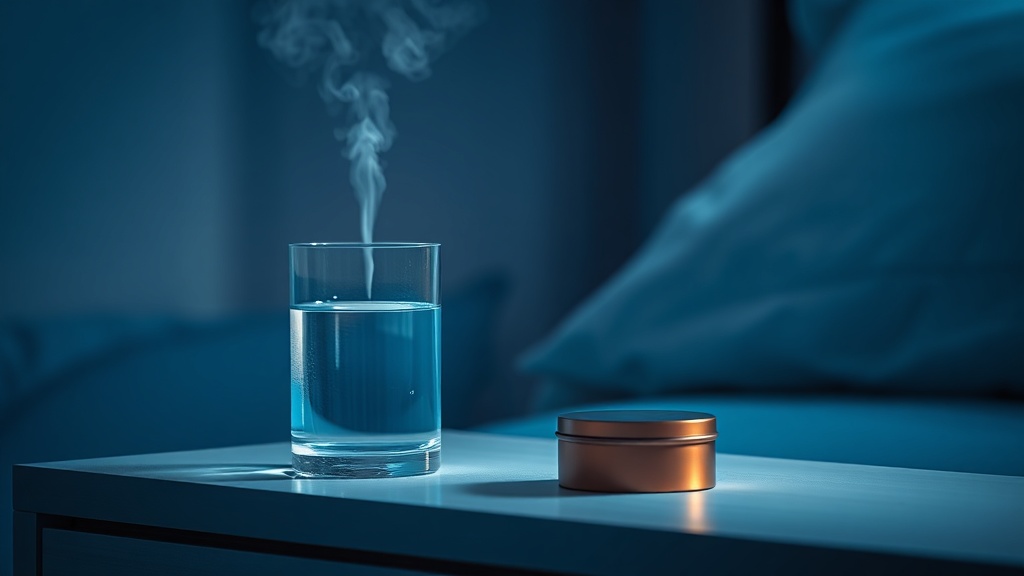
A simple bedside setup, hydration, humidified air and an overnight moisture layer, targets the two things that dry the mouth in sleep.
What the research actually shows
Every claim below maps to a named, peer-reviewed source in the Sources section. According to PubMed.
| Claim | Evidence | Source |
|---|---|---|
| Water evaporates from the mouth only during mouth breathing, so an open mouth overnight is a direct route to dryness. | Salivary-film and evaporation analysis. | Dawes, 2004 |
| Nighttime dry mouth tracks submandibular-gland function rather than the parotid, which is why bedtime tactics differ from daytime ones. | Study of night-time dryness after radiotherapy. | Dijkema et al., 2012 |
| Overnight heated humidification significantly reduced night-time and early-morning oral dryness. | Pilot study of nocturnal humidification. | Hay and Morton, 2006 |
| Heated humidification significantly reduced CPAP-related mouth dryness. | Randomised study in CPAP users. | Ruhle et al., 2011 |
| A xylitol adhering disc used overnight raised perceived oral wetness more than threefold and eased morning discomfort, though the trial was small and uncontrolled. | Pilot study of an overnight adhering disc (n=15). | Burgess and Lee, 2011 |
What dries your mouth at night, and what helps
| Nighttime driver | Why it dries the mouth | What helps |
|---|---|---|
| Mouth breathing | Open-mouth breathing evaporates the moisture film | Clear the nose, treat congestion, get loud snoring or apnea assessed |
| Dry bedroom air | Low humidity speeds evaporation | A cool-mist or heated humidifier |
| Late alcohol or caffeine | Both are drying and fragment sleep | Stop a few hours before bed |
| CPAP airflow | Continuous airflow dries the mouth | Add heated humidification, ask about mask fit or a chin strap |
| Some medications | Many reduce saliva as a side effect | Ask about timing or a review, never stop on your own |
The mouth-taping trap, and why to skip it
If you have searched this problem online you have almost certainly met the advice to tape your mouth shut so you are forced to breathe through your nose. It sounds logical, and it is exactly the kind of tidy hack that spreads fast. Please do not do it. The only systematic review to look hard at nighttime mouth taping concluded there is a potentially serious risk of harm for people who take up the trend, including the possibility of asphyxiation if the nose is obstructed, which is precisely the situation most dry-mouth mouth breathers are in. There is also a practical failure: people with obstructive sleep apnea simply mouth-puff around the tape, so it does not even deliver the nasal breathing it promises, and the people most drawn to it are often the ones it is least safe for. The honest fix is the unsexy one. Make nasal breathing genuinely easy, by clearing congestion and humidifying the air, and if you snore loudly, gasp, or have been told you stop breathing in your sleep, get assessed for sleep apnea rather than sealing your airway shut. Treat the reason your mouth falls open, not the symptom.
Evidence you can act on.
Occasional emails — new research, new protocols, no noise.
A bedtime routine that keeps your mouth moist
None of this treats a disease. It simply removes the things that dry your mouth overnight and adds a little lasting moisture.
- 1
Hydrate through the evening, but sip rather than chug
the hours before bedKeep well hydrated across the evening so you do not start the night behind, but avoid downing a large glass right at bedtime, which mostly wakes you for the bathroom. A few sips at lights-out is plenty.
- 2
Clear your nose before you lie down
2 minutesSince mouth breathing is the main driver, a saline spray or rinse and treating any allergy or congestion can be the single biggest change. The easier it is to breathe through your nose, the less your mouth falls open.
- 3
Run a humidifier by the bed
overnightA cool-mist or heated humidifier keeps the air from wicking moisture out of your mouth, and it is one of the few bedtime measures with direct evidence behind it. Keep it clean to avoid mould, and aim for comfortable, not tropical, humidity.
- 4
Lay down an overnight moisture layer
1 minuteA thicker moisturising gel clings far longer than a spray, and slow-dissolving adhering discs are designed to release moisture through the night. The disc evidence is promising but thin, so treat it as comfort worth trying, not a guaranteed fix, and judge it by your own mornings.
- 5
Ease off alcohol and caffeine before bed
a few hoursBoth dry the mouth and disturb sleep, and a nightcap is a common reason people wake parched. Shifting your last coffee earlier and skipping the late drink often improves the dryness on its own.
- 6
If you use CPAP or take drying medications, adjust with help
ongoingCPAP users should turn on heated humidification and check the mask fit, since air leaks dry the mouth fast. If a medication may be drying you, ask your prescriber about timing or a review, but do not stop it yourself.

The real goal is easy nasal breathing in humidified air, not forcing your mouth shut, so the moisture film survives the night.
See a dentist or doctor if the dryness is persistent, if you are getting a run of new cavities, or if you have dry eyes and a dry mouth together. Get assessed for sleep apnea if you snore loudly, gasp or choke in your sleep, or have been told you stop breathing, since that is a common and treatable reason mouths fall open at night. Do not tape your mouth shut, and if a medication may be the cause, ask about a review rather than stopping it on your own.
Frequently asked questions
Sources
- 1.
- 2.
- 3.
- 4.
- 5.
- 6.
- 7.

Fix your breath at the source.
The complete science-backed protocol — engineered to eliminate volatile sulfur compounds at the biological source.
Start the Breath Protocol →Related reading
Educational purposes only. The content on this page is not medical advice and is not a substitute for consultation with a qualified dental or medical professional.
More from the library
 Guides8 min
Dry Mouth at Night: Why It Happens and How to Sleep Easier
Nighttime dryness is common because your saliva naturally slows while you sleep, and a few targeted habits can make a real difference.
Read →→ Causes8 min
Can a CPAP Cause Dry Mouth? Why It Happens and How to Fix It
A dry mouth is one of the most common CPAP complaints, and it almost always has a fixable cause. Here is what is really drying you out overnight, and how to fix it without giving up the therapy that helps you breathe.
Read →→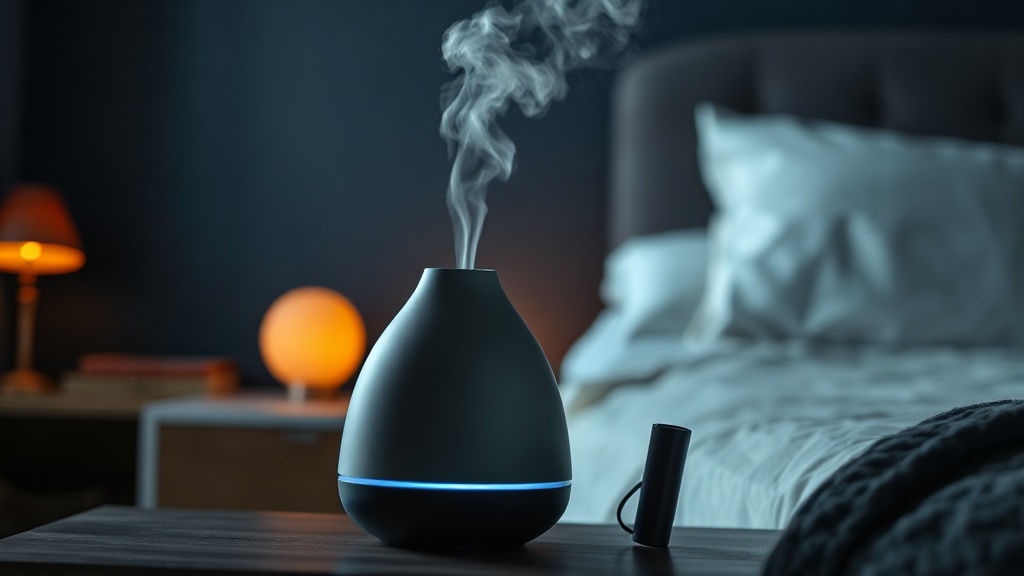 Best Of8 min
Best Humidifier for Dry Mouth
How a humidifier eases overnight dry mouth, which type to pick, and how to get the most from it.
Read →→ Best Of8 min
Best Dry Mouth Sprays: What the Evidence Actually Shows
The honest, evidence-led guide to choosing a dry mouth spray that genuinely eases the dry feeling.
Read →→ Guides8 min
How to Fix Dry Mouth: An Evidence-Based Guide
Dry mouth is usually manageable once you know what is driving it and which supportive habits actually move the needle.
Read →→ Guides8 min
What Causes Dry Mouth? The Common Triggers, Explained
Dry mouth almost always has an identifiable trigger, and knowing yours is the first step toward relief.
Read →→