The Best Humidifier for Dry Mouth: What Actually Helps Overnight
How a humidifier eases overnight dry mouth, which type to pick, and how to get the most from it.
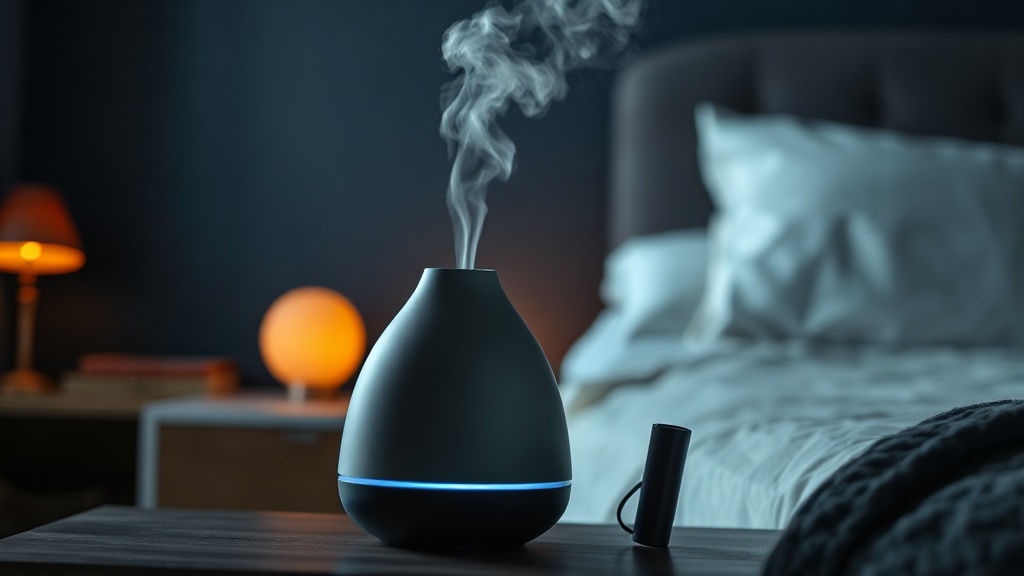
- A humidifier will not fix dry mouth, but by adding moisture to dry bedroom air it can ease the overnight feeling — especially if you mouth-breathe or run heating or air-conditioning.
- The strongest evidence is for heated humidification added to CPAP machines, which significantly reduced mouth dryness in sleep-apnea users; a small pilot found overnight humidified air eased night and early-morning dryness in Sjögren patients.
- For a bedroom, the practical choice is a cool-mist (evaporative or ultrasonic) or warm-mist unit sized to your room; the best one is the one you will actually clean and run every night.
- Humidity is only half the story — air moving over an open mouth is what dries it, so pairing a humidifier with nasal breathing does more than either alone.
- A humidifier is a comfort tool, not a substitute for a dentist or doctor identifying why your mouth is dry — medications are the most common cause.
A humidifier can genuinely ease dry mouth at night by keeping bedroom air moist, so less moisture evaporates from your mouth while you sleep. The best-supported use is heated humidification on a CPAP; for a bedroom, a well-sized, easy-to-clean cool- or warm-mist unit is the practical pick. It eases the feeling — it does not restore your own saliva.
Why humid air helps a dry mouth
Your mouth loses water to the air only while you are breathing through it — and dryness sets in when that loss outpaces the saliva available to replace it. Indoor air makes this worse: central heating and air-conditioning strip humidity out of a bedroom, so the air you breathe all night is thirsty and pulls moisture from an already-dry mouth. A humidifier works on that side of the equation. By raising the humidity of the air around you, it slows the rate at which the thin film of saliva coating your mouth evaporates, which is exactly the film that dries first and fastest during sleep. The clearest proof comes from sleep medicine: when heated humidification is added to a CPAP machine, users report significantly less mouth dryness, and a small study of dry-mouth patients found that breathing warmed, humidified air overnight eased both night-time and early-morning discomfort. None of this changes how much saliva your glands make — it simply makes the surrounding air kinder to the moisture you have.

A humidifier works on the air, not the glands: moist air slows how fast the mouth dries overnight.
What the research actually shows
Every claim below maps to a named, peer-reviewed source in the Sources section. According to PubMed.
| Claim | Evidence | Source |
|---|---|---|
| Adding heated humidification to CPAP significantly reduced mouth dryness in sleep-apnea users (dryness score 2.0 down to 1.4, p<0.05). | Randomised crossover study of CPAP with and without humidification. | Ruhle et al., 2010 |
| Overnight heated, humidified air significantly improved night-time (p=0.005) and early-morning oral comfort (p=0.008) in people with dry mouth. | Nocturnal humidification pilot in Sjögren patients. | Hay & Morton, 2006 |
| Evaporation from the mouth occurs only during mouth-breathing, and dryness appears when water loss outpaces saliva — the gap a humidifier helps narrow. | Analysis of oral moisture balance. | Dawes, 2004 |
| Oral breathing lowered oral moisture (p=0.001) and worsened dryness even with a heated humidifier running — air movement matters, not humidity alone. | Direct human measurement during ventilation. | Oto et al., 2013 |
| Nocturnal oral dryness tracked poorer sleep quality and more night-time waking in older adults — the comfort target for night humidification. | Study of nocturia correlates in older adults. | Natsume et al., 2025 |
The main humidifier types compared
| Humidifier type | Best for | Trade-off |
|---|---|---|
| Cool-mist evaporative | Everyday bedroom use; safest around children and pets | Needs wick changes and regular cleaning |
| Cool-mist ultrasonic | Quiet, very fine mist, low energy use | Can spread white mineral dust — use distilled water |
| Warm-mist (steam) | Cozy warmth and fewer microbes in the tank | Hot water risk; higher energy use |
| CPAP heated humidifier | Anyone on CPAP who wakes with a dry mouth | Built into the machine; ask your provider to enable it |
| Whole-house or furnace | Dry climates and several rooms at once | Costlier and less targeted than a bedside unit |
What a humidifier cannot do (and how to get the most from it)
It is worth being honest about the limits. The direct evidence for a bedside humidifier easing dry mouth is modest and largely extrapolated from the CPAP research and one small pilot — it is a reasonable, low-risk comfort measure rather than a proven remedy. A humidifier also treats the air, not the cause: if a medication or a health condition is drying your mouth, moist air makes the nights easier but changes nothing underneath. Hygiene matters more than people expect, because a neglected tank can aerosolise bacteria and mould into the very air you are trying to improve; aim for 30 to 50 percent relative humidity and no higher, since a too-damp room invites dust mites and mould of its own. The biggest gains come from stacking simple measures: humid air, less mouth-breathing, and a bedside saliva gel or spray together outperform any one of them. And because medications are the most common cause of dry mouth, the highest-value move remains a review with your dentist or doctor — a humidifier buys comfort while you sort that out.
Evidence you can act on.
Occasional emails — new research, new protocols, no noise.
How to choose and run a humidifier for dry mouth
A humidifier eases the overnight feeling of dryness; it does not restore saliva or resolve a cause. Used well, it is one of the simplest comfort upgrades you can make.
- 1
Match the unit to your room
one-time choiceA single bedside unit is plenty for one bedroom. Check that the rated output suits your room size rather than buying the biggest tank — an oversized unit in a small room just over-humidifies.
- 2
Aim for 30 to 50 percent humidity
ongoingAn inexpensive hygrometer keeps you in the comfortable band. Below that, the air stays drying; above it, you risk mould and dust mites. Most units let you dial the output to hold that range overnight.
- 3
Use distilled or demineralised water
each refillThis is especially important for ultrasonic models, which otherwise spray fine white mineral dust around the room. Distilled water keeps the mist clean and reduces scale in the tank.
- 4
Clean it religiously
daily and weeklyEmpty, rinse and dry the tank every day, and disinfect it weekly per the maker instructions. A dirty humidifier can blow bacteria and mould into your bedroom air — the opposite of what you want for a dry mouth.
- 5
Pair it with nasal breathing and bedside saliva support
nightlyHumid air helps most when you are not also mouth-breathing it straight out again. Keep your nose clear, and add a saliva-substitute gel or spray at the bedside so comfort measures work together.
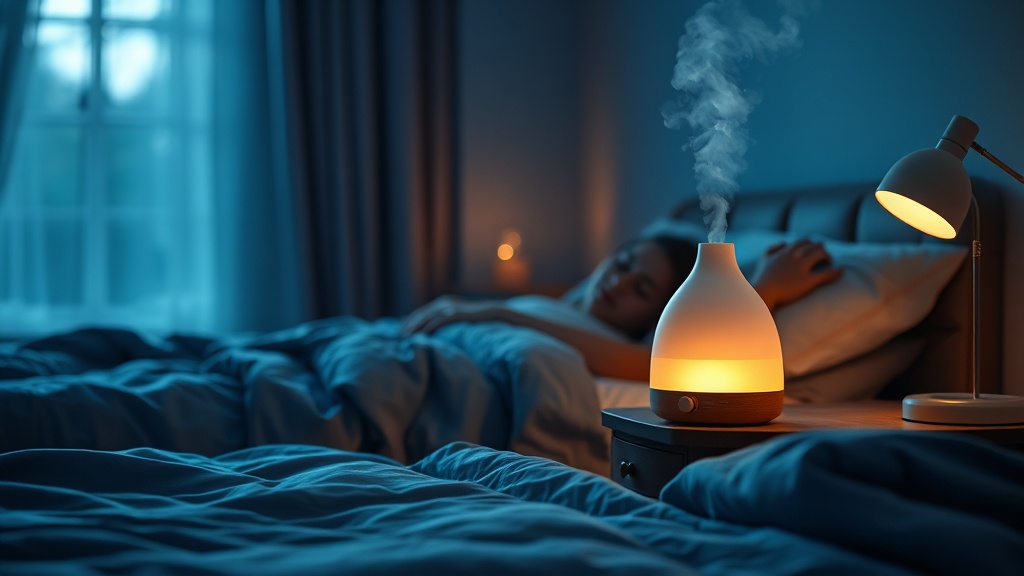
A well-placed bedside humidifier keeps the air moist through the night; hygiene and the right humidity level matter as much as the model.
A humidifier is comfort, not a workup. See a dentist or doctor if dryness persists despite it, or if it comes with dry eyes, trouble swallowing, a new medication, or mounting tooth and gum problems — a professional can identify the cause. If you use a CPAP and wake up dry, ask your provider about heated humidification and mask fit rather than stopping therapy, and never stop a prescribed medicine on your own.
Frequently asked questions
Sources
- 1.
- 2.
- 3.
- 4.
- 5.
- 6.
- 7.

Fix your breath at the source.
The complete science-backed protocol — engineered to eliminate volatile sulfur compounds at the biological source.
Start the Breath Protocol →Related reading
Educational purposes only. The content on this page is not medical advice and is not a substitute for consultation with a qualified dental or medical professional.
More from the library
 Best Of8 min
Best Mouthwash for Dry Mouth: What to Look For
The best dry-mouth rinse is the one that soothes without drying, and the label tells you more than the marketing.
Read →→ Guides8 min
Dry Mouth at Night: Why It Happens and How to Sleep Easier
Nighttime dryness is common because your saliva naturally slows while you sleep, and a few targeted habits can make a real difference.
Read →→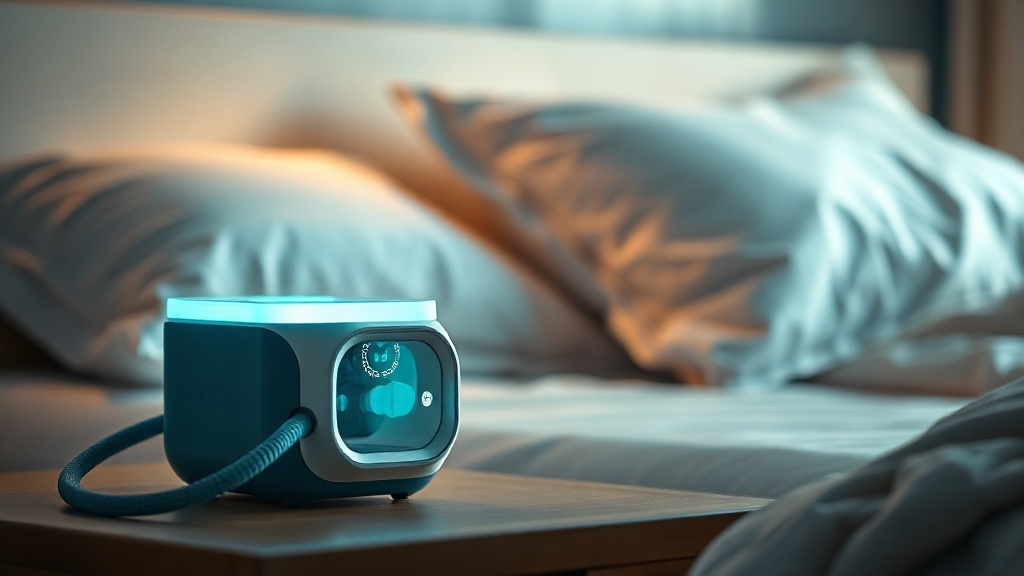 Causes8 min
Can a CPAP Cause Dry Mouth? Why It Happens and How to Fix It
A dry mouth is one of the most common CPAP complaints, and it almost always has a fixable cause. Here is what is really drying you out overnight, and how to fix it without giving up the therapy that helps you breathe.
Read →→ Guides8 min
What Causes Dry Mouth? The Common Triggers, Explained
Dry mouth almost always has an identifiable trigger, and knowing yours is the first step toward relief.
Read →→ Guides8 min
How to Fix Dry Mouth: An Evidence-Based Guide
Dry mouth is usually manageable once you know what is driving it and which supportive habits actually move the needle.
Read →→ Answers8 min
Does Dry Mouth Cause Bad Breath?
Low saliva and bad breath are closely linked, and understanding the connection points straight to what helps.
Read →→