
How to Improve Gum Health
The highest-payoff upgrades to improve your gums, and a simple two-week plan to make the difference visible.
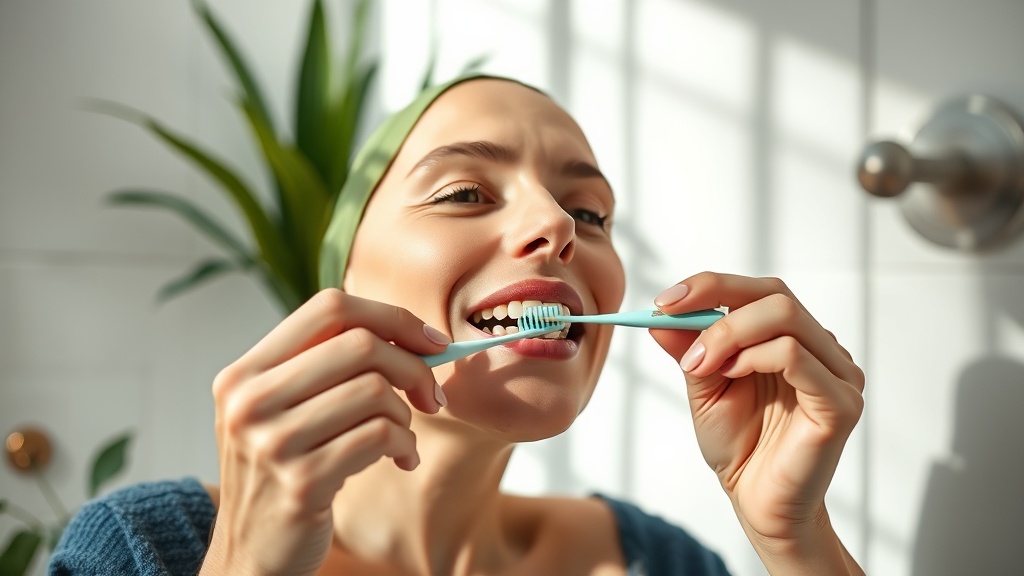
- If your gums bleed or look inflamed, you can usually improve them within about two weeks — early gum inflammation is reversible with consistent, gentle care.
- Improvement is measurable: less bleeding when you clean is the single clearest sign your routine is working, so it doubles as your feedback signal.
- The highest-yield upgrades are cleaning between the teeth every day, which sharply reduces gum bleeding, and softening your brushing technique so you stop irritating the gumline.
- Diet, quitting smoking and getting enough vitamin C add real, if smaller, gains on top of good mechanical cleaning.
- If bleeding or swelling has not improved after a few weeks of good care, a professional cleaning removes the hardened deposits below the gumline that home care simply cannot reach.
To improve gum health, target the plaque that inflames the gumline: clean between your teeth every day, soften your brushing, and give it about two weeks — early inflammation is reversible and you should see less bleeding. Add a gum-friendly diet, enough vitamin C, and no smoking. If it does not settle, a professional cleaning reaches the deposits you cannot.
Why gum health can improve quickly
The encouraging truth about gums is that early inflammation is not a slow, one-way decline — it is a state that flips back surprisingly fast once you change the inputs. In the classic experimental-gingivitis studies, healthy gums become inflamed within two to three weeks of no cleaning, and then return fully to a healthy baseline once plaque control resumes. That reversibility is your lever: improving your gums is mostly a matter of consistently removing plaque from the places it inflames the gum, and then giving the tissue a couple of weeks to respond. Better still, you get a built-in progress meter. Because bleeding is the most prevalent and one of the earliest signs of gum inflammation, watching how much your gums bleed as you clean tells you, in near real time, whether your new routine is working. In the first days a newly upgraded routine can even provoke a little more bleeding as inflamed tissue is disturbed, but over the following two weeks that should steadily fall. When the pink in the sink fades, your gums are genuinely getting healthier. The whole plan below is built around that loop: change the inputs, watch the bleeding, adjust.
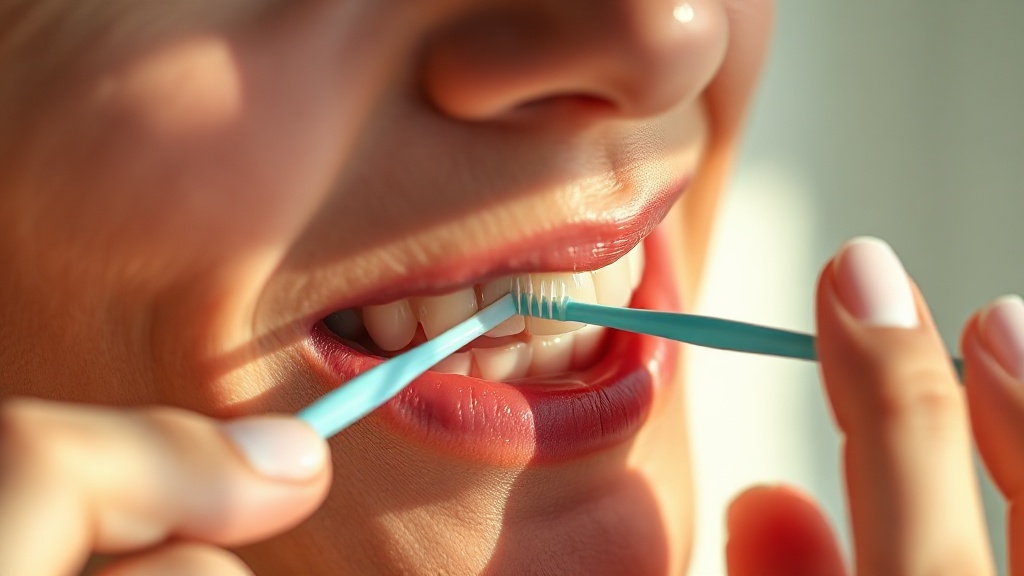
Cleaning between the teeth is the single biggest upgrade for most people — and falling bleeding is how you know it is working.
What the research actually shows
Every claim below maps to a named, peer-reviewed source in the Sources section. According to PubMed.
| Claim | Evidence | Source |
|---|---|---|
| Gum inflammation resolves back to a healthy baseline once plaque control resumes, typically over about two weeks — improvement is genuinely achievable at home. | Experimental-gingivitis study. | Wellappuli et al., 2017 |
| Gingival bleeding is the most prevalent sign of gum inflammation, which makes reduced bleeding a reliable way to track improvement. | Global epidemiology review. | Petersen & Ogawa, 2012 |
| Adding an interdental brush produced about a 52% reduction in gum bleeding at one month — the between-teeth habit pays off fast. | Randomised clinical trial. | Interdental brushing trial, 2014 |
| An anti-inflammatory diet lowered the gingival index from 1.04 to 0.61 in four weeks even though plaque levels were unchanged — food influences gums directly. | Randomised controlled trial. | Woelber et al., 2019 |
| Professional scaling and root planing gains about 0.5 mm of attachment by reaching deposits below the gumline that no home tool can remove. | ADA systematic review. | Smiley et al., 2015 |
Upgrades ranked by payoff
| Upgrade | What it does | Payoff |
|---|---|---|
| Add daily between-teeth cleaning | Reaches the between-teeth plaque a brush misses; large bleeding drop | High |
| Soften and angle your brushing | Removes gumline plaque without abrading the gum | High |
| Adopt an anti-inflammatory diet | Lowers gum bleeding partly independent of plaque | Moderate |
| Quit smoking | Removes the biggest modifiable risk to gums | High over time |
| Optional rinse or oil pulling | Small extra plaque control; never a replacement for cleaning | Low to moderate |
The upgrades that do not work the way people think
A good improvement plan is as much about dropping false shortcuts as adding good habits. Three deserve honesty. First, brushing harder: it feels productive, but plaque is soft and lifts off with gentle strokes, while the extra force mostly bruises the gum and, over time, wears it back — so pressing harder actively works against the goal. Second, oil pulling: it has a devoted following, but in controlled research it functions only as a minor adjunct to normal cleaning and did not significantly change gum inflammation, so it is fine as an optional extra but useless as a substitute for brushing and interdental cleaning. Third, supplements framed as gum-builders: vitamin C genuinely matters — it is essential for making the collagen in gum tissue, and correcting a deficiency can stop deficiency-related bleeding within days — but beyond correcting a shortfall it does not rebuild lost attachment, and swallowing collagen has no gum evidence at all. Keeping these straight protects you from spending effort on things that feel virtuous but move the needle little, and refocuses it on the mechanical cleaning and lifestyle changes that genuinely improve gums. Improvement is real and reachable; it just comes from the unglamorous levers, done gently and often.
Evidence you can act on.
Occasional emails — new research, new protocols, no noise.
Your two-week gum-improvement plan
This plan maintains and improves a healthy structure; it does not treat disease. If gums do not respond, that is a signal to be seen, not to push harder.
- 1
Day 1: add cleaning between the teeth
once dailyThis is the biggest single upgrade for most people. Fit an interdental brush size to each gap, or use floss or a rubber-tipped cleaner, and gently clean between every tooth once a day. Expect a little bleeding at first from inflamed spots; it should ease over the two weeks.
- 2
Day 1: soften and angle your brushing
2 minutes, twice dailySwap to a soft brush, hold it lightly, and tip the bristles toward the gumline in small movements. Stop scrubbing hard. If your brush has a pressure sensor, let it correct you. Gentle, thorough and twice daily beats fast and forceful.
- 3
Track your bleeding each day
secondsNotice how much pink appears when you clean. This is your feedback loop: a steady fall over two weeks means your routine is working. No change, or worsening, tells you something needs adjusting or professional attention.
- 4
Upgrade diet, hydration and habits
ongoingLean into an anti-inflammatory diet — more vegetables and oily fish, less frequent refined sugar — which lowers bleeding on its own, and get enough vitamin C from food. Stay hydrated for healthy saliva flow, and if you smoke, treat quitting as the highest-impact change of all.
- 5
Reassess at two to three weeks
checkpointIf bleeding and redness have clearly improved, keep the routine as your new normal. If they have not, book a dental cleaning: hardened deposits below the gumline keep gums inflamed no matter how well you clean at home, and only a professional can remove them.

An anti-inflammatory diet and enough vitamin C support calmer gums alongside the mechanical cleaning that does the heavy lifting.
If your gums have not clearly improved after two to three weeks of gentle, consistent care — or if you see deep redness, swelling, pus, loosening teeth, or gums pulling back from the teeth — book a dental visit. Persistent inflammation usually means hardened calculus or a pocket below the gumline that no home routine can reach, and a professional cleaning is exactly what addresses it. This is a habits-and-structure guide; it supports professional care and does not replace an examination or diagnosis.
Frequently asked questions
Sources
- 1.
- 2.
- 3.
- 4.
- 5.
- 6.
- 7.
- 8.

Fix your breath at the source.
The complete science-backed protocol — engineered to eliminate volatile sulfur compounds at the biological source.
Start the Breath Protocol →Related reading
Educational purposes only. The content on this page is not medical advice and is not a substitute for consultation with a qualified dental or medical professional.
More from the library
 Guides8 min
Healthy Gums: The Complete Guide to Keeping Them That Way
What healthy gums are, why they matter, and the proven daily pillars that keep them firm, pink and bleed-free.
Read →→ Guides8 min
How to Prevent Gum Recession: The Complete Playbook
The two real causes of receding gums, and the daily habits that protect the gum tissue you still have.
Read →→ Guides8 min
Bleeding Gums: What They Mean and What to Do
A calm, honest guide to why gums bleed, why it is almost always reversible in the early stage, and the point at which bleeding is a signal to see a professional.
Read →→ Answers8 min
How to Get Rid of Gingivitis: A Fast, Practical Routine
The fast, practical routine that clears the plaque driving gingivitis - and roughly how long it takes for the bleeding to stop.
Read →→ Guides8 min
Gum Disease Symptoms: The Early Warnings You Can Feel
The symptoms of gum disease you can feel and notice yourself, why bleeding comes first, and when a symptom means see a dentist now.
Read →→ Answers8 min
Can Receding Gums Grow Back? The Honest Answer
It is the question everyone with recession asks. The straight answer, and what you can realistically do instead.
Read →→