
Bleeding Gums: What They Mean and What to Do
A calm, honest guide to why gums bleed, why it is almost always reversible in the early stage, and the point at which bleeding is a signal to see a professional.
- Bleeding gums are the single most common early warning sign of gum inflammation, and in the large majority of people they point to gingivitis, the mild and reversible stage of gum disease.
- The usual cause is simple: a soft film of plaque bacteria left along the gumline irritates the tissue, and inflamed gums bleed easily when brushed or flossed. Bleeding is a sign of irritation, not fragility.
- Early bleeding is genuinely reversible. In classic experiments, pausing plaque control brings on gum inflammation within about two to three weeks, and resuming good cleaning returns bleeding, redness and swelling to baseline.
- You tilt the balance back with gentle twice-daily soft-bristle brushing, daily cleaning between the teeth, and a professional cleaning to lift the hardened tartar you cannot reach at home.
- Bleeding that is persistent, spontaneous, heavy, or paired with loose teeth, receding gums or a lasting bad taste deserves a dental visit, because it can signal periodontitis or another condition only a professional can identify.
Bleeding gums are almost always a sign of gingivitis: mild, plaque-driven inflammation that makes gum tissue swell and bleed when it is disturbed. It is the most common early warning sign of gum trouble, and at this stage it is reversible with better daily cleaning plus a professional scale-and-polish. Persistent, heavy or spontaneous bleeding should be checked by a dentist.
Why healthy gums do not bleed, and inflamed ones do
Firm, healthy gums do not bleed when you brush them. They can take normal pressure because the tissue is not inflamed. Bleeding starts with plaque, the soft, sticky film of bacteria that forms along the gumline every day. When plaque is left in place, the bacteria in it irritate the narrow band of gum where tooth meets tissue. The body responds the way it responds to any irritation: it sends more blood to the area. The tiny vessels just beneath the gum surface swell and become fragile, so the lightest disturbance, the brush or the floss, is enough to make them bleed. This is why dentists treat bleeding on gentle probing as the earliest reliable sign of gum inflammation rather than a sign that you are brushing too hard. Worldwide, gingival bleeding is in fact the single most prevalent sign of periodontal disease. The reassuring part is what this stage is called and what it is not. Bleeding from plaque-driven inflammation is gingivitis, and gingivitis sits entirely in the reversible tier. It has not yet touched the bone or the fibres that anchor the teeth. That deeper, non-reversible damage, periodontitis, is a minority picture: deep gum pockets, the marker of advanced disease, are found in only about one in seven adults. For most people, bleeding gums are the mouth asking for better cleaning, not announcing permanent harm.
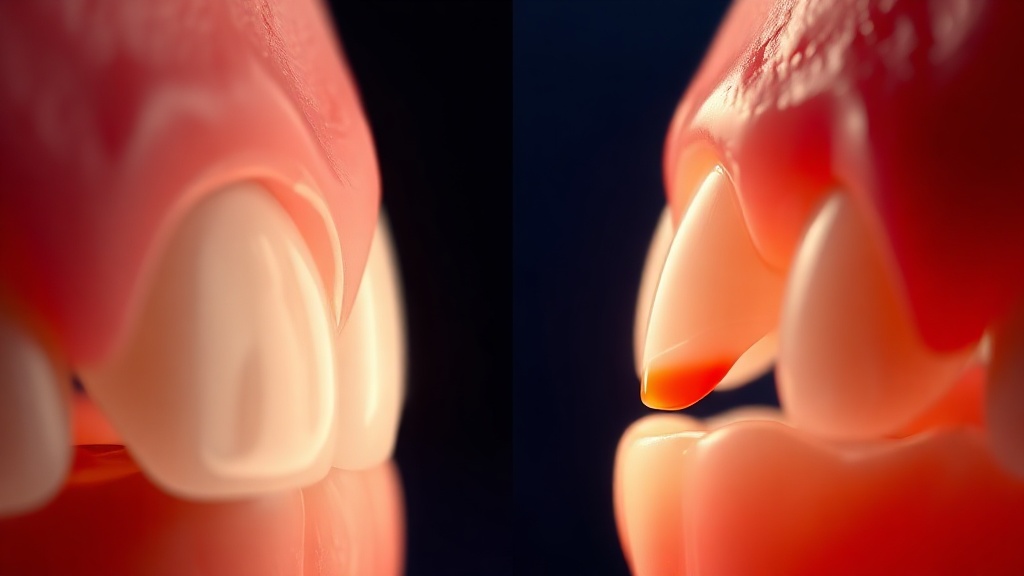
Plaque left along the gumline inflames the tissue and swells the tiny vessels beneath it, so healthy gums stay firm while inflamed gums bleed at the lightest touch.
What the research actually shows
Every claim above maps to a named, peer-reviewed source in the Sources section. According to PubMed.
| Claim | Evidence | Source |
|---|---|---|
| Gingival bleeding is the single most prevalent sign of periodontal disease worldwide, which is why it is treated as the earliest warning rather than a curiosity. | WHO global review of periodontal health and disease. | Petersen & Ogawa, 2005 |
| Gingivitis is reversible: when plaque control stops, inflammation and bleeding build within about two to three weeks, and every clinical measure returns to baseline once cleaning resumes. | Experimental-gingivitis clinical study. | Wellappuli et al., 2017 |
| Deep gum pockets of 6 mm or more, the marker of advanced disease, are present in only about 10 to 15 percent of adults, so most bleeding is the mild, reversible tier. | WHO global prevalence synthesis. | Petersen & Ogawa, 2005 |
| Bleeding gums caused by vitamin C deficiency resolve within about four days of repletion, a clear reminder that bleeding is a reversible tissue response, not fixed damage. | Review of vitamin C and periodontal tissue. | Van der Velden, 2020 |
| Adding daily flossing to brushing reduces gingival bleeding at one month compared with brushing alone. | Cochrane systematic review of flossing. | Sambunjak et al., 2011 |
Bleeding you can usually manage at home versus bleeding to get checked
| What you notice | What it usually means | Sensible next step |
|---|---|---|
| A little pink in the sink when you brush or floss | Early plaque-driven inflammation (gingivitis) | Improve daily cleaning; it often settles within a week or two |
| Bleeding only where you have just started flossing | Inflamed tissue reacting to being cleaned for the first time | Keep cleaning gently and consistently; expect improvement |
| Gums that bleed heavily, or bleed on their own without touching them | Possible advanced inflammation or another cause | See a dentist promptly for assessment |
| Bleeding with loose teeth, receding gums, pus or a lasting bad taste | Possible periodontitis or infection | Book a professional evaluation, do not wait |
| Bleeding with easy bruising elsewhere or during pregnancy | May involve a wider medical cause | Mention it to a dentist and a doctor |
The tartar you cannot brush away
Better brushing solves most bleeding, but not all of it, and it helps to understand why. When plaque is left undisturbed it slowly hardens into tartar, or calculus, a rough mineralised crust that a toothbrush cannot remove. Tartar gives bacteria a sheltered, textured surface to keep colonising, so the inflammation and bleeding continue no matter how diligent you are at home. Once tartar has formed below the gumline, only a professional can lift it off with the right instruments. This is the honest reason a dental cleaning matters: not because home care is pointless, but because there is a specific job, removing hardened deposits from around and below the gumline, that home tools physically cannot do. Professional cleaning removes that reservoir so the gum can settle. It is also why gum care is a partnership rather than a solo effort. Your daily routine keeps fresh plaque from building up and keeps the tissue calm between visits; the professional cleaning resets the surfaces you cannot reach. Neither replaces the other. If your gums keep bleeding despite genuinely good home care, that is usually the signal that hidden tartar, or something deeper, needs a professional set of eyes and instruments rather than a firmer toothbrush.
Evidence you can act on.
Occasional emails — new research, new protocols, no noise.
How to calm bleeding gums at home
None of the steps below treat a disease; they simply lower the plaque load and support the gum tissue so healthy, non-bleeding gums can return. If bleeding persists despite them, that itself is the cue to see a professional.
- 1
Brush gently twice a day with a soft-bristle brush
2 minutes, twice dailyUse a soft-bristle brush and angle it at about forty-five degrees to the gumline, with small, gentle movements rather than hard scrubbing. Firmer is not better; the goal is to sweep plaque off the gum margin without bruising the tissue. Two unhurried minutes, morning and night, does more than a brief vigorous scrub.
- 2
Clean between your teeth every day
1 to 2 minutes dailyA brush cannot reach the surfaces between teeth, where plaque quietly accumulates and gums often bleed first. Daily flossing or, for many people, small interdental brushes clears it. Interdental brushes in particular are well supported for reducing between-teeth inflammation. Expect a little bleeding at first from tissue that has not been cleaned there before; it typically eases within a week or two.
- 3
Use a soothing rinse for comfort
30 secondsA warm saltwater rinse can soothe tender gums and support the tissue as it heals; its benefit is comfort and gentle cleansing rather than curing anything. An alcohol-free essential-oil mouthrinse can further lower the bacterial load on the surfaces a brush reaches. Use rinses as a helper alongside brushing and interdental cleaning, never as a substitute.
- 4
Do not stop cleaning an area because it bleeds
ongoingIt is tempting to avoid a spot that bleeds, but backing off lets plaque build up there and keeps the inflammation going. Keep cleaning it gently and consistently. In most early cases the bleeding lessens over the following days as the tissue recovers.
- 5
Book a professional cleaning
as advisedA dental scale-and-polish removes the hardened tartar you cannot shift at home and lets your dentist check whether the bleeding is simple gingivitis or something that needs more attention. If you cannot remember your last cleaning, that is a good reason to book one.
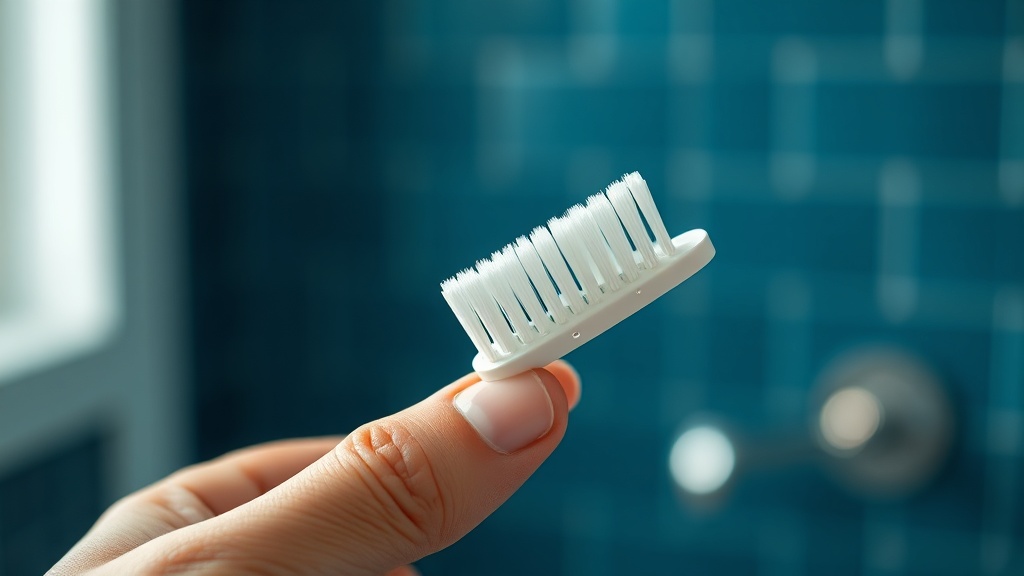
Gentle, angled, consistent cleaning at the gumline, twice a day, is what settles most bleeding, not a firmer, harder scrub.
Please have your gums assessed in person if bleeding is heavy, happens spontaneously without you touching the gums, or does not improve after two weeks of careful daily cleaning. See a dentist sooner if bleeding comes with loose or shifting teeth, gums pulling away from the teeth, persistent bad breath or a bad taste, pus, or noticeable pain. Bleeding gums during pregnancy, or alongside easy bruising elsewhere, are also worth mentioning to both a dentist and a doctor. Persistent bleeding can be a sign of periodontitis or another condition, and only a professional can tell the difference and treat the deeper cause.
Frequently asked questions
Sources
- 1.
- 2.
- 3.
- 4.
- 5.
- 6.
- 7.
- 8.
- 9.

Fix your breath at the source.
The complete science-backed protocol — engineered to eliminate volatile sulfur compounds at the biological source.
Start the Breath Protocol →Related reading
Educational purposes only. The content on this page is not medical advice and is not a substitute for consultation with a qualified dental or medical professional.
More from the library
 Causes8 min
Why Are My Gums Bleeding? The Real Causes
A clear run-through of what actually makes gums bleed, from everyday plaque to hormones and medicines, and how to tell an ordinary cause from one that needs a professional.
Read →→ Answers8 min
How to Stop Bleeding Gums: A Practical Guide
A calm, step-by-step routine for settling bleeding gums, why keeping at it works, and the point at which stopping the bleeding needs a professional rather than home care.
Read →→ Causes8 min
Why Do My Gums Bleed When I Floss?
The specific reason flossing makes gums bleed, why it is usually a good sign that improves with time, and the point at which flossing-related bleeding needs a professional.
Read →→ Guides8 min
How to Stop Receding Gums: What Actually Slows It
You cannot will your gum line back up, but you can often stop it from dropping further. Here is what the evidence supports.
Read →→ Guides8 min
Gum Disease Symptoms: The Early Warnings You Can Feel
The symptoms of gum disease you can feel and notice yourself, why bleeding comes first, and when a symptom means see a dentist now.
Read →→ Answers8 min
Can Receding Gums Grow Back? The Honest Answer
It is the question everyone with recession asks. The straight answer, and what you can realistically do instead.
Read →→