Healthy Gums
What healthy gums are, why they matter, and the proven daily pillars that keep them firm, pink and bleed-free.

- Gum health rests on one simple idea: keeping the gumline free of plaque so it never inflames. Gums are at their healthiest when they are firm, pink and do not bleed.
- Gum disease is enormously common — more than a billion people have severe periodontitis — yet its earliest stage, gingivitis, is fully reversible with good, gentle plaque control.
- The evidence-backed pillars are simple and unglamorous: gentle twice-daily brushing, daily cleaning between the teeth, not smoking, a gum-friendly diet, and regular professional cleanings.
- Technique and consistency beat products. The best routine is the one you actually do, gently, every single day — no premium gadget rescues an aggressive or on-and-off habit.
- Home care and professional care are partners, not rivals: brushing controls the gumline you can reach, while a dentist reaches and removes the hardened deposits you cannot.
Healthy gums are firm, pink and do not bleed, and you keep them that way by controlling plaque at the gumline. The proven essentials are gentle twice-daily brushing, daily cleaning between the teeth, not smoking, a gum-friendly diet, and regular dental cleanings. Early gum inflammation is reversible; the deeper damage of periodontitis is not — so prevention and consistency are everything.
What actually keeps gums healthy
Gum health is best understood as a balance between plaque building up and you clearing it away. Plaque is a living film of bacteria that constantly reforms on teeth; where it is left along the gumline, the gum responds with inflammation — the redness, puffiness and bleeding of gingivitis. The most elegant proof of this is the experimental-gingivitis model: when healthy volunteers stop cleaning their teeth, their gums become inflamed within about two to three weeks, and when they resume plaque control, every measure — bleeding, swelling, the lot — returns to a healthy baseline. That single experiment carries two liberating messages. First, gingivitis is genuinely reversible; you are rarely more than a couple of weeks of consistent care away from calmer gums. Second, prevention is not mysterious — it is simply keeping plaque below the threshold that triggers inflammation. The stakes for doing so are real: managing gingivitis is regarded as the primary prevention of periodontitis, the deeper, irreversible disease that destroys the bone and attachment holding teeth in place. Keep the gumline clean and calm, and you are quietly preventing the version of gum disease that cannot be undone.

The visible goal of gum health: firm, pink gums that hug the teeth and stay comfortably bleed-free.
What the research actually shows
Every claim below maps to a named, peer-reviewed source in the Sources section. According to PubMed.
| Claim | Evidence | Source |
|---|---|---|
| Stopping oral hygiene causes gum inflammation within about two weeks, and resuming plaque control returns all clinical measures to a healthy baseline. | Experimental-gingivitis study. | Wellappuli et al., 2017 |
| Gingivitis is reversible and managing it is the primary prevention of the deeper, irreversible disease periodontitis. | EFP consensus report. | Chapple et al., 2015 |
| Powered toothbrushes reduce plaque and gingivitis modestly compared with manual brushing over the long term. | Cochrane systematic review. | Yaacob et al., 2014 |
| Interdental brushes strongly reduce plaque and lower gingivitis more than floss does — the strongest interdental finding. | Systematic review. | Slot et al., 2008 |
| Over 30 years, consistent plaque control plus regular professional care led to near-total tooth retention, with periodontitis essentially halted. | 30-year prospective program. | Axelsson et al., 2004 |
The five pillars of gum health
| Pillar | What it does | Strength of evidence |
|---|---|---|
| Gentle brushing twice daily | Removes the gumline plaque you can reach | Strong |
| Cleaning between the teeth daily | Reaches the between-teeth plaque a brush misses | Moderate to strong |
| Not smoking | Removes the biggest modifiable risk to gums | Strong |
| A gum-friendly diet | Lowers gum inflammation partly independent of plaque | Moderate |
| Regular professional cleaning | Removes hardened deposits you physically cannot | Strong |
Why home care and the dentist are partners
A common and dangerous myth is that a good enough home routine makes the dentist optional. The biology says otherwise. Your toothbrush, floss and rinse are supragingival tools — they work on and just below the visible gumline, which is exactly where healthy gums are kept healthy. But once plaque hardens into calculus, or once a pocket forms and deepens, the deposits sit on the root surface below the gum, where no home tool can reach. Removing them is the job of professional scaling and root planing, which achieves meaningful attachment gain and pocket closure that brushing cannot. This is why the two work as a team: excellent home care keeps most of the mouth healthy and dramatically reduces how much professional work is ever needed, while periodic professional cleaning clears what has slipped beyond your reach before it can do lasting harm. Adjuncts fit into the home side of this partnership honestly — an essential-oil mouthrinse, for instance, meaningfully cuts plaque and gingivitis and reaches between-teeth surfaces, but it is an addition to mechanical cleaning, not a substitute for it. The long-term studies are unambiguous: people who combine consistent home plaque control with regular professional care keep almost all their teeth for life.
Evidence you can act on.
Occasional emails — new research, new protocols, no noise.
The daily healthy-gums routine
None of this treats disease; it maintains a healthy structure and keeps the gumline calm. The magic is entirely in doing it gently and consistently.
- 1
Brush gently for two minutes, twice a day
2 minutes, twice dailyUse a soft brush and light pressure, angling the bristles toward the gumline in small movements. A powered brush with a pressure sensor can help you brush more gently, but a well-used manual brush works too. Cover every surface without scrubbing.
- 2
Clean between the teeth once a day
once dailyBrushing cannot reach between teeth, where plaque quietly inflames the gum. Interdental brushes are especially effective; floss and rubber-tipped cleaners are good alternatives. Ease the tool gently along each tooth rather than snapping it into the gum.
- 3
Add a rinse only if it earns its place
optionalAn alcohol-free essential-oil rinse can be a useful daily adjunct, reducing plaque and gingivitis and reaching between-teeth surfaces. Strong antiseptics like chlorhexidine are for short courses under professional guidance, not everyday forever use, because they can stain teeth.
- 4
Live gum-friendly
ongoingDo not smoke — it is the single biggest modifiable risk to your gums. Favour an anti-inflammatory diet rich in vegetables and oily fish and lighter on refined sugar, which lowers gum bleeding on its own, and stay hydrated to keep saliva flowing.
- 5
Keep your professional check-ups
as advisedSee your dentist or hygienist on the schedule they recommend so hardened deposits are removed and any early change is caught while it is still reversible. This is the partner your home routine depends on, not an optional extra.

Gum health is built from small, gentle habits repeated daily — not from any single product.
See a dentist if your gums bleed on gentle cleaning for more than a couple of weeks, look persistently red or swollen, feel sore, or have started to pull back from the teeth. These are signs that inflammation may be moving beyond the easily reversible stage, and only an in-person examination can measure the gums, check for pockets, and remove deposits below the gumline. Regular check-ups are part of gum health, not a fallback for when things go wrong — this guide supports that care, it does not replace it.
Frequently asked questions
Sources
- 1.
- 2.
- 3.
- 4.
- 5.
- 6.
- 7.
- 8.
- 9.
- 10.

Fix your breath at the source.
The complete science-backed protocol — engineered to eliminate volatile sulfur compounds at the biological source.
Start the Breath Protocol →Related reading
Educational purposes only. The content on this page is not medical advice and is not a substitute for consultation with a qualified dental or medical professional.
More from the library
 Guides8 min
How to Improve Gum Health: A Two-Week Action Plan
The highest-payoff upgrades to improve your gums, and a simple two-week plan to make the difference visible.
Read →→ Answers8 min
What Do Healthy Gums Look Like? A Visual Guide
The five things to look for — colour, texture, firmness, contour, and bleeding — to tell healthy gums from inflamed ones.
Read →→ Guides8 min
Gum Disease: The Complete Guide to Gingivitis and Periodontitis
What gum disease is, how it moves from reversible bleeding to permanent bone loss, and where home care actually helps.
Read →→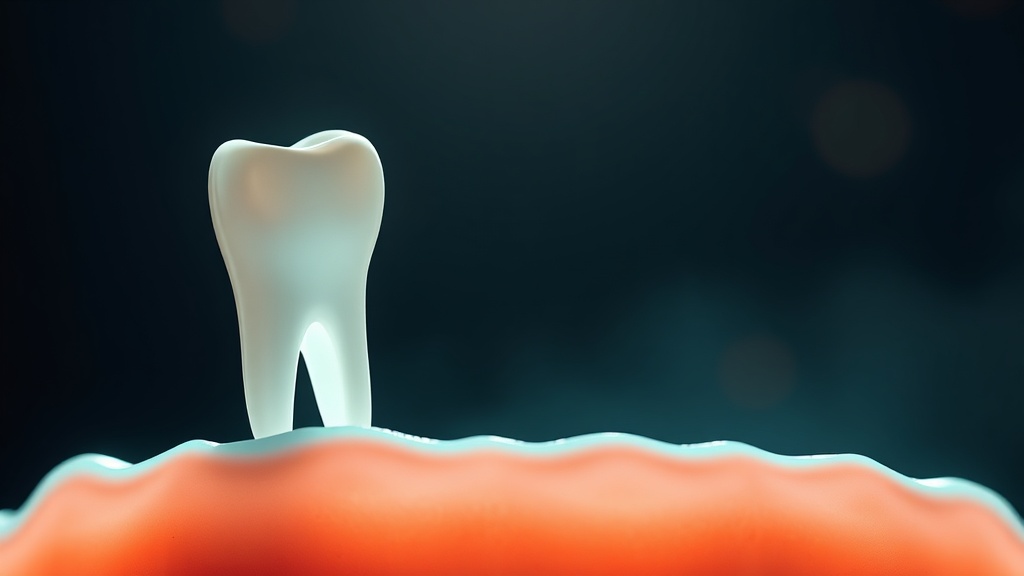 Guides9 min
Gum Inflammation: How It Works and How to Calm It
The mechanism behind red, swollen, bleeding gums — and the evidence-based ways to settle it.
Read →→ Guides8 min
Gum Disease Symptoms: The Early Warnings You Can Feel
The symptoms of gum disease you can feel and notice yourself, why bleeding comes first, and when a symptom means see a dentist now.
Read →→ Answers8 min
Can Receding Gums Grow Back? The Honest Answer
It is the question everyone with recession asks. The straight answer, and what you can realistically do instead.
Read →→