
How to Prevent Gum Recession
The two real causes of receding gums, and the daily habits that protect the gum tissue you still have.
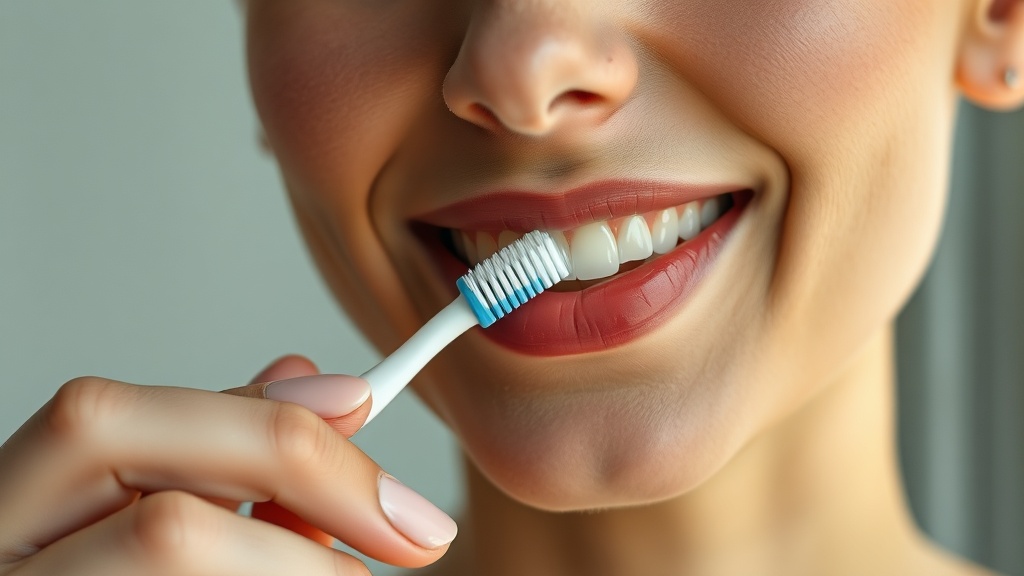
- Gum recession — when the gum pulls back and exposes part of the tooth root — is extremely common: in a seven-country European survey, recession of 1 mm or more was found in nearly 88% of adults, and it becomes more frequent with age.
- It has two main drivers: mechanical trauma (brushing too hard, with a stiff brush, in a sideways scrubbing motion) and inflammation (plaque left along the gumline). A good prevention plan works on both at once.
- Receding gums do not grow back on their own. The only time exposed root gets re-covered is after gum surgery, and even then coverage is incomplete — which is exactly why prevention matters so much.
- Gentle technique beats expensive hardware: a soft brush used with light pressure at the right angle protects the gumline better than an aggressive scrub with any brush.
- Smoking is linked to noticeably more recession and slower healing. Not smoking, controlling plaque between the teeth, and keeping regular dental visits are the defensible core of prevention.
You prevent gum recession by removing its two causes before they act: brush gently with a soft brush at the correct angle instead of scrubbing hard, clean between the teeth every day to control gumline plaque, avoid smoking, and keep regular dental check-ups. Because recession cannot be reversed at home, protecting the healthy gum you still have is the entire goal.
Why gums recede in the first place
Recession is not one disease with one cause; it is the visible result of gum tissue being worn away or undermined faster than the body maintains it. Two forces do most of the damage. The first is mechanical: brushing with heavy pressure, a hard brush, or a back-and-forth scrubbing stroke slowly abrades the delicate margin of gum where it meets the tooth. The tell-tale fingerprint of this is that recession is consistently more common and more severe on the cheek-facing (buccal) surfaces than between the teeth — the exact surfaces a scrubbing brush hits hardest. The second force is inflammatory: plaque left undisturbed along the gumline provokes chronic inflammation that gradually breaks down the fibres anchoring gum to tooth. Add contributing factors — a naturally thin gum type, a prominently positioned tooth, grinding, or smoking — and the margin retreats. Crucially, once it has retreated the tissue does not spontaneously crawl back up the root. In the entire clinical literature, coronal re-coverage of an exposed root happens only after mucogingival surgery, and even then it is not always complete or predictable. That single fact reframes the whole problem: with gums, an ounce of prevention really is worth more than any cure, because there is no reliable at-home cure to fall back on.
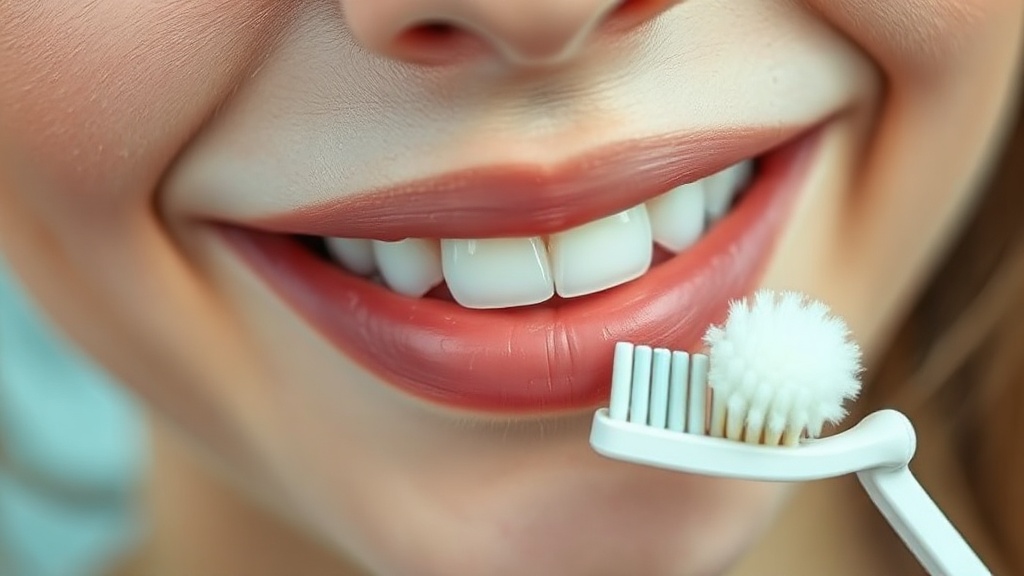
Recession appears first and worst on the cheek-facing gum margins — the signature of mechanical wear rather than infection alone.
What the research actually shows
Every claim below maps to a named, peer-reviewed source in the Sources section. According to PubMed.
| Claim | Evidence | Source |
|---|---|---|
| About 22.5% of US adults aged 30 and over already have 3 mm or more of recession on at least one tooth, and it is more prevalent on cheek-side than between-teeth surfaces. | NHANES III national survey. | Albandar & Kingman, 1999 |
| Across seven European countries, recession of 1 mm or more was present in 87.9% of adults, and the authors describe it as largely preventable. | Multi-country survey (n=3,551). | West et al., 2024 |
| Even in young UK adults, every participant had recession on at least one tooth and 42% had a site of 4-8 mm — recession starts early. | Cohort of young adults. | Seong & West et al., 2018 |
| Smoking is associated with higher odds of gingival recession (odds ratio about 1.84). | Systematic review / meta-analysis. | Marschner et al., 2025 |
| Left untreated over 10-27 years, recession sites drifted further down the root (a further 0.7-1.0 mm) while treated sites gained and held coverage — it tends to worsen, not settle. | Long-term split-mouth study. | Agudio et al., 2009 |
The prevention levers, and which you control
| Driver | Why it causes recession | Can you change it? |
|---|---|---|
| Hard or scrubbing brushing | Mechanically abrades the thin gum margin | Yes — soft brush, light pressure, gentle angled strokes |
| Plaque left along the gumline | Chronic inflammation undermines the attachment | Yes — clean between the teeth every day |
| Smoking | Linked to more recession and slower healing | Yes — quitting shifts risk back toward never-smokers |
| Thin gum type or a prominent tooth | Less tissue to start with, more exposed to force | Partly — a dentist can flag and monitor high-risk sites |
| Grinding or an uneven bite | Adds repeated mechanical load to certain teeth | Partly — a nightguard or bite review can help |
Technique beats hardware
It is tempting to think the answer is a better gadget, but the evidence points at how you brush more than what you brush with. Powered brushes do modestly reduce plaque and gingivitis compared with manual ones in Cochrane review data, yet that advantage largely disappears in people who are well-instructed and motivated with a manual brush. In other words, the brush is a tool; the hand matters more. For prevention, three things do the heavy lifting. First, pressure: most people press far harder than they need to, and pressure-feedback studies show habitual force can be trained down within a couple of weeks — many modern brushes now buzz or flash when you push too hard, and that feedback is worth using. Second, motion and angle: a gentle, angled technique (the bristles tipped toward the gumline in small movements, the Bass method) cleans the critical margin without gouging it, and twice-daily two-minute brushing with this approach is what the reviews reward. Third, softness: a soft, end-rounded brush, and gentle between-teeth tools such as interdental brushes or rubber-tipped cleaners, remove plaque with fewer gum abrasions than stiff bristles or snapping floss down hard. None of this treats gum disease — it simply stops you from being the cause of your own recession while keeping the gumline clean.
Evidence you can act on.
Occasional emails — new research, new protocols, no noise.
The daily recession-prevention routine
You cannot regrow lost gum, but you can remove nearly every controllable cause of losing more. None of these steps treats a disease; they protect healthy tissue and support a clean, calm gumline.
- 1
Switch to a soft brush and ease off the pressure
every brushChoose a soft, end-rounded brush and hold it like a pencil, not a fist. If your brush has a pressure sensor, let it train you; if not, imagine brushing a ripe tomato without bruising it. Heavy pressure does not clean better — it just wears the gumline.
- 2
Angle the bristles toward the gumline and use small strokes
2 minutes, twice dailyTip the bristles about 45 degrees toward where gum meets tooth and use short, gentle movements rather than a long horizontal scrub. This clears plaque from the exact margin that inflames and recedes, without abrading it.
- 3
Clean between the teeth every day
once dailyBrushing misses the surfaces between teeth, where gumline plaque quietly drives inflammation. Interdental brushes or gentle floss reach these spots; a rubber-tipped cleaner is a low-abrasion option many people tolerate better. Be gentle — the goal is to disrupt plaque, not to snap tissue.
- 4
Do not smoke, and manage grinding
ongoingSmoking is one of the few modifiable factors linked to more recession and slower gum healing, and quitting moves your risk back toward that of a never-smoker. If you clench or grind, ask about a nightguard, which removes a mechanical load certain teeth would otherwise carry.
- 5
Keep regular professional check-ups
as advisedA dentist or hygienist can spot early recession, thin gum types, or a high-force habit before you would notice, measure change over time, and remove hardened deposits you physically cannot. This is the safety net prevention relies on — not a step to skip.

Light pressure and a pencil grip protect the gum margin far more than any premium brush head.
See a dentist if you can already see exposed root, notice a tooth looking longer, feel new sensitivity to cold at the gumline, or spot bleeding that does not settle within a couple of weeks of gentle, consistent care. Recession that is caught early can often be stabilised, and a clinician can tell whether the cause is mechanical, inflammatory, or a bite issue — and whether a gum graft is worth discussing. This is a structure-and-habits guide, not a substitute for an in-person assessment.
Frequently asked questions
Sources
- 1.
- 2.
- 3.
- 4.
- 5.
- 6.
- 7.
- 8.
- 9.
- 10.

Fix your breath at the source.
The complete science-backed protocol — engineered to eliminate volatile sulfur compounds at the biological source.
Start the Breath Protocol →Related reading
Educational purposes only. The content on this page is not medical advice and is not a substitute for consultation with a qualified dental or medical professional.
More from the library
 Guides8 min
How to Stop Receding Gums: What Actually Slows It
You cannot will your gum line back up, but you can often stop it from dropping further. Here is what the evidence supports.
Read →→ Answers8 min
Can Receding Gums Grow Back? The Honest Answer
It is the question everyone with recession asks. The straight answer, and what you can realistically do instead.
Read →→ Guides8 min
Gum Recession Treatment: Every Option, Compared
The right treatment depends on why your gums receded and how far. Here is the full ladder, with what each rung can honestly deliver.
Read →→ Guides8 min
How to Improve Gum Health: A Two-Week Action Plan
The highest-payoff upgrades to improve your gums, and a simple two-week plan to make the difference visible.
Read →→ Guides8 min
Gum Disease Symptoms: The Early Warnings You Can Feel
The symptoms of gum disease you can feel and notice yourself, why bleeding comes first, and when a symptom means see a dentist now.
Read →→ Guides8 min
Periodontal Disease: The Full Spectrum, Explained
A clear, honest overview of periodontal disease as a spectrum: the difference between gingivitis and periodontitis, what the colloquial phrase gum disease misses, and why early bleeding is the signal to act.
Read →→