Can Receding Gums Grow Back? The Honest Answer
It is the question everyone with recession asks. The straight answer, and what you can realistically do instead.

- No: gum tissue that has receded does not grow back on its own, because the attachment that held it to the root is lost and the body does not rebuild it spontaneously.
- You can still halt or slow further recession by controlling its cause, which is often the more important goal.
- The only way to predictably re-cover an exposed root is surgical grafting, and it suits selected cases rather than everyone.
- No toothpaste, oil pulling, mouthwash, or home remedy regrows gum tissue; be skeptical of any product that claims it does.
- Catching recession early and stabilising it is far more effective than trying to reverse it after the fact.
No. Receding gums do not grow back on their own. Once the gum has moved down a root, the lost attachment does not spontaneously regenerate, so home care cannot restore it. Good care can halt further recession, and surgical grafting can re-cover a root in selected cases, but nothing regrows gum naturally.
Why gum tissue does not grow back on its own
To understand the honest answer, picture what actually holds a gum in place. The gum is anchored to the tooth and underlying bone by a delicate system of fibres and a thin layer of supporting bone. When recession happens, whether from inflammation or mechanical stress, that anchoring system is destroyed along the exposed root, not just pushed aside. The body does not spontaneously rebuild those lost fibres and bone, so the gum has nothing to climb back onto. This is why a receded gum stays where it is unless tissue is physically moved or added over the root by a surgeon. A 2001 review in the Journal of Dentistry reflects this reality: it describes management as preventing further progression and controlling symptoms, and notes that surgery is what covers exposed root surfaces. In other words, the professional literature does not treat spontaneous regrowth as something that happens; it treats coverage as something that has to be surgically created. That is the difference between hope and evidence, and it is worth being clear-eyed about.
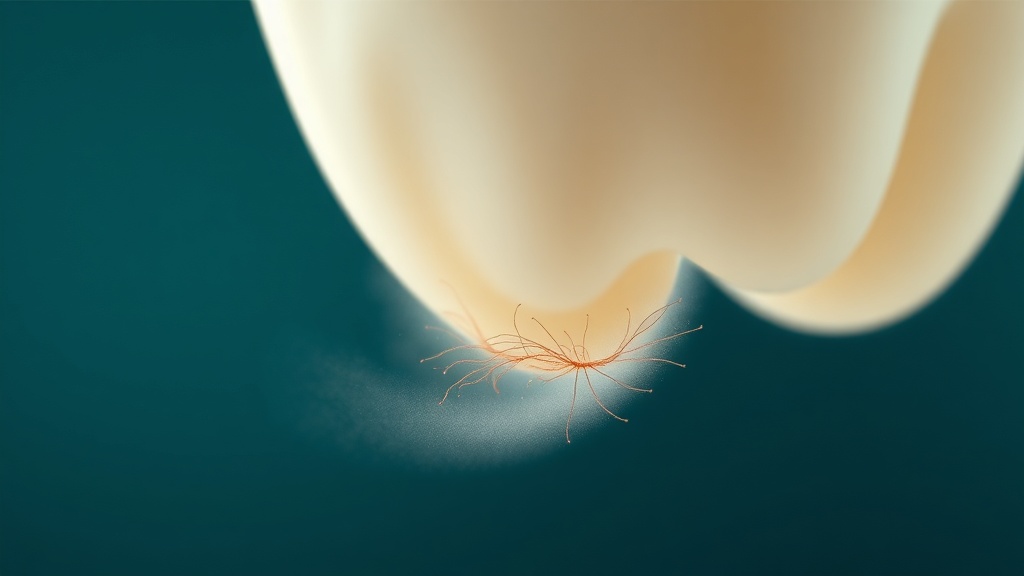
Recession destroys the fibres and bone anchoring the gum to the root; the body does not spontaneously rebuild them.
What the evidence actually says
Each claim below maps to a named, peer-reviewed source in the Sources section. According to PubMed.
| Claim | Evidence | Source |
|---|---|---|
| Management is directed at preventing further progression and controlling symptoms; surgery is used to cover exposed root surfaces, not spontaneous regrowth. | Narrative review of the mechanisms and management of recession. | Tugnait and Clerehugh, J Dent 2001 |
| Re-covering an exposed root requires periodontal plastic surgery; connective tissue graft procedures give the best measured coverage for suitable defects. | Systematic review of 234 studies from the AAP Regeneration Workshop. | Chambrone and Tatakis, J Periodontol 2015 |
| Even the best surgical technique, coronally advanced flap plus connective tissue graft, achieves high but not universal complete coverage, and only for suitable defect types. | Systematic review of 51 randomised trials in 1,574 patients. | Cairo et al., J Clin Periodontol 2014 |
| Because recession is highly prevalent and rises with age, early stabilisation matters more than chasing reversal. | Review of cross-sectional epidemiological studies. | Kassab and Cohen, J Am Dent Assoc 2003 |
Grow back on its own vs what is actually possible
| Claim | Reality | Evidence |
|---|---|---|
| Gums grow back naturally with good brushing | No; lost attachment does not spontaneously return | Management aims to halt progression |
| A special toothpaste or oil regrows gum | No; no product re-covers a root | Coverage requires surgery |
| You can stop it getting worse | Yes, by controlling the cause | Gum disease is the top driver to control |
| A root can be re-covered | Yes, surgically, in selected cases | Connective tissue grafts give best coverage |
Where the myth of regrowth comes from
If gums do not grow back, why do so many people believe they do? A few honest reasons. First, inflamed gums are swollen, and when you finally get the inflammation under control, the swelling goes down and the gum line can look a little different, which some mistake for regrowth; it is really just healthier, less puffy tissue, not new coverage over the root. Second, plenty of products are marketed with vague promises about restoring gums, and the wording blurs the line between soothing inflammation and actually regrowing tissue. Third, surgical grafting genuinely does re-cover roots, so stories of covered roots are real, but they involve an operation, not a home routine. The useful reframe is to stop asking how to make gums grow back and start asking how to stop them receding further, because that second question has real, evidence-backed answers and is usually the more valuable outcome anyway. Protecting what you still have beats chasing a reversal that home care cannot deliver.
Evidence you can act on.
Occasional emails — new research, new protocols, no noise.
What to do instead of waiting for regrowth
Reversal is not on the table at home, but these steps genuinely protect your gums and can stop further loss.
- 1
Control inflammation
twice dailyGentle, thorough plaque removal with a soft brush and daily cleaning between teeth targets the gum disease that drives most recession. This is the single most valuable thing you can do to stop it getting worse.
- 2
Remove modifiable drivers
ongoingStop smoking, ease brushing force, and address clenching with a nightguard if needed. These reduce the ongoing stress on already-thin or inflamed tissue.
- 3
Get measured and monitored
every 3 to 6 monthsA dentist records your gum levels so you can see whether they are stable. Stability, not visible regrowth, is the realistic and meaningful sign of success.
- 4
Ask about coverage only if it matters
as advisedIf a root is deeply exposed, sensitive, or aesthetically bothersome, a periodontist can assess whether surgical grafting is appropriate. It is the one route that genuinely re-covers a root, in selected cases.

The realistic framework: stop further recession at home, and consider surgical coverage only where it is warranted.
See a dentist if your gums bleed, look like they are pulling away, feel sore, or if teeth are becoming sensitive or looking longer. These can mean active gum disease that will keep advancing without care. A professional can tell you whether your recession is stable or progressing and whether surgical coverage is an option for your specific defect, which is something no home remedy can address.
Frequently asked questions
Sources
- 1.
- 2.
- 3.
- 4.

Fix your breath at the source.
The complete science-backed protocol — engineered to eliminate volatile sulfur compounds at the biological source.
Start the Breath Protocol →Related reading
Educational purposes only. The content on this page is not medical advice and is not a substitute for consultation with a qualified dental or medical professional.
More from the library
 Guides8 min
How to Stop Receding Gums: What Actually Slows It
You cannot will your gum line back up, but you can often stop it from dropping further. Here is what the evidence supports.
Read →→ Guides8 min
Gum Recession Treatment: Every Option, Compared
The right treatment depends on why your gums receded and how far. Here is the full ladder, with what each rung can honestly deliver.
Read →→ Guides7 min
Bad Breath Even After Brushing? The Biological Reason (and Fix)
You brushed, flossed and rinsed — and the smell is still there. The reason usually isn't hygiene; it's where the odour-causing bacteria actually live.
Read →→ Guides8 min
Gum Disease Symptoms: The Early Warnings You Can Feel
The symptoms of gum disease you can feel and notice yourself, why bleeding comes first, and when a symptom means see a dentist now.
Read →→ Guides8 min
Periodontal Disease: The Full Spectrum, Explained
A clear, honest overview of periodontal disease as a spectrum: the difference between gingivitis and periodontitis, what the colloquial phrase gum disease misses, and why early bleeding is the signal to act.
Read →→ Causes9 min
Swollen Gums During Pregnancy: Why It Happens
Why pregnancy makes gums swell, what is normal, and the safe steps to take with your dental and prenatal team.
Read →→