How to Get Rid of Tonsil Stones: A Step-by-Step Guide
The safe, evidence-informed way to dislodge tonsil stones and keep the crypts from refilling.

- Tonsil stones (tonsilloliths) are soft, calcified clumps of trapped debris and bacteria that form in the small pockets, or crypts, on the surface of the tonsils.
- They are extremely common and usually harmless: CT imaging studies put the prevalence at roughly 30 to 40 percent of adults, rising with age.
- Most small stones loosen on their own; gentle gargling, low-pressure water flossing and cotton-swab pressure clear the majority of reachable ones without any tools that could injure the tonsil.
- The anaerobic bacteria packed inside a stone produce the same volatile sulfur compounds behind bad breath, which is why removing a stone often freshens breath noticeably.
- Vigorous digging risks bleeding and gagging and does not stop new stones forming; consistent daily crypt hygiene is what keeps them from coming back.
Loosen tonsil stones gently: gargle with warm salt water, use a low-pressure water flosser aimed at the crypt, or nudge the stone with a damp cotton swab. Avoid sharp tools and hard digging, which cause bleeding. Daily gargling and good oral hygiene keep the crypts clear and breath fresher.
What a tonsil stone actually is
Your palatine tonsils are not smooth. Their surface is folded into deep pits called crypts, and in some people those crypts are wide and branching. Food particles, dead cells shed from the mouth lining, mucus and bacteria settle into these pockets. Over days to weeks the trapped material compacts and partly calcifies into a pale, gritty lump: a tonsillolith. According to PubMed, molecular analysis of real tonsil stones found them packed with anaerobic bacteria from genera such as Fusobacterium, Prevotella, Porphyromonas and Eubacterium, the same oxygen-avoiding species that break down proteins and release volatile sulfur compounds (VSCs). That is the direct link to bad breath: a stone is essentially a slow-release capsule of odour-producing bacteria sitting at the back of your throat. Because the stone forms inside a crypt rather than stuck to a flat surface, brushing and ordinary rinsing glide right past it. To clear one you have to reach into or flush out the pocket itself, and to keep it from returning you have to disrupt the debris before it has time to compact.
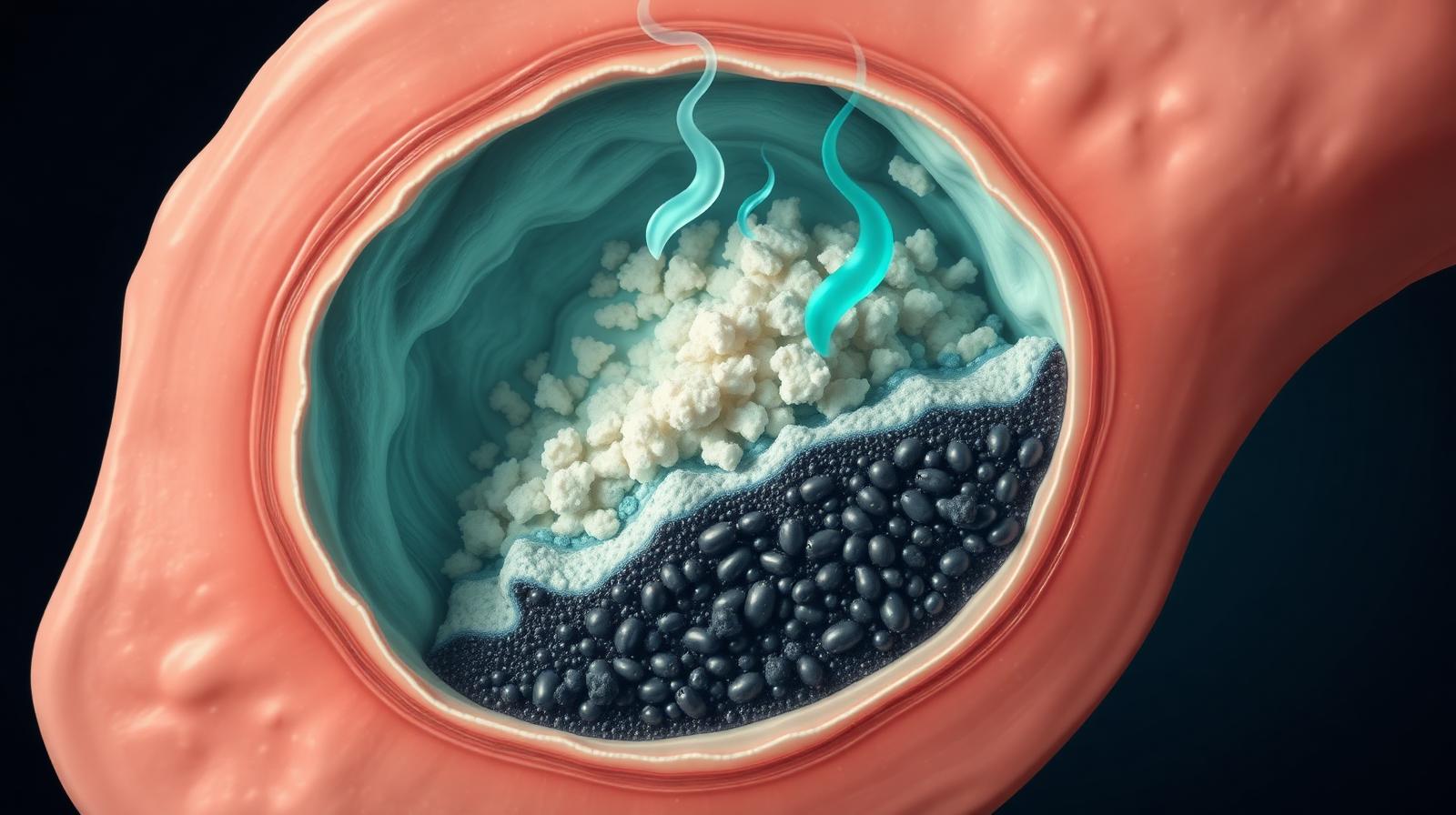
Debris packs into the tonsil crypt, anaerobic bacteria colonise it, and the volatile sulfur compounds they release drive the odour.
What the research actually shows
Each row maps to a named, peer-reviewed source in the Sources section. According to PubMed.
| Claim | Evidence | Source |
|---|---|---|
| Tonsil stones are common: CT imaging found palatine tonsilloliths in about 40 percent of 2,873 patients, with prevalence rising with age. | Retrospective CT study of tonsillolith prevalence, number and size. | Takahashi et al., ScientificWorldJournal 2014 |
| The bacteria inside tonsil stones are anaerobes that produce volatile sulfur compounds, supporting the stone as a source of oral malodour. | 16S rDNA sequencing and electron microscopy of stones from six people. | Tsuneishi et al., Microbes Infect 2006 |
| A visible tonsillolith carried a roughly tenfold higher risk of abnormal breath VSC readings in people with chronic caseous tonsillitis. | Halitometry study of 49 patients with chronic caseous tonsillitis. | Dal Rio et al., Br Dent J 2007 |
| Small tonsil stones are managed expectantly and usually pass on their own; surgery is rarely needed for size alone. | Clinical review of tonsillitis and tonsillolith diagnosis and management. | Smith et al., Am Fam Physician 2023 |
Removal methods compared
| Method | How well it reaches the crypt | Freshness effect | Risk |
|---|---|---|---|
| Warm salt-water gargle | Loosens surface debris and small, shallow stones | Reduces odour by flushing bacteria | Very low; safe to repeat daily |
| Low-pressure water flosser | Flushes into the crypt from a safe distance | Often dislodges the stone and freshens breath | Low if kept on the lowest setting |
| Damp cotton swab pressure | Good for a visible, already-loose stone | Immediate once the stone pops out | Moderate; can trigger gagging |
| Rigid picks or fingernails | Reaches deep but unsafely | Same as above if it works | High; bleeding, scratches, pushed-in debris |
Why gentle beats aggressive
It is tempting to attack a visible stone with whatever is to hand, but the tonsil is delicate, vascular tissue and the gag reflex is protective. Hard picking can scratch the crypt lining, cause bleeding, and even push debris deeper, and a scratched crypt tends to trap material more readily afterward. There is also no evidence that forcefully removing one stone stops the next from forming, because the crypt anatomy that traps debris is still there. This is why the sensible approach is two-track: use the gentlest method that dislodges a stone you can see, and then focus your ongoing effort on daily crypt hygiene so debris is flushed out before it can compact. If a stone is deep, painful to reach, or you cannot see it, that is a signal to leave it alone rather than dig, since most small stones eventually work loose on their own during eating, coughing or gargling.
Evidence you can act on.
Occasional emails — new research, new protocols, no noise.
A gentle removal routine
Work from the least invasive method to the more hands-on ones, and stop at the first that works. Do this over a sink with good light and a mirror.
- 1
Gargle warm salt water
30 to 60 secondsDissolve half a teaspoon of salt in a cup of warm water and gargle vigorously, tilting your head back so the water reaches the back of the throat. The agitation loosens shallow debris and the salt helps rinse away bacteria. Repeat two or three times; many small stones dislodge at this stage alone.
- 2
Flush with a low-pressure water flosser
1 to 2 minutesSet the flosser to its lowest setting, stand over the sink, and aim the stream at the crypt from a few centimetres away rather than pressing the tip against the tonsil. Short bursts flush the pocket out. Keep the pressure gentle; high pressure aimed straight at the tonsil can cause discomfort or minor trauma.
- 3
Nudge a visible stone with a damp swab
under a minuteIf a stone is clearly visible and already loose, moisten a cotton swab, gently press just below the stone and roll upward to ease it out. Breathe out slowly to calm the gag reflex. If it does not move with light pressure, stop; do not lever or dig.
- 4
Keep the crypts clear afterward
dailyOnce clear, a daily gargle, an alcohol-free rinse and staying well hydrated help flush debris before it compacts. Because the crypt anatomy remains, consistency is what actually reduces how often stones return and keeps breath fresher.

Clearing a stone is a one-off; keeping the crypts flushed daily is what changes how often they come back.
See a doctor or ENT if a stone is large or you cannot dislodge it, if you have persistent throat pain, difficulty swallowing, one-sided swelling, bleeding, or recurring stones that keep affecting your breath and comfort. Persistent or recurrent tonsil stones can be managed with professional crypt cleaning, in-office laser cryptolysis, or in selected cases tonsillectomy. These are decisions for a clinician, not for home tools.
Frequently asked questions
Sources
- 1.
- 2.
- 3.
- 4.

Fix your breath at the source.
The complete science-backed protocol — engineered to eliminate volatile sulfur compounds at the biological source.
Start the Breath Protocol →Related reading
Educational purposes only. The content on this page is not medical advice and is not a substitute for consultation with a qualified dental or medical professional.
More from the library
 Causes8 min
How Do Tonsil Stones Form? The Biology, Honestly Explained
The unglamorous truth about what a tonsil stone is, how it builds up in the folds of your tonsils, and why the crypts that make them are simply part of your anatomy.
Read →→ Answers8 min
Can Tonsil Stones Make You Sick? An Honest Look
A calm, honest look at whether tonsil stones can actually make you unwell, the local nuisances they do cause, and the red flags worth taking seriously.
Read →→ Answers8 min
Can a Dentist Remove Tonsil Stones? Your Professional Options
Who actually removes tonsil stones, the in-office options from simple expression to crypt reshaping, and how to know when a professional is worth it.
Read →→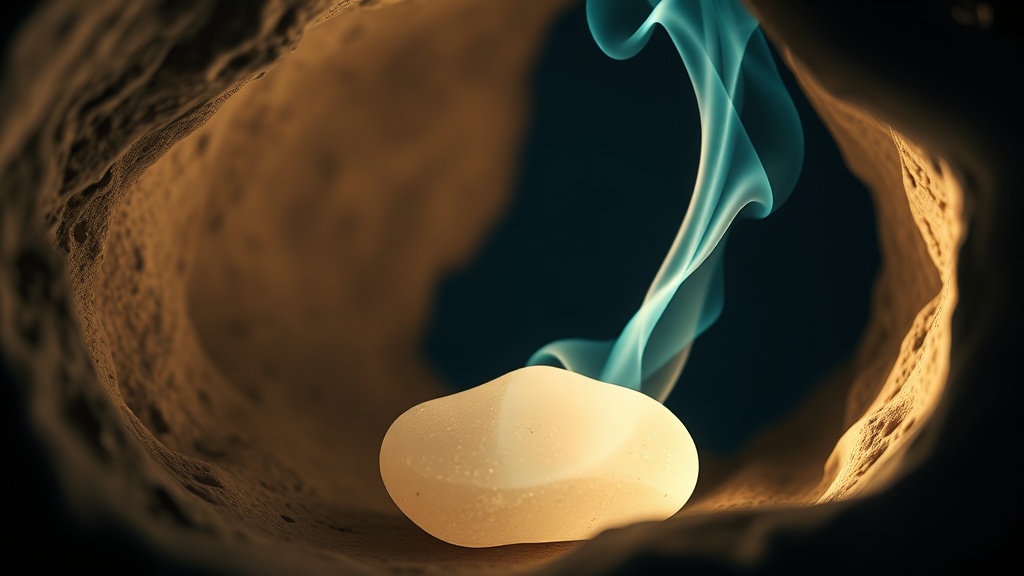 Answers8 min
Why Do My Tonsil Stones Smell So Bad? The Sulfur Science
The unmistakable, sulfurous smell of a tonsil stone has a specific bacterial chemistry behind it — and understanding it points straight to what actually helps.
Read →→ Best Of8 min
Best Mouthwash for Tonsil Stones: What Actually Helps
A rinse can freshen and flush, but it cannot dislodge a deep stone. Here is how to choose well.
Read →→ Guides8 min
Chronic Tonsil Stones: Why They Keep Coming Back
Recurring tonsil stones are driven by anatomy you cannot change — so the honest goal is steady control, not a one-time cure.
Read →→