Homemade Mouthwash Recipes: Safe, Effective, and What to Skip
A practical, honest guide to do-it-yourself mouth rinses - the gentle salt and baking-soda recipes worth making, and the harsh DIY mixes that can do more harm than good.
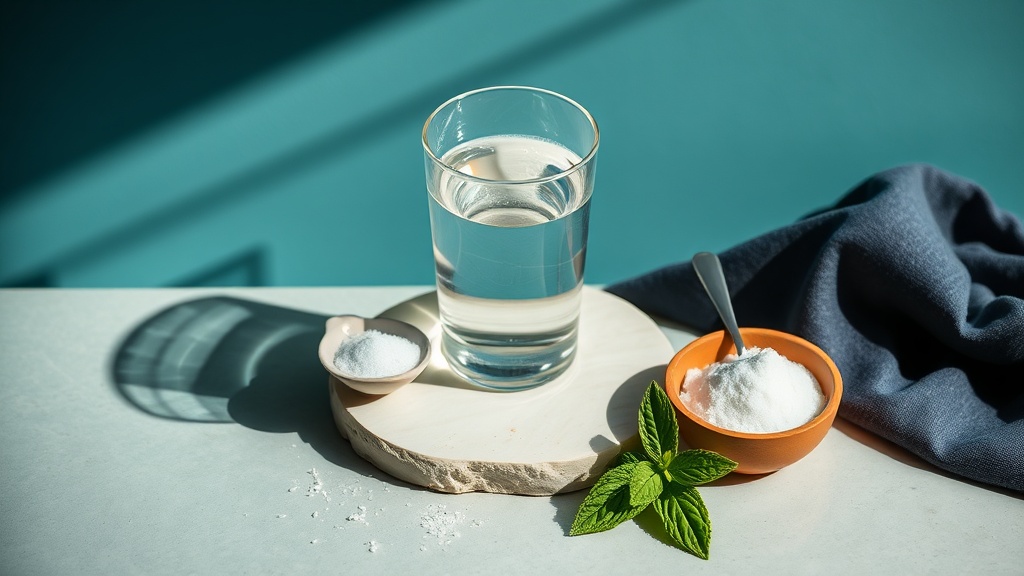
- The two safest, most sensible homemade rinses are a warm salt-water rinse and a baking-soda rinse - both cheap, gentle, and useful for a fresh, comfortable mouth.
- Salt water works mainly by soothing tissue and briefly rinsing away debris; baking soda works by neutralising the acids and raising the pH that odour bacteria prefer, which can help blunt bad breath.
- Homemade rinses are cosmetic and supportive - they do not replace brushing, flossing and tongue cleaning, and they do not treat gum disease or infection.
- Several popular DIY ideas are genuinely risky: undiluted essential oils can burn the mouth s lining, and hydrogen peroxide used strong or daily can irritate tissue - these are the recipes to avoid.
- For most people a store-bought alcohol-free rinse is more consistent, but a simple salt or baking-soda rinse is a reasonable, low-cost home option when used gently.
The homemade rinses worth making are simple: warm salt water to soothe and rinse, and a baking-soda rinse to neutralise the acids odour bacteria thrive in. Both are gentle, cheap and cosmetic. Skip the harsh internet recipes - undiluted essential oils and strong or daily hydrogen peroxide can burn or irritate the mouth. Rinses support, never replace, brushing and tongue cleaning.
Why salt water and baking soda help
Neither of these rinses is a disinfectant, and that is fine - most of their value is gentle and physical. A warm salt-water rinse is mildly hypertonic, meaning it draws a little fluid out of swollen tissue, which is why it feels soothing on sore or irritated gums, and the act of swishing itself flushes away loose debris and food. Baking soda, sodium bicarbonate, works on chemistry instead. The bacteria behind bad breath and plaque tend to thrive in a slightly acidic mouth; a baking-soda rinse raises the pH and buffers those acids, making the environment a little less friendly to them, and it can also neutralise some of the smelly compounds directly. Both effects are real but modest and short-lived, which is exactly why these rinses belong in the supportive-habit category rather than the treatment category. Bad breath is still generated by bacteria on the tongue and between the teeth producing volatile sulfur gases, so a rinse helps by briefly lowering that load or softening the acids they favour - it does not remove the source, which is what brushing, flossing and tongue cleaning are for.

A baking-soda rinse nudges the mouth toward neutral pH, making it a little less friendly to the acid-loving bacteria behind odour.
What the research actually shows
Every claim below maps to a named, peer-reviewed source in the Sources section. According to PubMed.
| Claim | Evidence | Source |
|---|---|---|
| Mouthrinses can reduce oral bacteria and malodour, but the quality of evidence varies and most are short-term - the same honest caveat applies to homemade versions. | Cochrane review of mouthrinses for halitosis. | Fedorowicz et al., 2008 |
| Chlorhexidine is the most effective antiplaque rinse in trials, which is why no simple salt or soda recipe should be presented as an equal substitute. | Cochrane review of chlorhexidine mouthrinse. | James et al., 2017 |
| The tongue s coating is the main source of odour gases, so tongue cleaning belongs in any home routine alongside a rinse. | Cochrane review of tongue scraping. | Outhouse et al., 2006 |
| Bad breath comes from bacteria producing volatile sulfur compounds, so a rinse helps by lowering that load or neutralising the acids they favour - not by masking alone. | BMJ Clinical Evidence review of halitosis. | Scully & Porter, 2008 |
| Across halitosis interventions the overall evidence is limited, reinforcing that DIY rinses are a supportive habit rather than a treatment. | Cochrane review of halitosis interventions. | Kumbargere Nagraj et al., 2019 |
Homemade rinses: safe vs. skip
| Recipe | How to make it (if safe) | Verdict |
|---|---|---|
| Warm salt water | Half a teaspoon of salt in a cup of warm water, swish 30 seconds, spit | Safe and soothing |
| Baking-soda rinse | Half a teaspoon of baking soda in a cup of warm water, swish, spit | Safe; helps neutralise odour acids |
| Undiluted or heavy essential oils | Not recommended - can chemically burn the lining of the mouth | Avoid |
| Hydrogen peroxide, strong or daily | Not recommended - irritates tissue and disrupts healthy bacteria | Avoid / clinician only |
| Vinegar or lemon-juice rinses | Not recommended - acid erodes enamel | Avoid |
Why some DIY recipes backfire
The internet is full of stronger-is-better mouthwash recipes, and this is where homemade rinses turn from harmless to harmful. Essential oils are the biggest trap: a bottle of tea tree, clove or oregano oil is extremely concentrated, and a few neat drops swished in the mouth can chemically burn the delicate lining, leaving raw, painful patches. Commercial rinses that use these oils are carefully diluted and buffered; a kitchen version is not. Hydrogen peroxide is the second trap. At the strengths sold for cuts, or used every day, it can irritate the gums and cheeks and disturb the balance of healthy mouth bacteria - a dentist may occasionally recommend a properly diluted peroxide rinse for a specific reason, but it is not a daily freshener. Acidic rinses made from vinegar or lemon juice are a quieter hazard: they may feel cleansing, but repeated acid exposure softens and erodes enamel, the opposite of what you want. The theme across all of these is that the mouth s lining and enamel are more fragile than they feel, and the safe homemade rinses are effective precisely because they are gentle.
Evidence you can act on.
Occasional emails — new research, new protocols, no noise.
Make and use a home rinse safely
A homemade rinse is easy to make well and easy to make badly, so the safe recipes and a few firm limits matter. Use these as a gentle, cosmetic extra - never as a treatment.
- 1
Measure into warm water
per rinseStir about half a teaspoon of salt, or half a teaspoon of baking soda, into a cup of warm (not hot) water until it dissolves. Warm water is more comfortable and helps everything dissolve cleanly.
- 2
Swish gently and spit
30 secSwish for about 30 seconds, moving the liquid around your teeth and gums, then spit it all out. Do not swallow it, especially the baking-soda version.
- 3
Keep baking soda to once or twice daily
1-2x dailyBaking soda is mildly abrasive and alkaline, so a couple of times a day is plenty. Salt water can be used a little more freely when the mouth feels sore.
- 4
Never let it replace brushing
dailyA rinse cannot remove plaque the way a brush and floss do. Keep brushing twice a day, flossing and cleaning your tongue - the rinse is only a finishing touch.
- 5
Skip the harsh recipes
alwaysAvoid undiluted essential oils, strong or daily hydrogen peroxide, and acidic vinegar or lemon rinses - these can burn tissue or erode enamel. If you are tempted to treat a specific problem, see a dentist instead of mixing something stronger.
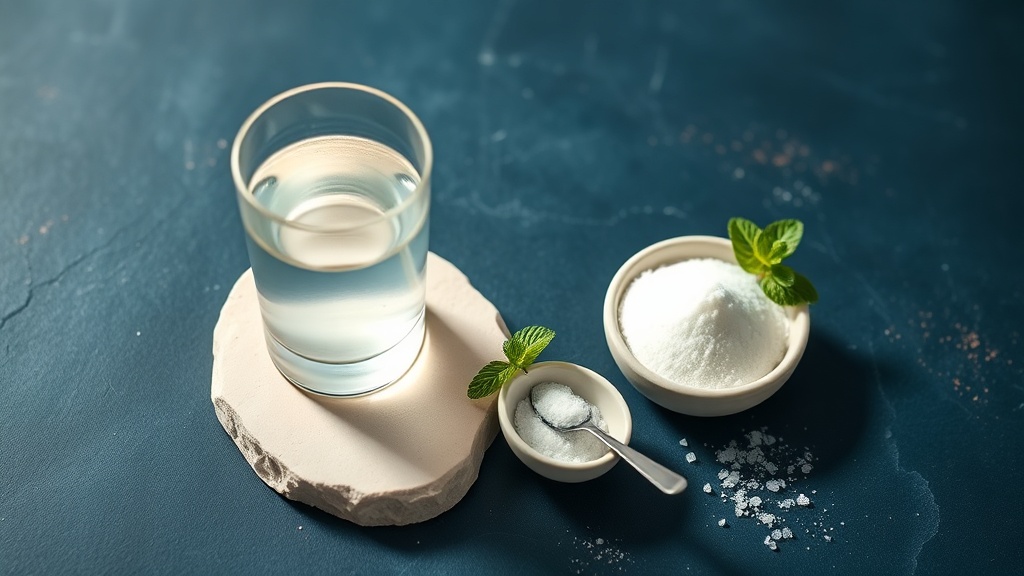
The safe DIY rinses are the simple ones - salt or baking soda in warm water, used gently and spat out.
A homemade rinse can soothe and freshen, but it cannot treat an underlying problem. If bad breath keeps coming back, or you notice bleeding gums, persistent pain or a metallic taste, see a dentist - these often have a specific, treatable cause. Never reach for strong hydrogen peroxide or neat essential oils to self-treat; the risks outweigh any benefit.
Frequently asked questions
Sources
- 1.
- 2.
- 3.
- 4.
- 5.
- 6.

Fix your breath at the source.
The complete science-backed protocol — engineered to eliminate volatile sulfur compounds at the biological source.
Start the Breath Protocol →Related reading
Educational purposes only. The content on this page is not medical advice and is not a substitute for consultation with a qualified dental or medical professional.
More from the library
 Best Of8 min
The Best Mouthwash for Bad Breath, by Active Ingredient
There is no single winner, only the right rinse for the right job. Here is how the active ingredients compare on the evidence, and which suits everyday fresh breath.
Read →→ Best Of8 min
The Best Alcohol-Free Mouthwash for Fresh Breath
Skip the burn. Alcohol-free rinses can freshen breath just as well, if you choose by active ingredient rather than by that stinging tingle. Here is what the evidence supports.
Read →→ Guides8 min
Home Remedies for Bad Breath: What the Evidence and Tradition Say
Salt water, baking soda, parsley and oil pulling, weighed honestly by both evidence and tradition, so you know what removes the source of odour and what only masks it.
Read →→ Ingredients9 min
Probiotics for Bad Breath: Do Oral Probiotics Actually Work?
Oral probiotics try to fix bad breath at the source, by shifting which bacteria live on your tongue. The idea is promising; the evidence is still early.
Read →→ Guides8 min
How to Get Rid of Bad Breath Permanently: An Evidence-Based Plan
The honest version: "permanently" means ongoing control, not a one-time fix. Here is the daily routine the research actually supports, and when to get help.
Read →→ Guides7 min
Bad Breath Even After Brushing? The Biological Reason (and Fix)
You brushed, flossed and rinsed — and the smell is still there. The reason usually isn't hygiene; it's where the odour-causing bacteria actually live.
Read →→