What Do Healthy Gums Look Like?
The five things to look for — colour, texture, firmness, contour, and bleeding — to tell healthy gums from inflamed ones.

- Healthy gums are typically firm and pale or coral pink, with a lightly stippled surface that looks a little like orange peel — although natural brown pigmentation is completely normal and healthy for many people.
- They hug each tooth in a thin, knife-edge margin and fill the small triangles between the teeth; they sit high and even rather than shrunken back or swollen up.
- The single most reliable sign of health is what gums do not do: healthy gums do not bleed when you brush or floss gently. Bleeding is the most common early sign of gum inflammation.
- Unhealthy gums tend to look red or dark and angry, puffy and shiny rather than firm, may feel tender or itchy, and bleed easily; they can also pull back so a tooth looks longer.
- Colour alone can mislead because pigmentation varies between people, so judge mainly by firmness, texture, margin shape, and above all whether the gums bleed.
Healthy gums are firm, pale or coral pink (natural brown pigmentation is also healthy), lightly stippled like orange peel, and hug each tooth with a thin margin that fills the space between teeth. Most tellingly, they do not bleed when you brush or floss gently. Redness, puffiness, a shiny surface and easy bleeding are the signs that gums are inflamed rather than healthy.
The five things to look for
Assessing gum health is mostly a matter of knowing what a healthy gum is supposed to look and behave like, then comparing. Five features tell the story. Colour comes first, but with a caveat: classic healthy gum is a pale coral pink, yet many perfectly healthy people have natural brown or grey-brown patches from melanin, so even, stable pigmentation is not a problem. Texture is more reliable — healthy gum is firm and often lightly stippled, a faint dimpling like the skin of an orange, whereas inflamed gum loses that texture and turns smooth and shiny as it swells. Contour is the shape of the margin: healthy gum tapers to a thin, knife-edge line that hugs the tooth and rises to a neat point in the little triangle between teeth. Position matters too — healthy gum sits high and covers the root, so a tooth that suddenly looks longer signals recession. Finally, and most importantly, behaviour: healthy gums stay put and do not bleed when you clean them gently. Of all five, bleeding is the one that most cleanly separates health from early disease, because inflamed gum tissue is fragile and leaks at the slightest provocation while healthy tissue does not.
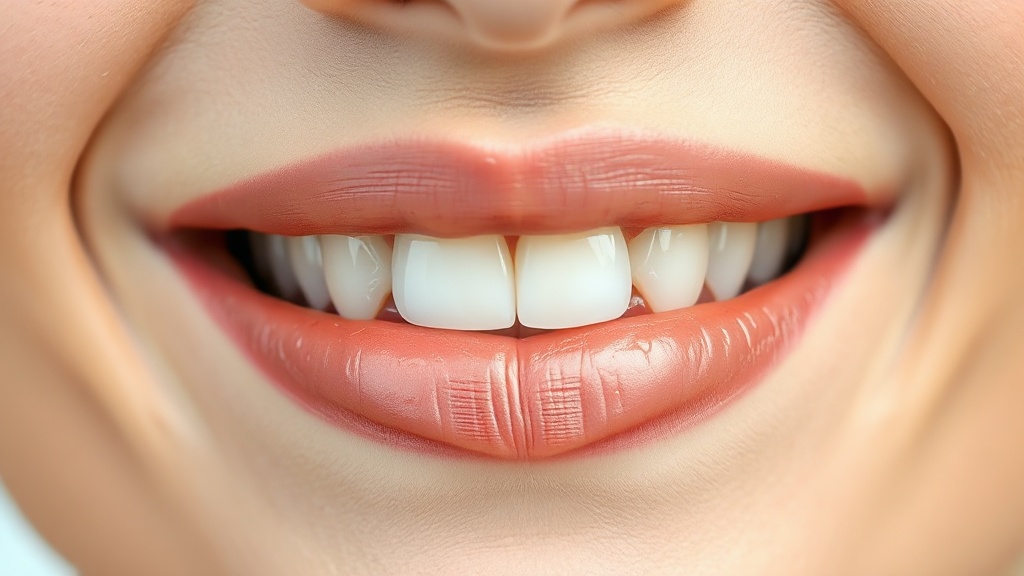
Firm, pale-to-coral pink, lightly stippled, with thin margins that hug each tooth and fill the spaces between them.
What the research actually shows
Every claim below maps to a named, peer-reviewed source in the Sources section. According to PubMed.
| Claim | Evidence | Source |
|---|---|---|
| Gingival bleeding is the single most prevalent sign of periodontal disease worldwide — which is why the absence of bleeding is the clearest everyday marker of gum health. | Global epidemiology review. | Petersen & Ogawa, 2012 |
| When people stop cleaning their teeth, bleeding and inflammation rise within about two weeks; resuming plaque control returns every measure to a healthy baseline — health is a reversible state. | Experimental-gingivitis study. | Wellappuli et al., 2017 |
| In a general cohort, most people had mild (61%) or moderate (27%) gum inflammation and only about 1% had severe disease — reversible, mild inflammation is common, severe disease is not. | Cross-sectional cohort (n=647). | Oyaro et al., 2022 |
| Recession that exposes the root is common in adults and appears most on the cheek-facing surfaces, so a tooth that looks longer is a visible sign gums have pulled back. | NHANES III national survey. | Albandar & Kingman, 1999 |
| Gingivitis is reversible with plaque control, so gums that currently look inflamed can usually return to a healthy appearance. | EFP consensus report. | Chapple et al., 2015 |
Healthy versus unhealthy gums, sign by sign
| Feature | Healthy gums | Unhealthy gums |
|---|---|---|
| Colour | Pale to coral pink (even brown pigmentation can be normal) | Bright or dark red, angry-looking |
| Texture | Firm, often lightly stippled like orange peel | Smooth, shiny and puffy |
| Contour and margin | Thin, knife-edge margin that fills between the teeth | Rolled and swollen, or shrunken and pulled back |
| Bleeding | None with gentle brushing or flossing | Bleeds easily, sometimes spontaneously |
| Feel | Comfortable, no tenderness | Tender, sore, or itchy |
Why colour can fool you, but bleeding cannot
People often fixate on colour, and colour is exactly the trait most likely to mislead. Natural gum pigmentation ranges widely: plenty of healthy mouths have brown, grey or mottled patches from melanin, especially in people with darker skin, and that stable pigment is a normal variant, not a warning sign. What you are actually looking for when disease sets in is a change — a shift from your own baseline toward a redder, more uniform, angry tone, particularly right at the margin. That is why the more dependable tells are firmness and bleeding. Inflamed tissue swells with fluid, so it loses its stippling, turns shiny, and becomes fragile enough to bleed from a gentle brush or floss; healthy tissue is firm and stays sealed. Because bleeding is the most prevalent sign of gum disease and one of the earliest, the humble gentle-floss test tells you more than staring at colour ever will. The encouraging flip side is that this state is reversible: when inflamed gums are cleaned consistently and gently, they typically firm up, lose the redness and stop bleeding within a couple of weeks, visibly returning toward that healthy baseline.
Evidence you can act on.
Occasional emails — new research, new protocols, no noise.
How to check your own gums in the mirror
You can do a fair self-assessment in a couple of minutes. This is a look-and-notice check, not a diagnosis; anything that looks off is a reason to see a professional, not to self-treat.
- 1
Get good light and a mirror
1 minuteStand near a bright, natural light or a good lamp and gently draw your lip back so you can see where the gums meet the teeth, both front and back. Daylight shows true colour better than a dim bathroom.
- 2
Read the colour and texture
1 minuteNote whether the gums look firm and lightly stippled or smooth, shiny and puffy. Remember that even brown pigment can be healthy — you are looking for firmness and for any change from your own normal, especially redness at the margin.
- 3
Check the margins and the triangles
1 minuteFollow the thin line where gum meets tooth. Healthy margins are knife-edge and the little triangles between teeth are filled and pointed. Rolled, swollen margins or gaps where the triangle has shrunk are signs to note.
- 4
Do the gentle-clean test
1 minuteBrush and floss gently and watch for pink in the sink. Occasional bleeding when you first start flossing is common, but gums that reliably bleed on gentle cleaning are inflamed, not healthy. Do not brush harder to make it stop.
- 5
Track it over two weeks
14 daysIf gums looked inflamed, clean them gently and consistently and re-check. Gingivitis usually improves within a couple of weeks. If redness, swelling or bleeding persists despite good gentle care, that is your cue to be assessed.

A minute in good light and a gentle floss test tell you more about gum health than colour alone.
Book a dental visit if your gums bleed reliably on gentle cleaning for more than about two weeks, look persistently red, swollen or shiny, feel sore, or have pulled back so a tooth looks longer. A dentist or hygienist can measure the gum around each tooth, tell early reversible inflammation from something that needs treatment, and remove hardened deposits you cannot reach at home. This visual guide helps you notice changes; only an in-person assessment can diagnose what is behind them.
Frequently asked questions
Sources
- 1.
- 2.
- 3.
- 4.
- 5.
- 6.
- 7.

Fix your breath at the source.
The complete science-backed protocol — engineered to eliminate volatile sulfur compounds at the biological source.
Start the Breath Protocol →Related reading
Educational purposes only. The content on this page is not medical advice and is not a substitute for consultation with a qualified dental or medical professional.
More from the library
 Answers8 min
What Does Gum Disease Look Like? A Stage-by-Stage Visual Guide
A plain visual walk-through of how gum disease appears at every stage, and how to tell healthy gums from early and advanced disease.
Read →→ Answers9 min
What Does Gingivitis Look Like? A Visual Guide
A plain-language visual guide to recognising what gingivitis looks like, and how to tell it from healthy gums.
Read →→ Guides8 min
Bleeding Gums: What They Mean and What to Do
A calm, honest guide to why gums bleed, why it is almost always reversible in the early stage, and the point at which bleeding is a signal to see a professional.
Read →→ Guides8 min
Healthy Gums: The Complete Guide to Keeping Them That Way
What healthy gums are, why they matter, and the proven daily pillars that keep them firm, pink and bleed-free.
Read →→ Guides8 min
Gum Disease Symptoms: The Early Warnings You Can Feel
The symptoms of gum disease you can feel and notice yourself, why bleeding comes first, and when a symptom means see a dentist now.
Read →→ Answers8 min
Can Receding Gums Grow Back? The Honest Answer
It is the question everyone with recession asks. The straight answer, and what you can realistically do instead.
Read →→