
Gum Pockets: What They Are and What Those Numbers Mean
A plain-English guide to gum pockets: what they are, why your hygienist calls out numbers like two, three and five, what counts as healthy, and why the deeper ones need a professional clean.
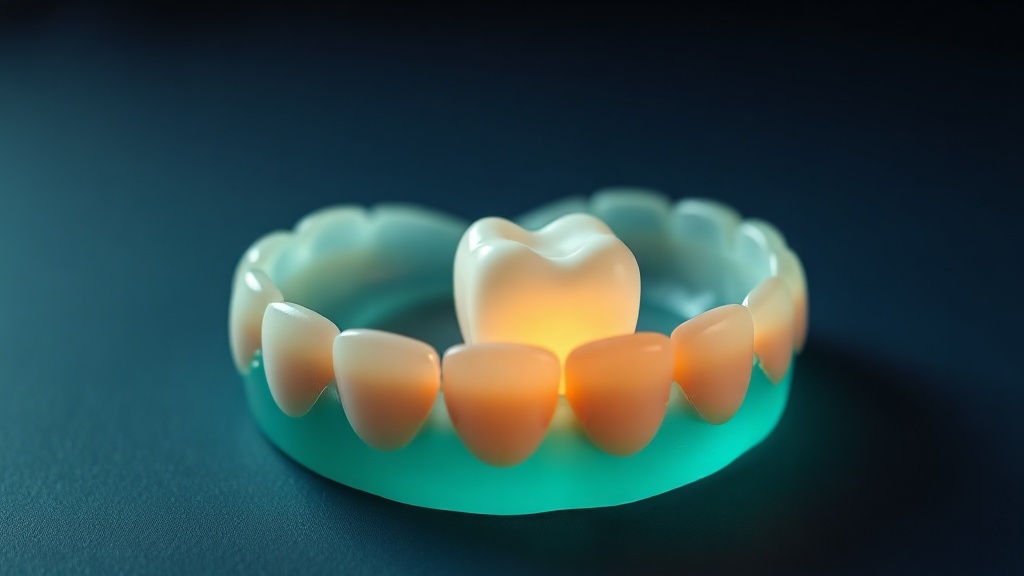
- A gum pocket is simply the little gap between your gum and your tooth. Everyone has a shallow one; the question is how deep it has become.
- Those numbers your hygienist calls out — two, three, five — are the depth of that gap in millimetres, measured with a tiny ruler-like probe at several spots on each tooth.
- Roughly one to three is healthy, four to five is a yellow flag, and six or more is a deep pocket that needs professional attention. Lower numbers are better.
- Pockets get deeper because of gum disease, when the gum loses its grip on the tooth. The everyday brushing you do cannot clean down inside a deep pocket.
- A professional deep clean, called scaling and root planing, is what actually reduces a deep pocket. Good home habits keep the shallow ones healthy and support the deep-clean results, but they cannot close a pocket on their own.
A gum pocket is the small gap between your gum and tooth. Your hygienist measures its depth in millimetres and reads the numbers aloud: about 1–3 is healthy, 4–5 is a warning, and 6 or more is deep. Deep pockets come from gum disease and need a professional deep clean to reduce them. Home brushing keeps shallow pockets healthy but cannot clean out a deep one.
What a gum pocket really is
Picture your gum as a soft collar wrapped snugly around each tooth. Where the collar meets the tooth there is a tiny gap, like the space between your finger and a ring, and in a healthy mouth that gap is shallow and the gum hugs the tooth tightly. A gum pocket is that gap when it has grown deeper. It happens because of gum disease: when plaque builds up at the gumline and the gum becomes inflamed, over time the gum can lose its firm grip and the little gap slides further down the tooth. A shallow, healthy gap of a couple of millimetres can turn into a five or six millimetre pocket. The trouble with a deeper pocket is that it becomes a hiding place. Bacteria and hardened deposits collect down inside it where your toothbrush and floss simply cannot reach, and because they sit there undisturbed they keep the inflammation going. That is the whole reason your dental team measures these gaps so carefully: the depth of the pocket is one of the clearest signs of how healthy, or how troubled, the gum around each tooth really is.

A gum pocket is just the gap between gum and tooth — shallow when healthy, deeper when gum disease loosens the gum grip.
What the research actually shows
Every claim below maps to a named, peer-reviewed source in the Sources section. According to PubMed.
| Claim | Evidence | Source |
|---|---|---|
| A professional deep clean reduces pocket depth by about 1.4 mm on average and closes roughly 74% of pockets. | Systematic review and meta-analysis. | Suvan J, et al., 2020 (EFP) |
| Deep pockets of 6 mm or more affect only about 10–15% of adults, so most people never get them. | Global review of gum disease. | Petersen PE, Ogawa H, 2012 |
| A deep pocket a toothbrush cannot reach: even after a professional clean, about 46% of the deepest root surfaces still had hardened deposits. | Study of residual calculus in deep pockets. | Shen K, et al., 1997 |
| A pocket that stays 7 mm or deeper after treatment sharply raises the chance of eventually losing that tooth. | 11-year follow-up of treated patients. | Matuliene G, et al., 2008 |
| With regular professional maintenance, tooth loss slows to roughly one tooth every ten years, and many people lose none. | Study of tooth loss during supportive care. | Carvalho R, et al., 2021 |
What those numbers mean
| The number you hear | In plain terms | What it usually means |
|---|---|---|
| 1, 2 or 3 | A shallow, healthy gap | Your gum is hugging the tooth well; keep it up |
| 4 or 5 | A gap getting deeper | Early gum trouble that is hard to keep clean at home |
| 6 or more | A deep pocket | Gum disease has loosened the gum; needs a deep clean |
| Bleeding noted with the number | The gum is inflamed there | A sign to improve cleaning and, if it persists, get it checked |
Why you cannot fix a deep pocket at home
It is completely reasonable to hope that brushing harder or buying a stronger mouthwash will sort out a deep pocket, but it is worth being honest about why that does not work. Your toothbrush, floss and rinse all do their job at the surface, right around the gumline. A deep pocket runs several millimetres down the side of the root, into a narrow space that those tools cannot enter. The hardened deposits stuck down there have to be physically scraped off by a hygienist or dentist using fine instruments made for exactly that, in the deep clean called scaling and root planing. That treatment genuinely works, shrinking most pockets and closing about three-quarters of them, and where a pocket stays stubbornly deep a gum specialist can do more. None of this means your home routine is pointless. Far from it: brushing well, cleaning between your teeth and using a supportive rinse keep the shallow, healthy gaps healthy and help your gums recover after a deep clean. They just work alongside professional care, keeping the surroundings in good shape, rather than reaching down into a pocket they were never able to clean.
Evidence you can act on.
Occasional emails — new research, new protocols, no noise.
What to actually do about gum pockets
Shallow pockets you can look after yourself; deeper ones need a professional. These steps keep the healthy gaps healthy and get the deep ones properly cleaned — home care alone will not close a deep pocket.
- 1
Ask what your numbers are
at your next visitNext time your hygienist reads out numbers, ask which teeth are higher and what they would like them to be. Knowing where your fours, fives and sixes are turns a stream of numbers into a simple map of where to focus.
- 2
Keep the shallow gaps clean
twice dailyFor the healthy one-to-three gaps, thorough twice-daily brushing plus cleaning between your teeth is genuinely enough to keep them that way. Most gum trouble starts as inflammation you can prevent, so this is where everyday habits pay off most.
- 3
Get a deep clean for the deeper pockets
1–2 visitsIf you have pockets of five or six millimetres or more, book scaling and root planing. This professional deep clean reaches down inside the pocket to remove what your brush cannot, and it is the step that actually reduces the depth.
- 4
Go back to be re-measured
a few weeks laterAfter a deep clean your gums are measured again to see which pockets shrank. Many settle back toward healthy numbers; any that stay deep are flagged so your dentist can decide whether a gum specialist should take a look.
- 5
Keep up regular maintenance
every few monthsGum pockets are best kept in check with regular professional cleanings on top of your home routine. Under this kind of steady care, most people hold on to their teeth, losing on average only about one per decade, and many lose none at all.

Those numbers are a routine health check of the gap around each tooth — ask your hygienist what yours are.
If your hygienist has mentioned deeper pockets, or if your gums bleed when you brush, look puffy, or seem to be pulling back from your teeth, it is worth booking a proper check rather than hoping a new toothpaste will fix it. Only a dental professional can measure a pocket and clean out a deep one. Pockets of six millimetres or more, and any that a home routine is not keeping healthy, are exactly the ones a dentist or gum specialist should see.
Frequently asked questions
Sources
- 1.
- 2.
- 3.
- 4.
- 5.
- 6.

Fix your breath at the source.
The complete science-backed protocol — engineered to eliminate volatile sulfur compounds at the biological source.
Start the Breath Protocol →Related reading
Educational purposes only. The content on this page is not medical advice and is not a substitute for consultation with a qualified dental or medical professional.
More from the library
 Guides8 min
Periodontal Pockets: How They Are Measured and Reduced
A precise, honest explainer of periodontal pockets: how they form, how a dentist measures probing depth, what the millimetre numbers mean, and why deep pockets are closed by professional care rather than any rinse or paste.
Read →→ Guides8 min
Periodontitis: Stages, Bone Loss, and How It Is Managed
An honest, evidence-based guide to periodontitis: what it does to bone and attachment, how dentists stage and grade it, and why professional care is the non-negotiable core of managing it.
Read →→ Guides8 min
Periodontal Disease: The Full Spectrum, Explained
A clear, honest overview of periodontal disease as a spectrum: the difference between gingivitis and periodontitis, what the colloquial phrase gum disease misses, and why early bleeding is the signal to act.
Read →→ Answers8 min
Can Receding Gums Grow Back? The Honest Answer
It is the question everyone with recession asks. The straight answer, and what you can realistically do instead.
Read →→ Guides8 min
Gum Disease Symptoms: The Early Warnings You Can Feel
The symptoms of gum disease you can feel and notice yourself, why bleeding comes first, and when a symptom means see a dentist now.
Read →→ Causes9 min
Swollen Gums During Pregnancy: Why It Happens
Why pregnancy makes gums swell, what is normal, and the safe steps to take with your dental and prenatal team.
Read →→