
Periodontal Pockets: What They Are, How They Are Measured, and How They Are Reduced
A precise, honest explainer of periodontal pockets: how they form, how a dentist measures probing depth, what the millimetre numbers mean, and why deep pockets are closed by professional care rather than any rinse or paste.
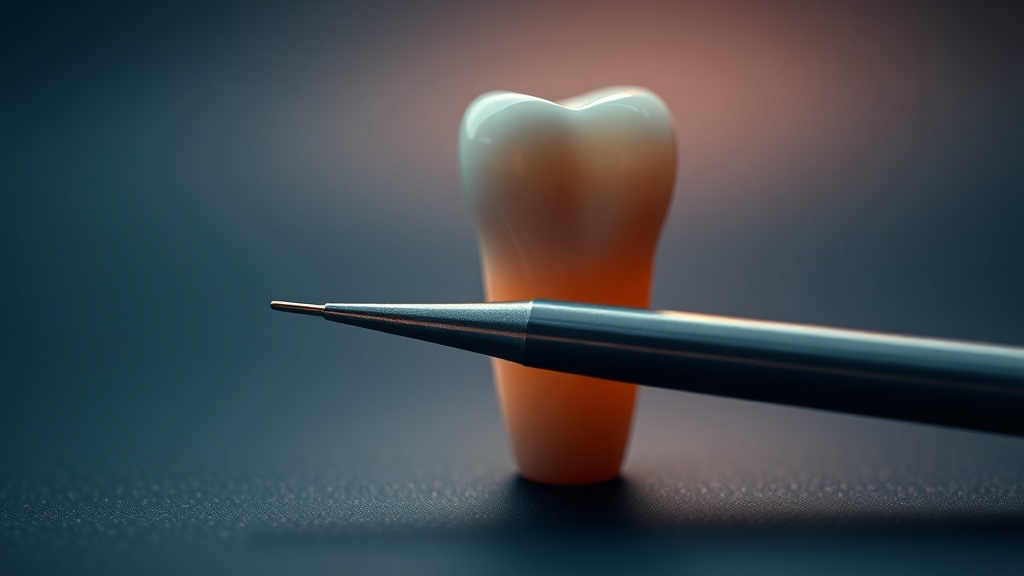
- A periodontal pocket is the deepened space between the gum and the tooth root that opens up when periodontitis destroys the attachment holding the gum against the tooth.
- Pockets are measured in millimetres with a small graded probe, at six points around every tooth. A healthy sulcus is about 1–3 mm; 4–5 mm signals concern; 6 mm or deeper is a deep pocket.
- Probing depth matters because a deeper pocket shelters more bacteria and hardened calculus out of a toothbrush reach, and it strongly predicts the risk of eventually losing that tooth.
- Pockets are reduced by professional scaling and root planing, which cleans the root surface below the gum, and by surgery for pockets that stay deep. This is the only reliable way to shrink an established pocket.
- No rinse, paste or home device closes a true periodontal pocket. Home cleaning keeps the pocket entrance and surrounding surfaces healthier and supports treatment, but it cannot reach or remove subgingival calculus.
A periodontal pocket is the deepened gap between gum and tooth that forms when periodontitis destroys attachment. A dentist measures it in millimetres with a probe: 1–3 mm is healthy, 4–5 mm is a warning, and 6 mm or more is deep. Pockets are reduced by professional scaling and root planing, and sometimes surgery. Home care supports gum health but cannot close an established pocket.
What a periodontal pocket actually is
Around every healthy tooth there is a shallow, natural groove where the gum meets the enamel, called the sulcus, usually only one to three millimetres deep. The gum is attached to the tooth at the base of that groove by a delicate seal of fibres. A periodontal pocket forms when disease breaks that seal. As the biofilm at the gumline drives chronic inflammation, the body begins to destroy the attachment fibres and the underlying bone, and the base of the groove migrates downward along the root. What was a snug one-to-three-millimetre sulcus becomes a four, six or eight millimetre pocket: a sheltered, oxygen-poor crevice running down the side of the root. This is not a cosmetic change. The deeper the pocket, the more it becomes a refuge for the exact bacteria that caused it, and the harder it is for anyone to clean. A pocket is therefore both a consequence of periodontitis and an engine that keeps it going, which is why measuring and reducing pockets sits at the centre of periodontal care.
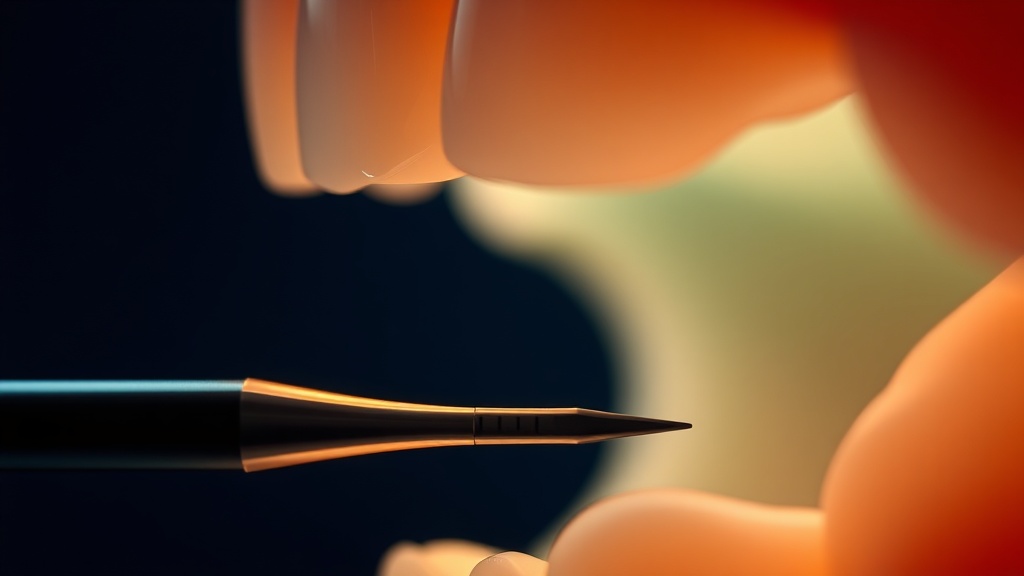
A graded probe reads pocket depth in millimetres at six points around each tooth — the core measurement of periodontal health.
What the research actually shows
Every claim below maps to a named, peer-reviewed source in the Sources section. According to PubMed.
| Claim | Evidence | Source |
|---|---|---|
| Professional subgingival instrumentation reduces probing depth by about 1.4 mm and closes roughly 74% of pockets. | Systematic review and meta-analysis. | Suvan J, et al., 2020 (EFP) |
| After closed scaling and root planing, about 46% of deep root surfaces (5–10 mm pockets) still had residual calculus — deep pockets are hard even for professionals to fully clean. | Study of residual calculus after scaling. | Shen K, et al., 1997 |
| A residual pocket of 7 mm or more after therapy raises the odds of losing that tooth by up to roughly 64-fold. | 11-year cohort of treated patients. | Matuliene G, et al., 2008 |
| Deep pockets of 6 mm or more are present in only about 10–15% of adults; most people never develop them. | Global review of periodontal disease. | Petersen PE, Ogawa H, 2012 |
| Deep pockets treated by open-flap debridement reduce by roughly 3–5 mm when surgical access is needed. | Review of surgical pocket reduction. | Perussolo J, et al., 2023 |
What probing depths mean
| Probing depth | What it usually indicates | Typical response |
|---|---|---|
| 1–3 mm | A healthy sulcus with intact attachment | Routine cleaning and home care maintain it |
| 4–5 mm | Early to moderate pocketing; harder to keep clean at home | Professional scaling and closer monitoring |
| 6 mm or more | A deep pocket sheltering subgingival calculus and bacteria | Scaling and root planing, often specialist referral |
| 7 mm or more that persists after treatment | A strong predictor of eventual tooth loss | Re-treatment, surgery, or ongoing specialist maintenance |
Why a pocket is reduced by a professional, not a product
The reason pockets sit squarely in professional territory is physical. A toothbrush bristle, floss, an interdental brush and a mouthrinse all work at or just below the gum margin; none of them travels several millimetres down a narrow crevice to scrape hardened calculus off a root. Scaling and root planing does exactly that, with fine instruments designed to reach the pocket base, and it is measurably effective, shrinking pockets by well over a millimetre on average and closing about three-quarters of them. Even then, the deepest pockets challenge the clinician: studies of closed scaling found that nearly half of the deepest root surfaces still carried some residual calculus afterwards, which is why very deep pockets are sometimes opened surgically for direct access. Set against that, the honest role of a home product is modest and worth stating plainly: it keeps the mouth around the pocket cleaner and lowers the overall bacterial load, which supports healing, but it does not close the pocket. Any claim that a rinse or paste closes periodontal pockets goes beyond what the evidence supports, and beyond what physics allows.
Evidence you can act on.
Occasional emails — new research, new protocols, no noise.
How periodontal pockets are actually reduced
Reducing a pocket is a clinical process. The steps below describe that process and the honest supporting role of home care — home care alone does not shrink an established pocket.
- 1
Have your pockets charted
one appointmentA dentist or hygienist probes six points around every tooth and records the millimetre readings, along with bleeding and X-ray bone levels. This full-mouth chart is the baseline that shows where pockets are and how deep, and it is repeated to track change.
- 2
Scaling and root planing to clean the pocket
1–2 visitsUsing hand or ultrasonic instruments, the clinician removes biofilm and calculus from the root surface inside the pocket. This is the core pocket-reducing therapy; there is no clinically meaningful difference between hand and ultrasonic instruments, and it can be done by quadrant or full mouth.
- 3
Re-evaluate after healing
6–8 weeks laterThe gum is re-probed to see which pockets shrank and which stayed deep. Many pockets close after cleaning; those that remain deep, especially 6 mm or more, flag where more is needed rather than more waiting.
- 4
Consider surgery for pockets that stay deep
as advisedWhere deep pockets persist, a periodontist can fold back the gum for direct access to clean and reshape the root and bone, reducing those pockets by several millimetres. This is a specialist decision based on your charts.
- 5
Maintain the result and support it at home
every 3–4 months, plus dailyRegular maintenance cleanings keep reduced pockets shallow, while daily brushing and interdental cleaning keep the pocket entrance and surrounding surfaces healthy. This home support protects the professional result but does not, by itself, close a pocket.
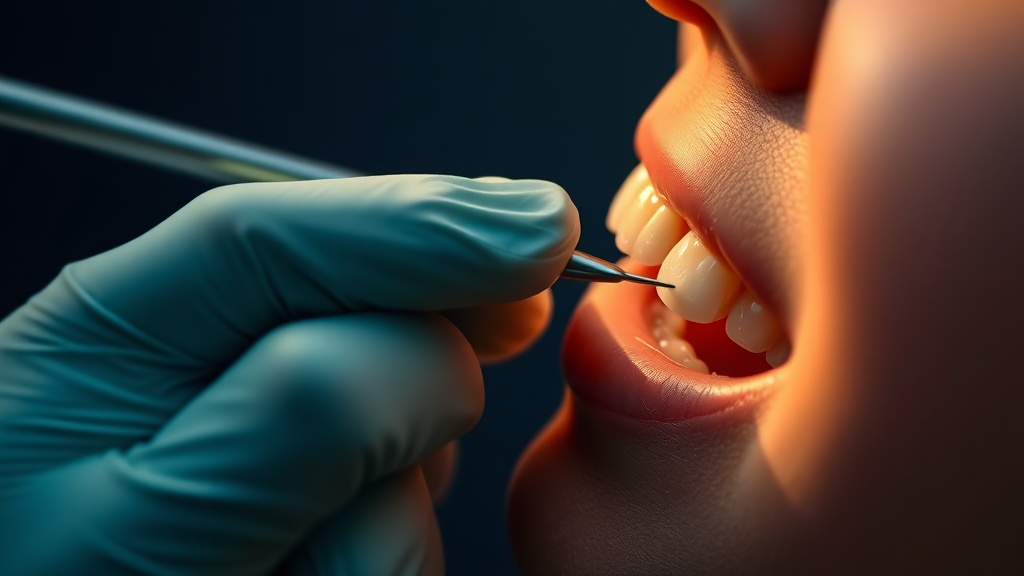
Scaling and root planing reaches down into the pocket to remove calculus a toothbrush never can — the actual mechanism of pocket reduction.
You cannot measure or reduce a periodontal pocket at home. If a dentist or hygienist has told you that you have pockets, or if your gums bleed, feel tender or are pulling away from your teeth, arrange scaling and root planing rather than relying on a rinse or paste. Deep pockets, and any pocket of 6 mm or more, are worth asking a periodontist about, because pockets that stay deep are the strongest local warning sign for losing a tooth.
Frequently asked questions
Sources
- 1.
- 2.
- 3.
- 4.
- 5.
- 6.
- 7.
- 8.

Fix your breath at the source.
The complete science-backed protocol — engineered to eliminate volatile sulfur compounds at the biological source.
Start the Breath Protocol →Related reading
Educational purposes only. The content on this page is not medical advice and is not a substitute for consultation with a qualified dental or medical professional.
More from the library
 Guides8 min
Gum Pockets: What Those Numbers at the Dentist Mean
A plain-English guide to gum pockets: what they are, why your hygienist calls out numbers like two, three and five, what counts as healthy, and why the deeper ones need a professional clean.
Read →→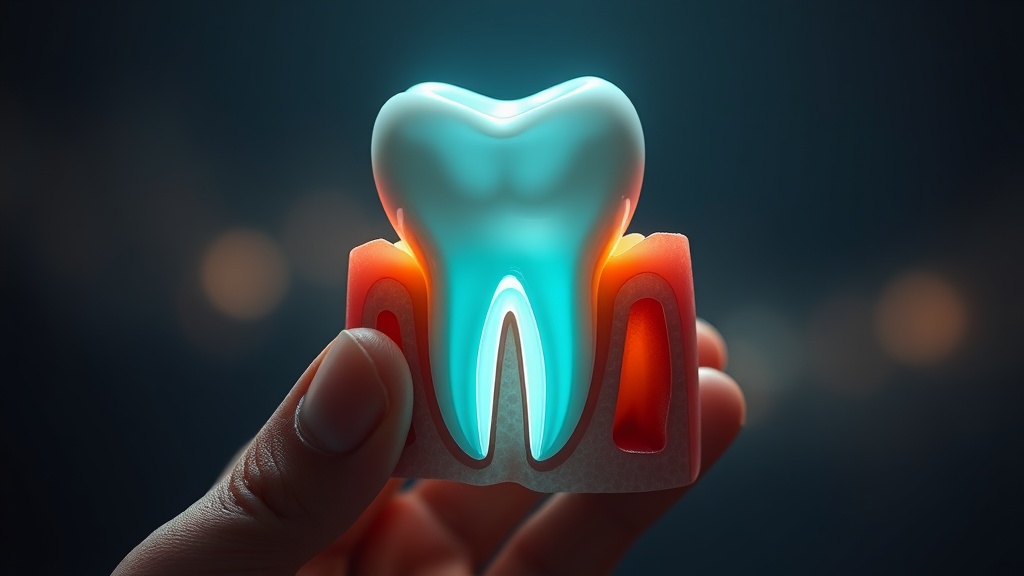 Guides8 min
Periodontitis: Stages, Bone Loss, and How It Is Managed
An honest, evidence-based guide to periodontitis: what it does to bone and attachment, how dentists stage and grade it, and why professional care is the non-negotiable core of managing it.
Read →→ Guides8 min
Periodontal Disease: The Full Spectrum, Explained
A clear, honest overview of periodontal disease as a spectrum: the difference between gingivitis and periodontitis, what the colloquial phrase gum disease misses, and why early bleeding is the signal to act.
Read →→ Guides8 min
How to Stop Receding Gums: What Actually Slows It
You cannot will your gum line back up, but you can often stop it from dropping further. Here is what the evidence supports.
Read →→ Guides8 min
Gum Disease Symptoms: The Early Warnings You Can Feel
The symptoms of gum disease you can feel and notice yourself, why bleeding comes first, and when a symptom means see a dentist now.
Read →→ Answers8 min
Can Receding Gums Grow Back? The Honest Answer
It is the question everyone with recession asks. The straight answer, and what you can realistically do instead.
Read →→