Swollen Gums During Pregnancy
Why pregnancy makes gums swell, what is normal, and the safe steps to take with your dental and prenatal team.

- Swollen, puffy gums are very common in pregnancy — hormonal changes make the gums over-respond to the same everyday plaque, so tissue that used to look fine can become tender and swollen.
- This is usually pregnancy gingivitis, the reversible form of gum inflammation; it often appears from the second month, peaks in the middle-to-late trimesters, and typically eases after birth.
- A distinct, localised lump on the gum during pregnancy (sometimes called a pregnancy tumour or epulis) is almost always benign and tends to shrink after delivery — but any lump should be checked in person by a dentist, never self-treated.
- Dental care is safe and important during pregnancy: gentle daily cleaning plus a professional cleaning helps control the plaque driving the swelling, and routine dental visits are recommended, not avoided.
- Talk to both your dentist and your OB or midwife — coordinate care, and get prompt attention for severe swelling, a growing lump, pain, pus or a fever.
Swollen gums in pregnancy are usually pregnancy gingivitis: hormones make the gums over-react to normal plaque, so they puff up, redden and bleed more easily. It commonly starts early, peaks mid-to-late pregnancy, and eases after birth. Gentle cleaning plus a professional cleaning helps; see your dentist and OB, and get any lump checked.
Why pregnancy makes gums swell
The swelling is not usually because your cleaning has slipped — it is because your body is responding to the same plaque more strongly than before. During pregnancy, levels of the sex hormones oestrogen and progesterone rise dramatically, and gum tissue is rich in receptors for them. Those hormones increase blood flow to the gums and amplify the local inflammatory response, so even a modest amount of plaque at the gum line can provoke a puffy, red, tender reaction that would not have shown up before. This is why researchers describe pregnancy gingivitis as an exaggerated gum response to existing plaque rather than a brand-new infection. The good news is what that mechanism implies: because plaque is still the underlying trigger, keeping the gum line clean genuinely reduces the swelling, and because the hormonal surge is temporary, the tissue usually calms down after the baby arrives. The swelling tends to follow a recognisable arc — often noticeable from around the second month, most pronounced in the middle-to-late trimesters when hormone levels peak, then settling in the months after birth. Understanding that pattern is reassuring: swollen gums in pregnancy are common, expected, and largely manageable, not a sign that something is going badly wrong.
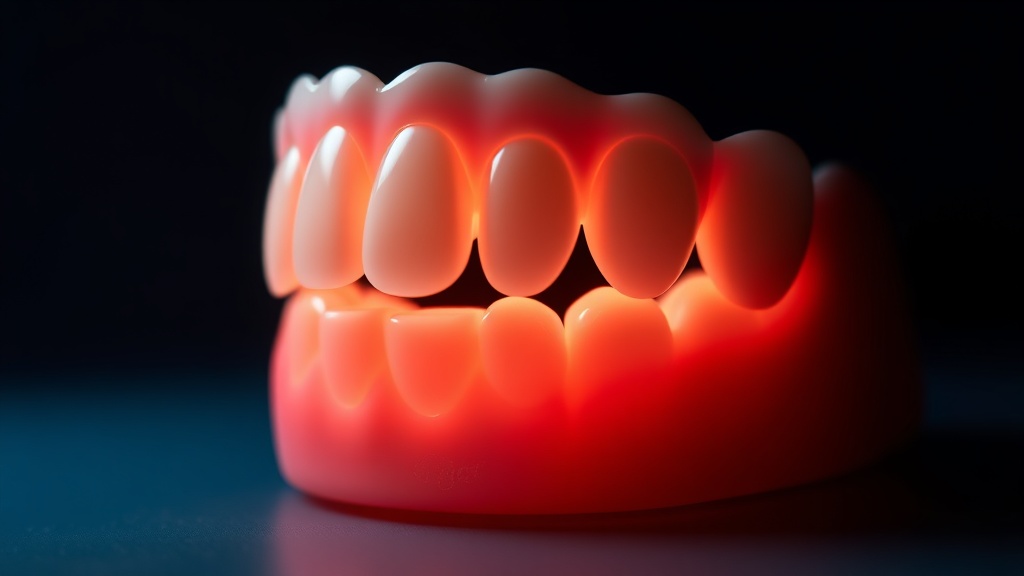
Pregnancy hormones amplify the gum's response to ordinary plaque, so the tissue swells and reddens more easily.
What the research actually shows
Every claim below maps to a named, peer-reviewed source in the Sources section. According to PubMed.
| Claim | Evidence | Source |
|---|---|---|
| Rising oestrogen and progesterone in pregnancy have a marked effect on the gums and are linked to increased prevalence and severity of gingival inflammation. | Review of pregnancy and gingival inflammation. | Wu et al., 2015 |
| Pregnancy-associated gingivitis is highly prevalent, with reported rates ranging from about 35% to 100% across studies. | Prospective study and review. | Gursoy et al., 2014 |
| In one cross-sectional study, gingivitis affected about 60% of pregnant women, with not using cleaning aids and skipping dental visits as key risk factors. | Cross-sectional study (n=92). | Gallardo Chavez et al., 2022 |
| Because plaque remains the trigger, resuming consistent plaque control returns inflamed gums toward baseline. | Experimental-gingivitis model. | Wellappuli et al., 2017 |
| Essential dental treatment, including local anaesthetics, was not associated with increased risk of adverse pregnancy outcomes at 13–21 weeks. | Randomized controlled trial (n=823). | Michalowicz et al., 2008 |
What kind of swelling is it?
| What you notice | Likely explanation | What to do |
|---|---|---|
| Puffy, tender gums along the gum line | Pregnancy gingivitis (hormone-amplified plaque response) | Gentle cleaning; professional cleaning; usually eases after birth |
| A single soft lump between teeth | A pregnancy lump (epulis) — almost always benign | Have a dentist evaluate it; it often shrinks after delivery |
| Swelling with bleeding when brushing | Common early sign of pregnancy gingivitis | Keep cleaning gently; do not stop brushing the area |
| Swelling with pain, pus or a bad taste | Possible localised infection or tooth problem | See a dentist promptly; do not wait |
| Sudden swelling with facial puffiness | Needs assessment — could be several causes | Contact your dentist and OB without delay |
The pregnancy lump, and why care still matters
Sometimes the swelling is not a general puffiness but a distinct lump, most often on the gum between two teeth. This is commonly called a pregnancy tumour or pregnancy epulis, and the word tumour is misleading: it is a benign overgrowth of the same inflamed, blood-rich tissue, not a cancer, and it typically appears in the second or third trimester and shrinks or resolves after the baby is born. Because it is fragile and vascular it can bleed easily, which is understandably alarming, but it is generally harmless. The right response is not to panic and not to pick at it, but to have a dentist look at it — any lump in the mouth deserves professional eyes to confirm what it is, and occasionally one that is troublesome is gently removed. This is part of a bigger point about pregnancy and gums: it is exactly the time to stay connected to dental care, not to avoid it. Gum inflammation in pregnancy has been associated in some studies with adverse outcomes such as preterm birth, though treating gum disease during pregnancy has not been shown to reliably change those outcomes. What is clear and reassuring is that routine and essential dental care is considered safe in pregnancy, and controlling the plaque behind the swelling is good for you regardless. Coordinating between your dentist and your OB or midwife is the sensible path.
Evidence you can act on.
Occasional emails — new research, new protocols, no noise.
Gentle care for swollen pregnancy gums
These steps help control the plaque behind the swelling and keep tender tissue comfortable. They are supportive care, not medical treatment — pair them with your dentist and prenatal team, and do not use any medication or product for your gums in pregnancy without professional advice.
- 1
Keep cleaning gently, even where it is swollen
2 minutes, twice dailyIt is tempting to avoid a swollen, tender area, but skipping it lets plaque build and the swelling worsen. Use a soft brush and light pressure right along the gum line. Gentle, consistent cleaning is the single most effective home step for pregnancy gingivitis.
- 2
Clean between the teeth daily
about 1 minute dailyPregnancy lumps and swelling most often sit between teeth, exactly where a brush cannot reach. Careful daily flossing or an interdental brush clears the plaque there. Be gentle — the tissue bleeds more easily now, and that is expected, not a reason to stop.
- 3
Soothe and stay hydrated
as neededA warm salt-water rinse can soothe swollen, tender gums and keep the area clean while it settles. Sip water through the day. If pregnancy nausea or vomiting is a factor, rinse with water afterwards and wait before brushing to protect the enamel.
- 4
Book a professional cleaning
once per trimester or as advisedA dental hygienist can remove the hardened deposits home care cannot, which directly reduces the plaque load driving the swelling. Tell the practice you are pregnant and how far along; routine and preventive dental care is safe and encouraged during pregnancy.
- 5
Get any lump or worsening swelling checked
promptlyHave a dentist evaluate any distinct gum lump rather than self-treating it, and seek prompt care for swelling with pain, pus, a bad taste or fever. Keep both your dentist and your OB or midwife informed so your care is coordinated.

Gentle daily cleaning plus regular dental visits — safe and encouraged in pregnancy — help control the swelling.
Swollen gums in pregnancy are common and usually manageable, but do not manage them alone. See a dentist for a distinct lump, for swelling that comes with pain, pus, a bad taste or fever, or for gums that keep worsening despite gentle care. Keep your OB or midwife in the loop too. Routine and essential dental care is safe during pregnancy, so a check-up and cleaning are the right move, not something to postpone. Never take any medicine or use any gum product for the swelling without first checking with your dentist and prenatal provider.
Frequently asked questions
Sources
- 1.
- 2.
- 3.
- 4.
- 5.
- 6.
- 7.

Fix your breath at the source.
The complete science-backed protocol — engineered to eliminate volatile sulfur compounds at the biological source.
Start the Breath Protocol →Related reading
Educational purposes only. The content on this page is not medical advice and is not a substitute for consultation with a qualified dental or medical professional.
More from the library
 Causes9 min
Bleeding Gums During Pregnancy: Why and What Helps
Why pregnancy gums bleed, why gentle cleaning is still the answer, and when to call your dental and prenatal team.
Read →→ Causes9 min
Pregnancy Gingivitis: Gentle, Safe Gum Care
A reassuring, evidence-based guide to caring for your gums through pregnancy — safely and gently.
Read →→ Guides9 min
Gum Inflammation: How It Works and How to Calm It
The mechanism behind red, swollen, bleeding gums — and the evidence-based ways to settle it.
Read →→ Answers8 min
Can Receding Gums Grow Back? The Honest Answer
It is the question everyone with recession asks. The straight answer, and what you can realistically do instead.
Read →→ Guides8 min
Gum Disease Symptoms: The Early Warnings You Can Feel
The symptoms of gum disease you can feel and notice yourself, why bleeding comes first, and when a symptom means see a dentist now.
Read →→ Guides8 min
Periodontal Disease: The Full Spectrum, Explained
A clear, honest overview of periodontal disease as a spectrum: the difference between gingivitis and periodontitis, what the colloquial phrase gum disease misses, and why early bleeding is the signal to act.
Read →→