
White Spots on Teeth After Braces: Causes and How to Fix Them
What causes the white marks left after braces come off, and the evidence-based cosmetic options that make them fade or blend in.
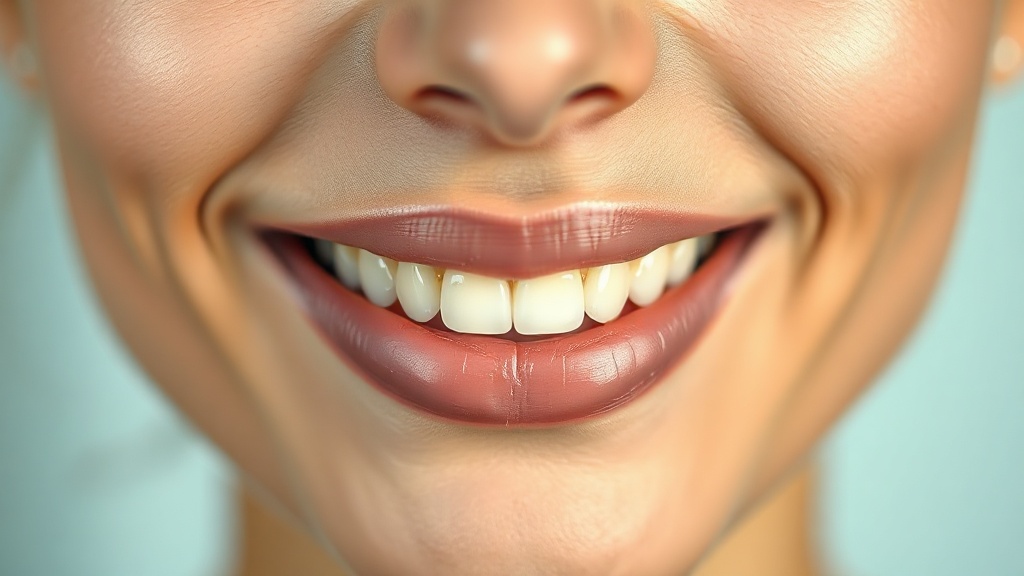
- The chalky white marks left after braces come off are called white spot lesions. They are patches where the enamel has lost minerals just below the surface — not stains sitting on top, but a change within the enamel itself.
- They form because plaque collects around the brackets and wires, in spots a toothbrush struggles to reach. Acids from that plaque quietly draw minerals out of the enamel, leaving a more porous patch that scatters light and looks white.
- They are common. Across studies these early demineralised lesions appear in a wide share of orthodontic patients, and one clinic found white spots on nearly half of patients by the twelfth month of treatment.
- There is real good news: many faint spots improve on their own over months to years as saliva slowly re-deposits minerals, and gentle remineralising care can help that process along.
- For spots that do not fade, a dentist has genuine cosmetic options — remineralising agents, resin infiltration and microabrasion — that make them far less visible. Because a white spot is early enamel damage, it is best assessed in person.
White spots after braces are white spot lesions — small areas where plaque around the brackets pulled minerals out of the enamel, leaving a chalky, more porous patch that scatters light. Many fade partly as saliva remineralises them over time, and remineralising products, resin infiltration or microabrasion can make stubborn ones much less visible.
What a white spot lesion actually is
A white spot lesion is not a stain and not a scratch. It is a small zone where the enamel has quietly lost mineral just beneath its intact outer surface. Healthy enamel is dense and clear enough that the colour of the dentin shows through evenly. When minerals are drawn out, that zone becomes microscopically porous — riddled with tiny gaps — and porous enamel scatters light differently, so the patch looks opaque, chalky and whiter than the tooth around it. This is why the marks often become obvious the day the brackets come off: they were forming underneath all along. The trigger is demineralisation. Plaque bacteria feed on sugars and produce acid, and around a fixed brace there are countless sheltered corners — the margins of each bracket, under the wire, along the gumline — where plaque sits undisturbed because a brush cannot easily reach. Held against the enamel, that acid pulls calcium and phosphate out of the surface layer over weeks and months. The result is the earliest, still-reversible stage of enamel breakdown, showing up as a bright matte outline exactly where the hardware used to be. Because the loss sits just under an intact surface, the enamel usually still feels smooth to the tongue at this stage, which is part of why the spots are so easy to miss until the braces come off. It is also why a white spot cannot be scrubbed away: brushing harder does nothing to a change that lives inside the enamel, and only risks irritating the gums around an already vulnerable area.
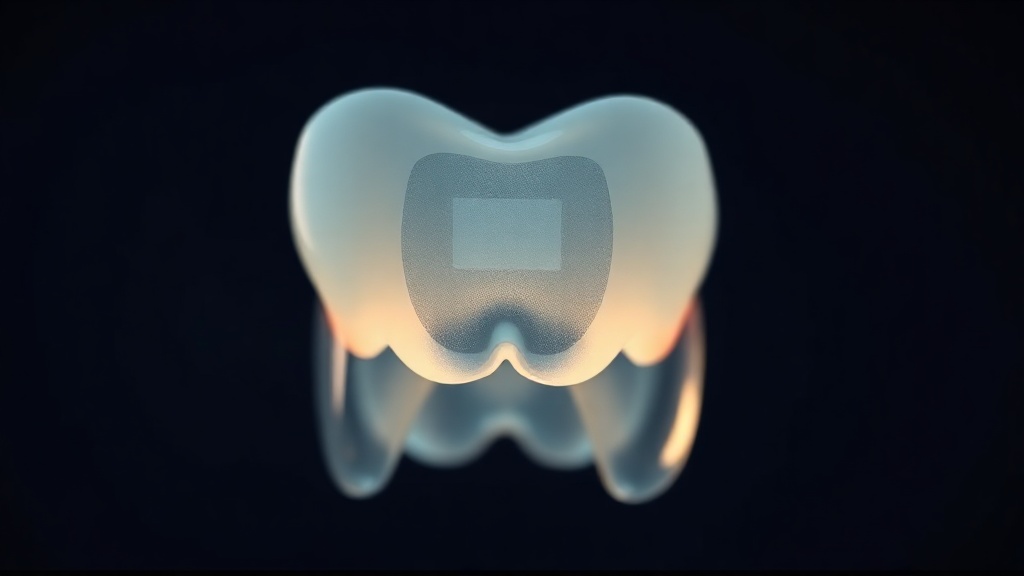
Plaque collects around each bracket where a brush cannot reach; its acid draws minerals out of the enamel, leaving a chalky halo where the hardware sat.
What the research actually shows
Every claim below maps to a named, peer-reviewed source in the Sources section. According to PubMed.
| Claim | Evidence | Source |
|---|---|---|
| Early demineralised (white spot) lesions next to brackets are the most common side effect of fixed braces, with prevalence reported across a wide range of patients. | Systematic review and meta-analysis of prevalence and incidence. | Salerno et al., 2024 |
| In one clinic, white spots were found in about 47% of patients by 12 months of treatment, rising fastest during the first six months. | Prevalence study during fixed orthodontic treatment. | Jha et al., 2023 |
| Left alone, many post-braces white spots slowly improve: over a 15-year-plus follow-up, 28% of affected teeth fully recovered and 48% got better. | Long-term follow-up of post-orthodontic lesions. | Bock et al., 2024 |
| Resin infiltration masks white spots significantly better than natural remineralisation or fluoride varnish alone. | Systematic review and meta-analysis of clinical studies. | Bourouni et al., 2021 |
| Both resin infiltration and CPP-ACP remineralising paste gave durable cosmetic improvement in the size and colour of post-braces white spots over 12 months. | Randomised controlled clinical trial. | Simon et al., 2022 |
The realistic options, from gentlest to most involved
| Approach | How it works | Best suited to |
|---|---|---|
| Time and healthy saliva | Saliva slowly re-deposits minerals into the porous surface layer | Faint, recent spots — many improve on their own |
| Remineralising agents (fluoride, CPP-ACP, nano-hydroxyapatite) | Help minerals settle back into the softened surface | Early, shallow spots; supports natural recovery |
| Resin infiltration (e.g. ICON) | A thin resin seeps into the porous enamel so it stops scattering light and blends in | Established spots that will not fade on their own |
| Microabrasion | Gently polishes away the thin outer demineralised layer | Shallow surface marks, often paired with the above |
| Whitening the whole tooth | Evens overall contrast, but can make spots look brighter at first | Only under professional guidance, after the spots are assessed |
Why they appear where the brackets were — and why not everyone gets them
White spots trace the outline of the old hardware because that is exactly where plaque was hardest to remove. The flat margin around each bracket, the shadow under the archwire and the strip along the gumline are all sheltered from the sweep of a toothbrush, so plaque matures there undisturbed. It is worth saying plainly: getting white spots after braces is not a character flaw. Fixed braces create cleaning challenges that defeat plenty of conscientious people, which is why the risk is built into the treatment rather than into the person. What tips the balance is the total load over time — how much plaque sits there, how often sugar and acid arrive, and how protective your saliva is, since saliva is the mouth's natural mineral-replenishing system. There is one more thing worth knowing before you reach for a whitening kit: bleaching a tooth that has white spots can briefly make the spots stand out more, because they dehydrate and turn more opaque before the tooth rehydrates. That is not damage, but it is a reason to have the spots looked at and plan whitening with a professional rather than springing it on them. It also helps to picture the range you might be dealing with. Some white spots are shallow and recent, barely a surface haze that healthy saliva and a few weeks of remineralising care can quietly settle. Others are deeper and older, set into the enamel over many months of treatment, and those are the ones that tend to need a hands-on cosmetic option rather than patience alone.
Evidence you can act on.
Occasional emails — new research, new protocols, no noise.
How to help white spots look better — gently
None of this is a medical fix; it is about helping the enamel surface recover and making the marks less noticeable. Start at the gentlest end and escalate only if the spots persist.
- 1
Get them assessed early
one visitBecause a white spot is early enamel demineralisation rather than a simple stain, the first step is having a dentist evaluate how deep and how active the spots are. That decides whether they are likely to fade on their own or need a hands-on cosmetic option.
- 2
Rebuild the surface with remineralising care
daily, several weeksRemineralising agents — fluoride, CPP-ACP pastes, or nano-hydroxyapatite — help minerals settle back into the softened surface layer. Used consistently they can make faint, recent spots less visible and support the natural recovery saliva is already driving. Consistency matters far more than intensity here: a little every day over several weeks does more than an occasional heavy application.
- 3
Keep plaque off the affected zone
twice dailyThe demineralised surface is more vulnerable, so thorough brushing and flossing along the gumline keep fresh plaque and acid from settling there again and give the enamel a calm environment to remineralise in.
- 4
Ask about resin infiltration or microabrasion for stubborn spots
one or two visitsFor marks that will not fade, resin infiltration seeps a thin resin into the porous enamel so it stops looking chalky, and microabrasion polishes away a shallow outer layer. Both are minimally invasive cosmetic procedures with good evidence for masking established spots.
- 5
Be cautious with strong whitening
as advisedBecause whitening can make white spots look more obvious at first, treat it as a professionally guided finishing step — after the spots have been assessed and, where needed, remineralised or infiltrated — not as a first move.
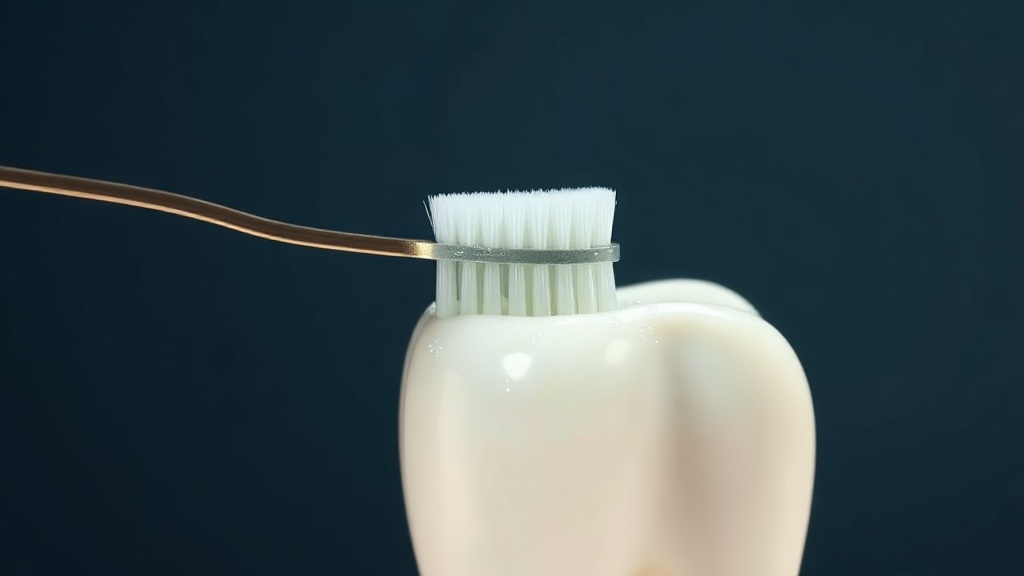
Remineralising care helps minerals settle back into the porous surface, so a faint white patch blends in with the enamel around it.
See a dentist if the white spots are not fading after a few months, if any of them start to look brown, rough or pitted, or if you feel the tooth surface catching rather than staying smooth — these can signal that the enamel loss is progressing and needs hands-on attention rather than home care. A professional can evaluate the spots in person and talk you through the cosmetic options, from remineralising care to resin infiltration. And if you are hoping to whiten afterwards, raise it at the same visit so the sequence is planned properly.
Frequently asked questions
Sources
- 1.
- 2.
- 3.
- 4.
- 5.
- 6.
- 7.
- 8.

Fix your breath at the source.
The complete science-backed protocol — engineered to eliminate volatile sulfur compounds at the biological source.
Start the Breath Protocol →Related reading
Educational purposes only. The content on this page is not medical advice and is not a substitute for consultation with a qualified dental or medical professional.
More from the library
 Answers8 min
Does Teeth Whitening Damage Enamel? The Evidence-Based Answer
The honest, evidence-based answer to whether whitening harms enamel — what peroxide really does to the surface, why sensitivity is not damage, and the DIY methods that actually cause wear.
Read →→ Answers8 min
Can You Whiten Crowns? What Works and What Doesn't
The honest, evidence-based answer to whether teeth whitening works on crowns, veneers and fillings — and what to do instead.
Read →→ Guides8 min
How to Remove Coffee Stains From Teeth
A honest, evidence-based guide to lifting coffee stains from teeth without wrecking your enamel: what works, what only polishes the surface, and why to skip charcoal.
Read →→ Answers8 min
Does Baking Soda Whiten Teeth? What the Evidence Says
An honest look at what baking soda can and cannot do for a whiter smile.
Read →→ Best Of9 min
Best Fluoride-Free Whitening Toothpaste: An Honest, Evidence-Based Guide (2026)
Which fluoride-free whitening ingredients hold up to the research — and which are marketing. An honest buyer's guide.
Read →→ Guides9 min
In-Office Teeth Whitening Cost: What Dentists Charge (2026)
An honest, evidence-based look at chairside whitening prices — and whether the convenience premium is really worth it.
Read →→